
Your pool filter’s maintenance directly determines water clarity and swimmer safety. Clean filters trap pathogens like Cryptosporidium and Giardia while removing debris as small as 5 microns, preventing waterborne illness. They also maintain proper chemical balance, reducing algae and bacterial byproducts that irritate skin and eyes. Regular upkeep extends filter lifespan from 2-3 years to 5-7 years, saving thousands in replacements. You’ll discover how strategic maintenance schedules unveil both health protection and long-term cost savings.
Water Clarity Preservation Through Effective Filtration
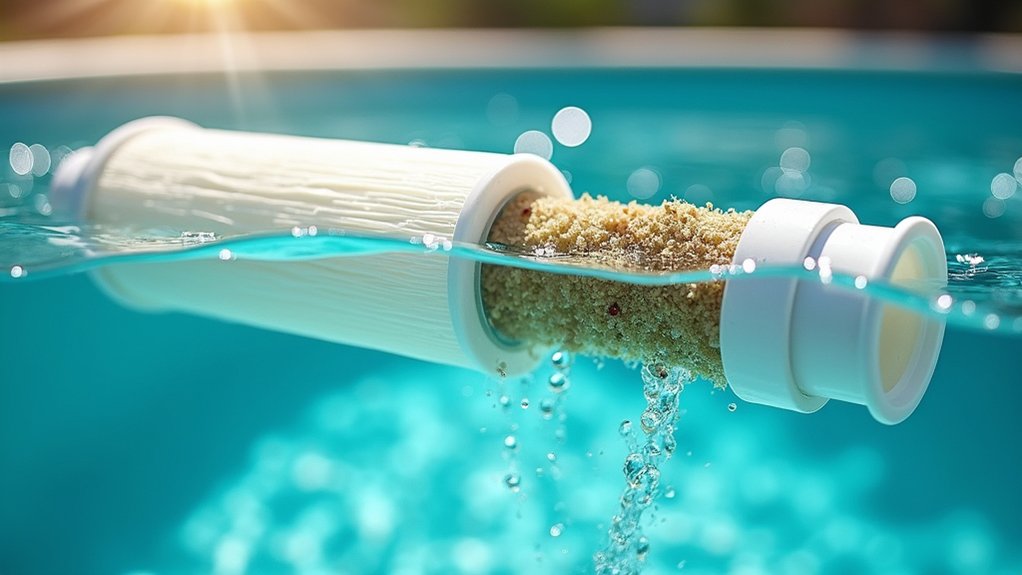
Your pool’s clarity depends entirely on your filter’s ability to trap suspended particles that cloud the water. Effective filters remove debris, dirt, and organic contaminants as small as 5 microns, preventing the murky appearance that signals filter underperformance.
Clean filters work synergistically with circulation to distribute chemicals uniformly, minimizing chemical imbalances that compromise water quality. By physically removing contaminants, you’ll reduce your reliance on excessive chemical additions, lowering costs while maintaining stability. Different filter types offer varying efficiency levels, so selecting the right filter based on your pool size and budget ensures optimal contaminant removal and water quality. Monthly inspections of your filter components will help you catch early signs of wear and maintain consistent performance.
Consider filter upgrades to high-efficiency models that remove smaller particulates, delivering visibly clearer water while lowering pump energy consumption. Routine media replacement, sand every 3 5 years, cartridges every 2 3 years, sustains peak performance and clarity consistency. Heavy swimmer loads require cleaning every 4-6 weeks to maintain optimal performance.
Monitor your filter pressure gauge regularly; an 8 10 psi rise above normal signals cleaning needs. This proactive approach prevents circulation dead spots and maintains pristine water transparency. Consistent maintenance prevents issues and extends filter life, ultimately supporting your pool’s long-term health and safety.
Health and Safety Protection for Swimmers
While clear water certainly enhances your swimming experience, it’s the filter’s pathogen-removal capability that truly safeguards your health. Your filter traps Cryptosporidium, Giardia, and bacteria before they cause waterborne illness. By reducing pathogen transmission, you’re securing yourself and others from infection.
Regular filter maintenance directly supports maintaining skin and eye comfort. When you neglect cleaning, algae and bacterial byproducts accumulate, triggering rashes, redness, and irritation, especially for children and sensitive swimmers. Clean filters also optimize chemical balance, preventing chloramine buildup that irritates airways and eyes. Scheduling professional inspections annually identifies potential issues before they compromise water quality and swimmer safety. Additionally, clean filters reduce equipment strain by maintaining proper water circulation throughout your pool system. A consistent cleaning schedule of three times yearly ensures your filtration system operates at peak performance, capturing debris and contaminants that would otherwise compromise water quality.
Additionally, proper filtration guarantees visibility that lifeguards need for emergency response. You’ll see pool hazards clearly, reducing slip-and-fall risks. Dirty filters create slippery surfaces and obscured depth changes, increasing accident potential.
Consistent maintenance keeps you compliant with health department regulations while protecting everyone’s well-being.
Equipment Longevity and Cost Reduction Benefits
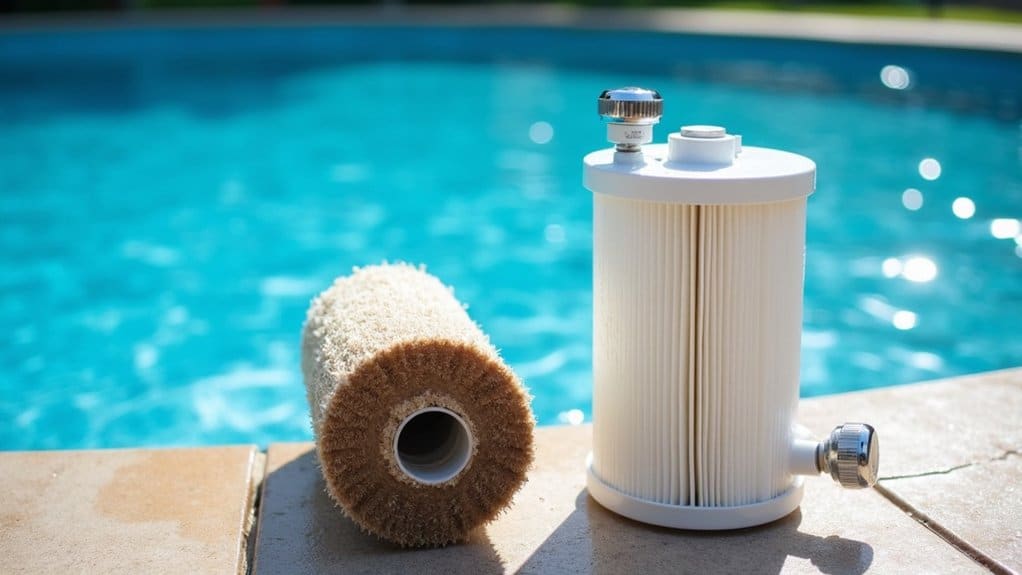
Beyond safeguarding your health, diligent filter maintenance delivers substantial financial returns by dramatically extending your equipment’s operational life. You’ll transform reduced operating expenses into meaningful savings while enabling smarter operational budget planning.
Diligent filter maintenance delivers substantial financial returns by extending equipment life and transforming reduced operating expenses into meaningful savings.
Routine maintenance shifts your costs dramatically:
- Regular cleaning extends filter lifespans from 2 3 years to 5 7 years, saving you $800 1,200 over five years
- Annual upkeep ($150 200) costs far less than emergency replacements ($500 800), protecting your capital reserves
- Smart monitoring systems ($1,000 upfront) reduce replacement intervals to every 4 5 years, lowering long-term expenditures
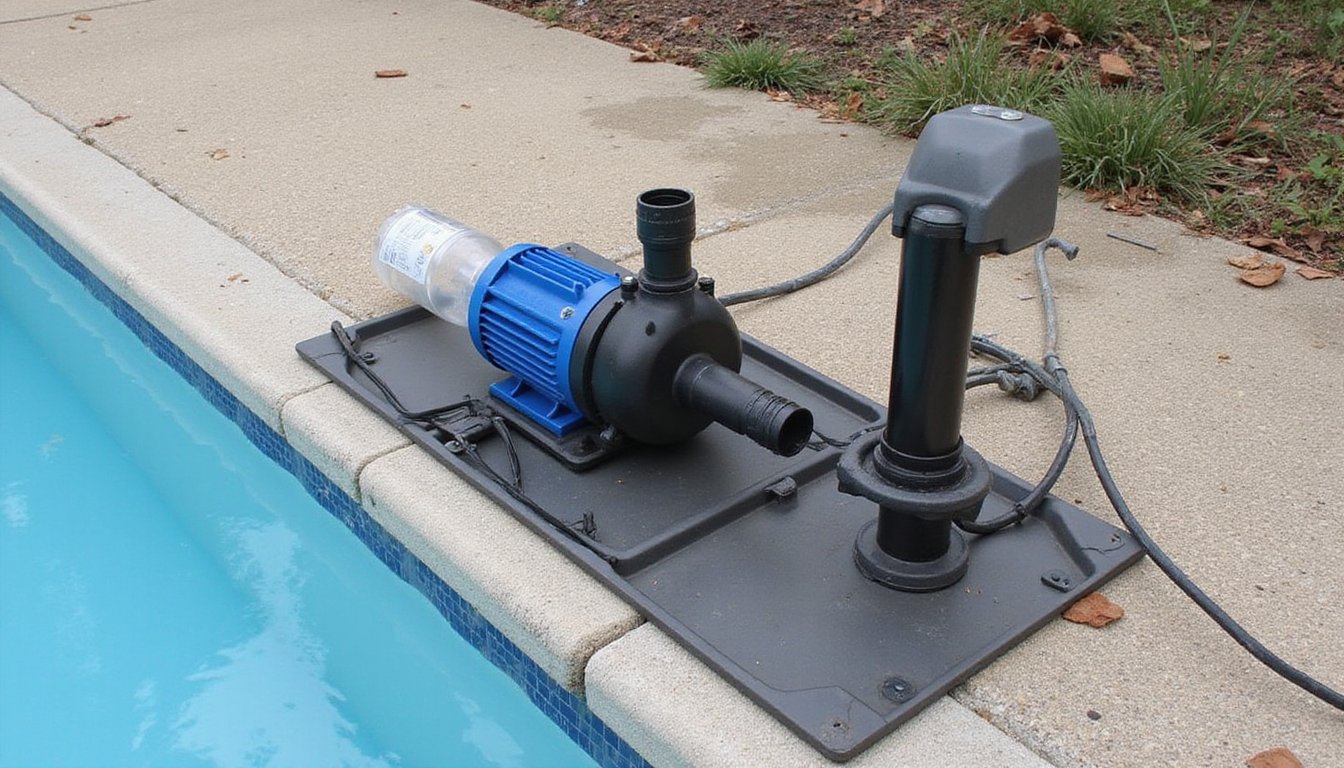
You’ll prevent catastrophic pump, heater, and chlorinator failures by maintaining balanced chemistry and consistent pressure checks. Proper backwashing protocols eliminate system strain, ensuring peak efficiency while avoiding costly burnout scenarios. Anticipating equipment needs through scheduled inspections allows you to budget strategically rather than react to unexpected breakdowns. Different filter types like sand filters and cartridge filters have varying replacement frequencies that should guide your maintenance schedule. Water chemistry imbalances like pH above 7.8 or high chlorine levels can make filter materials brittle and reduce their effectiveness significantly. Well-maintained pools require less frequent filter replacement, further reducing your long-term maintenance expenses.
Filtration Efficiency and Sustainability Practices
Maximizing the lifespan and cost-effectiveness of your pool equipment hinges on understanding how filtration efficiency directly impacts water clarity, pathogen removal, and overall system performance. You’ll achieve 90%+ contaminant removal by operating multiple turnover cycles, ensuring regulatory compliance and reducing chemical dosing optimization requirements. Modern 3-micron filtration technologies cut water usage by 66% compared to traditional sand filters, minimizing backwash waste and lowering replacement costs. You’ll also reduce pump energy consumption through lower pressure drops across optimized systems. By implementing finer micron ratings and maintaining proper filtration rates, you’re not just extending equipment life; you’re creating a sustainable operation that conserves water, reduces chemical dependency, and meets environmental standards while delivering superior water quality consistently. Facilities using ceramic filtration systems have reported annual electricity savings of £22,000 alongside substantial reductions in operational costs. Coagulants enable small particles to mass together, allowing the filtration process to remove contaminants that would otherwise pass through filter pores unchanged. The integration of smart filtration controls with automated systems transforms pool management by enabling real-time monitoring and optimization of filtration performance across both residential and commercial facilities.
Maintenance Schedules and Operational Reliability
Since superior filtration efficiency depends on consistent upkeep, you’ll need to establish a structured maintenance schedule tailored to your pool’s specific conditions and usage patterns. Routine inspections and pressure monitoring form the foundation of operational reliability.
You’ll prevent costly equipment failures by adhering to these evidence-based intervals:
- Backwash sand filters weekly or when pressure rises 8 10 psi above baseline
- Rinse cartridge filters every 2 4 weeks; replace every 2 3 years
- Backwash and recharge D.E. filters when pressure increases; deep clean every 4 8 weeks during swim season
Peak season demands increased cleaning frequency every 4 6 weeks across all filter types. Neglected maintenance causes poor circulation, decreased contaminant removal, and potential waterborne illness. You’ll recognize maintenance cues through high-pressure readings, cloudy water, and reduced return flow. Environmental factors such as storms and heavy rain can accelerate debris accumulation and require more frequent cleaning intervals. Inspecting O-rings and seals regularly will help you catch leaks before they compromise your system’s integrity. Proactive filter care directly prolongs pump and heater lifespan while maintaining system longevity.
Frequently Asked Questions
What Are the Warning Signs That My Pool Filter Needs Immediate Cleaning or Replacement?
You’ll notice dirty filter indicator lights illuminating on your gauge; this signals pressure buildup. Watch for excessive debris buildup circulating in your pool despite normal operation. You’ll experience reduced water flow from return jets and rapid pressure spikes above your baseline. If you’re backwashing frequently or detecting cloudy water persisting after chemical balancing, your filter’s declining. Don’t ignore these signs; prompt cleaning or replacement prevents costlier equipment damage and maintains water clarity.
How Do I Choose the Right Filter Type for My Specific Pool Size and Usage?
You’ll start by calculating your pool’s volume using shape-specific formulas: Length × Width × Depth × 7.5 for rectangular pools, or the round equivalents. Next, match your volume to filter sizing guidelines, sand filters suit pools under 20,000 gallons, while cartridge filters work for 15,000-gallon pools requiring 100 sq. ft. minimum surface area. For larger pools, you’ll select D.E. filters offering superior micron filtration. Your filter media selection depends on maintenance preferences and desired water clarity.
Can I Clean My Pool Filter Myself, or Should I Hire a Professional Service?
You can clean your filter yourself using DIY filter cleaning methods like backwashing sand filters or soaking cartridges in TSP solution. However, professional filter cleaning services offer thorough inspections and advanced techniques that catch wear issues early. Choose DIY if you’re budget-conscious and handy; opt for professionals if you prefer consistent results, chemical safety, and expert problem detection. Your filter type and pool usage ultimately determine which approach suits you best.
What Is the Average Cost of Replacing a Pool Filter, and How Often Is Replacement Needed?
You’ll spend $250 $1,700 replacing your pool filter, with the national average hitting $950. For filter replacement budgeting, expect sand filters every 5 7 years, cartridge filters every 2 5 years, and DE filters every 10 years. Filter lifespan estimates vary based on usage intensity and maintenance habits. You can reduce costs $50 $200 by handling installation yourself, though professional labor typically runs $50 $200.
How Does Weather and Seasonal Changes Affect Pool Filter Maintenance Requirements and Performance?
You’ll find that seasonal weather variations directly impact your filter’s performance and maintenance frequency. Summer heat accelerates algae growth, demanding weekly cleanings, while fall debris loads overwhelm your filter capacity usage. Spring pollen and winter freeze risks require adjusted schedules. You’ll need to monitor pressure gauges constantly, increase chemical monitoring during temperature swings, and winterize equipment in cold climates to prevent damage and maintain ideal water circulation year-round.