
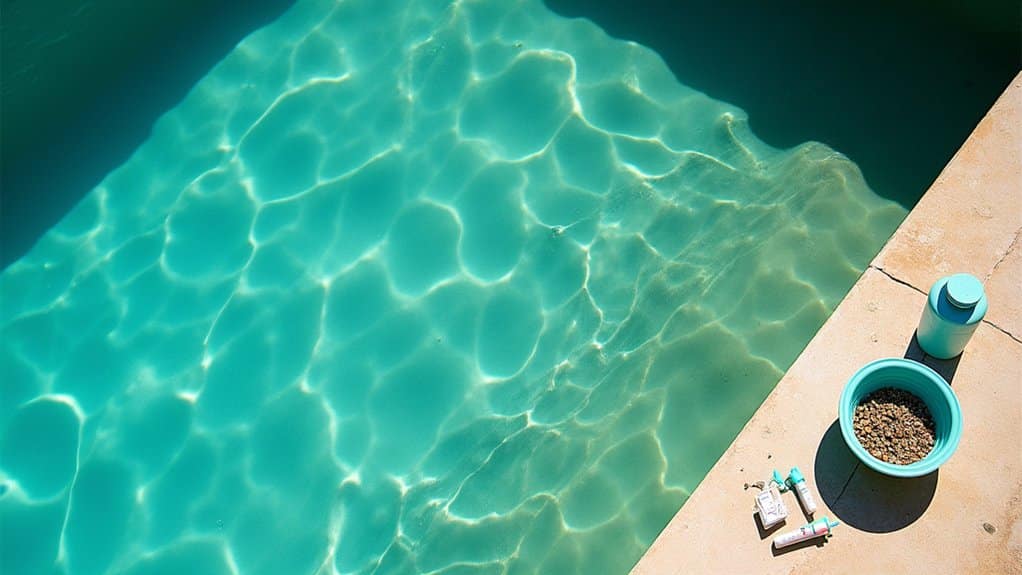
To choose pool equipment correctly, you’ll need to size every component as an integrated system not as isolated purchases. Start by calculating your pool volume (L × W × D × 7.5) to determine the required GPM and pump horsepower, then match a sand, cartridge, or DE filter that handles that flow rate. From there, align your sanitizer, heater, and cleaner type to your pool’s specific conditions. Below, we’ll break down each component so you can spec your system with confidence. To choose pool equipment correctly, you need to size every component as part of an integrated system rather than as isolated purchases. Start by calculating your pool volume (L × W × D × 7.5) to determine the required GPM and pump horsepower, then match a sand, cartridge, or DE unit that aligns with that flow rate an essential step in understanding how to choose a pool filter effectively. From there, coordinate your sanitizer, heater, and cleaner based on your pool’s specific conditions to ensure efficient, long-term performance.
How Your Pool Equipment Works as a System
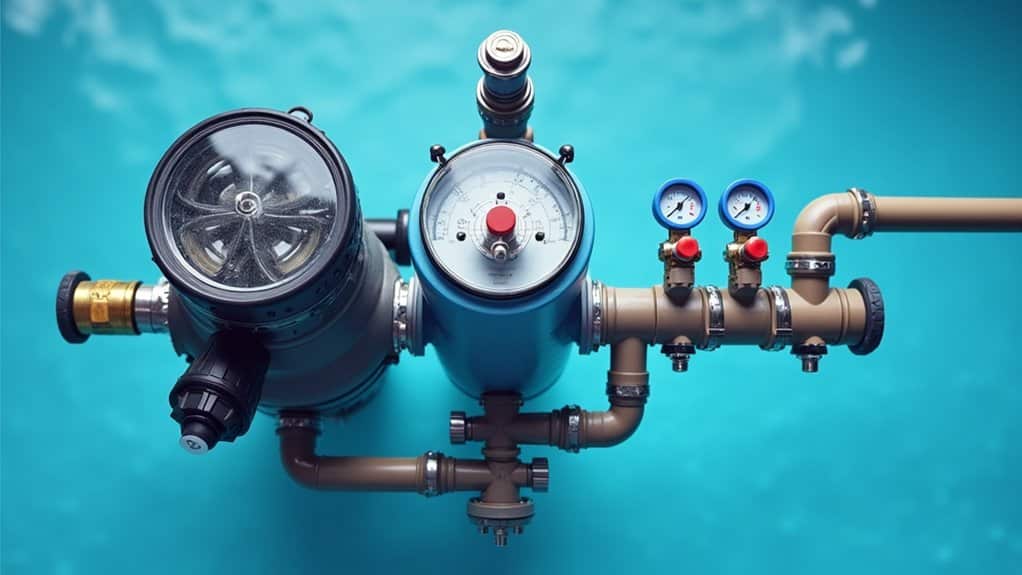
Your pool equipment operates as an integrated circulation system, not a collection of independent parts. Water flows through a specific sequence: skimmers and main drains pull water into suction lines, the pump drives it through the filter, then onward to the heater and sanitizer before return jets push clean water back into the pool. Skimmers are positioned at the water line and connected to the filtration system to effectively remove debris from the surface before it sinks.
Your pool filtration system sits at the core of this sequence. The pump acts as the system’s heart, creating suction that pulls water in and pressure that pushes it out. Sand, cartridge, or diatomaceous earth filters remove debris, bacteria, and fine particles. Heaters follow filtration, and chemical feeders come last before return lines. Understanding this flow path helps you select compatible components that maximize efficiency and performance. Because clean filtration supports better chemistry control over time, choosing the right filter type also directly influences how effectively your sanitizer and chemical feeders perform downstream. For pool owners looking to reduce manual maintenance, robotic cleaners like the Aquabot Pool Rover S2-40i can supplement your circulation system by independently scrubbing and vacuuming surfaces at an accessible price point.
Match Your Pool Pump to Your Pool Size
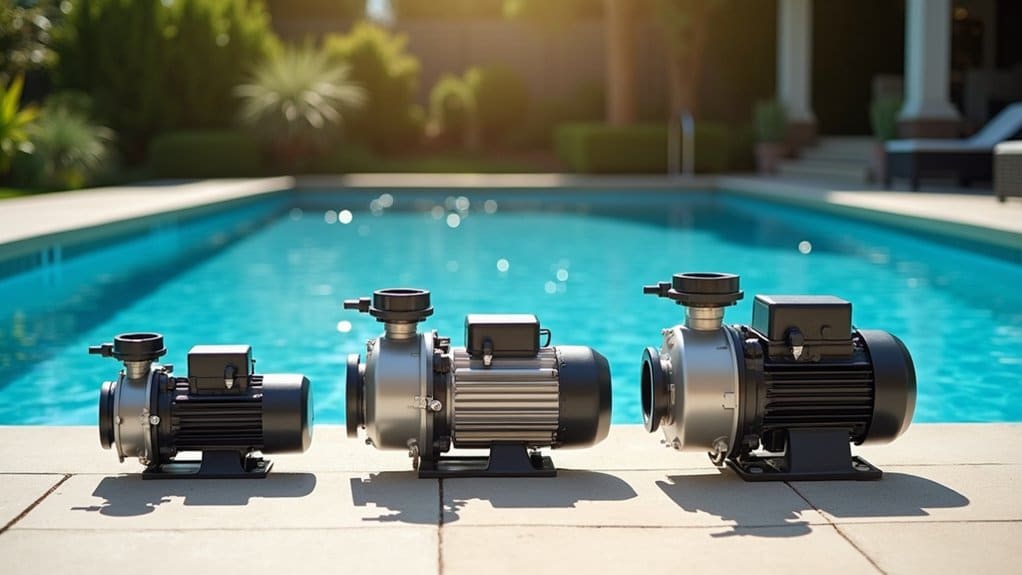
Five key variables determine whether your pump delivers efficient circulation or wastes energy fighting your plumbing: pool volume, turnover rate, flow rate (GPM), total dynamic head (TDH), and horsepower. Calculate your pool’s volume first a rectangular pool uses Length × Width × Depth × 7.5 for gallons. Then divide by your target turnover time (6 8 hours) and by 60 to find your required GPM.
For proper pool pump filter heater selection, match horsepower to volume: 0.75 1 HP handles 6,000 10,000 gallons, while 20,000 30,000+ gallon pools need 2 3 HP. Add 20% extra capacity on TDH calculations for reliability. Your pump’s GPM must never exceed your filter’s maximum rated flow. Oversized high-head pumps consume excess wattage and reduce overall system efficiency.
Sand, Cartridge, or DE: Pick the Right Pool Filter
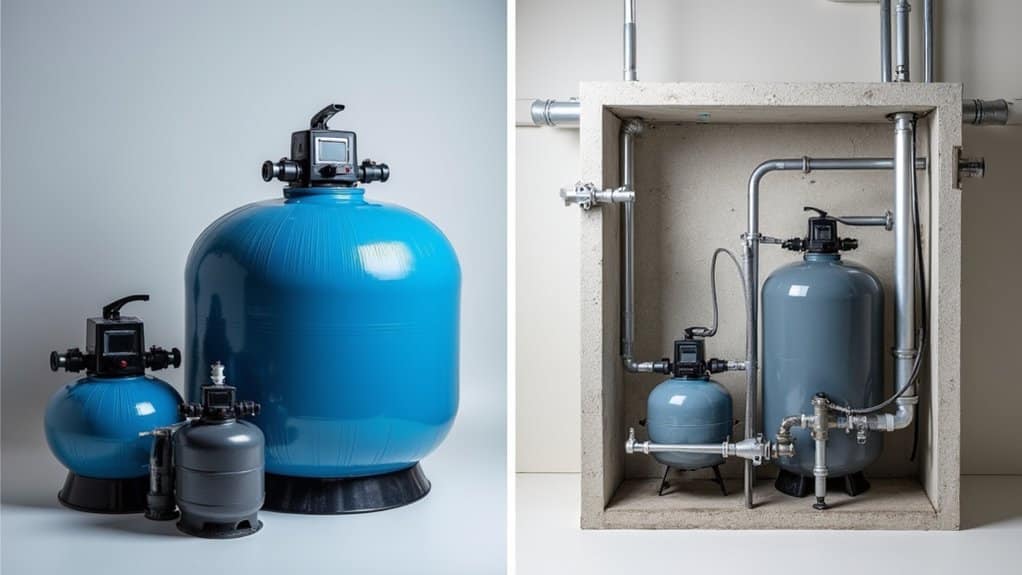
How effectively your pool filter removes debris depends entirely on which filtration technology you select sand, cartridge, or DE each operating at a distinct micron threshold.
| Filter Type | Micron Rating | Best For |
|---|---|---|
| Sand | 20 40 microns | Large pools, budget buyers |
| Cartridge | 10 20 microns | Water conservation, spas |
| DE | 3 5 microns | Fine debris, problem water |
In any pool equipment buying guide, you’ll find DE filters deliver the finest filtration down to 1 micron but require powder replenishment after each backwash. Cartridge filters don’t need backwashing at all, saving thousands of gallons annually. Sand filters offer the lowest upfront cost with sand replacement only every 3 5 years. Your pool’s volume, local debris conditions, and maintenance tolerance should drive your selection.
Pick a Pool Water Treatment System You’ll Stick With
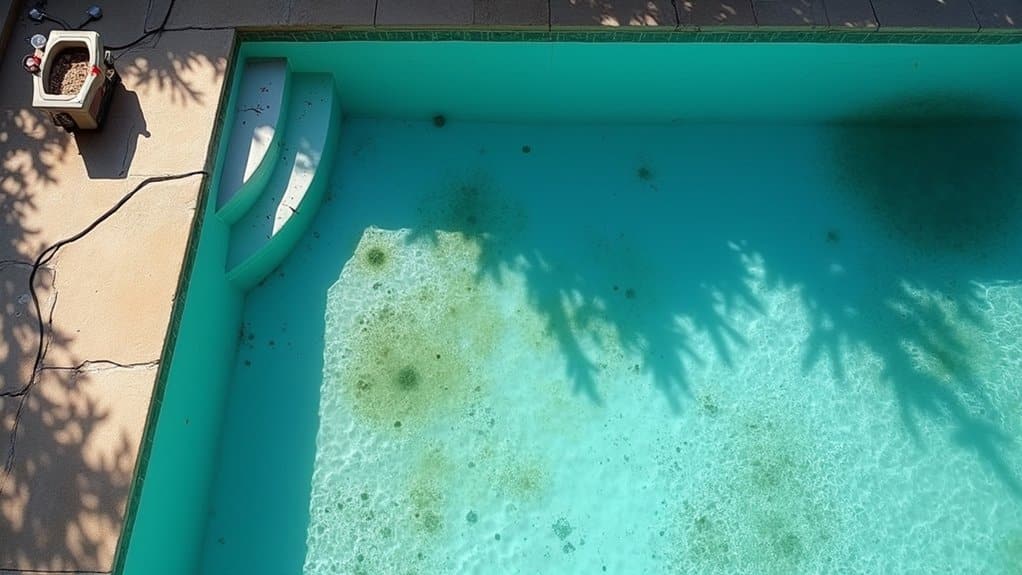
Once you’ve matched your filter to your pool’s debris load, the next decision water treatment determines your day-to-day chemical management and long-term operating costs. Each pool water treatment system carries distinct tradeoffs in sanitation speed, maintenance demand, and swimmer comfort.
Chlorine systems remain the most accessible, destroying contaminants effectively across pool types. Saltwater chlorinators automate sanitation through electrolysis, producing hypochlorous acid with less irritation. Ozone generators oxidize pathogens 3,500 times faster than chlorine but lack residual protection. Bromine stays stable in warm water, making it ideal for spas and hot tubs.
Hybrid configurations UV paired with low-dose chlorine, or mineral systems reducing chlorine demand by 50% offer flexibility. Match your choice to your maintenance tolerance, climate exposure, and budget for consistent, long-term results.
Gas Heaters vs. Heat Pumps for Your Pool
Because pool heating represents one of the largest ongoing energy expenses in your equipment budget, the choice between gas heaters and heat pumps directly shapes both upfront costs and long-term operating efficiency. When evaluating gas heaters vs. heat pumps for your pool, consider these critical specifications:
- Heat pumps achieve a COP of 5.0 6.5, while gas heaters deliver only 0.8 0.95
- Gas heaters cost $3.00 $9.00/hour to operate versus $0.63/hour for heat pumps
- Heat pumps last 10 15 years; gas heaters average 5 10 years
- Gas heaters perform in any ambient temperature, whereas heat pumps lose efficiency below 50°F
- Heat pumps paired with solar panels deliver 100% renewable heating at minimal cost
Select based on your climate, usage frequency, and budget priorities.
Robotic vs. Suction vs. Pressure-Side Pool Cleaners
When selecting a pool cleaner, you’ll compare three distinct technologies robotic, suction-side, and pressure-side each with fundamentally different operating mechanisms and performance characteristics. Energy efficiency varies dramatically across these categories, with robotic models consuming just 100-200 watts per hour compared to pressure-side systems requiring 700-1,000-watt booster pumps, translating to significant long-term cost differences. Your pool’s size, debris load, and surface type will ultimately determine which cleaner delivers the best combination of coverage, filtration quality, and total cost of ownership.
Cleaner Types Compared
How effectively a pool cleaner performs depends largely on its motor technology, navigation capability, and independence from existing pool infrastructure. When evaluating pool maintenance equipment, you’ll find distinct performance tiers across all three cleaner types.
- Robotic cleaners use low-voltage DC motors consuming nearly 10 times less power than AC-driven alternatives, achieving 87% greater efficiency
- Pressure-side cleaners handle large debris like leaves and acorns but lack fine filtration and wall-cleaning capability
- Suction-side cleaners are limited to bottom cleaning and can’t address walls or waterlines
- Navigation systems in robotic units map your pool’s layout, creating systematic cleaning routes instead of random wandering
- Premium robotic models feature three DC motors delivering commercial-grade scrubbing power compared to standard one or two motor configurations
You’ll maximize coverage and minimize energy costs by matching cleaner type to your pool’s specific demands.
Energy and Efficiency
Although all three cleaner types get the job done, their energy profiles differ dramatically and those differences compound into hundreds of dollars annually. Robotic cleaners consume 150 300W per cycle, translating to just 197 kWh annually per PG&E data. Suction cleaners pull 1,675 kWh yearly, while pressure-side units top out at 2,989 kWh driven largely by 2,000 3,000W booster pumps.
If you’re prioritizing energy efficient pool equipment, robotics deliver 85 90% savings over conventional systems. The Dolphin E10, for example, runs at 180W with an annual cost of roughly $58. Compare that to pressure-side units costing $432 $864 yearly. Brushless DC motors and smart navigation technology drive this efficiency, eliminating pump dependency entirely. You’ll typically recoup the robotic cleaner’s purchase price within 5 12 months through electricity savings alone.
Best Pool Fit
Energy costs tell only part of the story matching a cleaner to your pool’s size, surface type, and debris load determines whether you’ll get reliable, thorough cleaning or constant frustration. When selecting pool equipment for inground pools, consider how each cleaner type handles your specific conditions.
- Robotic cleaners map your pool’s layout, scrub floors, walls, and waterline methodically achieving 87% higher efficiency than alternatives.
- Suction-side units vacuum floors only, using random movement patterns that miss walls and fine silt entirely.
- Pressure-side models excel at collecting large debris like leaves and acorns but skip fine particles and lack scrubbing capability.
- Navigation technology in robotic models eliminates the aimless wandering that pressure and suction cleaners rely on.
- DC-powered robotic motors deliver commercial-grade cleaning without straining your existing pump or filtration system.
Best Pool Equipment Brands and What They Do Best
When you’re investing in pool equipment, knowing each brand’s core strengths helps you match the right manufacturer to your specific needs. Among the best pool equipment brands, Pentair leads in variable-speed innovation, Hayward delivers reliable salt chlorination, and Jandy dominates smart automation. Here’s how they compare:
| Brand | Core Strength | Standout Feature |
|---|---|---|
| Pentair | Variable-speed pump technology | IntelliFlo VS with 24/7 monitoring |
| Hayward | Reliable filtration and chlorination | TriStar VS 900 30% quieter operation |
| Jandy | Smart automation and remote control | iAquaLink platform with smart home integration |
Fluidra’s global reach strengthens commercial applications, while Zodiac/Polaris excels in automated pool cleaners. Each brand’s specialization means you’ll optimize performance by selecting equipment aligned with your pool’s primary demands.
Frequently Asked Questions
How Much Does It Cost to Run Pool Equipment Monthly?
You’ll typically spend $80 $260 monthly on pool equipment operation. Your pump drives the biggest cost variable-speed models run $30 $50/month, while single-speed units hit $75 $150. Heat pumps add $50 $250 depending on usage. You’ll also budget $30 $70 for chemicals and $15 $50 for cleaning supplies. Running your pump at least eight hours daily greatly impacts electricity bills. Pool size, climate, and feature upgrades like lighting directly influence your total operating expenses.
Can I Install Pool Equipment Myself or Need a Professional?
You can handle many pool equipment installations yourself, including pumps, filters, and plumbing connections using Schedule 40 PVC, flex hose, and standard fittings. You’ll need a pipe cutter, PVC cement, purple primer, Teflon tape, and union fittings for serviceable connections. However, you should hire a licensed professional for electrical wiring, heater installations, and automation systems that require code compliance. Always dry-fit components before gluing and follow manufacturer specifications for proper equipment pad sequencing.
How Often Should Pool Equipment Be Replaced or Upgraded?
You should replace sand filters every 5 7 years, cartridge filters every 2 4 years, and DE filters every 8 10 years. Pumps typically last 6 15 years, while gas heaters run 5 10 years and heat pumps 10 20 years. You’ll want to upgrade when repair costs exceed 50 60% of replacement price, energy bills spike noticeably, or you’re experiencing decreased flow, unusual noises, or frequent breakdowns within a single year.
What Pool Equipment Is Best for Harsh Winter Climates?
For harsh winter climates, you’ll want freeze protection devices like Pentair IntelliCenter, which monitors air temperature and activates pumps and heaters automatically to prevent ice formation. You should install solid or mesh winter covers to block debris and reduce heating costs, use air pillows to break up ice sheets, and seal plumbing with winter plugs after blowing out lines. Don’t forget to drain pumps completely and store booster pumps indoors to avoid frost damage.
Are Smart Pool Automation Systems Worth the Extra Investment?
Yes, smart pool automation systems are absolutely worth the extra investment. You’ll cut energy consumption by up to 85% with variable-speed pump integration and reduce chemical waste by 70% through automated pH and chlorine adjustments. Most systems pay for themselves within 2-4 years. You’ll also get mobile app control, voice assistant compatibility with Alexa and Google Home, and predictive maintenance alerts that reduce unexpected breakdowns by 85%.