
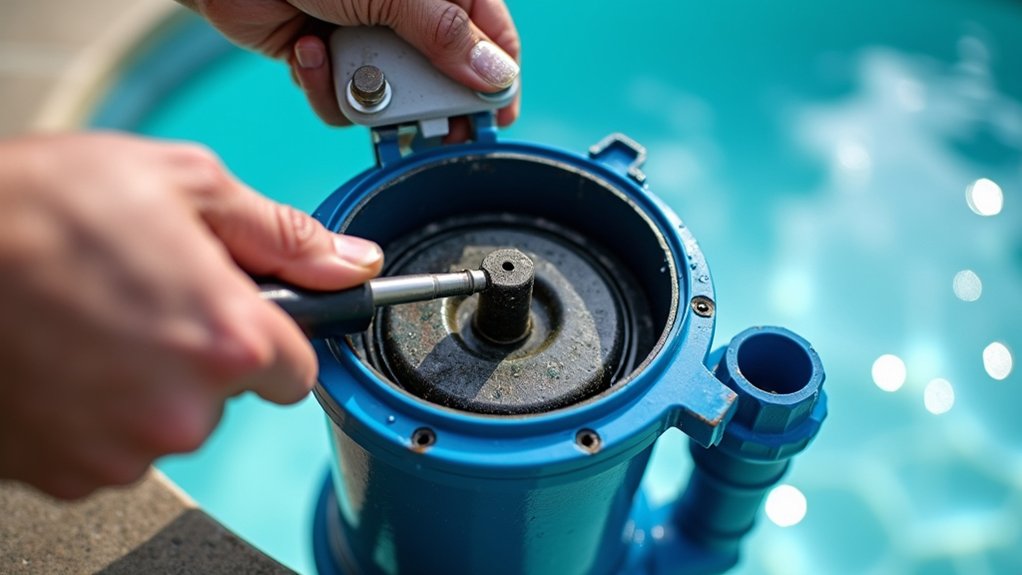
Pool algae falls into four distinct types green, yellow (mustard), black, and pink each requiring a targeted elimination protocol. You’ll need to identify the specific strain first, since black algae’s protective polysaccharide shell won’t respond to standard chlorine shock the way green algae does. Common causes include chemical imbalance, poor circulation, and phosphate buildup. Each type has a unique resistance profile, and understanding those differences below will help you eliminate algae permanently.
How to Identify the Type of Algae in Your Pool
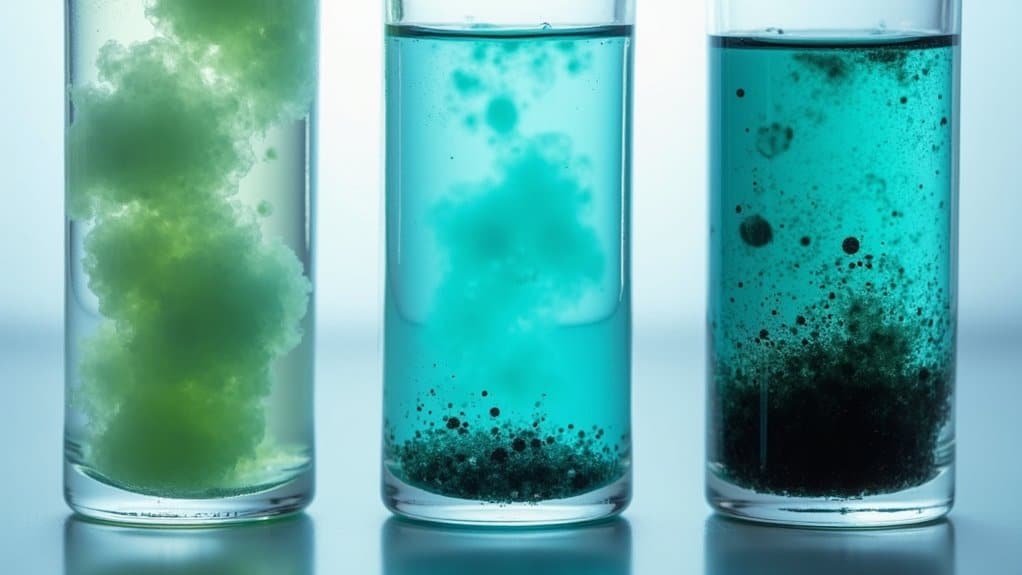
How quickly can you tell what’s actually growing in your pool? Start by running your hand along submerged surfaces sliminess confirms biological growth. Next, identify the color. Yellowish-brown dust on shaded walls indicates mustard algae, while dark black dots embedding into plaster signal black algae. Pink slime on plastic fixtures points to bacterial colonization, not true algae.
Understanding pool algae types determines your next steps. Brush the affected area: mustard algae dislodges easily, but black algae expands due to root-like structures beneath protective layers. Green algae pool contamination typically presents as free-floating cloudiness or surface film. Since green algae is the most common variety, it can spread rapidly across pool surfaces and walls if left untreated. cloudy pool water fix involves using clarifiers and appropriate chemicals to restore water clarity. Regular maintenance and ensuring proper circulation can prevent cloudiness from returning. Monitoring pH levels and chlorine concentrations are also essential for a healthy, inviting swimming environment. One common issue that can arise during pool maintenance is the pool pump not priming, which can disrupt water circulation and lead to further issues like algae growth. If you notice your pump isn’t priming, it’s crucial to check for air leaks in the system or ensure that the water level is sufficient for proper operation.
Each organism demands targeted pool algae treatment. Don’t mistake mustard algae for pollen or sand it recurs on equipment. Check low-circulation zones first, as stagnant water accelerates colonization across all varieties. Beyond visual checks, routine water testing can reveal low chlorine, high phosphate, and pH imbalances that confirm conditions favoring specific algae growth. Pink algae is often linked to excessive phosphates in pool water, making phosphate level management a critical part of prevention.
Green Pool Algae: The Most Common and Fastest Spreading
Among all pool algae types, green algae (*Chlorophyta*) ranks as the most common and the fastest spreading making it the first variety you’re likely to encounter after identifying biological growth in your water. With over 21,000 known varieties, green pool algae replicates every 3 6 hours under ideal conditions, turning your pool into a “pea soup” bloom within days.
This photosynthetic organism exploits failures in pool water sanitation specifically low chlorine residuals, poor circulation, and heightened nitrogen or phosphate levels from rain runoff and swimmer waste. You’ll notice slippery green layers on walls, floors, and low-flow zones.
Effective algae prevention pool strategies require maintaining consistent sanitizer levels, optimizing filtration runtime, and eliminating nutrient sources before spores establish.
Yellow Pool Algae: The Stubborn Strain That Keeps Coming Back
Yellow algae’s chlorine-resistant compounds allow it to survive standard sanitizer levels, so it reestablishes itself quickly if you don’t eliminate it with aggressive, targeted treatment. To eradicate it, you’ll need to brush all affected surfaces vigorously, then shock your pool to breakpoint chlorination levels while applying a yellow algae specific activator like Yellow Treat. After treatment, retest your water chemistry within 24 hours and repeat the process if any traces persist, since even small surviving colonies will regenerate rapidly.
Why It Keeps Returning
Even after you’ve treated your pool and restored water clarity, mustard algae often reappears within days and its biology explains why. This mustard algae pool strain resists standard chlorine levels and lies dormant on surfaces you’d never suspect. Maintaining pool chemical balance alone won’t solve persistent algae problems in pools if reintroduction vectors remain unaddressed.
Common reasons mustard algae returns:
- Contaminated equipment: Spores transfer via toys, floats, swimsuits, and covers stored in damp conditions.
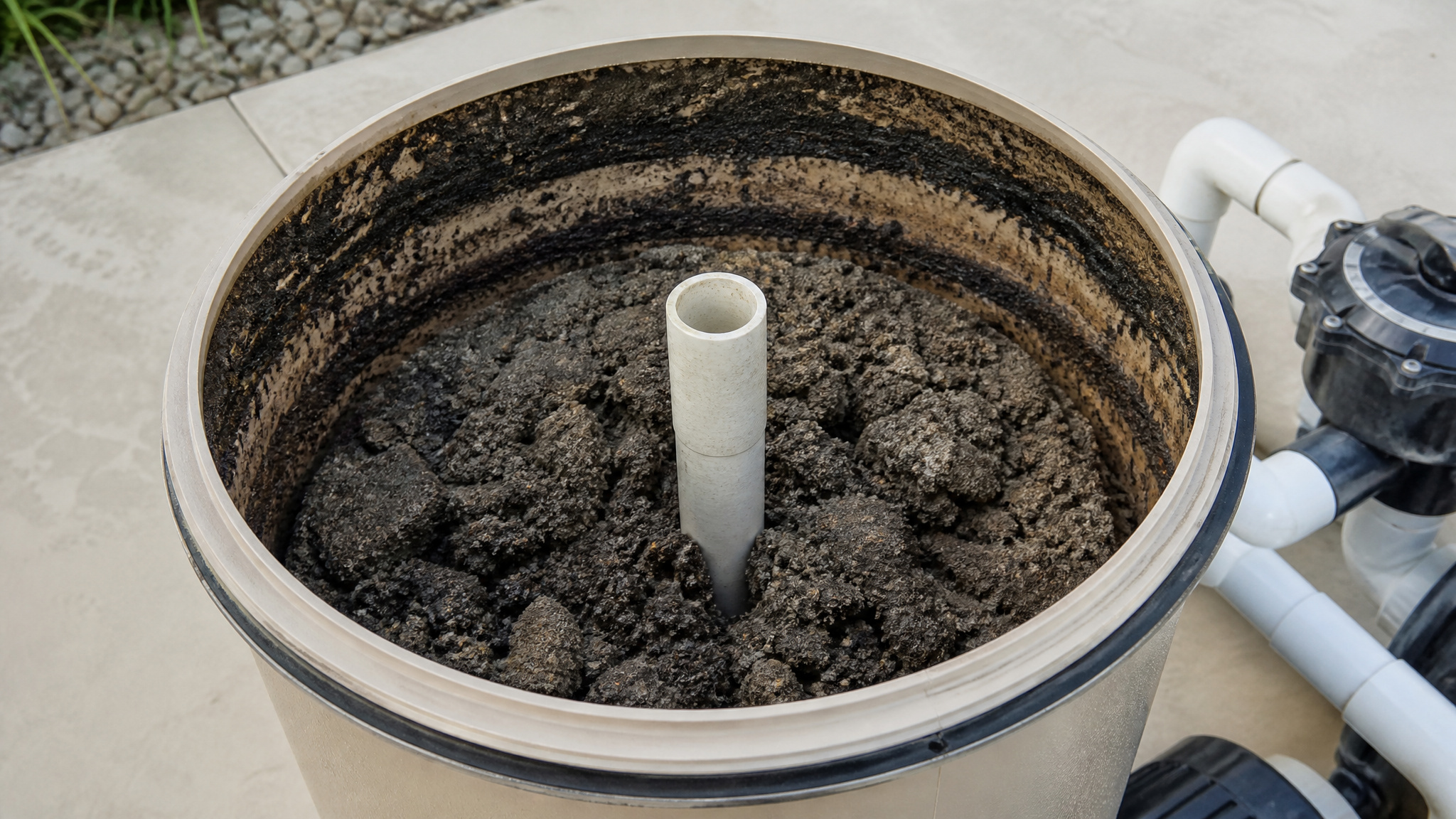
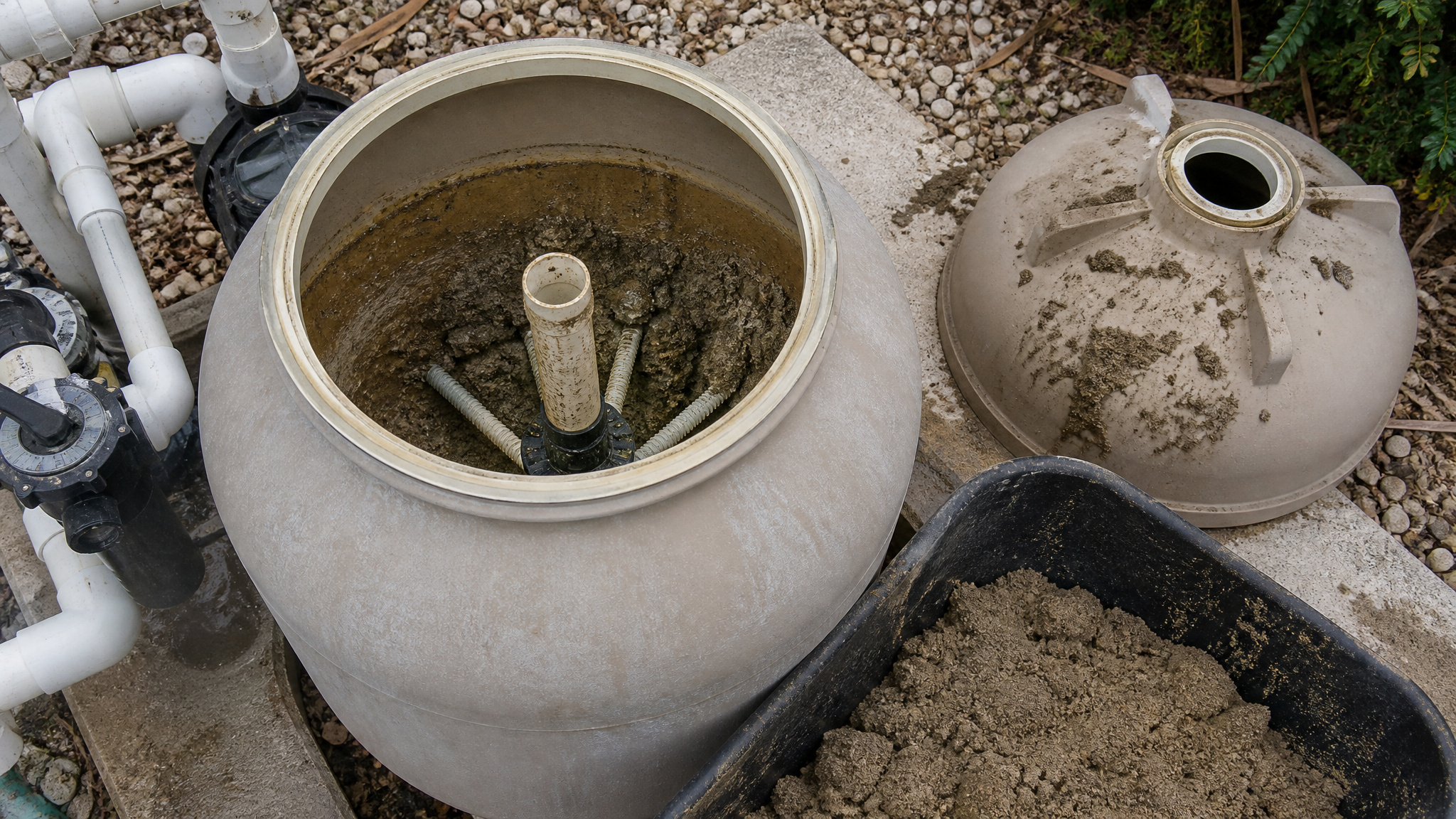
- Compromised filtration: Clogged or degraded filter media embeds and recirculates spores.
- Inadequate circulation: Dead zones in shaded corners and steps foster localized regrowth.
- Environmental triggers: Rapid temperature shifts and rain reintroduce wind-borne spores.
- Insufficient post-treatment filtration: Running pumps under eight hours fails to capture residual particles.
Effective Treatment Strategies
Five critical phases preparation, brushing, chemical treatment, shocking, and follow-up maintenance form the backbone of an effective mustard algae elimination protocol. You’ll start by balancing pH to 7.2 7.4, cleaning your filter, and running the pump continuously throughout treatment.
Next, brush all surfaces with the appropriate bristle type to break algae’s grip, then vacuum to waste. Apply Yellow Out at 2 pounds per 15,000 gallons, followed by triple hyperchlorination at 12-hour intervals using Power Powder Plus 73. This aggressive approach mirrors strategies used against black algae pool infestations, where chlorine resistance demands repeated dosing.
Once FAC drops below 5.0 ppm, add clarifier and vacuum remaining debris. Consistent pool cleaning maintenance weekly algaecide, sustained 4 ppm chlorine, and regular brushing prevents mustard algae’s notorious return.
Black Pool Algae: Deep-Rooted and Hardest to Kill
Although green and yellow algae respond to standard shock treatments, black algae presents an entirely different challenge because it isn’t actually algae at all. It’s cyanobacteria photosynthetic prokaryotes that form tightly bound, multi-layered colonies protected by a chlorine-resistant polysaccharide shell. This biofilm shields the organism from standard sanitizers, making conventional treatment ineffective.
You’ll identify black algae by its distinct characteristics:
- Appears as dark, pin- to quarter-sized spots rather than broad films
- Anchors into porous surfaces like plaster, resisting standard brushing
- Recurs persistently in fixed locations with poor circulation
- Contains masking compounds that create its characteristic dark blue-green color
- Nitrogen-fixing genera produce their own nutrients, bypassing phosphate removal strategies
You can’t treat black algae like conventional algae it demands targeted, aggressive intervention protocols.
Pink Pool Algae: The Bacterial Imposter
| Threat Factor | What’s Happening | Your Action |
|---|---|---|
| Biofilm shield | Bacteria resist chlorine penetration | Brush surfaces before superchlorinating |
| Low circulation | Crevices harbor bacterial colonies | Run your filter 24 hours continuously |
| Organic fuel | Oils and phosphates feed growth | Apply enzyme cleaners to break down contaminants |
Don’t use standard algaecides they’re ineffective against bacteria. Instead, superchlorinate, chemically clean your filters, and sanitize all removable equipment. Maintain balanced pH and alkalinity to prevent recurrence.
What Causes Pool Algae to Grow and Spread?
When your pool’s defenses break down, algae seize the opportunity and multiple factors often converge to trigger rapid growth. You’ll need to identify and address each contributing cause to prevent recurring blooms.
- Chemical imbalance: Unbalanced pH, chlorine, and alkalinity levels create conditions where algae thrive unchecked.
- Poor circulation: Stagnant zones from inadequate pump runtime let algae settle and colonize surfaces.
- Inadequate filtration: Dirty or malfunctioning filters can’t remove spores, giving algae a foothold.
- Nutrient presence: High phosphates, nitrates, and organic debris fuel algae reproduction.
- Environmental factors: Warm temperatures, direct sunlight, and wind-carried spores accelerate growth.
You should test your water every few days, run your pump for one full water cycle daily, and remove foliage debris promptly to eliminate algae-friendly conditions.
How to Treat Each Type of Pool Algae
Once you’ve identified the type of algae in your pool, you can apply the targeted treatment protocol that matches its specific resistance profile and growth pattern. Green algae responds to standard superchlorination and filtration, but black algae requires aggressive mechanical removal combined with spot chemical applications to penetrate its protective layers. Yellow and pink varieties demand specialized algaecides and repeated treatment cycles to prevent recurrence in low-circulation zones.
Green Algae Treatment Steps
Tackle green algae early it reproduces every 3 6 hours, so delays let a minor bloom escalate into a full-scale infestation. Before treating, balance your water chemistry: pH 7.2 7.6, alkalinity 80 120 ppm, and calcium hardness 200 400 ppm.
Follow these eradication steps in sequence:
- Brush all pool surfaces vigorously to break up slime and expose algae to chemicals.
- Shock the pool with 10 30 ppm chlorine to destroy active algae cells.
- Apply a targeted algaecide weekly to eliminate residual spores.
- Run your filter 24 hours daily until the water clears completely.
- Vacuum dead algae debris after 24 48 hours of continuous filtration.
If a green tint persists, repeat the shock treatment. Clean your filter media after resolution to restore peak performance.
Eliminating Stubborn Black Algae
Black algae presents a far greater challenge than green algae its colonies form a hard protective shell and send roots deep into porous surfaces like plaster, concrete, and gunite, making it resistant to standard chlorine levels and conventional scrubbing.
To treat it, you’ll need a wire or stiff-bristle algae brush to break through the protective jacket. Scrub all visible spots aggressively before applying chemicals. Add 1.5 quarts of Metal Control per 10,000 gallons, followed by 12 ounces of Super Black Algaecide per 10,000 gallons. For targeted removal on walls, use a Spot Kill formulation.
Brush affected areas daily until no traces remain. Early detection shortens treatment timelines considerably the longer black algae persists, the deeper it embeds. Don’t swim until the pool tests completely algae-free.
Yellow And Pink Remedies
Although black algae demands the most aggressive physical removal, yellow (mustard) algae and pink algae each require their own targeted chemical protocols to achieve full eradication. Yellow algae forms a protective coating that resists standard chlorine levels, so you’ll need specialized algaecides like Yellow Treat®2 to penetrate that barrier.
Apply your treatment using these steps:
- Brush all surfaces with appropriate brushes before chemical application
- Apply Yellow Out® at 2 pounds per 15,000 gallons directly to the pool
- Shock with chlorine powder five minutes after algaecide introduction
- Sanitize all equipment, toys, and bathing suits using a 1:1 water-to-bleach solution
- Run continuous filtration for 24 hours post-treatment via the main drain
Maintain free available chlorine at 4 ppm until elimination’s confirmed through daily testing.
Daily Habits That Prevent Pool Algae From Growing
Because algae thrive on neglect, establishing consistent daily maintenance habits is your most effective defense against growth before it starts. Skim your pool’s surface daily to remove leaves, insects, and organic debris that decompose into algae nutrients. After rainfall or heavy use, skim immediately to restore clarity and reduce spore food sources.
Test your pH daily, maintaining a 7.4 7.6 range, and keep chlorine levels between 1 3 ppm to inhibit algae proliferation. Run your pump 8 12 hours daily to guarantee full water turnover, even chemical distribution, and elimination of stagnant zones. Brush walls, steps, and corners weekly using nylon brushes for vinyl or stainless steel for concrete to dislodge early spore attachment. Shock weekly in the evening, then vacuum dead spores to maintain sanitizer effectiveness.
Why Pool Algae Comes Back and How to Break the Cycle
Even when your pool water appears crystal clear after treatment, algae spores can persist in porous surfaces, filter media, and chemical dead zones ready to recolonize the moment conditions shift in their favor. Addressing common pool problems and solutions is essential for maintaining a healthy swimming environment. Proper filtration and regular shock treatments can significantly reduce the chances of algae regrowth.
To break the cycle, address these root causes simultaneously:
- Reduce CYA levels below 50 ppm so chlorine remains bioavailable against spores.
- Run your pump 24 hours during active treatment to eliminate stagnant dead zones.
- Brush porous gunite surfaces thoroughly before shocking to expose embedded algae.
- Deep-clean or replace filter media post-treatment to purge trapped spores.
- Test phosphates quarterly and treat when levels exceed 500 ppm to starve regrowth.
You won’t eliminate recurring algae by shocking alone. Target the underlying conditions nutrient loads, circulation gaps, and incomplete surface treatment to prevent recolonization permanently.
Frequently Asked Questions
Can Pool Algae Make Swimmers Sick or Cause Skin Infections?
Yes, pool algae can make you sick and cause skin infections. Green algae harbor bacteria that lead to rashes, skin breaks, and eye infections. If you ingest contaminated water, you’ll risk fever, diarrhea, and gastrointestinal symptoms. Cyanobacteria produce toxins causing respiratory problems and liver damage. You should rinse immediately with warm water and soap after exposure, maintain proper sanitizer levels, and contact your doctor if you develop rashes, vomiting, or fever.
Does Saltwater Pool System Prevent Algae Better Than Traditional Chlorine Pools?
A saltwater system doesn’t prevent algae better than a traditional chlorine pool both produce chlorine to combat algae growth. However, you’ll benefit from a saltwater pool’s consistent, automated chlorine output, which reduces gaps in sanitation. With a chlorine pool, you can deliver rapid high-dose shock treatments to eliminate outbreaks faster. Ultimately, you’ll need regular brushing, proper chemical balance, and routine maintenance in either system to effectively prevent algae.
How Long Should You Wait to Swim After Treating Pool Algae?
You should wait 8 24 hours after shock-treating pool algae before swimming. If you’ve applied a standard algaecide alone, you’ll typically need only 15 30 minutes. However, don’t rely solely on wait times test your water first. Confirm free chlorine has dropped to 1 4 ppm and pH reads 7.2 7.6 before entering. Run your pump continuously during treatment for even chemical distribution, and always follow the manufacturer’s specific product instructions.
Can Algae Damage Pool Equipment Like Pumps, Heaters, or Filters Over Time?
Yes, algae can greatly damage your pool equipment over time. It clogs your filters, reducing water pressure and disrupting chemical balance. Algae-related chemical imbalances corrode your pipes, metal clamps, and rubber components from the inside out. Your pump accumulates spores and debris, leading to motor failures and circulation dead zones. Heaters also suffer, as contaminated water causes mineral deposits and scaling. You’ll need to address algae immediately to prevent cascading equipment failures.
Is It Safe to Drain Your Pool Completely to Remove Severe Algae?
You shouldn’t fully drain your pool to treat severe algae. Complete draining risks vinyl liner relaxation, fiberglass structural damage (follow the one-third drain rule), and pump prime loss. Instead, you’ll get better results by shocking with liquid sodium hypochlorite, brushing vigorously, and running your filter 24 hours post-treatment. If you must partially drain, use a submersible pump and hose walls continuously to prevent dried algae from baking onto surfaces.