
You’ll maximize night swimming safety with white light, which highlights edges and hazards effectively. Blue creates tropical ambiance for entertainment, while yellow and red LEDs deter insects by 40-80% through wavelengths outside their visual spectrum. Orange and pink lights enhance water contrast for faster swimmer detection while reducing stress. Green penetrates water effectively for lagoon aesthetics. Each color serves distinct safety and enjoyment purposes, and discovering which combination suits your pool’s specific needs reveals surprising advantages.
White Light for Maximum Visibility and Safety
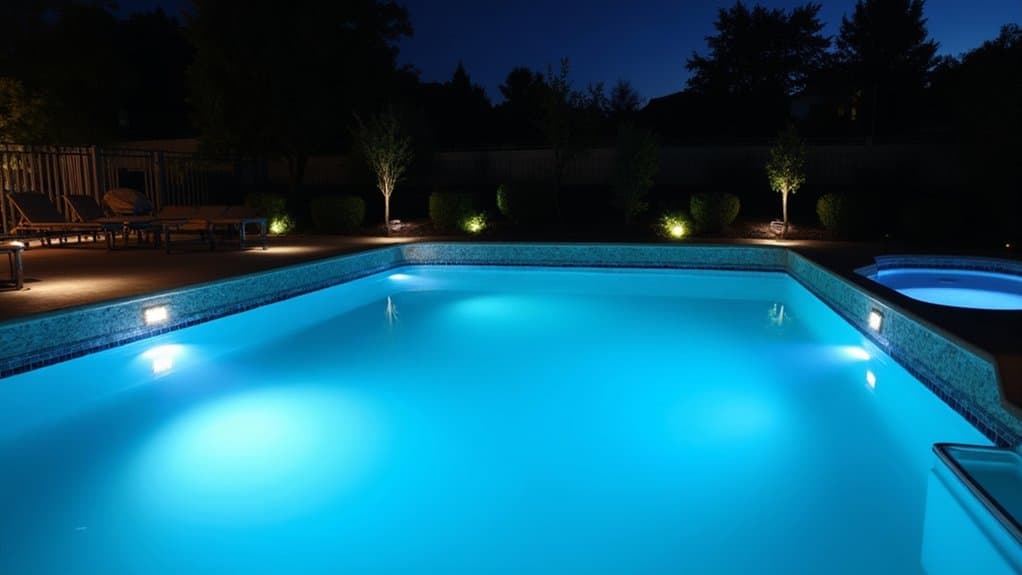
When you’re designing pool lighting for safety, white light stands as the gold standard because it delivers unmatched visibility across all critical zones. You’ll immediately notice superior contrast that highlights pool edges, steps, and underwater hazards essential for detecting toys or debris quickly.
LED white fixtures provide efficient energy use while maintaining low operating temperatures, reducing burn and overheating risks. You should choose low-voltage (12V) systems over traditional 120V alternatives; they considerably lower electrocution risk and improve overall electrical safety. Ensure that light cord wires run properly in conduit from the light niche to the junction box to prevent hazardous exposure. Regular maintenance of all lighting fixtures ensures they continue functioning optimally and maintain safety compliance. Qualified electricians should inspect underwater lights to ensure proper and safe installation according to local electrical codes.
Strategic placement in deep areas, entry zones, and perimeters guarantees uniform coverage without shadows. You’ll enhance supervision capabilities, enabling rapid incident detection. Pair underwater illumination with poolside lighting for thorough layered protection. Select UL-listed plastic fixtures with GFCI protection and schedule routine maintenance checks to maintain peak performance and safety compliance.
Blue Light for Tropical Ambiance and Evening Entertainment
Because blue LED lighting effectively mimics natural water and ocean environments, it’s become the preferred choice for pools targeting resort-style aesthetics and enhanced evening entertainment.
Blue LEDs deliver enhanced mood and relaxation through physiological responses lowering heart rate and blood pressure during nighttime use. The color’s versatility for social events shines through color-changing systems that sync with music, enabling custom light shows for gatherings. You’ll experience less eye strain than brighter alternatives, supporting extended poolside entertainment comfortably. Smart lighting systems allow remote control of these color-changing features through smartphone apps, making it convenient to adjust the ambiance throughout your evening events. LED systems maintain consistent brightness and color quality throughout their 25,000 to 50,000 hour lifespan, ensuring reliable performance for years of evening entertainment. Fibre optic lights offer an energy-efficient alternative that transmits light through optical fibres for versatile underwater and perimeter applications.
Key advantages:
- Reduces glare while maintaining adequate visibility for recreational swimming
- Consumes 80% less energy than traditional halogen systems
- Supports circadian-friendly winding down compared to stimulating warm tones
- Prevents shadowed zones through even light dispersion
Blue lighting transforms typical pools into immersive retreat spaces without compromising safety or comfort.
Yellow Light for Bug Deterrence and Extended Use
While blue lighting elevates your pool’s aesthetic appeal and promotes relaxation, you’ll find that yellow pool lights address a distinct concern: insects that congregate around traditional white and blue illumination. Yellow LEDs emit in the 570 590 nm range, outside most insects’ peak visual sensitivity, reducing bug attraction by 40 60% compared to standard bulbs. The wavelengths block blue and UV components that target bugs’ vision, making your pool environment noticeably less appealing to moths, beetles, flies, and mosquitoes.
Beyond bug deterrence, you’ll benefit from extended comfortable swimming hours and reduced reliance on chemical repellents. Yellow pool lights offer superior energy efficiency and water compatibility, lasting longer than incandescent alternatives while consuming minimal electricity. LED pool lights use up to 80% less power than old bulbs, making them an economical choice for nightly use. However, some insects can still perceive the yellow light in some manner, though they have more difficulty detecting it compared to traditional bulbs. Modern color-changing LED systems allow you to adjust light wavelengths based on seasonal bug activity patterns to optimize deterrence throughout the year. These lights maintain excellent visibility for safety without attracting pests, creating an uninterrupted gathering space.
Red Light for Peak Bug Activity Periods
As insect activity peaks during evening and night hours, red pool lighting emerges as your most effective defense against unwanted swarms. Red LEDs emit wavelengths exceeding 620 nanometers outside the visual spectrum for most insects. This positioning disrupts their navigation mechanisms, which rely on UV and blue wavelengths. You’ll notice considerably fewer bugs congregating around red-illuminated pools compared to blue or white alternatives.
Red lighting delivers multiple advantages:
- Minimal UV emission eliminates the primary attractant for moths and mosquitoes
- Reduces insect attraction by up to 80% during peak activity periods
- Lower brightness requirements enable reduced energy consumption and eco-friendly sustainability
- Maintains adequate swimmer visibility while minimizing environmental impact
Strategically positioning red fixtures directly over water surfaces, away from vegetation, maximizes effectiveness. Pairing red lighting with dimmer controls and motion sensors further optimizes both bug deterrence and energy efficiency. Motion-activated lighting can minimize prolonged illumination around your pool area, creating additional barriers to insect activity. The location and surroundings of your pool, including proximity to trees and gardens, significantly influence how many insects are naturally present in the area. Unlike blue or white lights that confuse insects with artificial light, red wavelengths remain invisible to most bug species, providing superior long-term protection for your pool area.
Orange and Pink Lights for Warm Aesthetics and Insect Control
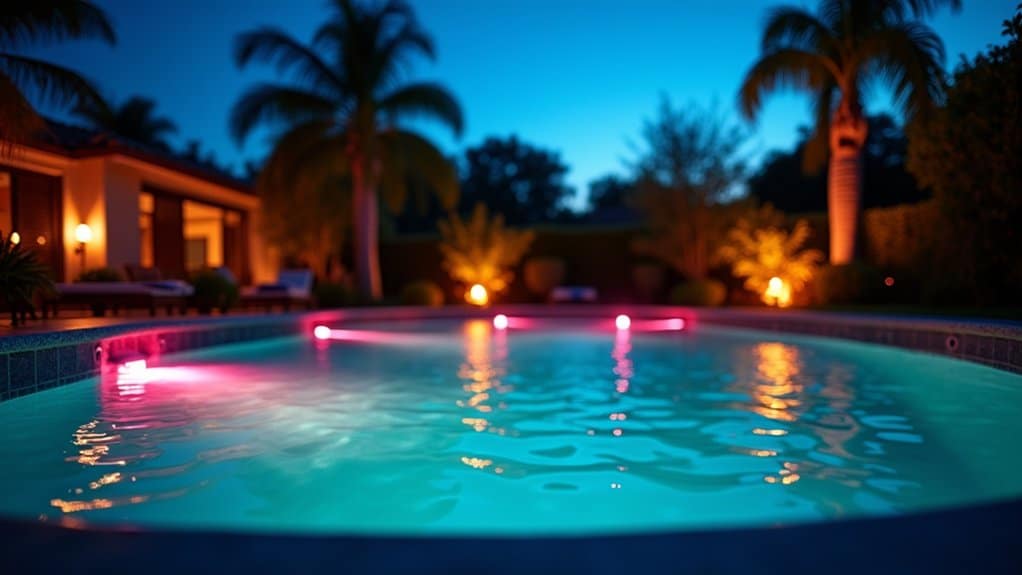
You’ll find that orange and pink lights create a cozy poolside atmosphere while simultaneously reducing insect attraction through their long-wavelength spectrum (above 590 nm), which most bugs can’t easily detect. These warm-colored LEDs in the 2000-3000K range deliver aesthetic warmth without sacrificing safety when you layer them strategically with brighter white lighting at entry points and stairs. You’re balancing three critical factors ambiance, bug prevention, and visibility by positioning orange and pink fixtures for soft underwater illumination while maintaining clear sightlines in high-traffic safety zones. Motion-activated lighting systems can further minimize bug attraction by reducing unnecessary illumination when swimmers aren’t actively using the pool. LED lights offer energy efficiency and durability, making them an ideal choice for maintaining these warm-colored underwater fixtures over extended periods of nightly use. Proper pool lighting with adequate visibility ensures swimmers can see the pool’s edges, steps, and depth markers, which is essential for reducing the risk of accidents and injuries during nighttime swimming.
Aesthetic Appeal and Warmth
Orange and pink pool lights fundamentally transform nighttime swimming environments by creating warm, inviting atmospheres that research demonstrates reduce stress and promote relaxation. You’ll experience enhanced color harmony when integrating these hues with existing outdoor lighting, while programmable LED systems enable seamless seasonal themes for thematic events.
- Warm-colored lighting reduces psychological stress levels, encouraging extended swim sessions and social interaction
- Dynamic LED technology supports up to 30 programmable color combinations for customizable visual effects
- Orange and pink tones provide adequate brightness for safe navigation without harsh glare or eye strain
- Feature lighting on steps and floating decorations increases visibility while maintaining aesthetic warmth
Your pool environment achieves both functional safety and emotional comfort through strategic warm-light placement, balancing ambient visibility with the soothing glow that transforms ordinary swims into memorable experiences. PaneraLux colored underwater pool lights deliver IP68-rated durability for submerged installations, ensuring reliable performance throughout extended nighttime swimming sessions while maintaining consistent warm color output.
Bug Prevention Effectiveness
While warm aesthetic benefits make orange and pink lighting attractive choices, their insect-deterrent properties offer equally compelling practical advantages. You’ll experience considerably fewer mosquitoes and moths when you switch to orange or pink LED technology compatibility systems, as these wavelengths (590 650 nm) fall outside insects’ ideal vision range.
| Light Color | Wavelength (nm) | Insect Attraction | LED Efficiency |
|---|---|---|---|
| Blue | 450 495 | Very High | High |
| White | 400 700 | Very High | High |
| Orange | 590 620 | Very Low | High |
| Pink | 600 650 | Low | High |
| Amber | 590 610 | Very Low | High |
You’ll maximize effectiveness by moderating brightness and positioning lights downward, while accounting for surrounding landscape factors like vegetation and adjacent light sources that influence local bug activity.
Visibility During Night Swimming
When you’re swimming after dark, the wavelengths you choose for pool illumination directly impact both your safety and your ability to enjoy the water. Orange and pink lighting delivers superior contrast enhancement against blue-green pool water, enabling you to identify movement and position underwater with precision.
These warm hues reduce accident risk reduction by minimizing dark spots at pool edges and supporting rapid swimmer detection. The high reflectivity of orange and pink wavelengths means they’re less absorbed by water, maintaining brilliance throughout your swim session.
Key visibility benefits include:
- Enhanced surface swimmer silhouette definition for overhead monitoring
- Minimized glare reflection off water surfaces
- Improved identification of floating debris and obstacles
- Evenly distributed illumination preventing shadowed hazard zones
Modern LED systems allow you to optimize these warm tones for both safety and ambiance during night swimming sessions.
Green Light for Natural Lagoon-Style Design
Because green light wavelengths penetrate water more effectively than other colors, they’ll create enhanced visibility for your night swimmers while producing a naturally atmospheric lagoon aesthetic. You’ll achieve natural moonlight effects by installing soft LED lights in green shades that mimic celestial glow, transforming your pool environment into a tropical oasis.
Your energy efficient design benefits from LED technology consuming up to 80% less energy than incandescent alternatives green LEDs use approximately 40 watts compared to 300-500 watts. You’ll implement cross-lighting techniques every 8 feet along pool sides for even illumination distribution. This approach highlights structural features while seamlessly blending with surrounding landscaping.
Green lighting strategically reduces harsh glare while maintaining adequate brightness for safe navigation. You’ll enhance both aesthetic appeal and functional visibility simultaneously, creating an inviting nighttime swimming environment.
Choosing the Right Pool Light Color for Your Needs
You’ve seen how green lighting delivers atmospheric appeal and energy savings, but selecting your pool’s ideal light color requires matching specific performance metrics to your priorities.
Your decision hinges on quantifiable factors:
- Safety metrics: White light maximizes visibility with neutral color temperature; blue offers moderate contrast; warm colors sacrifice clarity for bug reduction
- Energy consumption: LED systems consume 75% less power than traditional fixtures; fiber optics distribute light evenly but with lower brightness output
- Maintenance requirements: Water chemistry directly impacts color perception; murky conditions degrade brightness and hue saturation
- Modular lighting design: Color-changing LEDs enable dynamic switching without replacing fixtures, reducing long-term replacement costs
Evaluate your pool’s depth, chemical balance, and primary use. Implement modular lighting design for flexibility white baseline with optional colored overlays addresses both safety compliance and aesthetic preferences without permanent infrastructure changes.
Frequently Asked Questions
Do Pool Light Colors Affect Water Temperature or Chemical Balance in Any Way?
No, you won’t find any credible data linking pool light colors to water temperature or chemical balance. Your pool lights don’t emit enough UV or infrared energy to affect thermal properties. They also won’t influence the potential impact on chemical composition or potential impact on algae growth those factors depend on sunlight exposure, chemical dosing, and maintenance practices. You’re safe choosing lights purely for aesthetics and visibility; they won’t alter your water’s chemistry or temperature.
How Long Do Colored Pool Light Bulbs Typically Last Compared to Standard White Bulbs?
Your colored LED pool bulbs‘ll typically last 25,000 50,000 hours roughly 15 20 years compared to standard white bulbs’ measly 1,000 4,000 hours. That’s a tenfold lifespan advantage. You’ll experience minimal bulb maintenance requirements with LEDs, often operating hassle-free for a decade or more. Standard incandescent and halogen whites demand seasonal replacements due to frequent burnouts and heat-related degradation, making colored LEDs substantially more cost-effective long-term investments for your pool.
Can I Switch Between Different Colored Lights Seasonally or Based on Bug Activity Levels?
Yes, you can easily switch between different colored lights seasonally and based on bug activity. Modern LED pool systems let you perform seasonal color alteration through remote or app control no bulb replacement needed. For bug-based color selection, you’ll want to use warm tones (yellow, amber, orange) during high-activity periods since insects gravitate toward blue and UV spectrums. You can automate these shifts or manually adjust them instantly based on your preferences and environmental conditions.
Are LED Colored Pool Lights More Energy-Efficient Than Traditional Incandescent Colored Bulbs?
Yes, you’ll find LED colored pool lights dramatically outperform incandescent alternatives. You’re looking at 80 87% less energy consumption LEDs draw 40 55 watts versus incandescent’s 300 500 watts for equivalent brightness. Your energy consumption metrics shift considerably, reducing pool lighting costs to mere cents daily. You’ll also benefit from long-term maintenance costs savings; LEDs last 25,000 50,000 hours compared to incandescent’s 1,000 hours, minimizing replacement expenses and service interruptions extensively.
What Is the Cost Difference Between Installing White Versus Yellow or Red Pool Lighting?
You’ll find white pool lights cost $600 $1,500 total, while yellow and red options run $700 $1,500. The potential cost difference stems from specialty fixtures and limited availability driving yellow and red prices higher. Installation complexity variations emerge because color-changing systems require additional wiring or controls, increasing labor costs. White LEDs offer the most affordable entry point, whereas you’d pay premium prices for yellow or red specialty fixtures.