
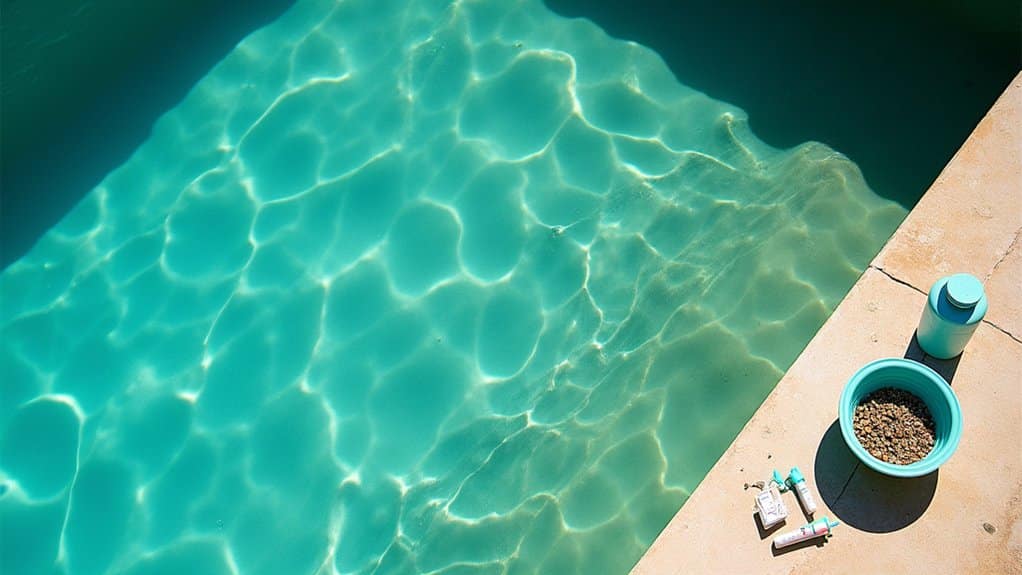
Cloudy pool water typically stems from chemical imbalances, poor filtration, algae growth, or mineral precipitation. You’ll want to test your water first adjust total alkalinity to 80 120 ppm, pH to 7.2 7.6, and free chlorine to 1 3 ppm. If levels have dropped notably, shock your pool at 1 pound per 10,000 gallons and run your filter continuously for 12 48 hours. Each cause requires a specific fix, which we’ll break down step by step below.
Chemical Imbalances That Cause Cloudy Pool Water
When your pool water turns cloudy, chemical imbalances are almost always the primary culprit. Low chlorine below 1.0 ppm allows bacteria and algae to multiply, creating hazy conditions. A pH above 7.8 renders chlorine ineffective and causes particles to solidify, compounding pool water clarity issues. Regular testing of chemical levels ensures imbalances are caught early before they lead to persistent cloudiness.
For a reliable cloudy pool water fix, you’ll need to address each chemical imbalance systematically. Target alkalinity between 80 120 ppm to stabilize pH, and maintain calcium hardness within 200 400 ppm to prevent scaling. Excessive stabilizer levels or incompatible chemicals create conflicts that increase chlorine demand and produce turbidity. If chlorine’s been low for extended periods, shock treatment restores sanitizer balance. In hard water areas, rising temperatures cause calcium to precipitate out of solution, further contributing to cloudy conditions. Correcting these parameters methodically eliminates cloudiness at its source. When limescale precipitation is the issue, using pH-Minus to bring the pH down to the 7.0 7.4 range and running the sand filter system for 24 72 hours with frequent backwashing is the most effective approach, since shock chlorination alone will not remove mineral deposits.
How Poor Filtration Makes Pool Water Cloudy
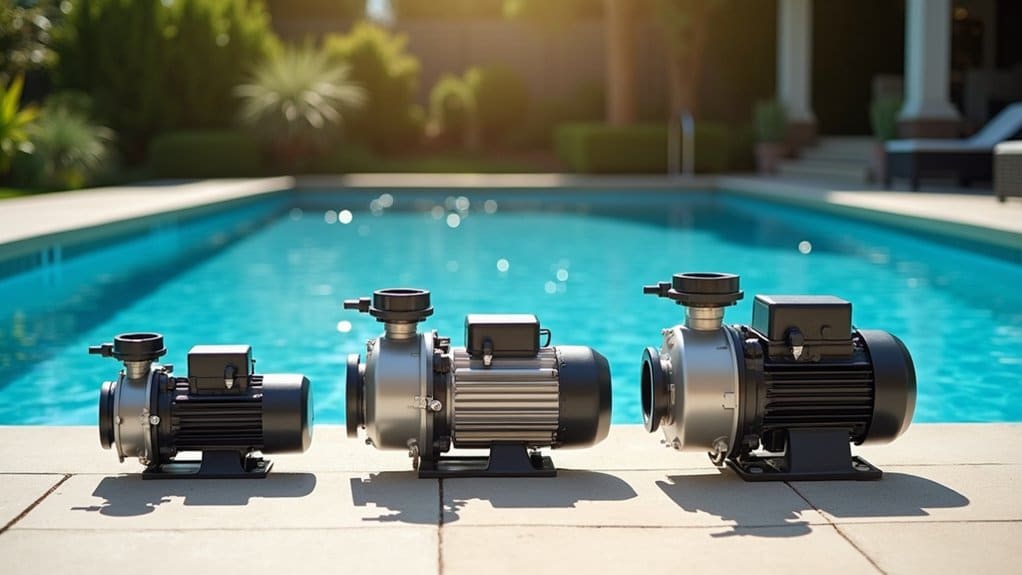
Even if your water chemistry is perfectly balanced, an underperforming filtration system will keep your pool cloudy by failing to capture the fine particles suspended throughout the water. Pool filtration problems rank among the primary causes of persistent cloudiness, often compounding any existing pool chemical imbalance.
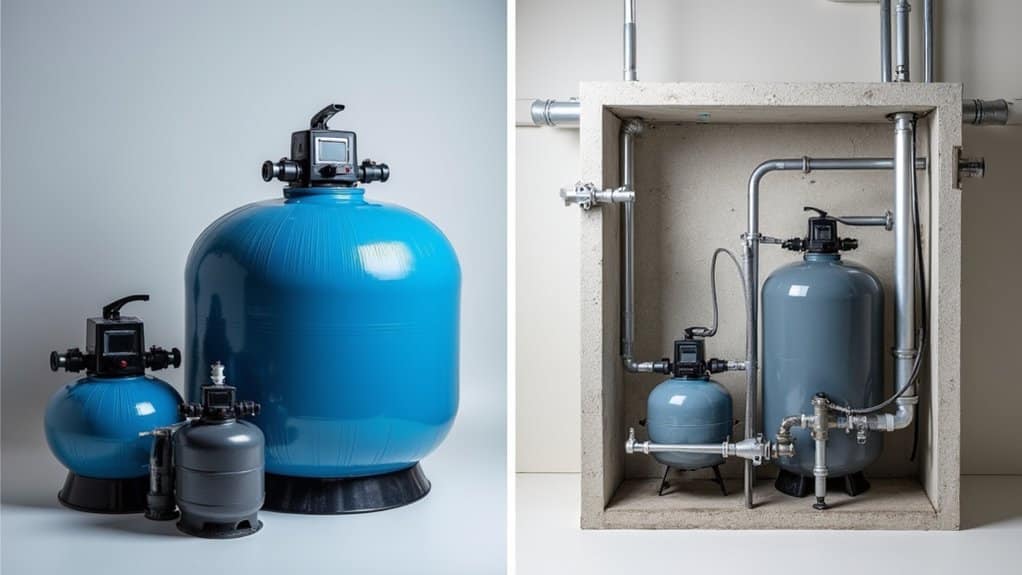
Your filter needs 8 12 hours of daily runtime, especially during summer. Shorter cycles allow particles to remain suspended, degrading the water clarity that pool owners expect. Check your filter pressure gauge elevated readings indicate clogged media requiring backwashing or replacement.
To restore clarity, run your pump continuously for 12 48 hours while removing visible debris with nets and vacuums. Clean or replace cartridge, sand, or DE media as needed. Consistent filter maintenance prevents recurring cloudiness efficiently.
Algae, Bacteria, and Contaminants That Cloud Your Pool
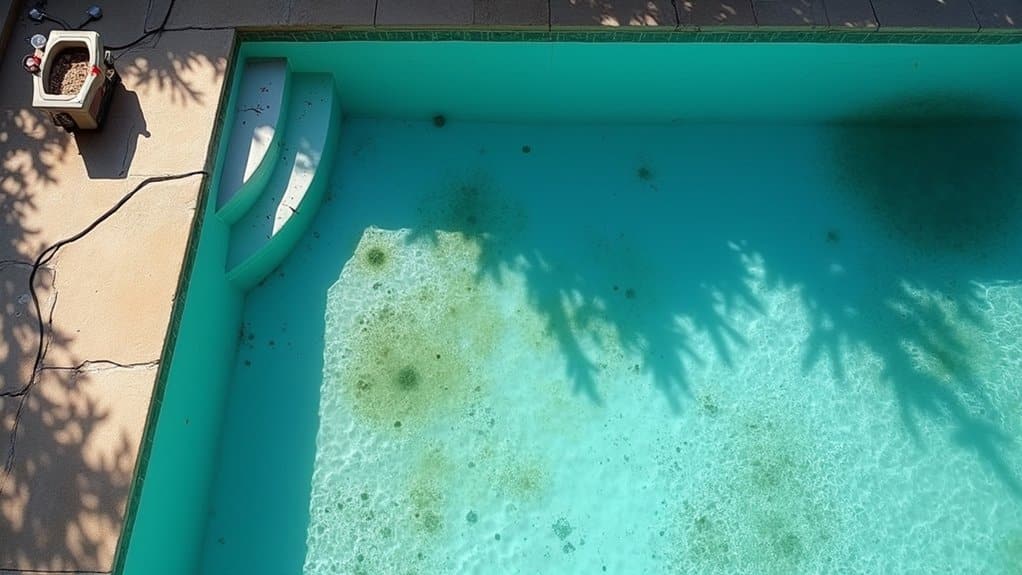
Though filtration issues account for many cases of cloudy water, biological contaminants algae, bacteria, and organic debris pose an equally persistent threat to your pool’s clarity. Among cloudy pool water causes, algae blooms rank highest. Green algae replicates every 3 6 hours under low-sanitizer conditions, while mustard algae resists standard chlorine levels entirely.
| Contaminant | Primary Treatment |
|---|---|
| Green Algae | Superchlorination + brushing |
| Pink Bacteria (*Serratia marcescens*) | Shock treatment + increased sanitizer residuals |
For effective pool maintenance troubleshooting, you’ll need to identify the specific organism before selecting pool cleaning solutions. Pink bacteria signal inadequate sanitation, requiring thorough vacuuming alongside chemical treatment. Target low-circulation zones corners, deep ends, and shaded walls where contaminants establish footholds fastest.
When Minerals and Limescale Are Clouding Your Pool
Because mineral precipitation operates through entirely different chemistry than biological contamination, it demands its own diagnostic approach and targeted treatment strategy. When calcium hardness pool levels exceed 400 ppm, and pH climbs above 8.0, dissolved minerals precipitate into microscopic white particles that suspend throughout your water column.
You’ll recognize limescale cloudiness by its whitish, odorless appearance distinct from the green or slimy characteristics of bacterial contamination. This pool water imbalance triggers calcium carbonate release when your Langelier Saturation Index exceeds +0.30.
To resolve this, maintain pH between 7.4 7.6 and total alkalinity at 80 120 ppm. Run your sand filter continuously for 24 72 hours, backwashing every 3 5 hours to prevent recirculation. Avoid adding soda ash or sodium bicarbonate too quickly, as localized pH spikes worsen precipitation.
Test and Rebalance Your Cloudy Pool Water First
Before you add any chemicals, you’ll want to test your water using a liquid test kit or digital tester for the most accurate readings, starting with pH and adjusting it to 7.0 with pH-Minus to maximize chlorine’s sanitizing power. Once pH is dialed in, check your total alkalinity and free chlorine levels, since low chlorine allows suspended particles and microorganisms to persist, while unbalanced alkalinity destabilizes your pH corrections. You should also measure calcium hardness, keeping it between 200 500 ppm, because high calcium precipitates out of solution and directly contributes to the cloudy water you’re trying to eliminate.
Check pH Levels First
When your pool water turns cloudy, pH testing should be your first diagnostic step since pH directly controls chlorine’s sanitizing power and influences particle suspension. Collect your sample 18 inches below the surface in a well-circulated area avoid skimming within 1.5 inches of the top, which skews results.
You’ve got three reliable methods: dip test strips for 2 3 seconds, use liquid kits with 5 drops of phenol red, or submerge digital probes 1.5 inches deep. Always match colors outdoors; indoor lighting distorts readings. If chlorine exceeds 3.0 ppm, neutralize it with sodium thiosulfate before testing.
Target a pH between 7.2 and 7.6. Readings above 7.5 reduce chlorine effectiveness and promote cloudiness. Run an acid demand test, then consult your dosage chart to correct accordingly.
Balance Chlorine And Alkalinity
Getting your pH dialed in is only part of the equation chlorine and total alkalinity work alongside pH to determine whether your pool stays clear or turns hazy. You’ll need to test both levels systematically before making corrections.
- Maintain free chlorine between 1 3 ppm; levels below 1 ppm promote algae and bacterial growth.
- Keep total alkalinity within 80 120 ppm to stabilize pH and prevent cloudiness.
- If combined chlorine exceeds 0.3 ppm, shock your pool immediately.
- Add sodium bicarbonate to raise low alkalinity, broadcasting evenly with the pump running.
- Retest alkalinity 4 6 hours after treatment to confirm adjustments held.
High alkalinity above 120 ppm directly contributes to cloudy water and reduces chlorine effectiveness. Address alkalinity first, since it influences pH stability and chlorine performance simultaneously.
Monitor Calcium Hardness
Calcium hardness sits as the third critical variable in your water chemistry triangle and if it’s drifted outside the 200 400 ppm range, it’s likely driving your cloudiness. Levels above 400 ppm cause calcium to precipitate out of solution, forming scale deposits on tile lines, equipment, and plumbing while turning your water murky.
Test using a standard hardness reagent kit: fill a comparator tube with 25 mL of pool water, add calcium buffer and indicator drops, then titrate with hardness reagent until the sample shifts from pink to blue. Multiply your drop count by 10 for ppm.
If readings run high, partially drain and refill with soft water. If low, broadcast calcium chloride at 1.25 pounds per 10,000 gallons to raise levels 10 ppm.
Shock, Scrub, and Filter Your Cloudy Pool Clear
Tackle cloudy pool water head-on by combining three essential steps: shocking, scrubbing, and filtering. First, brush walls and floors to dislodge contaminants, then vacuum and skim debris. Pre-dissolve granular shock in a bucket always add chemical to water and broadcast evenly around the pool’s perimeter at dusk to prevent UV degradation.
Follow these critical guidelines for effective treatment:
- Dose accurately: Apply 1 pound of shock per 10,000 gallons with pH between 7.2 7.6.
- Circulate continuously: Run your pump 8 24 hours post-application.
- Brush after shocking: Remove any undissolved particles from surfaces.
- Avoid the skimmer: Never pour shock directly into equipment.
- Retest after 24 hours: Verify chlorine, alkalinity (80 120 ppm), and calcium hardness levels.
This methodical sequence restores water clarity efficiently.
How Long Does Cloudy Pool Water Take to Clear?
How quickly your pool clears depends on the treatment method you choose and the severity of the cloudiness. Flocculant treatments produce results within 24 to 48 hours, while clarifiers typically require 48 to 72 hours for visible improvement. Shock treatments need continuous filtration over one to three days for full effect.
Run your filter 24 hours a day during treatment to guarantee complete water turnover and particle removal. Backwash or rinse the filter before extended runs, and monitor pressure gauges higher readings signal the need for immediate cleaning.
Mild cloudiness clears faster than severe cases. With proper chemical correction and continuous filtration, you should expect full clarity within 48 hours or less under ideal conditions.
Weekly Habits That Keep Your Pool Water Clear
Keeping your pool water consistently clear requires a set of weekly habits that address chemistry, filtration, and circulation before problems develop. You’ll want to test your water’s chemical balance at least once a week, clean or inspect your filters on a regular schedule, and run your pump long enough each day to turn over the full volume of water. These three practices work together to eliminate the conditions that cause cloudiness, so you’re preventing issues rather than reacting to them.
Test Chemistry Every Week
Five minutes of weekly testing prevents most cloudy water problems before they start. You’ll catch imbalances early by maintaining a consistent testing schedule and following the correct sequence.
Test these parameters in order each week:
- Total alkalinity (80 120 ppm) adjust this first, as it stabilizes pH
- pH (7.2 7.6) test daily during peak season or heavy use
- Calcium hardness (200 400 ppm) high levels directly cause cloudiness
- Cyanuric acid (30 50 ppm) protects chlorine from UV degradation
- Free available chlorine (1.0 4.0 ppm) low levels allow contaminant buildup
Collect your sample 18 inches below the surface, away from return jets, using a clean plastic bottle. Always adjust alkalinity and pH before adding sanitizer. Retest after storms, parties, or any chemical additions.
Clean Filters Regularly
Even when your water chemistry tests perfectly balanced, a dirty filter will undo that work by letting fine particles circulate back into the pool. Monitor your pressure gauge consistently once it reads 8-10 PSI above your clean baseline, it’s time to act.
Your maintenance schedule depends on filter type. Cartridge filters need cleaning every 2-6 weeks; rinse pleated cartridges with a garden hose and periodically soak them in specialized cleaning solution. Sand filters require backwashing every 4-6 weeks during swimming season. D.E. filters need backwashing every 3-6 weeks, with fresh D.E. powder added after each cycle.
Adjust frequency based on environmental conditions. Pools under trees or experiencing heavy use accumulate debris faster. Don’t wait for cloudiness establish a baseline pressure reading and let that number guide your cleaning intervals.
Run Pump Consistently
While clean filters handle particle removal, your pump’s runtime determines whether water actually reaches those filters consistently enough to stay clear. You’ll need 8 12 hours of daily operation to achieve proper turnover rates and distribute sanitizer evenly throughout the basin.
- Empty skimmer and pump baskets weekly to prevent clogs that restrict flow and strain equipment.
- Monitor filter pressure gauges weekly, noting any 8 10 psi rise above baseline that signals backwash time.
- Brush walls and stairs twice weekly to dislodge biofilm and push debris toward active circulation zones.
- Vacuum regularly to suspend settled particles where your filter can capture them.
- Integrate tasks into 15 20 minute weekly sessions alongside chemical testing for a streamlined maintenance routine.
Consistent circulation eliminates stagnant zones where algae thrive and cloudiness develops.
Frequently Asked Questions
Is Cloudy Pool Water Safe to Swim In?
You shouldn’t swim in cloudy pool water. It poses serious health and safety risks. Bacteria like E. coli, Giardia, and Cryptosporidium thrive in poorly sanitized water, causing recreational water illnesses. Reduced visibility also hides struggling swimmers, increasing drowning risk. Before entering, you’ll need to test and balance your pH, chlorine, and calcium hardness levels. If you can’t clearly see your pool’s deep-end drain, close it until you’ve restored proper water clarity.
Can Cloudy Pool Water Fix Itself Without Any Treatment?
Cloudy pool water rarely fixes itself without intervention. If your free chlorine stays above 2.0 ppm, pH sits between 7.2 7.6, and you’re running your pump at least 8 hours daily, mild haze might clear within 24 48 hours through passive filtration. However, you shouldn’t count on this. Untreated cloudiness typically worsens, promoting algae growth and bacterial buildup. You’ll need to test your water chemistry and correct imbalances to reliably restore clarity.
Why Does My Pool Get Cloudy After It Rains?
Rain dilutes your pool’s free chlorine, dropping it below the effective 2 5 ppm range and weakening sanitization. It also shifts your pH and total alkalinity by introducing acidic or mineral-laden water. Beyond chemistry, rain washes in debris, dust, pollen, and phosphate-rich pollutants like fertilizers, which fuel algae and microorganism growth. These suspended particles overwhelm your filtration system. You’ll need to rebalance chemicals, shock-treat, and clean your filter to restore clarity.
Does Water Temperature Affect How Quickly Pool Water Turns Cloudy?
Yes, water temperature directly affects how quickly your pool turns cloudy. Warmer water above 85°F accelerates chlorine depletion, promotes rapid algae and bacteria growth, and raises your Langelier Saturation Index, which triggers calcium carbonate scaling. You’ll also see increased evaporation, concentrating dissolved solids. To counteract these effects, you should increase your chlorine dosing frequency, monitor LSI regularly, and optimize filtration run times during hot weather to maintain water clarity.
Can Using Too Many Pool Chemicals at Once Cause Cloudiness?
Yes, adding multiple chemicals simultaneously can definitely cause cloudiness. When you introduce products like calcium hypochlorite, soda ash, or phosphate removers too quickly, you’ll spike the LSI and precipitate calcium carbonate. You’re also risking product conflicts enzymes react with polyquat algaecides, creating turbidity, while excess chemicals push pH above 7.8, reducing chlorine’s effectiveness to just 25%. To prevent this, you should dose chemicals individually, allowing each to circulate fully before adding the next.