
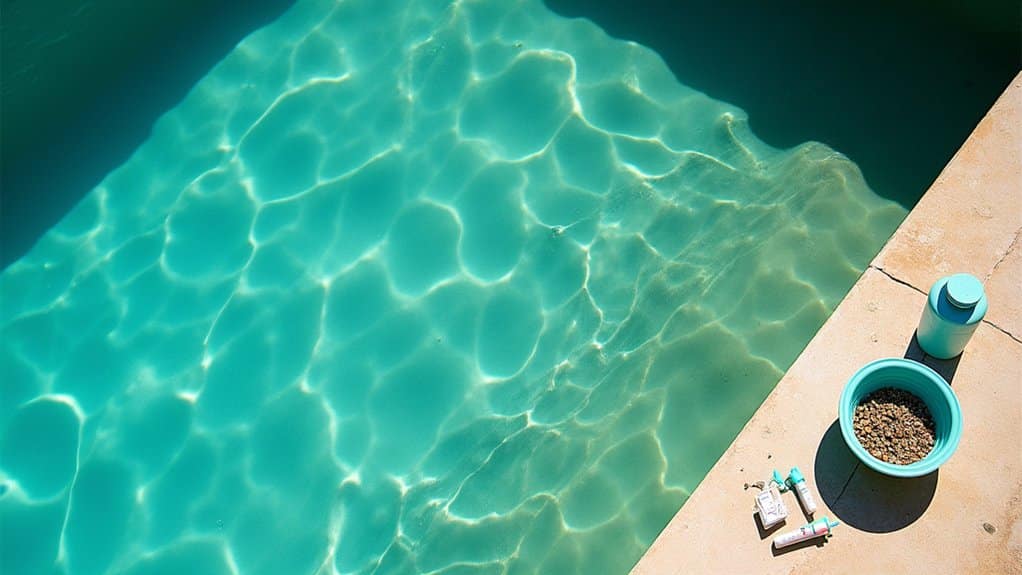
Most pool problems you’ll encounter algae blooms, cloudy water, and equipment failures stem from the same core issues: unbalanced chemistry, poor circulation, and inconsistent maintenance. You’ll want to test pH (7.2 7.6) and chlorine (2 4 ppm) regularly, shock weekly, and run your pump 10 12 hours daily. Don’t ignore rising filter pressure or unexplained water loss, as these signal clogs or leaks. Below, you’ll find the precise fixes for each issue and the maintenance routine that prevents them.
How to Fix Algae and Cloudy Pool Water Fast
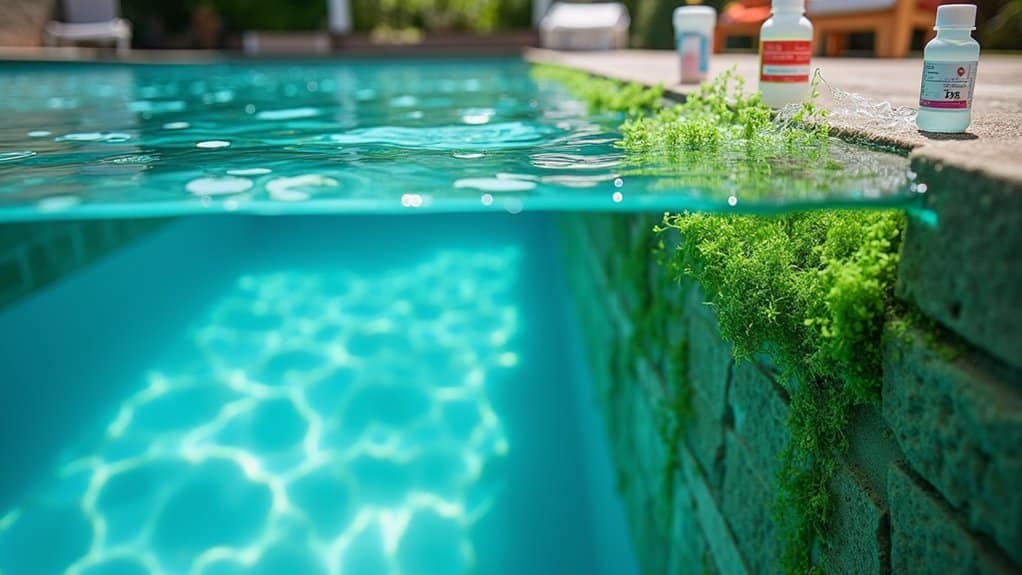
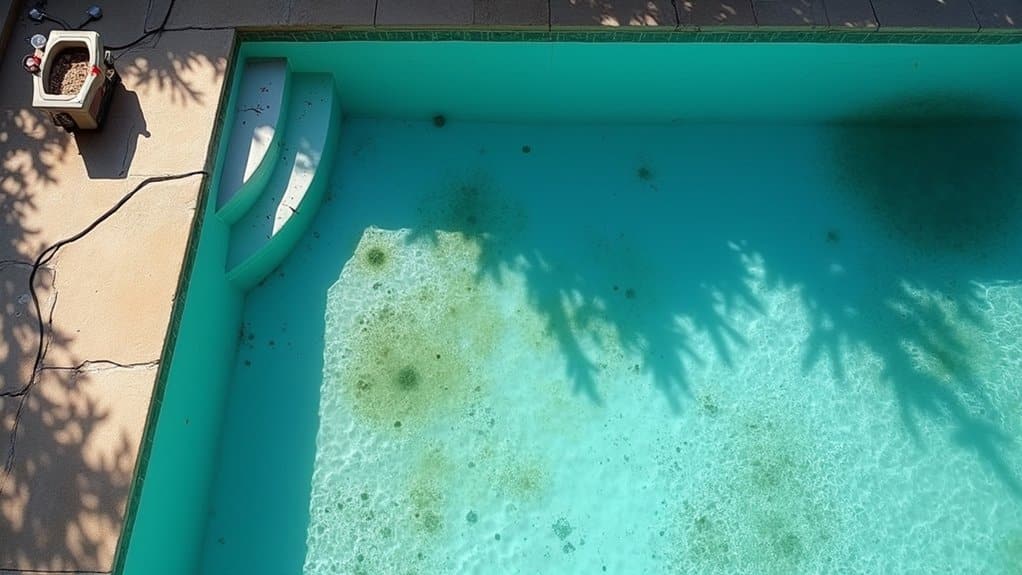
When algae takes hold of your pool, the water turns green, walls feel slimy, and standard chlorination can’t keep up. Among common pool problems and how to fix them, algae ranks as the most visible and urgent.
Start by brushing all surfaces vigorously, then vacuum manually on the waste setting to bypass your filter. Adjust pH to 7.2 7.6 before applying calcium hypochlorite shock double the dose for green algae, triple for yellow. Run your pump continuously for 24 48 hours. Black algae is the toughest variety to eliminate, forming stubborn spots on pool surfaces that often require repeated scrubbing and aggressive chemical treatment.
For persistent pool water issues, add flocculant post-shock, circulate for two hours, and let debris settle overnight. Effective swimming pool troubleshooting means retesting chemistry daily and adding algaecide only after chlorine drops below 5 ppm. Left untreated, algae can also clog your pool filter, reducing water quality and circulation to the point where chemical treatments become far less effective.
Why Unbalanced Pool Chemistry Causes Most Problems
When your pH drifts outside the 7.2 7.6 sweet spot, it triggers a cascade of problems corroding equipment at low levels and neutralizing chlorine at high ones. Hidden chemical imbalances in calcium hardness, total alkalinity, and cyanuric acid compound the damage, causing scaling, cloudy water, and sanitizer failure that you won’t catch without looking beyond chlorine alone. Regular water testing lets you detect these shifts early, so you can correct imbalances before they escalate into costly repairs or unsafe swimming conditions. Even water that appears perfectly clear can harbor dangerous pathogens like E. coli and Giardia when sanitizer levels drop below effective thresholds.
pH Level Sweet Spot
Your pool chemistry balance depends on maintaining this narrow range. Proper chlorine levels mean nothing if pH undermines disinfection effectiveness. At high pH, you’re fundamentally wasting sanitizer while creating conditions for algae and cloudy water.
The fix starts with testing pH twice weekly and adjusting before problems compound. Keep total alkalinity between 80 120 ppm to buffer against rapid pH swings. This single correction prevents the cascade of issues that triggers most service calls.
Hidden Chemical Imbalances
Beyond pH alone, several hidden chemical imbalances silently degrade your pool’s water quality and equipment. High alkalinity triggers scale formation on heaters and filters, while low alkalinity creates corrosive water that etches surfaces. Calcium hardness imbalances precipitate mineral crusts and cloudy water, generating long-term repair costs.
Elevated TDS levels exceeding 1,000ppm above mains water reduce sanitizer activity and cause persistent haziness. These pool maintenance problems compound when cyanuric acid climbs too high, effectively blocking chlorine’s sanitizing power and fueling algae growth.
Chloramine buildup from nitrogen-chlorine reactions produces skin irritation, strong odors, and milky discoloration. Metals like manganese stain surfaces pink to deep purple. Addressing these pool cleaning issues requires systematic testing beyond basic chlorine and pH to identify hidden chemical imbalances before they escalate.
Regular Water Testing Matters
Detecting hidden chemical imbalances starts with one non-negotiable practice: regular water testing. You should test chlorine and pH daily during peak season, total alkalinity weekly, and calcium hardness monthly. Without this routine, you won’t catch problems before they escalate.
Understanding why regular water testing matters is central to any pool maintenance guide. Unbalanced chemistry corrodes equipment, promotes algae growth, and irritates swimmers’ skin and eyes. Low chlorine lets bacteria proliferate, while improper pH accelerates damage to your pool filtration system.
Heavy bather loads, rainstorms, and extreme heat all destabilize chemical levels rapidly. You’ll need to increase testing frequency after these events. Consistent monitoring reduces chemical waste, prevents costly repairs, and keeps your water safe addressing most common pool problems at their source.
How to Balance Your Pool’s pH the Right Way
Start by testing total alkalinity, which buffers pH stability. Run your pool circulation system on high during testing and balancing. To raise low pH, add sodium carbonate at one pound per 10,000 gallons, pre-dissolved in a bucket. To lower high pH, dilute muriatic acid maximum 16 ounces per 10,000 gallons and pour into the deep end with the pump running. Retest after four hours before making additional adjustments.
How Much Chlorine Does Your Pool Actually Need?
You should maintain your pool’s free chlorine between 2 4 ppm, testing daily during peak season and adjusting dosage based on pool volume, bather load, and sunlight exposure. If you notice a strong chlorine smell or cloudy water, perform a weekly shock treatment at 5 10 ppm to break down combined chlorine and restore effective sanitization. Saltwater pools require the same 1 3 ppm target, so monitor your chlorine generator‘s output and adjust it as conditions change.
Recommended Chlorine Levels
Monitor combined chlorine closely it should stay at 0.5 ppm or lower, with 0 0.2 ppm representing ideal conditions. When combined chlorine exceeds this threshold, shock treatment is necessary. If you detect a strong chlorine smell, that’s actually chloramines signaling contamination, not over-chlorination. Keep pH between 7.2 7.6, since high pH drastically reduces chlorine’s disinfection capability regardless of concentration.
Weekly Shock Treatment
Every pool requires periodic shock treatment a controlled chlorine spike that oxidizes contaminants and destroys chloramines your regular sanitizer can’t eliminate. For standard maintenance, you’ll need one pound of granular shock per 10,000 gallons weekly.
Adjust your dosage based on water condition:
- Light green algae: double shock at two pounds per 10,000 gallons
- Dark green algae: triple shock at three pounds per 10,000 gallons
- Black algae: quadruple shock at four pounds per 10,000 gallons
- Clear water maintenance: one pound per 10,000 gallons weekly
Apply shock at dusk to prevent UV degradation of cal-hypo. Run your pump at least six hours post-treatment for full circulation. Don’t swim until chlorine drops to 3 ppm or below retest after 24 hours.
Saltwater Pool Dosing
Saltwater pools generate their own chlorine through electrolysis, but that doesn’t mean you can skip monitoring three key variables determine whether your salt cell produces enough sanitizer to keep water safe.
Salt concentration should stay between 2,700 3,400 ppm. You’ll need roughly 200 pounds of pool-grade salt per 10,000 gallons to reach 2,400 ppm, then adjust upward. Rain and splash-out dilute levels, requiring periodic additions.
Free chlorine must hold at 1 3 ppm. When levels drop below 1 ppm, supplement manually: add 5 fluid ounces of 12.5% liquid chlorine per 5,000 gallons for each 1 ppm increase.
Cyanuric acid at 60 80 ppm shields chlorine from UV degradation. Without it, sunlight burns through your cell’s output faster than it can produce. Adjust chlorinator output percentage and pump runtime before adding chemicals.
Why Weekly Shock Treatments Prevent Most Pool Issues
Because organic contaminants accumulate faster than daily chlorination can neutralize them, weekly shock treatments serve as the most effective preventive measure against the majority of common pool problems. Shock oxidation destroys chloramines, eliminates pathogenic bacteria, and prevents algae establishment before visible symptoms appear.
Weekly shocking addresses four critical maintenance areas:
- Contaminant elimination: Breaks down sweat, body oils, sunscreen, and cosmetics at the molecular level
- Algae prevention: Stops green growth, cloudiness, and slime during hot weather when UV depletes chlorine rapidly
- Chemical efficiency: Restores sanitizer effectiveness, reducing overall chemical consumption and manual adjustments
- Heavy usage recovery: Neutralizes increased bacterial loads after parties, storms, or peak swimming periods
You’ll find that consistent weekly shock schedules prevent minor imbalances from escalating into costly, time-consuming repairs.
How to Clean Clogged Pool Filters Properly
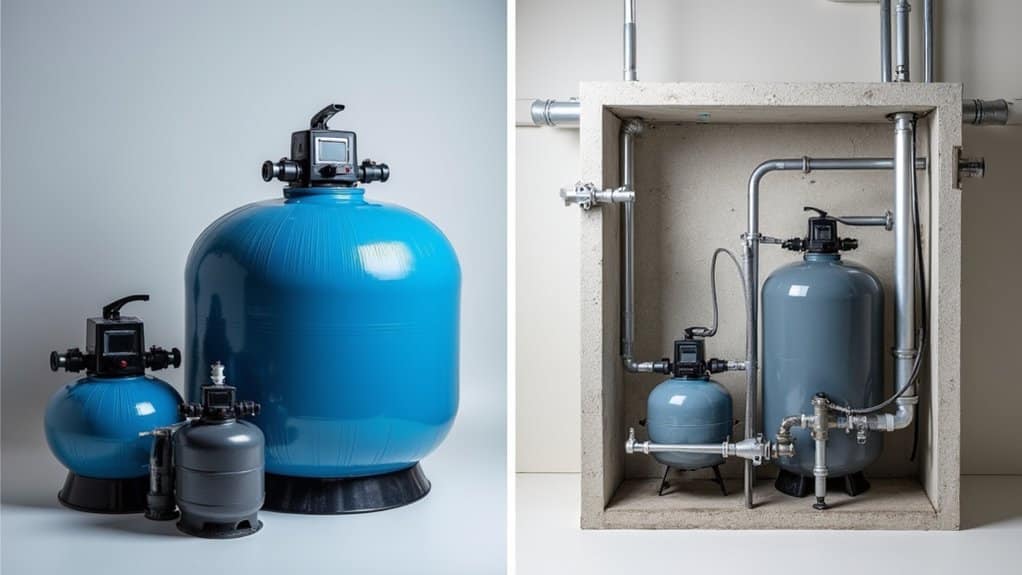
When your pool’s pressure gauge climbs 8 10 PSI above its clean baseline, you’re looking at a clogged filter that’s choking circulation and letting debris slip back into the water. Start by killing the pump, then open the air relief valve to bleed pressure before removing the tank clamp and extracting the cartridges.
Rinse each cartridge top-to-bottom with a garden hose at a 45-degree angle, directing spray between pleats to dislodge trapped material. For stubborn buildup suntan lotion oils especially soak cartridges in TSP solution (1 cup per 5 gallons) for 24 hours, then scrub gently with a soft-bristled brush.
After reinstalling, open the air relief valve until a steady stream flows, then record the new baseline pressure so you’ll know exactly when the next cleaning’s due.
Why Poor Circulation Is Behind Most Pool Problems
Most pool problems cloudy water, algae blooms, uneven chemical distribution trace back to one root cause: poor circulation. When water doesn’t move properly, chemicals can’t disperse, filtration stalls, and bacteria thrive in dead zones.
Circulation failures typically stem from these common issues:
- Clogged skimmer baskets or pump pots blocking water flow to the filtration system
- Misaimed return jets creating stagnant dead spots instead of consistent water movement
- Low water levels sitting below the skimmer’s midpoint, breaking pump prime
- Air leaks from cracked O-rings introducing bubbles and reducing system pressure
You’ll want to run your pump continuously variable speed models make this energy-efficient for inground pools. Check that return jets point downward at a 45-degree angle away from skimmers to maximize circulation throughout the entire pool.
How to Spot Pool Cracks, Leaks, and Water Loss Early
A single undetected crack or fitting separation can drain hundreds of gallons per week and most pool owners don’t notice until their water bill spikes or their deck starts settling.
Start with a visual inspection. Check your deck perimeter for damp concrete, eroding soil, or unusually lush grass all signs of escaping water. Examine penetrations around lights, drains, jets, and skimmer connections for cracks.
Next, run a bucket test. Fill a bucket to match your pool’s water level, mark both levels, turn off the pump, and wait 24 48 hours. If the pool drops more than the bucket, you’ve got a leak not just evaporation.
To pinpoint the source, apply dye drops near suspected cracks or fittings with the pump off. If the dye gets pulled in, you’ve confirmed the exact location.
A Weekly Pool Maintenance Checklist That Works
Keeping your pool clean and chemically balanced doesn’t require guesswork it requires a consistent weekly routine that targets every major system: surface, walls, water chemistry, and equipment.
Follow this proven checklist each week:
- Skim and clean surfaces: Remove floating debris daily, empty skimmer baskets 2 3 times weekly, and sweep the deck twice weekly to reduce contamination sources.
- Brush and vacuum: Scrub walls, steps, corners, and the waterline to dislodge algae and sediment, then vacuum the entire pool floor and sides.
- Test and adjust chemistry: Check pH (7.2 7.6), chlorine (1 3 ppm), alkalinity (80 150 ppm), and calcium hardness (175 275 ppm). Shock as needed after heavy use.
- Inspect equipment: Verify filter pressure, lubricate O-rings, check for leaks, and confirm your pump runs 10 12 hours daily.
Frequently Asked Questions
How Often Should Pool Equipment Be Professionally Serviced Each Year?
You should have your pool equipment professionally serviced at least once a year. During this annual check, you’ll want to lubricate O-rings, inspect pumps, service heaters, and examine safety features like ladders and handrails. However, don’t stop there you should schedule monthly equipment maintenance tasks like cleaning filters and checking calcium hardness. Adjust your service frequency based on your pool’s size, usage, environment, and budget to prevent costly mechanical failures.
Can Extreme Weather Conditions Cause Unexpected Damage to Pool Systems?
Yes, extreme weather can cause significant damage to your pool systems. Heavy rainfall dilutes chemicals and clogs filters with debris, while freezing temperatures crack pipes, pumps, and plumbing as water expands. Strong winds and hail damage covers, liners, and exposed equipment. Intense heat accelerates algae growth and disrupts water chemistry through rapid evaporation. You’ll want to winterize properly, run your pump during freezes, and use solar blankets to minimize weather-related damage.
What Is the Average Lifespan of a Standard Residential Pool Pump?
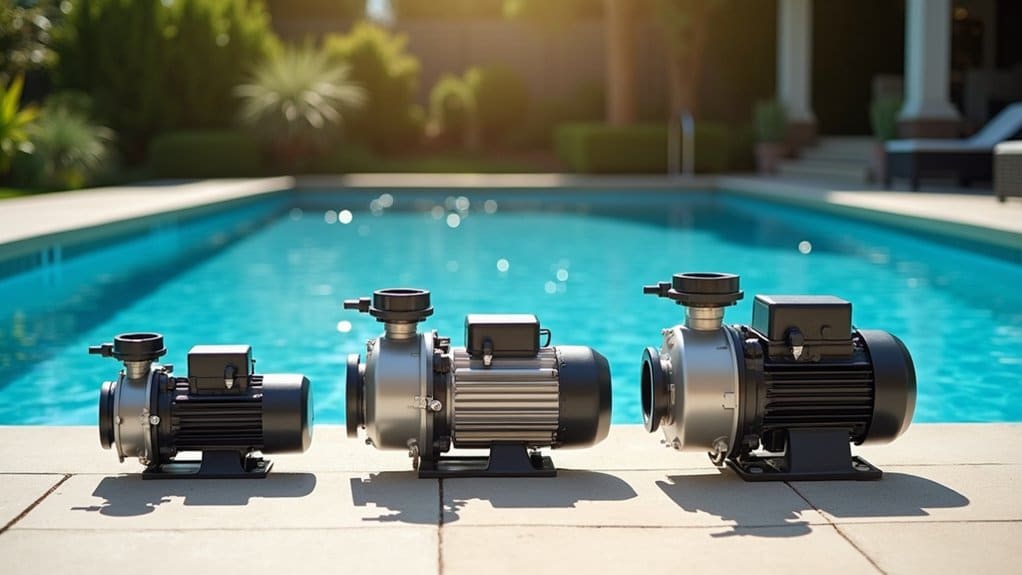
A well-maintained standard residential pool pump typically lasts 8 to 12 years. If you’re running a single-speed pump, you’ll likely get 7 to 10 years, while variable-speed models can stretch to 10 to 15 years due to reduced motor wear. Your pump’s actual lifespan depends on daily runtime, maintenance consistency, and environmental conditions. You should expect to replace key components like o-rings and motors before the full unit needs swapping.
How Does Landscaping Near a Pool Affect Long-Term Maintenance Costs?
Landscaping near your pool considerably increases long-term maintenance costs. Trees and shrubs boost debris removal expenses by $80 $150 per visit and raise chemical needs to $600 $1,200 annually due to algae growth and pH imbalances. Tree roots can cause structural damage requiring $5,000 $15,000 in resurfacing. You’ll also face heightened water replacement costs of $200 $400 yearly from backwashing. Over five years, landscaping-related issues can push total costs to $14,450 $31,250.
Should You Drain Your Pool Completely Before Winterizing for the Season?
You shouldn’t drain your pool completely before winterizing. The water stabilizes your pool’s walls and floor, preventing structural collapse or liner damage from freezing conditions. Instead, lower the water level 18 24 inches below the tile line or 4 6 inches below the skimmer if you’re using blowout extensions. This protects your plumbing from freeze damage while maintaining enough water to support winter covers and preserve your liner’s integrity.