

You’re harnessing controlled electrical power through sealed, low-voltage systems to transmit light into water. Waterproof transformers convert standard mains electricity to safe 12V or 24V power routed through IP68-rated cables and conduit protection. Stainless steel or reinforced plastic housings with double waterproof gaskets shield internal electronics from water infiltration. GFCI protection circuits immediately shut down power during faults, eliminating shock hazards. LED technology dominates modern installations, delivering superior efficiency and 50,000+ hour lifespans. Understanding how pool lights work and each component’s role reveals why proper installation matters considerably.
Types of Pool Lights
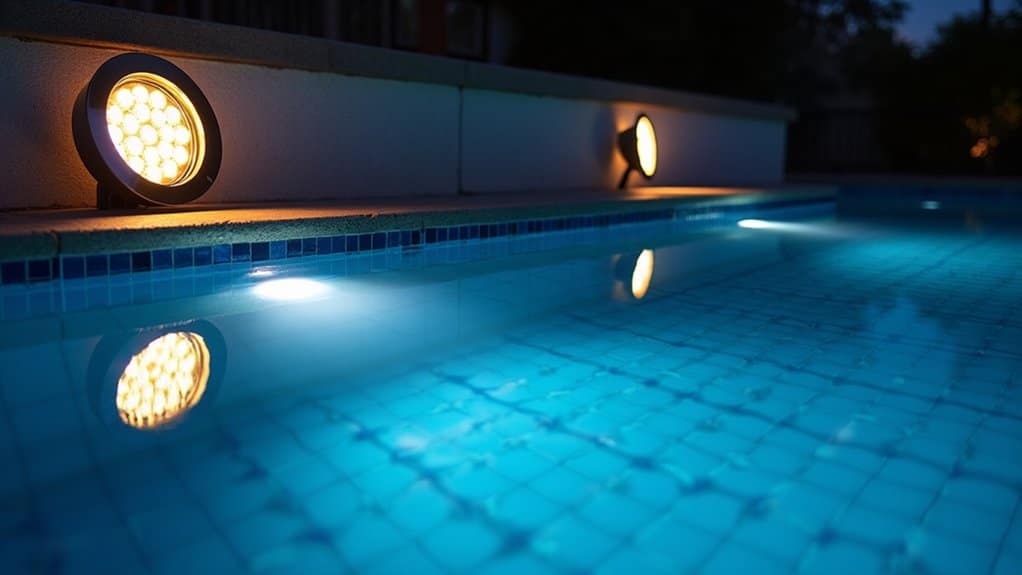
Because pool lighting serves both functional and aesthetic purposes, you’ll find several distinct technologies available, each with different performance characteristics and installation requirements. LED lights offer energy efficient features with lifespans reaching 50,000 hours, though they demand higher upfront cost considerations. Halogen bulbs provide bright illumination at lower initial prices but require frequent replacement every 1,000 to 2,000 hours. Incandescent options remain largely obsolete due to poor energy efficiency and short 1,000-hour lifespans. Fiber optic systems deliver creative lighting effects through remote light sources, eliminating submerged electrical components but involving complex, costly installations. Solar and floating lights serve primarily as supplemental, decorative solutions powered by renewable energy, ideal for above-ground pools. For budget-conscious pool owners, solar-powered pool lights eliminate ongoing electricity costs while providing ambient illumination through built-in twilight sensors and color-changing capabilities. Professional installation of underwater lighting systems ensures proper safety compliance and optimal performance in your pool environment. Underground LED installations require professional installation expertise to prevent damage to pool structures. Each technology balances performance, durability, and installation complexity differently.
How Underwater Pool Lights Work
You’ll find that underwater pool lights rely on robust structural components typically stainless steel or reinforced plastic housings sealed with IP67/IP68-rated casings that withstand chlorinated and saline environments while protecting internal circuitry from water infiltration. Your lighting system transmits electrical power through low-voltage cables (12V or 24V) routed via conduit protection and connected in parallel configuration, ensuring each fixture operates independently while maintaining stable voltage across all units. A waterproof transformer converts standard mains electricity to this safe low voltage, while GFCI protection and grounding mechanisms work together to eliminate shock hazards and equalize electrical potential throughout the system. Modern underwater lighting systems increasingly utilize LED lighting technology that consumes significantly less energy than traditional incandescent fixtures while providing superior longevity and operational efficiency. Annual professional inspections should be conducted to identify and prevent faulty electrical wiring that could create serious electrocution risks in your pool environment. The transformer power should be sized at approximately 130% of the total lamp wattage to account for voltage fluctuations and ensure optimal performance during normal operation.
Structural Components and Design
Five critical design elements work together to maintain underwater pool lights functioning reliably in harsh aquatic environments. You’ll find V4A/316 stainless steel housings and reinforced tempered glass lenses protecting internal electronics from corrosion and pressure damage. IP68-rated seals and double waterproof gaskets prevent water infiltration at critical entry points.
Heat dissipation mechanisms, including integrated heat sinks, protect LEDs from thermal failure. Cable management channels keep power lines secure within the pool shell. Regular maintenance of gaskets and seals is essential, as checking these components frequently helps maintain watertight integrity and prevent water seepage that could compromise the fixture’s performance. High-quality waterproof seals are critical for protecting electrical components from water damage and ensuring the safety and longevity of the entire lighting system. LED lights last 50,000+ hours, significantly reducing the need for frequent maintenance and replacement compared to traditional lighting options.
Your lighting system’s optical design featuring microprism covers enables ideal dimensional light distribution across pool surfaces while minimizing glare. Advanced RGBW LED chips combined with smart DMX controls allow programmable lighting effects that enhance ambiance and synchronize with water features.
Low-voltage operation (12V or 24V) guarantees electrical safety compliance.
Electrical Power and Transmission
Your lights’ power requirements have dramatically decreased contemporary LED fixtures deliver 1,200+ lumens at merely 12-35W, compared to earlier 100W+ incandescent bulbs. Waterproof cables meeting IP68 standards route through conduits to termination boxes above water level. GFCI protection circuits immediately shut down power during faults, ensuring safety. Amoray LED lights exemplify this advancement by consuming only 12V of electricity, making them among the most energy-efficient options available for pool installations. The 24V DC power supply design used in modern underwater pool lights provides an additional safety advantage over traditional higher voltage systems. Light cord stoppers are essential accessories that prevent water leaks around pool light installations, protecting the integrity of your electrical system. This architecture balances operational efficiency with thorough electrical safeguards.
Installation and Placement Guidelines
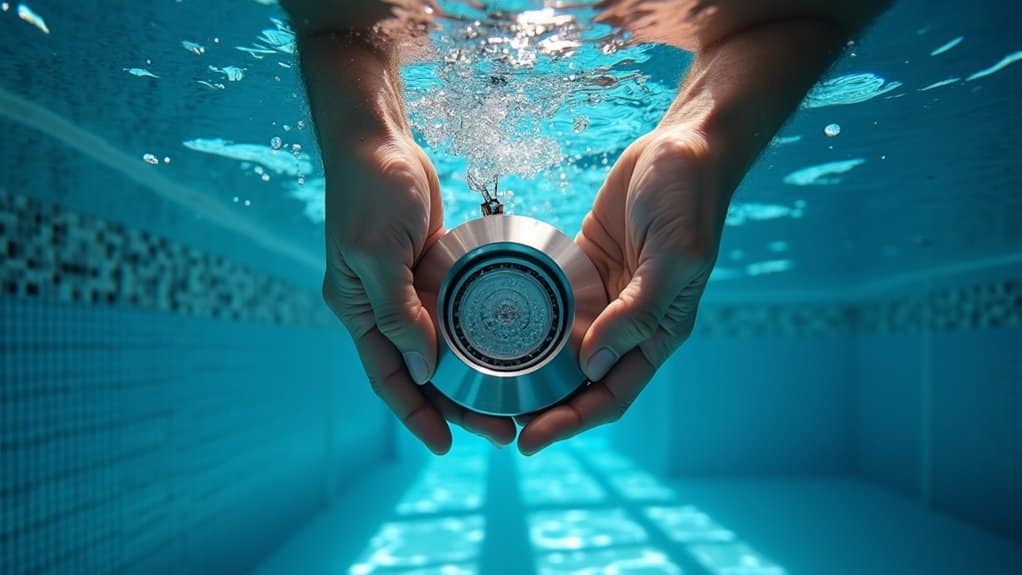
Because proper positioning directly determines both safety and illumination quality, you’ll need to follow specific guidelines when installing pool lights.
Position your fixtures with the lens top at least 18 inches below the waterline, adhering to Canadian standards’ 20-inch maximum. Space lights every 6 8 feet along pool walls for uniform coverage. Niche mounting requires flush installation below water surge lines. Your directional aiming should orient lights away from spectator areas to minimize glare while maximizing the longest pool dimension for optimal coverage. LED fixtures installed in properly sealed niches offer 50,000+ hour lifespans that significantly extend the interval between maintenance replacements compared to halogen alternatives. The light niche should be installed once the pool walls are erected to ensure proper structural integration. A qualified electrician should oversee the complete installation process to meet local safety standards and electrical codes.
Key installation considerations:
- Install junction boxes 18 inches above the waterline, 8 10 feet from the pool’s edge
- Run waterproof conduit for all wiring connections
- Leave 3 4 feet of service loop cord in the niche for maintenance access
- Verify fixture compatibility with your pool’s material finish
- Guarantee GFCI protection on all circuits
Safety and Regulatory Standards
While proper installation guarantees functional lighting, adhering to established safety and regulatory standards safeguards swimmers and facility operators from electrical hazards and visibility-related accidents. You must verify compliance requirements align with NEC guidelines, ISPSC codes, and UL-listing standards for all underwater fixtures. Your facility requires minimum 200 lux illumination on pool decks and water surfaces, with emergency backup lighting providing at least 10 lux during power failures. You’ll need qualified electricians for installation and maintenance to meet electrical codes. Your regulatory documentation must include weekly light-level readings, inspection logbooks, and corrective action records. The designated pool operator bears responsibility for ensuring proper pool illumination is maintained through all periods of operation and maintenance. You should immediately close pools if lighting falls below standards, reopening only after certified repairs. These documentation practices demonstrate your commitment to safety compliance and risk management.
Benefits of Pool Lighting
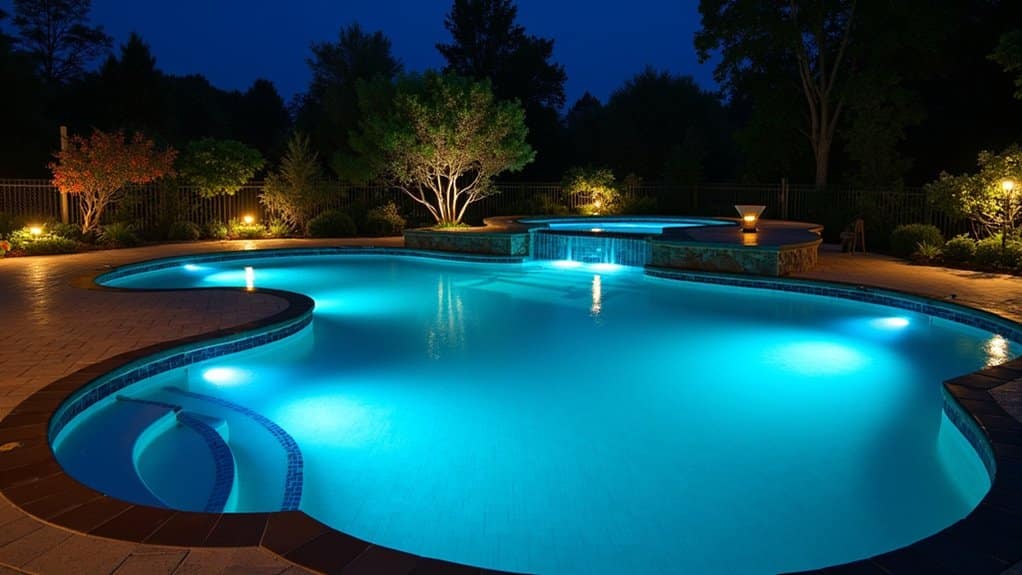
You’ll discover that modern pool lighting transforms your aquatic environment through three distinct advantages: creating nighttime ambiance that enhances visual appeal, improving water safety by illuminating hazards and activity zones, and delivering energy-efficient solutions that reduce operational costs to mere pennies daily while cutting electricity consumption by up to 85% compared to traditional incandescent systems. LED technology’s 50,000-hour lifespan minimizes maintenance interruptions, allowing you to maintain consistent illumination schedules without frequent replacements. Strategic placement of underwater and perimeter lights enables you to customize atmospheric conditions while simultaneously strengthening safety protocols for evening pool activities.
Nighttime Ambiance and Appeal
When darkness falls, strategically positioned pool lights transform your backyard into an illuminated focal point that extends the visual impact and usability of your outdoor space. You’ll create a compelling social atmosphere that encourages evening gatherings and entertaining.
Modern pool lighting systems deliver precise control over ambiance through:
- Colored LED options that establish distinct moods cool blues for relaxation or vibrant hues for celebrations
- Underwater placement that highlights architectural features, waterfalls, and unique tile work with dimensional depth
- Subtle illumination preventing harsh glares while maintaining gentle, inviting aesthetics
- Strategic landscaping accentuation that complements surrounding design elements and property aesthetics
- Programmable customization enabling dynamic scenes tailored to specific occasions and preferences
You’ll maximize your pool’s nighttime appeal while creating functional spaces for year-round entertainment and social interaction.
Enhanced Water Safety
Because darkness obscures water depth, pool boundaries, and potential hazards, strategic lighting installation fundamentally transforms your pool into a safer aquatic environment. Enhanced swimmer visibility directly reduces collision risks and misjudgments that cause injuries. Properly illuminated pool edges, steps, and ladders minimize tripping hazards during entry and exit phases.
Underwater lighting enables you to identify obstacles and equipment quickly, preventing accidental contact. Consistent, shadow-free illumination across the entire pool surface supports effective supervision, allowing you to monitor multiple swimmers simultaneously and respond rapidly to distress situations.
Well-designed lighting systems meet UL-listing requirements and comply with local safety codes, ensuring electrical safety through proper grounding and bonding. Regular maintenance sustains compliance and reliability. Your illuminated pool demonstrates commitment to injury prevention while creating confidence among swimmers of all experience levels.
Energy-Efficient Lighting Solutions
While enhanced water safety creates the foundation for responsible pool ownership, the operational reality of maintaining traditional lighting systems demands significant ongoing investment. LED pool lighting transforms this equation through superior efficiency and long term investment benefits that compound annually.
You’ll experience dramatic reductions in electricity consumption LEDs use 80 90% less energy than incandescent systems, cutting daily operating costs from $1 to mere cents. This efficiency delivers measurable environmental impact reduction by decreasing greenhouse gas emissions and lessening strain on power infrastructure.
Key advantages include:
- Extended lifespan of 25,000 50,000 hours versus 1,000 hours for traditional bulbs
- Minimal maintenance expenses through reduced replacement frequency
- Consistent brightness output over decades of operation
- Cooler operation eliminating hazardous materials
- Smart control capabilities enabling customized illumination
You’ll recoup your initial investment through lower utility bills while supporting sustainability goals simultaneously.
Maintenance and Troubleshooting
How do you keep your pool lights functioning safely and reliably for years? You’ll start by turning off power at the circuit breaker before any maintenance work. Inspect your cord insulation regularly for cuts or damage that could allow water infiltration. During bulb changes, perform fixture gasket replacement to maintain watertight seals and prevent electrical shorts. Clean lenses quarterly to remove mineral deposits and algae that reduce light output.
When troubleshooting, check for tripped GFCI breakers first resetting often restores functionality. If you notice flickering lights, suspect corroded terminals or poor connections. Water inside fixtures indicates a compromised seal requiring immediate gasket inspection. For wiring damage or intermittent operation, consult a licensed electrician. Seasonal inspections at pool opening and closing catch problems before peak usage periods, ensuring safe, efficient operation.
Choosing the Right Lighting System for Your Pool
Selecting the ideal pool lighting system requires you to evaluate multiple variables: energy efficiency, lifespan, safety requirements, installation complexity, and aesthetic preferences.
LED technology dominates modern installations due to superior lighting efficiency and 30,000 50,000 hour operational life. Halogen alternatives provide intense brightness but consume considerably more energy. Fiber optic systems eliminate electrical hazards by keeping current outside the water, though they demand complex installation.
Consider these factors when deciding:
- Energy consumption: LEDs reduce operational costs by up to 80% versus incandescent/halogen
- Lifespan requirements: Calculate replacement frequency against budget constraints
- Safety compliance: Verify GFCI protection and local electrical code adherence
- Lighting customization: Assess programmable color capabilities and smart control integration
- Installation demands: Budget for professional technician fees and housing/bonding requirements
Combine underwater and perimeter lighting to maximize visibility and safety while achieving your desired ambiance.
Frequently Asked Questions
How Much Does It Cost to Install Underwater Pool Lights in a Residential Pool?
You’ll spend $700 $1,700 installing a single underwater pool light in your residential pool. Your actual pool lighting installation costs depend on which pool lighting upgrade options you choose. Basic LED models run $700 $900 installed, while color-changing LEDs reach $1,500 or higher. Incandescent lights cost $450 $650, and fiber optic systems run $1,300 $1,700. You’ll also need to factor in electrician labor ($50 $130 hourly), potential electrical upgrades ($350 $4,000), and permits ($50 $350).
Can Existing Pool Lights Be Upgraded to LED Without Replacing the Entire Fixture?
Yes, you can upgrade your existing pool lights to LED without replacing the entire fixture. You’ll simply swap out the old bulb if the base matches your housing. LED retrofits offer you various color temperature options to customize your pool’s ambiance. However, you should methodically verify manufacturer specifications and installation considerations beforehand. Some older fixtures may require housing replacement for ideal performance. Professional installation’s recommended for complex setups to guarantee proper fit and safety certifications.
What Is the Average Lifespan of LED Pool Lights Compared to Halogen Bulbs?
You’ll find that LED pool lights last 25,000 50,000 hours (10 20 years), while halogen bulbs only reach 1,500 5,000 hours (2 5 years). That’s roughly 20 times longer lifespan. You’ll appreciate LED’s energy efficiency considerations they consume less power while delivering superior longevity. Your maintenance requirements drop considerably since you’re replacing LED units far less frequently than halogen bulbs, reducing both labor costs and operational downtime enormously over time.
Do Pool Lights Increase Electricity Bills Significantly, and What Are Monthly Operating Costs?
You’ll find that LED pool lights won’t drastically strain your monthly operating budget. Running an 42W LED fixture for 8 hours daily costs you approximately $1.50 $3 monthly, depending on local rates. Your total pool electricity expense typically ranges $30 $120 monthly, with lighting representing a trivial fraction. However, you should consider energy usage considerations carefully: traditional halogen bulbs cost $10 $18 monthly per light, making LEDs considerably more economical for your household.
Can Pool Lights Be Controlled Remotely or Integrated With Smart Home Automation Systems?
Yes, you can absolutely control your pool lights remotely and integrate them with smart home systems. You’ll find RF remotes, Bluetooth, and Wi-Fi options that let you manage colors and brightness wirelessly. You’ve got compatibility with Google Home, Alexa, and Apple HomeKit for seamless automation. Through dedicated apps, you can schedule lighting, sync multiple zones, and activate custom scenes from anywhere. Voice control features also enable hands-free operation via digital assistants for ultimate convenience.