
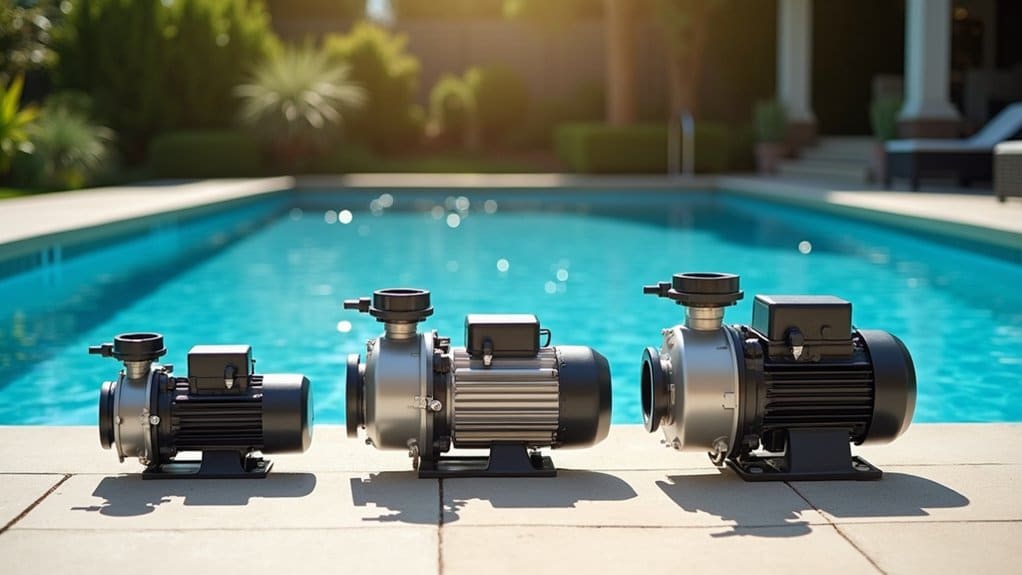
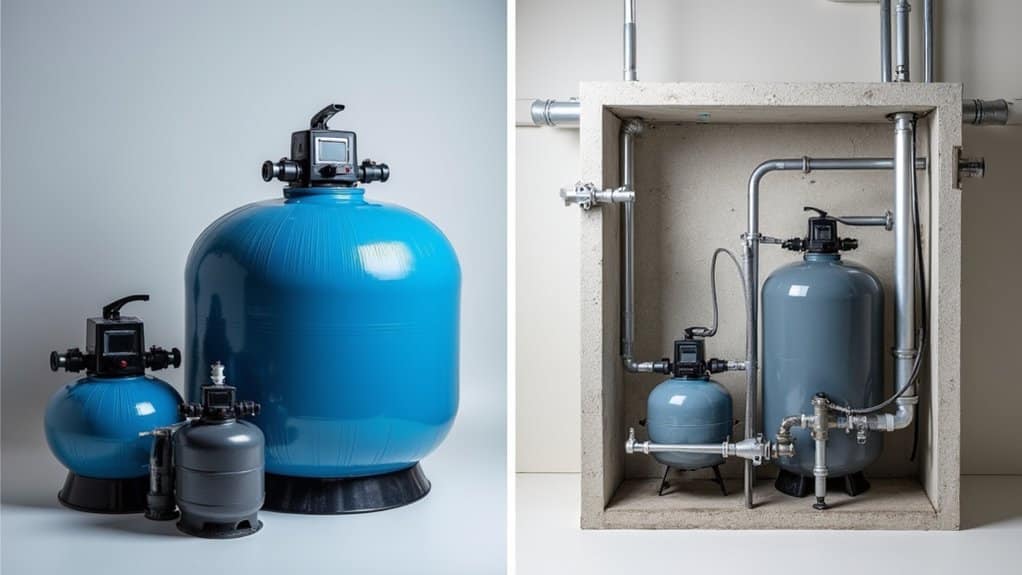


If you live in a cold climate, a gas heater’s your best bet it’ll raise water temperature 1 3°F per hour regardless of air temp. In mild climates above 50°F, a heat pump delivers 500% 600% efficiency at a fraction of gas costs. Sun-rich regions benefit most from solar heaters, cutting heating expenses by up to 70%. When you choose a pool heater, your swim frequency matters just as much, and matching it to the right system can save you thousands annually. If you live in a cold climate, a gas heater is your best option, raising water temperature by 1 3°F per hour regardless of air temperature. In milder climates above 50°F, heat pumps offer 500% 600% efficiency at significantly lower operating costs, while sun-rich regions benefit most from solar heaters, cutting heating expenses by up to 70%. Your swimming frequency also plays a key role in system selection, and aligning your setup with how to choose the right size pool filter ensures balanced performance and long-term savings.
The Two Factors That Pick Your Pool Heater
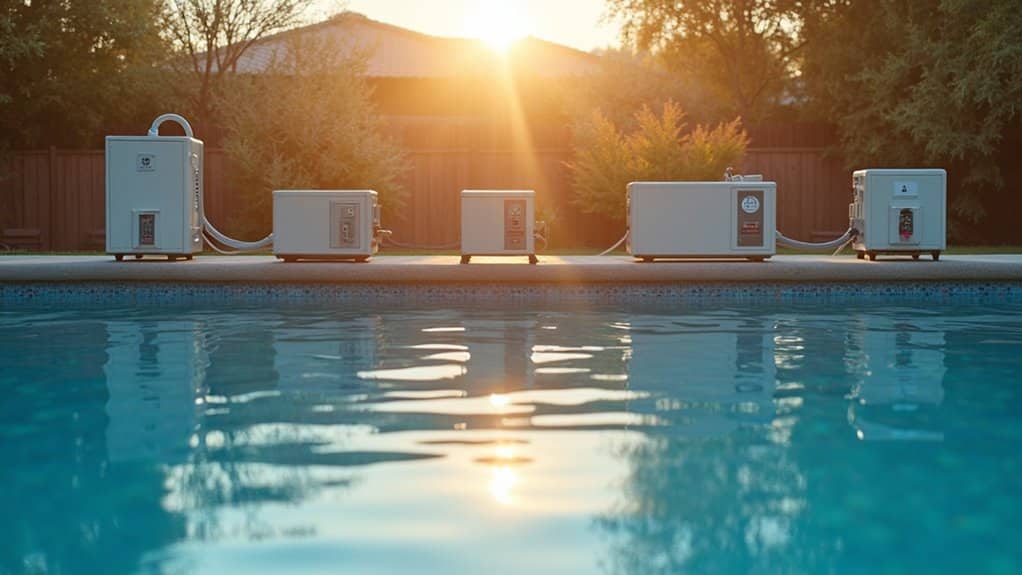
In warm climates, heat pumps leverage ambient air temperature, making them the leading energy-efficient pool heater option for regular swimmers. Cold climates demand gas heaters that fire up fast regardless of outside conditions. Gas heaters can raise water temperature 1 – 3°F per hour, making them the fastest option available for pools in any weather. When comparing a gas vs electric pool heater, usage frequency tips the scale. Occasional swimmers benefit from gas heaters’ rapid heating, while daily users save more long-term with electric heat pumps. For those seeking year-round versatility, hybrid heating systems combine both technologies with four operating modes to adapt to changing seasonal demands. Match these two factors correctly, and you’ll avoid overspending on energy and equipment. Keep in mind that energy consumption increases by 10% 30% per degree rise in temperature, so selecting the right heater for your climate and usage pattern has a direct impact on long-term operating costs.
Pool Heater Types by Climate Zone: A Quick-Match Guide
How do you know which heater matches your region? Start with this pool heating system guide broken down by climate zone.
In cold climates, gas heaters deliver rapid warmth regardless of outside temperatures ideal for sporadic use or year-round swimming. Moderate climates favor heat pumps, which extract ambient air heat efficiently above 58°F. When evaluating a pool heat pump vs solar heater, solar wins in hot, sunny regions where ambient warmth already reduces heating demands.
Tropical climates rarely need aggressive heating; heat pumps or solar systems handle cooler nights efficiently. Variable climates benefit from hybrid gas-heat pump systems with smart controls that optimize seasonal performance.
Proper swimming pool heater sizing within each zone guarantees you’re not overspending on energy or equipment capacity. when considering factors like location, climate, and the pool’s intended use, it’s also important to know how to choose a pool company that understands these needs. A reliable company will guide you through the process of selecting the right heater and ensuring proper installation.
Gas Pool Heaters: Best for Cold Climates and Quick Heat
If you need reliable pool heating when temperatures drop below 50°F, gas heaters are your strongest option they operate effectively in conditions that cause heat pumps to lose significant efficiency. Their combustion-driven design delivers rapid heating at approximately 1 1.25°F per hour, making them ideal if you use your pool periodically and want quick warm-ups rather than continuous operation. When sizing a unit, calculate your required BTU output using the formula Pool Area × Temperature Rise × 12, and consider that stepping up from a 250,000 to a 400,000 BTU model can cut heating time by roughly 10 minutes per 1,000 gallons.
Cold Weather Performance
Because gas heaters generate warmth through combustion rather than ambient air extraction, they maintain peak performance in temperatures well below freezing a critical advantage over heat pumps, which lose efficiency once conditions drop below 50°F. When assessing how to choose a pool heater for harsh climates, prioritize gas systems for reliable pool temperature control across states like Minnesota, Michigan, and Colorado.
Key cold-weather performance metrics to evaluate:
- Advanced gas models maintain 89 95% efficiency ratings during winter operation
- Gas units deliver rapid temperature increases per hour versus extended heat pump cycling times
- Pool heating cost can reach five times higher than electric alternatives during extreme cold
- Hybrid systems switch to gas mode automatically, overcoming heat pump limitations while preserving year-round efficiency
Rapid Heating Capability
When you need your pool ready on short notice, gas heaters deliver unmatched heating speed compared to heat pump and solar alternatives. Pre-mixed combustion technology in modern models enables ultra-fast heat-up, maintaining any desired temperature regardless of weather conditions. This makes gas heaters ideal if you use your pool periodically or want to extend your swimming season.
| BTU Output | Best For | Speed Advantage |
|---|---|---|
| 75,000 150,000 BTU | Small pools/spas | Baseline heating rate |
| 250,000 400,000 BTU | Standard residential pools | 18% faster per additional 100,000 BTU |
| 450,000 500,000 BTU | Large residential pools | Fastest available option |
You’ll want approximately 100,000 BTU for every 10,000 gallons of pool water. Upgrading from a 250,000 to a 400,000 BTU heater dramatically increases heating speed without proportionally raising gas costs.
Heat Pumps: The Efficient Pool Heater for Mild Climates
Heat pumps stand out as the most energy-efficient option for pool owners in mild climates, delivering 500% 600% efficiency by extracting warmth from ambient air rather than generating it directly. They perform exceptionally well above 50°F ambient temperature, with COP values ranging from 4 to 7 depending on conditions.
When sizing a heat pump, match BTU output to your pool’s volume:
- Pools up to 10,000 gallons 60,000+ BTU output
- Pools up to 15,000 gallons 90,000+ BTU output
- Pools up to 20,000 gallons 120,000+ BTU output
- Custom sizing Calculate surface area × temperature rise × 12
You’ll save up to 80% on operating costs versus gas heaters, with daily expenses between $0.84 and $1.80. Higher COP models deliver the strongest long-term returns.
Solar Pool Heaters: Lowest Cost in Sun-Rich Regions
If you’re in a sun-rich region, solar pool heaters can cut your heating costs by up to 70% annually since they rely on free sunlight as their primary energy source. However, their performance is climate-dependent output drops considerably on cloudy days and in areas with limited solar exposure, making them a poor fit for colder, overcast climates. To maximize efficiency and reduce heat loss during off-hours, you should pair your solar system with a pool cover, which helps maintain temperature gains and extends the practical benefits of your investment.
Free Sunlight Energy Source
Solar pool heaters convert up to 80% of available solar radiation into usable heat, producing approximately 1,000 1,200 BTU per square foot per day under ideal conditions making them the lowest-cost heating option in sun-rich regions.
You’ll see measurable differences in output based on environmental variables. Here’s what drives real-world performance:
- Clear-sky days deliver 100% rated efficiency, while overcast conditions reduce output to 60 80% capacity
- Temperature differential per pass ranges from 3 8°F, influenced by solar intensity, flow rate, and wind exposure
- Annual heating cost reductions reach up to 70% compared to gas or electric alternatives
- Installation costs fall between $3,000 $7,000, with annual operating expenses staying below $550
These metrics confirm solar’s advantage where consistent sunlight supports reliable thermal gain.
Climate Dependency Limitations
Because solar pool heaters depend entirely on available sunlight, their cost advantage shifts dramatically based on geographic location. In the Northeast US, you’ll only capture 3 5 peak sun hours daily, while the Pacific Northwest averages just 2 4 hours. These reduced windows directly limit heat generation and extend payback timelines.
Cloudy afternoons, foggy mornings, and cool overnight temperatures compound the problem erasing daytime thermal gains during spring and fall shoulder seasons. If you’re operating in these climates, you shouldn’t rely on solar as your primary heating source.
However, in sun-rich regions like Arizona or Florida, where 5 8 peak sun hours are standard, solar heaters deliver the lowest annual operating costs available. You’ll want to match your geographic solar resource to system expectations before committing to this technology.
Pairing With Pool Covers
Even though solar heaters deliver the lowest operating costs in sun-rich states like Florida and Arizona, you’ll leave significant performance on the table without a pool cover. Covers directly address the primary inefficiency in solar systems nighttime and surface heat loss ensuring your daytime solar gains aren’t wasted.
Here’s how covers optimize your solar investment:
- Minimize overnight thermal loss during spring and fall shoulder seasons when ambient temperatures drop.
- Retain accumulated heat from daily gains of 2-8°F, maintaining consistent water temperatures.
- Extend your usable swim season beyond the typical 6-9 month window by preserving warmth during variable weather.
- Maximize collector efficiency by pairing 100% collector-to-surface coverage with consistent cover use for reliable comfort.
You’ll achieve measurably better results by treating covers as essential system components, not optional accessories.
Occasional vs. Daily Swimmers: Which Pool Heater Fits Your Schedule?
How often you actually use your pool should drive your heater selection more than any other single factor. Gas heaters deliver rapid temperature recovery, making them ideal if you’re heating for weekend gatherings or seasonal guests. Heat pumps, by contrast, operate most efficiently under consistent, daily use where gradual heating offsets lower operating costs.
| Factor | Gas Heater | Heat Pump |
|---|---|---|
| Best For | Occasional/weekend use | Daily/consistent use |
| Heating Speed | Rapid on-demand | Gradual, steady |
| Operating Cost | Higher per use | Lower monthly |
| Lifespan | 5 10 years | Up to 15 years |
If your pool sits idle for extended periods, you’ll waste energy running a heat pump. Match your heater type directly to your actual usage frequency.
Can a Hybrid Pool Heater Setup Cover Every Season?
When temperatures swing from summer highs to near-freezing lows, can a single heating system realistically handle every condition your pool faces? A hybrid pool heater addresses this by offering four distinct operating modes:
- Heat pump mode prioritizes efficiency during mild conditions
- Gas mode delivers rapid heating at 93% thermal efficiency
- Hybrid mode calculates ideal heating based on water temperature differential
- Dual mode runs both systems simultaneously for fastest recovery
Below 37°F, heat pump efficiency drops considerably, but the gas-fired component compensates automatically. Onboard intelligence selects the ideal mode per season, while dual titanium heat exchangers guarantee year-round durability. You’ll extend your swimming season without manually switching between separate systems.
What Each Pool Heater Type Actually Costs to Run
Five distinct heater types compete for your pool budget, and their operating costs diverge dramatically from under $100 annually to well over $5,000.
| Heater Type | Annual Operating Cost |
|---|---|
| Solar | $80 $200 |
| Heat Pump | $500 $1,200 |
| Natural Gas | $1,500 $3,000+ |
| Electric Resistance | $3,000 $5,000+ |
Heat pumps cost roughly half what natural gas demands and a quarter of propane’s burden. You’ll find electric resistance heaters rarely cost-effective for pools exceeding 5,000 gallons. Solar systems carry higher upfront investment $3,000 $4,000 but pay for themselves within 1.5 7 years through near-zero fuel expenses. Propane runs 70% less efficiently per dollar than natural gas, pushing monthly bills to $400 $850+ during daily use.
Pick Your Pool Heater: Climate, Usage, Budget, Fuel Type
Operating costs tell only part of the story your ideal pool heater depends on four interconnected factors: climate, usage patterns, budget, and available fuel type. considering how to choose a pool liner is also crucial for ensuring the longevity and appearance of your pool. The right liner can complement your backyard and withstand the various conditions it will face over time. Additionally, evaluating the maintenance requirements and potential for fading will help you make the best choice for your settings.
- Climate Gas heaters deliver reliable heat in cold regions regardless of outdoor temps. Heat pumps require ambient air above 58°F, making them best for mild climates. Solar systems excel where sunlight’s abundant.
- Usage Sporadic swimmers benefit from gas’s rapid 2 5°F/hour heating. Consistent daily use favors heat pumps’ efficient maintenance heating.
- Budget Gas installations start at $1,500, while solar’s 15 20 year lifespan yields superior long-term savings. Heat pumps save roughly $400 annually at 85°F settings.
- Fuel type Propane works where gas lines aren’t available. Hybrids combine gas and electric for adaptive efficiency across seasons.
Frequently Asked Questions
How Long Does a Typical Pool Heater Last Before Needing Replacement?
You can expect a typical pool heater to last between 5 and 20 years, depending on the type you choose. Gas heaters generally wear out fastest at 5 10 years, while electric heat pumps deliver 10 20 years of service. Solar heaters offer the longest lifespan at 15 20 years. You’ll extend your heater’s life considerably by maintaining proper water chemistry, scheduling regular maintenance, and ensuring quality installation from the start.
Do Pool Heaters Require Professional Installation or Can Homeowners Install Them?
You’ll need professional installation for most pool heater setups. Licensed technicians handle gas line routing, electrical hardwiring, and dedicated circuit connections tasks that require permits and code compliance. You can tackle basic plumbing connections and equipment pad preparation yourself, potentially saving $500 $1,000 in labor costs. However, gas heaters demand a licensed gas technician, and heat pumps require a certified electrician for bonding and wiring. Professional installation typically takes 4 8 hours.
How Noisy Are Different Pool Heater Types During Normal Operation?
You’ll find that gas heaters operate relatively quietly since they lack large external fans, while electric heat pumps generate 40 65 decibels during normal operation comparable to a standard air conditioner. Solar systems produce minimal noise, limited to circulating pumps. Among heat pumps, models like the AquaCal SQ145 (48 dB) and Hayward W3HP50CL (50 dB) feature sound-dampening technology. You can further reduce noise by positioning units strategically and using anti-vibration pads.
Will Adding a Pool Heater Affect My Homeowner’s Insurance Policy?
Adding a pool heater typically won’t trigger a separate insurance adjustment, but it can increase your pool’s replacement cost, which affects your property coverage limits. You should notify your insurer about the installation so they can reassess your “other structures” or dwelling coverage accordingly. If the heater raises your pool’s overall value, you’ll want to confirm your coverage limits adequately reflect that change to avoid gaps during a claim.
What Safety Features Should I Look for When Buying a Pool Heater?
You should prioritize GFCI protection, which the NEC requires for heaters near pools to prevent electrical shock. For gas models, look for electronic ignition safeguards, automatic shut-off controls, and pressure relief valves these prevent gas buildup and overpressure hazards. You’ll also want a check valve to block chemical backflow. Verify the unit meets DOE energy conservation standards and any regional emissions requirements. Professional installation‘s essential for proper water flow and overheating prevention.