
You’ll maintain peak filtration efficiency by regularly rinsing and cleaning your pool filter. Debris accumulation reduces your filter’s capacity to capture microparticles and organic waste, while clogged filters force your pump to work harder, potentially increasing energy bills by 75%. Regular cleaning prevents costly equipment failures, eliminates harmful microorganisms like Cryptosporidium, and guarantees crystal-clear water. Neglected filters trigger expensive cascading problems that compromise safety and swimmer health. Understanding each maintenance benefit reveals why systematic filter care safeguards your entire pool investment.
Filtration Efficiency & Water Quality
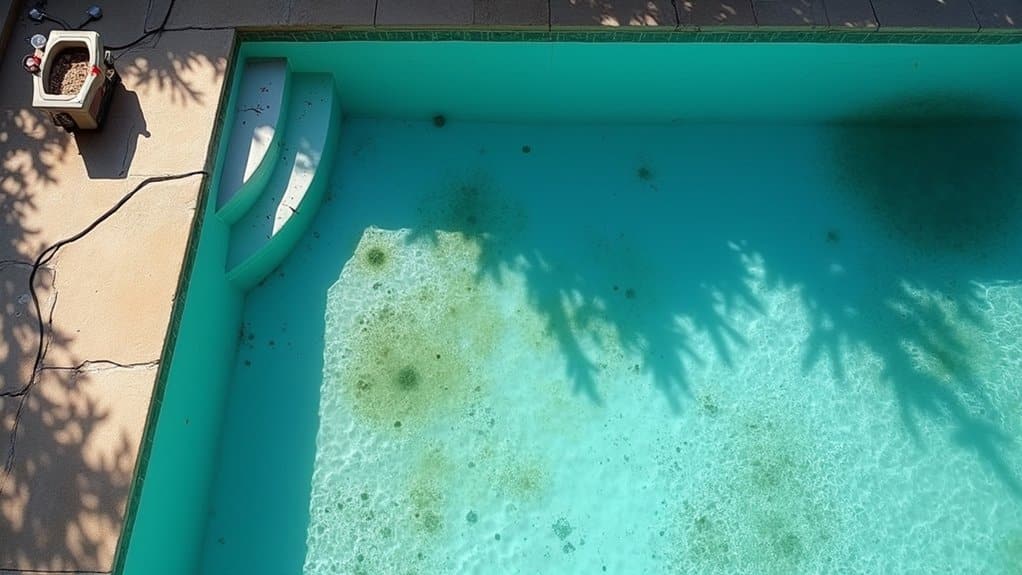
Why does your pool’s water turn cloudy despite regular chemical treatment? Your filter’s declining efficiency is likely the culprit. As debris accumulates, your filter loses its capacity to capture microparticles and organic waste, directly compromising water clarity. Reduced circulation rates create dead spots where contaminants settle unevenly, affecting particle settling rates throughout your pool.
Clean filters maximize chemical distribution, enabling consistent contaminant removal and biological contamination control. When filters clog, you’ll notice rising pressure readings and weakened return jets, indicators that debris recirculation has begun. Your water becomes murky because the filter can’t effectively trap fine particles and organic material anymore. Monitoring your pressure gauge helps you determine when cleaning is needed to maintain optimal filtration performance. Insufficient pump run time of at least 8 hours daily can also prevent proper water circulation and filtration effectiveness. Extended equipment lifespan is another key benefit of maintaining clean filters through regular professional service.
Regular filter maintenance restores ideal circulation and clarity. You’ll achieve stable, transparent water by preventing debris recirculation and maintaining proper filtration performance.
Equipment Longevity & Cost Reduction
Most pool owners don’t realize that neglected filter maintenance triggers a cascade of costly equipment failures. When you skip regular rinsing, clogged filters force your pump to overwork, cutting its lifespan from 8-12 years to just a few. This excessive backpressure stresses automation valves, heaters, and chlorinators, accelerating corrosion and mechanical wear. Skipping weekly backwashing alone costs you approximately 1 year of filter life. Regular filter cleaning is essential to maintain efficiency and longevity, as persistent debris buildup can lead to abnormal pressure gauge readings and significantly reduced filtration performance. Soaking your cartridge in a cleaning solution helps remove built-up dirt and debris that regular rinsing alone cannot eliminate.
For equipment inspection and budget forecasting, consider these facts: professional maintenance costs $200 monthly but saves $800-1,200 annually in premature replacements. Neglected filters require $200-300 in extra cartridge costs every few years, while filter units themselves run $300-$800. Smart monitoring systems deliver $1,500 savings over a decade.
Your consistent filter care prevents tank cracking, reduces repair emergencies, and keeps your entire system operating within recommended pressure ranges, ultimately protecting your investment.
Energy Efficiency
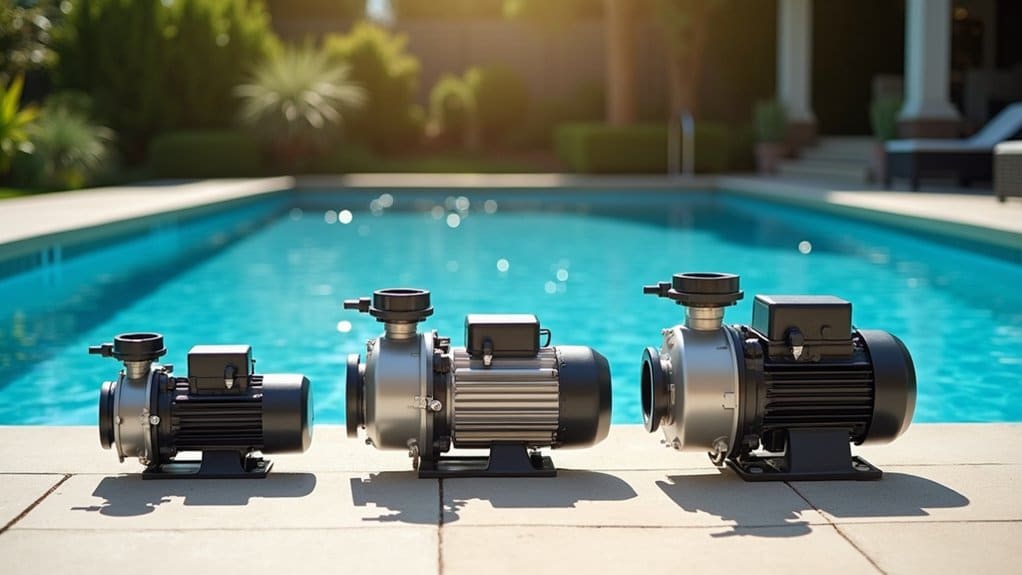
Proper filter maintenance directly reduces your pump’s energy demand and operational costs. When you keep filters clean, you’ll optimize water flow, requiring less pump strain and runtime. Clogged filters force your pump to work harder, potentially increasing energy bills by up to 75%.
You’ll achieve energy management optimization by implementing shorter filtration cycles with clean filters, cutting daily runtime by up to 75%. Consider upgrading to energy-efficient filtration systems like cartridge filters, which demand less energy than traditional sand filters and eliminate water-intensive backwash cycles. Multi-speed and variable-speed pumps can further enhance your system’s efficiency by operating at lower speeds during regular filtration periods.
Regular cleaning also decreases chemical circulation needs, further reducing pump operation time. Scheduling your automatic cleaner to run with your filter pump maximizes cleaning system performance while conserving energy. ENERGY STAR certified equipment guarantees you’re meeting strict efficiency standards. By maintaining your filters systematically, you’ll substantially lower electricity consumption while supporting environmental sustainability and regulatory compliance.
Safety & Swimmer Health
How effectively you maintain your pool filter directly determines whether swimmers remain protected from waterborne pathogens and contaminants. Clean filters eliminate microorganisms like Cryptosporidium and Giardia while promoting even sanitizer distribution, preventing bacterial dead zones. A clean filter captures dirt and debris effectively, which is essential for maintaining proper sanitation throughout your pool system.
| Maintenance Aspect | Health Benefit |
|---|---|
| Regular rinsing | Prevents algae blooms and stagnant conditions |
| Debris removal | Reduces food sources for bacteria and mold |
| Ideal flow | Minimizes organic buildup supporting microbial growth |
| Chemical efficiency | Lowers harsh disinfectant exposure needs |
You’ll notice crystal-clear water boosts emotional wellbeing and swimmer confidence. Turbid water masks hazards and discourages use, undermining community acceptance. Clean filters trap allergens and environmental pollutants, reducing respiratory irritation. Well-maintained filters are essential for effective circulation and disinfection, ensuring that your pool’s defense system operates at peak efficiency. By systematically maintaining your filter, you create a safer swimming environment that reinforces proper health standards and encourages consistent pool usage.
Aesthetic & Owner Satisfaction
Beyond the health imperatives that drive filter maintenance, you’ll find that a clean filter delivers tangible aesthetic rewards that directly enhance your ownership experience. A well-maintained filter produces crystal-clear water that transforms your pool into a visually appealing centerpiece. You’ll notice the immediate visual appeal when debris and microscopic particles disappear, creating sparkling water that invites use. Clean filtration removes tiny particles that may hide nasty microorganisms, ensuring safer swims for you and your family. Regular cleaning prevents the filter media from becoming clogged, which would otherwise reduce the filter’s efficiency and ability to remove contaminants.
This clarity directly supports sensory relaxation; you experience genuine peace of mind observing clean, inviting water daily. The systematic maintenance prevents murky discoloration that diminishes your satisfaction and property ambiance. Regular filter replacement ensures the filtration system operates at peak efficiency, maintaining the visual quality your pool deserves.
You’ll also recognize increased recreational frequency when your pool maintains its attractive appearance. This consistent visual quality elevates your sense of accomplishment in property maintenance while simultaneously boosting your home’s curb appeal and perceived value for potential buyers.
Chemical Efficiency & Cost
A clean filter fundamentally reduces your pool’s chemical demands by minimizing the contaminant load that sanitizers must neutralize. When you maintain your filter properly, you’ll achieve ideal chemical performance because clean filters guarantee even distribution throughout your pool’s circulation system. This prevents uneven sanitizer concentrations that waste chemicals and jeopardize protection.
Your chemical savings increase drastically when filters operate efficiently. You’ll use less chlorine, algaecide, and clarifiers because fewer organics and particulates accumulate. Neglected filters force you into expensive problem-solving cycles, shock treatments, pH adjustments, and repeated dosing that compound costs rapidly. Regular filter maintenance also reduces energy consumption, which further decreases your overall pool operating expenses.
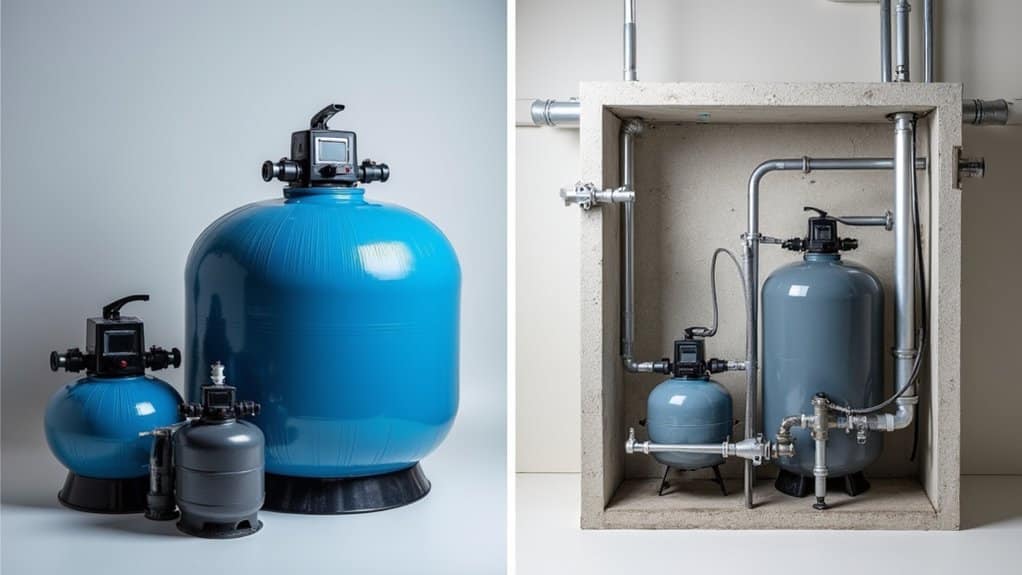
Filter type matters considerably. Cartridge filters deliver superior chemical savings through infrequent cleaning and zero backwashing, while DE filters provide minimal chemical usage despite higher maintenance expenses. Sand filters typically require greater chemical expenditures over time.
Prioritizing filter maintenance directly protects your budget.
Maintaining Your Pool Investment
You’ll protect your pool investment by prioritizing filter maintenance, which directly prevents costly equipment repairs and extends your filter’s operational lifespan. When you establish consistent cleaning routines, you safeguard not only the filtration system but also your property’s overall value and appeal. Your proactive maintenance approach eliminates expensive emergency replacements and preserves the functionality of interconnected circulation components.
Preventing Costly Equipment Repairs
How much will it cost when your pump fails without warning? Equipment repairs typically run $400 $1,000 per incident, while catastrophic filter tank failure demands full system replacement ($250 $1,700).
Regular filter maintenance prevents these emergencies by reducing mechanical stress on your pump and motor. When you keep filters clean, you minimize strain on gaskets, seals, and circulation components, directly lowering your repair liability.
Additionally, routine cleanings establish improved warranty compliance. Most manufacturers require documented maintenance records to honor equipment guarantees. Without proof of proper upkeep, you’ll face denied claims and contested repairs.
Early detection during scheduled cleanings catches cracks and wear before they cause sudden breakdowns requiring expensive emergency service. You’ll protect your investment while maintaining predictable annual maintenance costs ($1,000 $4,000) instead of facing preventable spikes from equipment failures.
Extending Filter Lifespan
When you maintain your pool filter consistently, you’re directly controlling how long it’ll operate before replacement becomes necessary. Cartridge filters typically last 1 3 years with diligent cleaning, while sand media can reach 7 10 years if you regularly backwash to prevent compaction. DE filters extend their lifespan through routine deep-cleaning that removes clogged particles.
Consistent maintenance prevents debris accumulation, which accelerates physical degradation and material fatigue. By reducing exposure to trapped chemicals during regular rinsing, you minimize cracking and warping of filter elements. Proper storage of cleaned cartridges between seasons further protects their integrity.
Documentation of your maintenance schedule strengthens warranty claims and validates manufacturer-estimated lifespans. Early detection of wear, visible cracks, heightened pressure, reduced flow allows you to address issues before catastrophic failure occurs, ultimately preserving your investment.
Protecting Your Property Value
Extending your filter’s operational life directly safeguards your pool’s overall condition, and by extension, your home’s market appeal. When you neglect filter maintenance, you risk costly structural damage that signals broader property neglect to potential buyers, creating home resale challenges that compress your sale price.
Well-maintained pools command 5 8% property value increases in desirable markets. Conversely, deferred maintenance deters buyers who factor repair costs into offers. Consider financing pool maintenance as a strategic investment protecting your equity.
Key maintenance impacts:
- Regular cleaning prevents algae growth and equipment failure
- Functional filters reduce utility costs buyers scrutinize
- Proper upkeep eliminates visible deterioration signals
- Preventive care avoids thousands in resurfacing expenses
- Documented maintenance records demonstrate responsible stewardship
Your filter’s condition directly influences buyer perception and final negotiating power.
Frequently Asked Questions
How Often Should I Rinse and Clean My Pool Filter for Optimal Performance?
You’ll want to rinse and clean your cartridge filter every 2 to 6 weeks during peak season, though you should adjust your filter backwashing schedule based on pressure readings and debris levels. You’ll need more frequent cleaning with heavy pool use. For ideal performance, establish a preventive maintenance routine by checking pressure gauges weekly, clean when readings rise 8 10 psi above baseline. Plan your filter cartridge replacement interval every 3 5 years to maintain peak filtration efficiency.
What Are the Different Types of Pool Filters and Their Specific Cleaning Requirements?
You’ll find two primary filter types in residential pools. Sand filters, the most common choice, trap particles sized 20 40 microns and require backwashing when pressure rises 8 10 psi above normal. Cartridge filters use pleated cartridges for finer 10 20 micron filtration and need only hose rinsing, no backwashing required. Both types demand cleaning when your pressure gauge signals increased resistance, ensuring ideal performance and water clarity throughout your pool season.
Can I Clean My Pool Filter Myself, or Should I Hire a Professional?
You can clean your pool filter yourself, but consider your technical comfort level. DIY filter cleaning saves $100 $150 monthly on service fees and requires basic tools: hoses, buckets, and proper cleaning agents. However, if you’re inexperienced with chemical handling or lack time, professional filter servicing secures thorough results and prevents damage. Professionals access hard-to-reach areas and guarantee proper reassembly, maximizing filter lifespan. Choose based on your expertise and maintenance capacity.
What Signs Indicate My Pool Filter Needs Immediate Cleaning or Replacement?
You’ll notice your filter needs immediate attention when you experience reduced water flow from jets or require frequent backwashing beyond normal intervals. Watch for cloudy water that persists despite chemical balancing, visible debris remaining in the pool, or unusual noises from your pump system. High pressure gauge readings indicate blockage, while cracks in the filter housing demand urgent replacement. If standard cleaning doesn’t restore performance, replacement is necessary.
How Do Seasonal Changes Affect Pool Filter Maintenance Schedules and Cleaning Frequency?
You’ll adjust your filter maintenance based on seasonal weather fluctuations and debris accumulation patterns. Spring requires complete disassembly and thorough cleaning before peak usage begins. Summer demands cleaning every 2 4 weeks due to heavy swimmer load and algae growth. Fall intensifies maintenance as leaves clog filters more frequently. Winter reduces cleaning needs drastically, though you’ll monitor for stagnant water. Each season’s unique environmental conditions directly dictate your cleaning schedule’s intensity and frequency.