
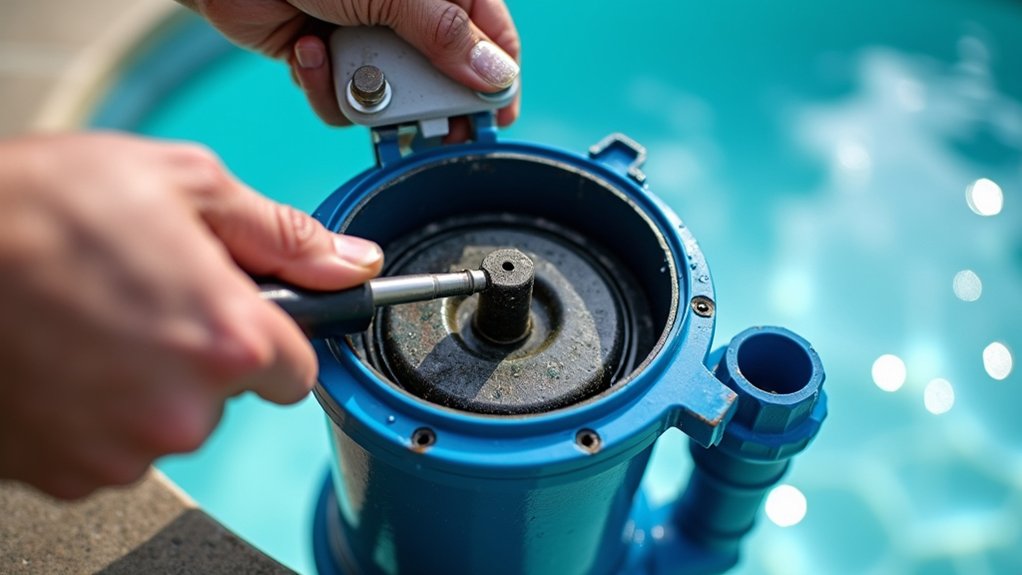
If your pool’s not circulating water, you’re likely dealing with a clogged skimmer basket, an air leak in the suction line, a seized pump impeller, or a dirty filter choking off flow. Check for debris blockages first, then inspect the pump lid O-ring for cracks allowing air ingress. Weak return jets signal line-specific obstructions, while uniformly poor flow points to pump or filter failure. Each cause requires a different fix and we’ll walk you through every one below.
Signs Your Pool Has a Circulation Problem
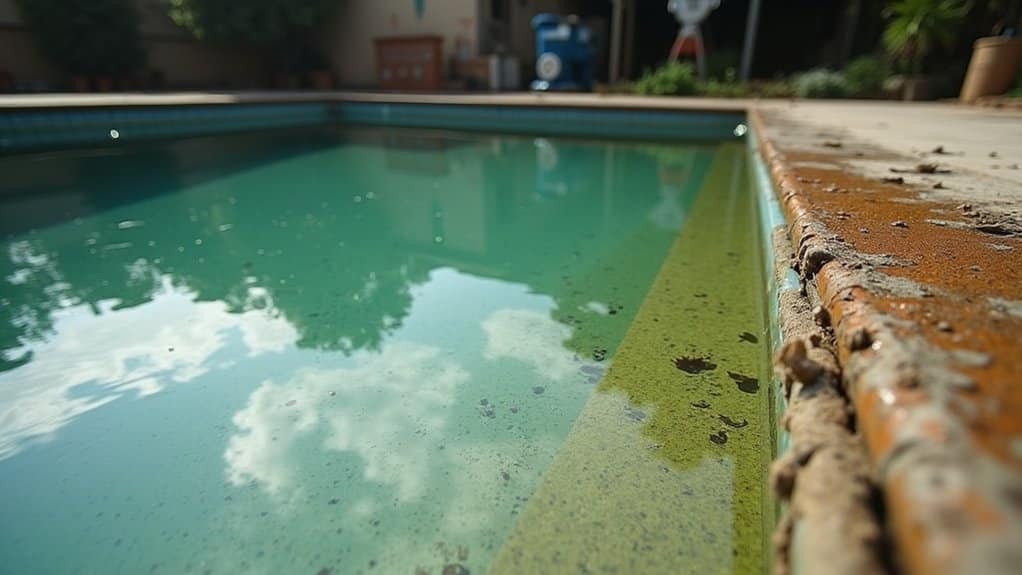
Five key indicators signal a circulation problem in your pool, and catching them early prevents costly damage.
Algae growth in corners or steps points to dead spots where pool circulation problems allow stagnant conditions. Green patches can develop within 48 hours in warm climates.
Cloudy water persisting after shock treatments indicates pool filtration system problems preventing effective sanitation. You’ll notice hazy patches in specific zones.
Debris accumulation in consistent patterns reveals pool water flow issues, as particles can’t reach skimmers. These lingering debris patterns often indicate that dirt and leaves are not being moved effectively to the skimmer for removal.
Uneven chemical distribution produces varying chlorine readings across different locations, causing repeated treatment failures. Without proper circulation, sanitizing chemicals cannot spread evenly throughout the water, leaving some areas vulnerable to contamination.
Temperature variations between pool sections confirm insufficient water mixing. You’ll detect distinct warm or cool zones in stagnant areas requiring immediate diagnostic attention. Left unaddressed, poor circulation can compound into broader water quality issues affecting the entire pool.
How Pool Water Circulation Actually Works
Understanding how your pool’s circulation system operates lets you diagnose failures faster and target the right component when problems arise. Your skimmer pulls roughly 70% of water from the surface while the main drain handles the remaining 30% from the pool’s deepest point.
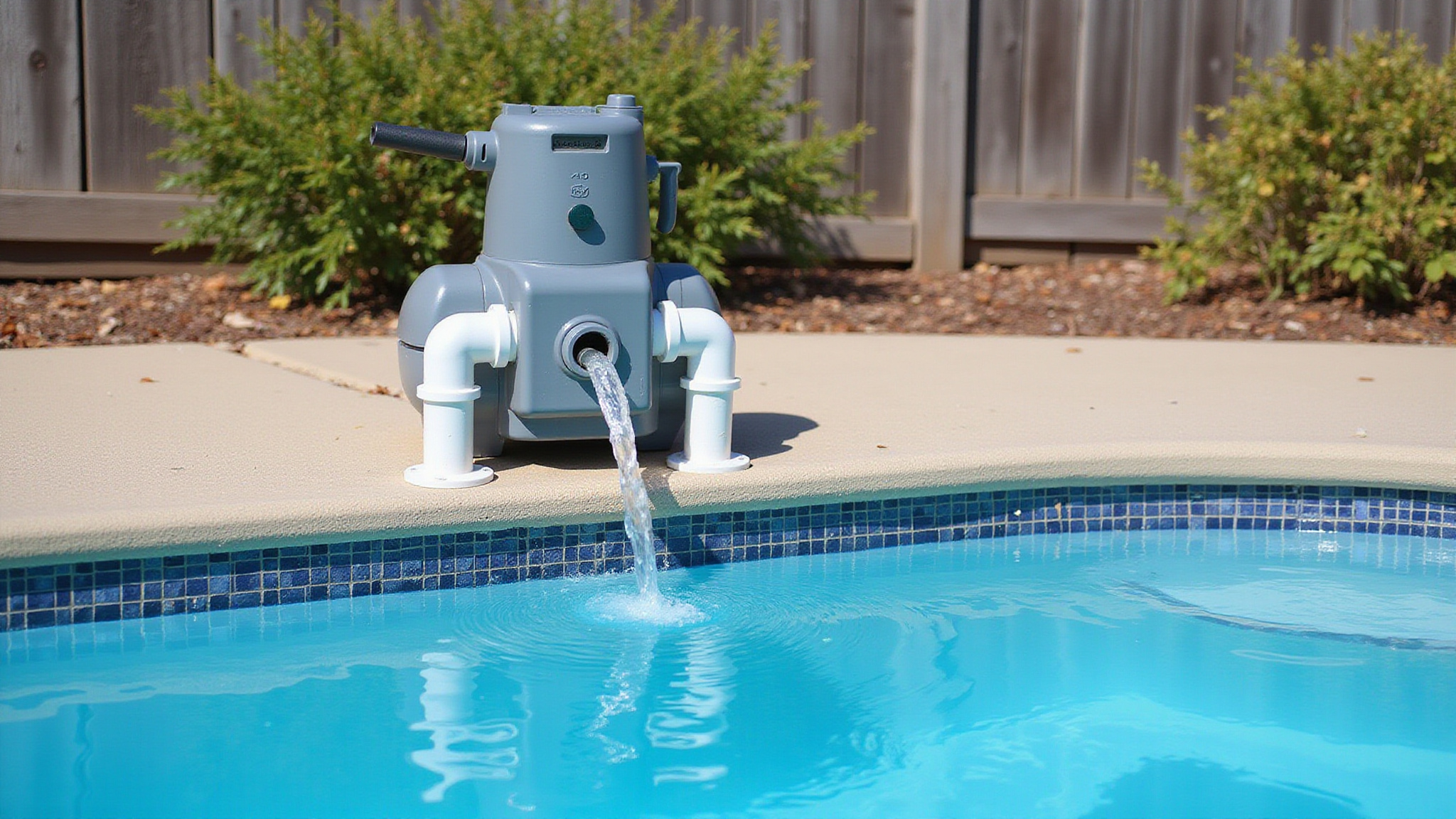
The circulation pump creates vacuum pressure, drawing water through PVC suction lines into a hair/lint trap strainer, then pushing it through the pumping chamber to your filter. Diagnosing pool pump flow issues starts here. Post-filtration, water travels via pressure-side lines to pool return jets, angled slightly upward to promote surface cleaning.
Effective pool maintenance circulation depends on each component functioning sequentially skimmer, pump, filter, returns. A failure at any stage disrupts the entire cycle, causing chemical imbalance and debris accumulation.
Clogged Skimmer Baskets and Stuck Weir Doors
If your pool’s skimmer suction feels weak or inconsistent, you’ll want to start by inspecting the skimmer basket for debris accumulation, cracks, or improper sizing any of these conditions restricts water passage to the pump and triggers downstream circulation failures. A clogged basket prevents smooth water flow and can cause air bubbles, reduced filter pressure, and erratic pool cleaner performance, so you should empty and examine it regularly. Next, check the weir door for sticking or damage, since a malfunctioning weir door compromises the skimmer’s intake efficiency and is often misdiagnosed as a pump or plumbing issue. If your pool’s skimmer suction feels weak or inconsistent, start by checking the skimmer basket for debris buildup, cracks, or improper sizing, as these issues restrict water flow to the pump and lead to circulation problems. A clogged basket can cause air bubbles, low filter pressure, and poor cleaner performance, so regular inspection is essential. Also examine the weir door for sticking or damage, since it directly affects intake efficiency and is often mistaken for pump or plumbing failure especially in cases like pool losing water when pump is on, where circulation issues may be the underlying cause.
Clearing Debris Blockages
To clear the blockage effectively, follow this process:
- Shut off the pump before accessing the skimmer housing.
- Remove the lid, then wiggle and extract the basket carefully.
- Dispose of collected debris away from the pool to prevent re-entry.
- Spray the basket with a hose and inspect it for cracks or structural damage.
Cracked baskets allow fine debris to bypass filtration and reach the pump impeller, compounding circulation failure. Replace damaged baskets immediately.
Fixing Stuck Weir Doors
Even with a clean basket reinstalled, poor surface skimming often points to a stuck or malfunctioning weir door the hinged flap at the skimmer’s throat that traps debris inside once it’s pulled in. If you notice leaves washing back into the pool or the basket draining when the pump cycles on, the weir door likely isn’t seating properly. Another potential issue could be that the pool pump not priming automatically could cause a decrease in water circulation, leading to various water quality problems. It’s essential to monitor the pump’s operation closely, as improper priming might indicate an air leak in the suction lines or an obstruction that needs to be cleared. Regular maintenance of the pump and skimmer area will help ensure optimal performance and prevent future complications.
Inspect the hinge pins for breakage and check for UV warping, debris jams at the pivot area, or friction against a narrowed skimmer throat. Don’t force a stuck door you risk cracking the housing. Instead, wiggle it free gently or shave the sides if clearance is tight. For brittle or waterlogged doors, replace them with a model-matched unit. Regular inspection during basket emptying prevents recurrence.
Air Leaks That Starve Your Pool Circulation
Because air leaks occur on the suction side of your system between the skimmer and the pump impeller they’re often invisible until you notice telltale symptoms: persistent bubbles in the pump strainer pot, air spurting from return jets, or a gurgling whine from the pump housing.
Air leaks hide on the suction side you won’t see them, but bubbles, sputtering jets, and pump noise give them away.
Isolate the leak source through systematic elimination. Check these primary failure points:
- Pump lid O-ring inspect for cracks, flatten spots, or dry rot; lubricate or replace.
- Male adapter joint reapply thread sealant where it meets the pump front.
- Drain plugs confirm they’re torqued to a tight seal.
- Three-way valve stem assess for wear compromising the seal.
Kill pump power, release filter pressure, then prime the strainer box before restarting.
Pump Failures That Stop Pool Water Flow
When your pump motor hums but won’t spin, a seized impeller is the most likely culprit. Kill power at the breaker, remove the housing screws, and extract the impeller assembly. Use a wire tool to clear compacted debris, then reassemble.
| Failure Type | Diagnostic Indicator | Corrective Action |
|---|---|---|
| Seized impeller | Humming, no rotation | Disassemble, clear debris |
| Electrical fault | No response at startup | Reset breaker, inspect wiring |
| Worn bearings | Grinding noise, overheating | Professional motor repair |
Electrical issues account for 60% of pump failures, so always check your breaker and connections first. If you’re hearing grinding or detecting excess heat, worn bearings are generating friction you’ll need a technician for replacement.
Dirty Filters and Valves That Choke Off Flow
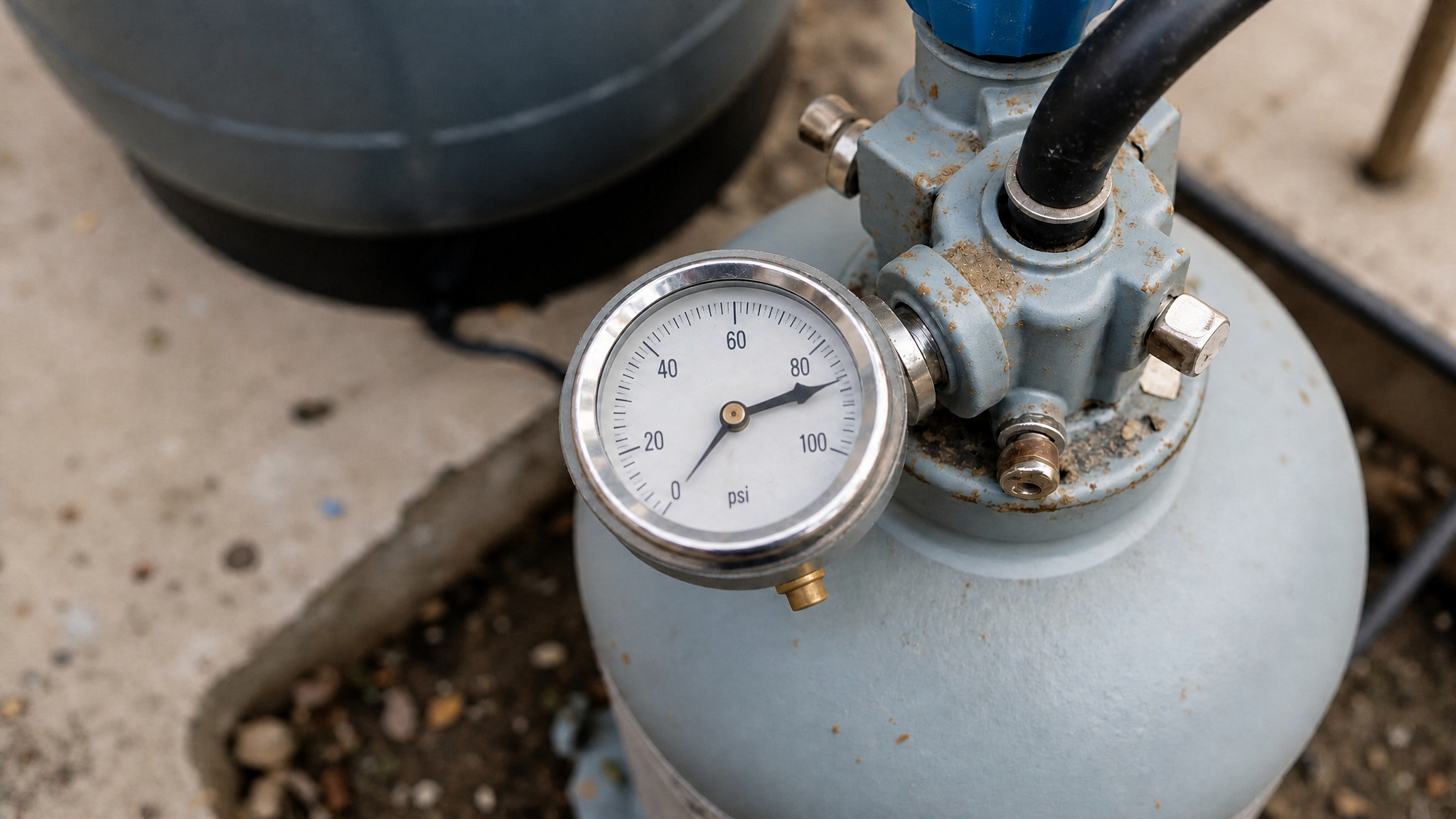
A filter cartridge that’s saturated with debris, oils, and organic matter will choke your system’s flow rate just as effectively as a dead pump. When your pressure gauge reads 8 10 PSI above baseline, you’ve confirmed restricted flow through clogged media.
Diagnose and resolve filter-related circulation failures using these steps:
- Cartridge filters: Rinse pleats at a 45-degree angle with a garden hose never a pressure washer. Soak in TSP solution for 24 hours to dissolve embedded oils.
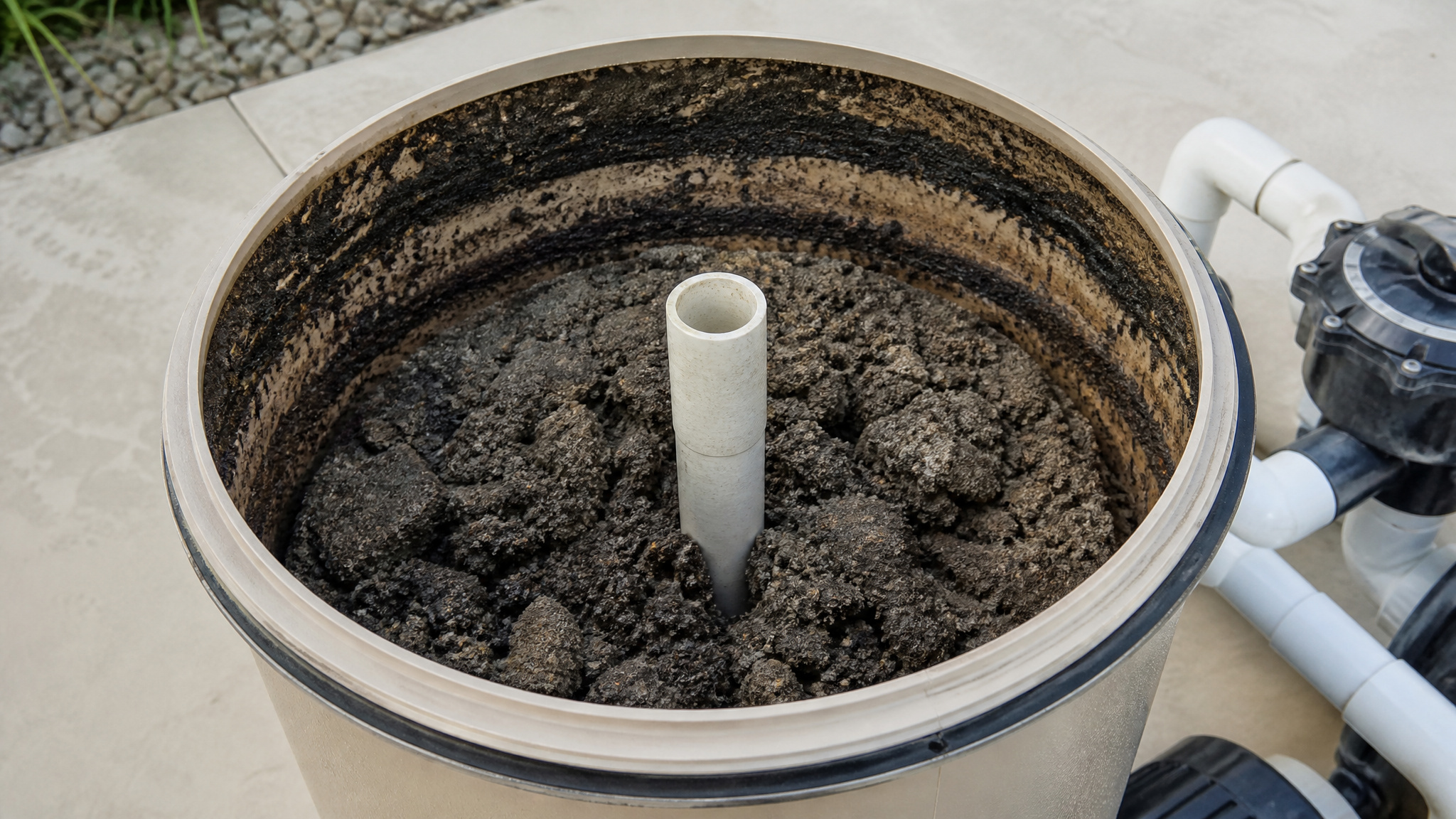
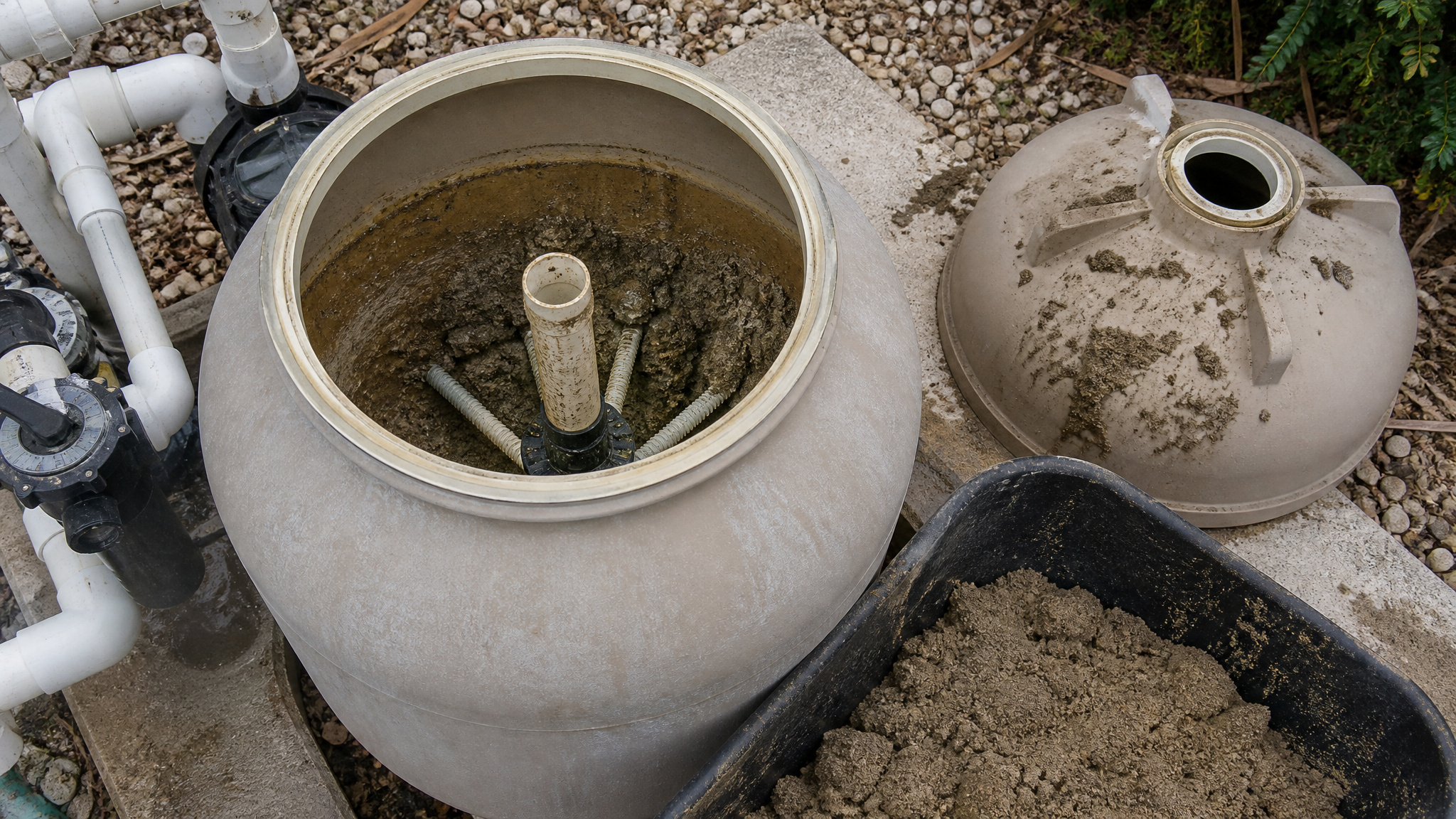
- Sand filters: Backwash via multiport valve until discharge runs clear, then rinse for one minute before returning to filter mode.
- DE filters: Backwash until sight glass clears, then replenish DE powder per manufacturer specs.
- Baseline monitoring: Record clean-filter pressure readings to establish accurate cleaning triggers.
Weak or Misaligned Return Jets
Weak or inconsistent return jet output traces back to five primary failure points: suction-side air leaks, low water level, jet misalignment, line-specific blockages, and degraded seals. Start diagnosis by verifying water level sits halfway up the skimmer opening insufficient level causes air ingestion that kills circulation entirely.
If bubbles appear through return jets, you’re dealing with suction-side air entry. Check the pump lid O-ring first, then inspect all fittings for cracked or dry seals. Weak flow from select jets indicates line-specific blockages requiring isolated troubleshooting, while uniformly weak output points upstream to pump or filter failure.
Angle all return jets at 45 degrees across the pool surface. Proper alignment eliminates dead spots, enhances chemical distribution, and prevents algae establishment. implementing strategies to manage common pool resources is essential for maintaining a healthy aquatic environment. Regular inspections and adjustments to the water circulation system can further optimize usage and minimize waste.
How to Restore Pool Circulation Step by Step
Diagnosing jet alignment and seal integrity gets you partway there, but restoring full circulation requires a systematic approach across every component in the loop.
- Clear all intake points. Remove debris from skimmer baskets and the pump strainer basket. Check skimmer plumbing lines for hidden blockages restricting suction.
- Service the filter. Backwash sand filters or hose down cartridge elements when pressure reads 10 PSI above baseline. Deep clean annually.
- Verify valve positions. Confirm suction and return line valves are fully open. Inspect O-rings for cracks allowing air ingress, and clear impeller obstructions.
- Eliminate dead zones. Brush walls, corners, and areas behind ladders. Deploy a robotic cleaner and position water features to redirect flow toward stagnant spots.
Run Your Pump 24/7 to Prevent Poor Circulation
Once you’ve restored flow across every component in the circulation loop, the next diagnostic question is runtime specifically, whether your pump operates long enough to prevent the conditions that caused poor circulation in the first place. Running your pump 24/7 during swimming season eliminates stagnant zones, guarantees multiple complete turnovers daily, and maintains uniform chemical dispersal without concentration gradients.
If 24-hour operation isn’t feasible, target a minimum of 12 hours using a variable-speed pump at low RPM. This configuration achieves efficient filtration while reducing energy draw compared to single-speed units at full load. Continuous low-speed operation also extends equipment lifespan through reduced mechanical stress. You’ll offset higher energy costs with lower chemical consumption and fewer corrective maintenance interventions making nonstop circulation a net-positive diagnostic safeguard against recurring flow failures.
Frequently Asked Questions
Can Poor Pool Circulation Cause Health Risks for Swimmers?
Yes, poor pool circulation directly threatens your health. Stagnant water harbors pathogens like E. coli, Cryptosporidium, and Legionella, increasing your infection risk through ingestion or skin contact. You’ll also face uneven chlorine distribution, which generates disinfection byproducts that irritate your eyes, skin, and respiratory tract. Prolonged exposure can trigger asthma symptoms, bronchial inflammation, and heightened bladder cancer risk. You should diagnose circulation failures immediately inspect your pump, clean filters, and restore consistent water flow.
How Much Does It Cost to Replace a Pool Circulation Pump?
You’ll spend between $150 and $1,000 on the pump unit alone, depending on whether you’re sourcing a single-speed or variable-speed model. If you’re handling the swap yourself, you can cut costs by replacing just the motor for $50 to $400. Hiring a professional adds $100 to $300 in labor, pushing your total to $500 $2,000. If the motor repair exceeds 75% of a new pump’s cost, you’re better off replacing the entire unit.
Does Pool Shape or Size Affect How Well Water Circulates?
Yes, your pool’s shape and size directly impact circulation efficiency. Rectangular pools promote directed water flow, while freeform designs create dead zones where algae and bacteria thrive. Larger pools require higher GPM rates you’ll need to calculate your volume divided by 60 for proper turnover within 6-8 hours. You’ll want to position multidirectional, downward-angled return jets strategically to eliminate stagnant areas, ensuring even chemical distribution and preventing temperature stratification throughout the entire volume.
Can Poor Circulation Damage the Pool Liner or Surface Over Time?
Yes, poor circulation can greatly damage your pool liner over time. Stagnant water creates dead zones where bacteria, debris, and concentrated chemicals accumulate, causing abrasive wear, fading, and vinyl degradation. Low-flow areas promote uneven chemical distribution high chlorine bleaches the liner while low pH breaks down vinyl bonds. You’ll also see wrinkling from hydrostatic pressure imbalances and plasticizer leaching that stiffens the material. Over 40% of premature liner failures trace back to circulation-related chemical imbalances.
Should I Hire a Professional or Fix Circulation Problems Myself?
You should start with basic DIY troubleshooting clean your skimmer baskets, inspect for air leaks, and check your pump’s priming. If you’re hearing hissing sounds or spotting wet areas near plumbing, that’s diagnostic data pointing to deeper system failures. When water loss exceeds ½ inch daily or DIY fixes don’t restore flow, you’ll need a certified contractor with specialized leak detection equipment. Their warranty-backed repairs prevent costly misdiagnosis and long-term damage.