
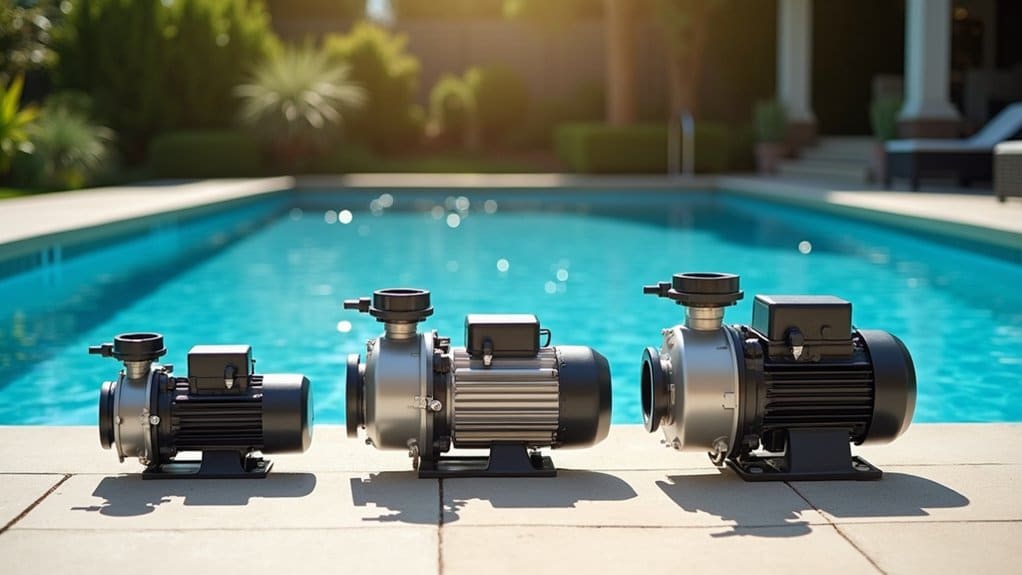
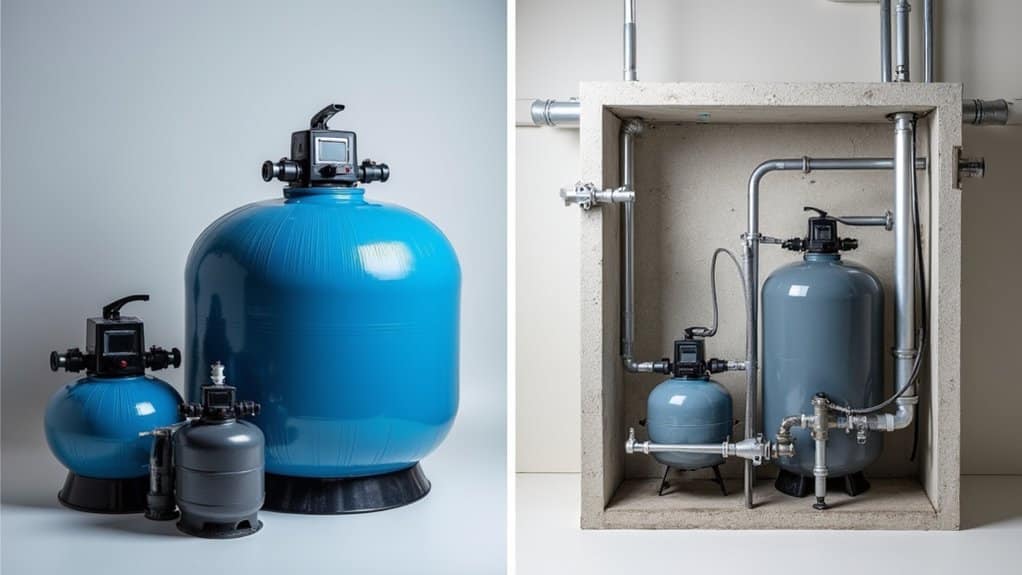


Variable-speed pool pumps cost $500 $1,000 more upfront than single-speed models, but they’ll cut your energy consumption by 80 90%, dropping operating costs from around $2,000 annually to roughly $240 $360. You’ll typically recoup the price difference within one to two years. Variable-speed pumps also run 50 70% quieter and last longer due to reduced mechanical wear at lower RPMs. Below, you’ll find a detailed breakdown of costs, efficiency metrics, and sizing guidance to help you choose the right pump. Variable-speed pool pumps cost $500 $1,000 more upfront than single-speed models, but they can reduce energy consumption by 80 90%, lowering annual operating costs from about $2,000 to roughly $240 $360. Most homeowners recover the price difference within one to two years, making them a cost-efficient upgrade. Along with energy savings, they operate 50 70% quieter and tend to last longer due to reduced mechanical strain at lower RPMs key advantages to consider when evaluating important factors for pool pumps.
Single-Speed vs. Variable-Speed: The Core Difference
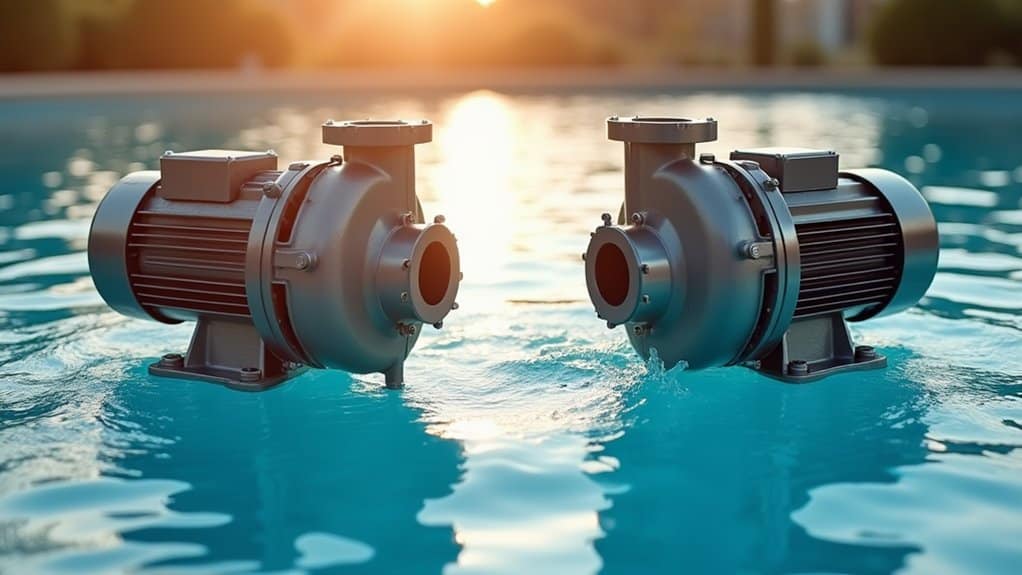
This pool pump efficiency comparison reveals a critical operational gap. You can program variable-speed pumps for specific tasks low speeds for daily filtration, high speeds for vacuuming or water features. Single-speed pumps can’t adapt. Every energy efficient pool pump comparison confirms that this flexibility directly reduces energy consumption, component wear, and noise while doubling water turnover capacity at comparable operating costs. Variable-speed pumps utilize permanent magnet motors that deliver superior efficiency compared to the induction motors found in traditional single-speed units. Additionally, many states offer rebates for variable-speed installations, making the transition even more financially accessible for pool owners.
Upfront Cost: What Each Pool Pump Type Costs
Your pump upgrade pool cost depends heavily on existing infrastructure. Labor adds $100 $500 depending on rewiring or piping modifications. You’ll want to weigh these upfront figures against long-term operational expenses before committing.
Why Variable-Speed Pool Pumps Use Far Less Energy
- Pump Affinity Law physics: Power consumption drops exponentially with speed reductions halving RPM cuts energy use by roughly 87%, enabling massive savings with minimal flow compromise.
- Permanent Magnet Motor efficiency: These motors operate at ~90% efficiency versus 30 70% for single-speed induction motors, requiring less electricity for identical hydraulic output.
- Optimized low-speed turnover: Running at 22 gpm uses just 116 watts, achieving full turnover in 19 hours at 2.2 kWh versus 12.6 kWh at high speed.
This systems-level pool circulation efficiency yields up to 3,796 kWh in annual savings an 80 90% reduction in operating costs. This systems-level pool circulation efficiency can deliver up to 3,796 kWh in annual savings an 80 90% reduction in operating costs, and when paired with smart decisions like how to choose pool lights, it further enhances overall energy efficiency and long-term performance.
Energy Savings: Single-Speed vs. Variable-Speed Pool Pumps
When you cut your pump’s speed in half, you reduce its power consumption to roughly one-eighth thanks to the affinity law (speed cubed), which translates to annual savings of up to $949 when comparing a variable-speed pump‘s 780 kWh against a single-speed pump’s 3,900 kWh. These lower operating costs mean your variable-speed pump can pay for itself within one to two years, even with its higher upfront price. You should also know that current efficiency regulations, such as the Department of Energy’s standards, increasingly mandate variable-speed technology for new installations, making the switch not just cost-effective but a compliance requirement.
Lower Speed, Less Energy
Because variable-speed pumps adjust their motor output to match real-time circulation demands, they consume dramatically less electricity than single-speed models locked at full power. The Pump Affinity Law confirms that reducing speed cuts energy use exponentially not linearly.
Here’s how the efficiency gap breaks down:
- Single-speed pumps draw 1,500 2,500 watts continuously, consuming roughly 16 kWh daily at an 8-hour runtime.
- Variable-speed pumps operate near 300 watts at low speed, totaling just 2.4 kWh daily for the same runtime.
- Permanent Magnet Motors achieve 90% efficiency, while single-speed induction motors operate at only 30 70%.
You’re looking at an 80% reduction in electricity usage when you switch from a 2,000-watt single-speed to a variable-speed pump running at optimized low speeds.
Annual Cost Savings
Although the per-kilowatt-hour difference between pump types might seem modest, it compounds into substantial annual savings that justify the variable-speed pump‘s higher upfront cost. When you switch from a single-speed to a variable-speed pump, you’ll cut electricity usage by up to 80%, with some configurations achieving 90% reductions. A single-speed pump consuming 480 kWh monthly dwarfs the variable-speed’s 72 kWh for equivalent filtration.
Even on small pools running 24-hour variable-speed operation, you’ll save nearly $200 annually. The 85% power bill reduction from low-speed filtration mode drives a typical payback period of just 1-2 years. These savings stem directly from the cube law’s compounding effect your pump doesn’t just use less energy per hour; it sustains that efficiency across every operating cycle.
Efficiency Regulations and Standards
Federal efficiency standards now mandate the shift you’re already seeing in energy savings data. The DOE’s 2021 DPPP Rule established Weighted Energy Factor (WEF) as the primary metric, measuring gallons pumped per kilowatt-hour for pumps ≤2.5 HHP. The 2023 DPPP Motor Rule accelerates this change with phased deadlines you’ll need to track:
- September 2025: Standard-size motors (1.15 5 THP) must include variable-speed control; extra-small motors (<0.5 THP) require 69% minimum full-load efficiency.
- September 2027: Small-size motors (0.5 <1.15 THP) must comply with variable-speed mandates.
- Ongoing exemptions: Three-phase pumps, units >5 THP, rigid spa filter pumps, and labeled waterfall pumps remain outside these requirements.
Single-speed replacements ≥1 HP are prohibited starting 2025, effectively eliminating them from residential installations.
Noise, Lifespan, and Other Pool Pump Differences
When comparing pool pump types beyond energy costs, noise output stands out as one of the most immediately noticeable differences. Single-speed pumps generate 65 75 dB at their fixed 3,450 RPM. Variable-speed pumps at typical filtration speeds (1,500 2,000 RPM) produce just 45 55 dB, reducing perceived noise by 50 70%.
Lifespan differences are equally significant. Variable-speed pumps experience less mechanical wear because they operate at lower RPMs during routine filtration. Their permanent magnet motors technology shared with electric vehicles support extended operational life, while vibration-absorbing construction minimizes stress-related component failures.
You’ll also find maintenance costs favor variable-speed models. Lower operating speeds reduce strain on internal components, decreasing long-term repair frequency. Rust-proof materials and heavy-duty impellers in quality units further extend service intervals, making them the more durable long-term investment.
Single-Speed or Variable-Speed: Which Pool Pump Should You Buy?
Before choosing a pump, you need to evaluate your pool’s specific circulation requirements, including volume, plumbing configuration, and daily filtration demands. If upfront cost is your priority, single-speed pumps win but if you factor in operating expenses of up to $2,000 annually versus roughly $20 $30 per month for variable-speed models, the long-term math shifts dramatically. Balancing your initial budget against projected energy savings over the pump’s lifespan will determine which option delivers the best return on your investment.
Assess Your Pool Needs
Every pool operates as a unique hydraulic system, and sizing your pump correctly starts with three core variables: pool volume, turnover rate, and total dynamic head (TDH). Understanding what size pump do i need for a pool is crucial for optimal performance. A pump that is too small may struggle to keep up with circulation needs, while one that is too large can lead to excessive energy consumption and increased wear. By considering these factors, you can select a pump that maintains water clarity and efficiency in your pool system.
- Pool volume Calculate gallons using shape-specific formulas. A 15,000-gallon pool requires 25 31 GPM for an 8 10 hour turnover.
- Turnover rate Target 6 8 hours for residential pools. Divide volume by turnover hours, then by 60 to get your minimum GPM.
- Total dynamic head Account for pipe friction, elbows, and elevation changes, typically 20 60 feet. Add a 20% buffer for practical sizing.
You’ll also need to verify motor voltage, match pump output to your filter’s maximum flow rate, and factor in accessories like heaters or salt chlorine generators that increase system demand.
Budget Versus Long-Term Savings
Once you’ve dialed in your pool’s volume, turnover rate, and TDH, the next decision comes down to dollars specifically, how much you’ll spend now versus how much you’ll pay over the life of the pump. Single-speed pumps cost $500 to $1,000 less upfront, but they run at full power constantly. A 1.5 HP single-speed unit costs roughly $275.52 annually at five hours per day over a six-month season.
Variable-speed pumps cut that energy expense by up to 90%. At half speed, they consume approximately one-eighth the energy, translating to $38.84 in monthly savings on a 20,000-gallon pool. You’ll recoup the higher purchase price within one to two years. Over an 84-month cycle, cumulative savings reach $4,297 making variable-speed the stronger financial investment long-term.
Frequently Asked Questions
Can You Convert a Single-Speed Pool Pump to a Variable-Speed Pump?
Yes, you can convert your single-speed pump to variable-speed using two methods. You can directly replace the entire pump unit, costing $1,200 $1,600, or you’ll save money by swapping just the motor with a compatible variable-speed motor like the Neptune VS on your existing housing no replumbing required. After installation, you’ll program flow rates, set low-RPM circulation schedules around 2,000 RPM, and configure higher speeds for filtration or water features.
Do Variable-Speed Pool Pumps Require Special Electrical Wiring for Installation?
Yes, variable-speed pumps typically require specific electrical wiring. Most need a 240V dedicated circuit with a GFCI breaker, though some smaller models run on 120V. You’ll use a standard 3-wire system red, black, and green for 240V installations. You must hard-wire the pump directly from your breaker panel without extension cords. You’ll also need proper bonding with 8 AWG solid copper conductor to meet NEC and local code requirements.
How Often Should You Replace Your Pool Pump’s Motor or Seals?
You should replace your pool pump’s motor every 5 8 years and seals when you notice leaks or decreased water flow. Watch for grinding noises, frequent overheating, or unexpected shutdowns these signal imminent motor failure. If you’re facing recurring repairs, it’s more cost-effective to replace the entire pump. Clean your pump basket monthly, inspect the impeller bi-monthly, and schedule annual professional inspections to maximize component lifespan.
Are Variable-Speed Pool Pumps Compatible With Saltwater Pool Systems?
Yes, variable-speed pumps work perfectly with saltwater chlorination systems operating at 2,000 3,000 ppm salt levels. You’ll need to set your pump’s RPM above the chlorinator’s minimum flow detection threshold add a 200 300 RPM buffer to account for dirty filters or clogged skimmers. Choose models with corrosion-resistant components like titanium alloy impellers rated up to 6,000 ppm. The Hayward TriStar VS and Moov MP15AIDV are particularly well-suited for saltwater integration.
What Pool Pump Size Do I Need for My Specific Pool Volume?
You’ll size your pump based on your pool’s volume and an 8-hour turnover rate. For 8,000 12,000 gallons, you’ll need 0.75 1.0 HP (17 25 GPM). For 12,000 18,000 gallons, select 1.0 1.5 HP (25 38 GPM). Pools holding 18,000 24,000 gallons require 1.5 2.0 HP (38 50 GPM), while 24,000 35,000-gallon pools need 2.0 2.5 HP (50 73 GPM). Don’t forget to verify your plumbing diameter 1.5″ pipes max out at 45 GPM.