
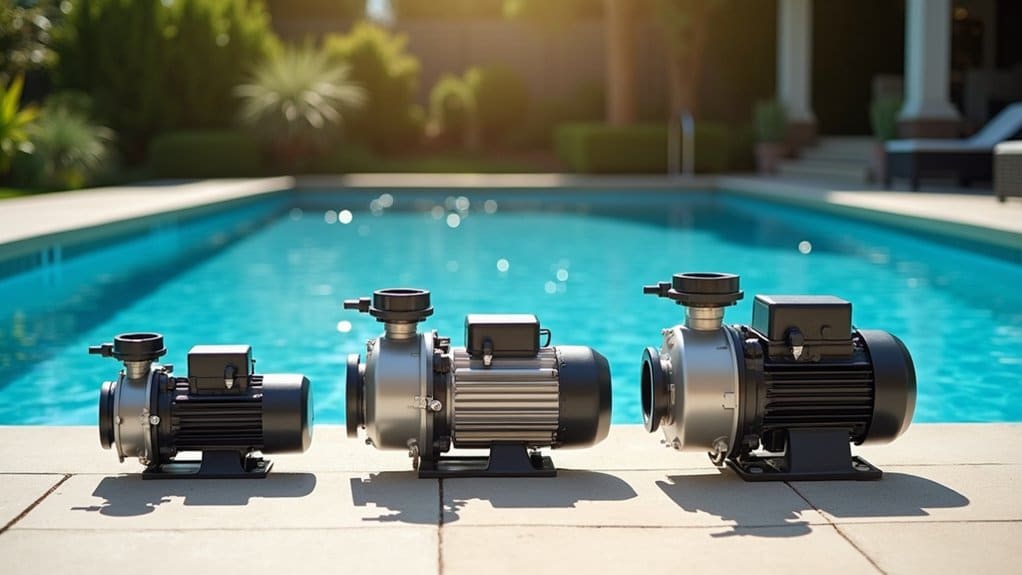
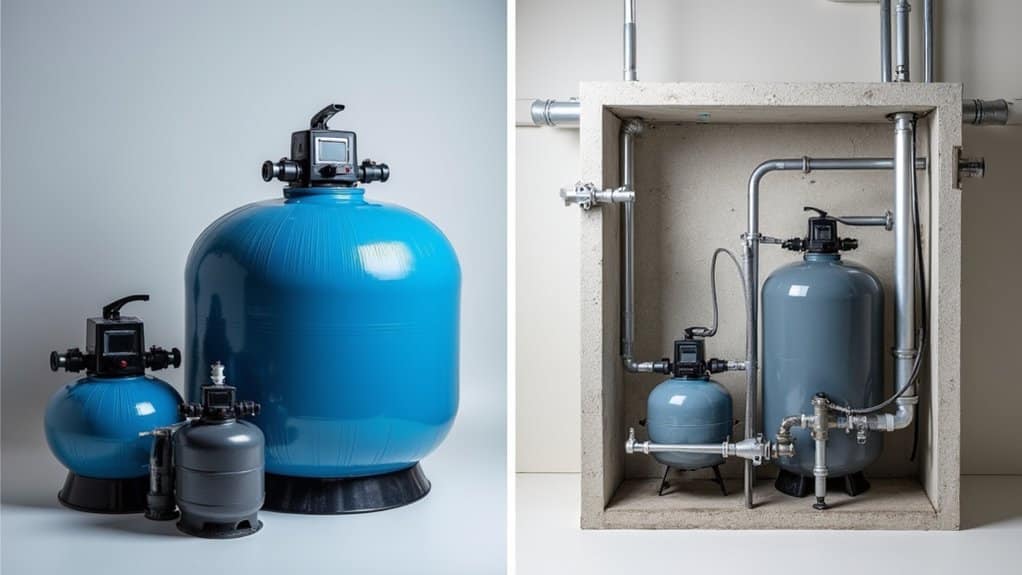


You’ll find pool light switches in three strategic locations. First, on dedicated equipment pads near pumps and filters, maintaining the required 5-foot distance from water’s edge and complying with National Electrical Code Article 680. Second, inside your home in utility rooms or hallways for safe, convenient daily operation. Third, on exterior walls near the pool deck with GFCI protection and weatherproof installation. Each location serves specific safety and accessibility purposes you should understand.
Pool Equipment Pad and Outdoor Panel Area
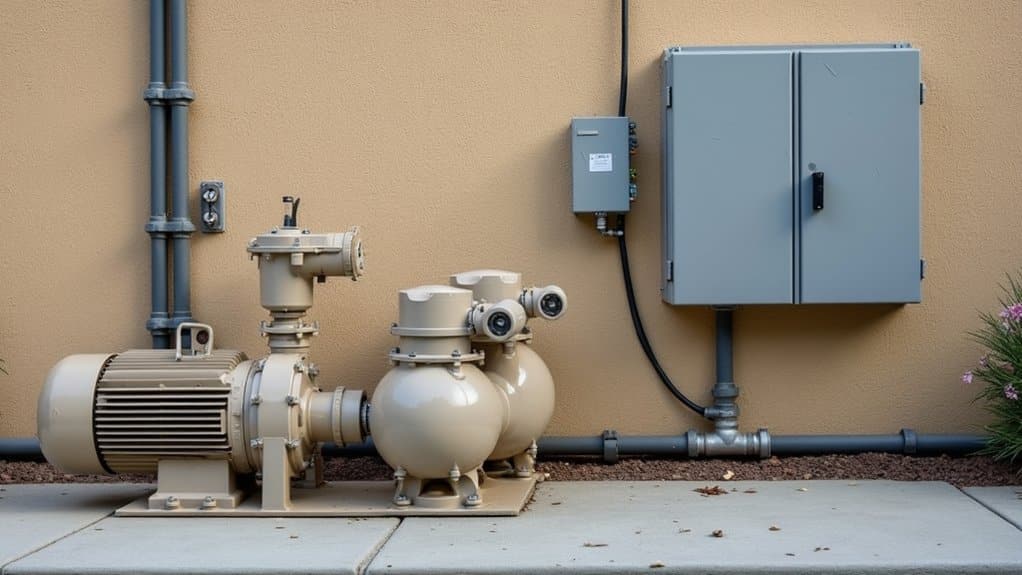
Most pool light switches you’ll encounter at the equipment pad are mounted on a post, wall, or conduit stub positioned adjacent to other critical pool controls like pumps and filters. You’ll find these installations feature weatherproof installation standards to protect against moisture and debris exposure.
The outdoor panel area houses your pool system’s electrical subpanel, where light switches meet National Electrical Code Article 680 requirements. You must maintain at least 5 feet distance from the water’s edge for safety compliance. Your switches here typically include GFCI protection with accessible test and reset features. However, if your pool light switch remains unfound after checking these common locations, the light may have been abandoned during previous renovations or system upgrades.
You’ll also notice mechanically or electronically interlocked controls that coordinate your pool equipment operation. These lockable switches allow secure shutoff during servicing. Clear labeling guarantees you can quickly identify each circuit during maintenance or emergencies.
Inside the Home for Safe, Convenient Access
While outdoor pool light controls serve essential functions at the equipment pad, you’ll find that interior switches offer significant safety and convenience advantages for daily operation. You’ll typically locate these switches in utility rooms near main control panels, hallways adjacent to exterior doors, or living spaces integrated with smart home systems. Installing switches at interior entry points like mudrooms allows you to activate lights before entering pool areas during low-light conditions, enhancing safety. You can leverage existing wall outlets for modular or wireless installations, reducing installation costs. Wireless controls positioned throughout your home bedrooms, kitchens, study rooms enable flexible operation without running new hardwired circuits. Multiple wireless units provide redundancy and convenience. Indoor placement protects switches from weather exposure, extending their operational lifespan while restricting access to authorized household members only. Turning the switch off and on again cycles through various color options if your pool uses colored LED bulbs. If your pool lights stop working unexpectedly, checking the circuit breaker can help you quickly restore power. To ensure proper electrical safety, particularly with young children present around the pool, your interior switch should connect to a dedicated GFCI outlet that meets current electrical codes.
Near the Pool Deck and Exterior Walls
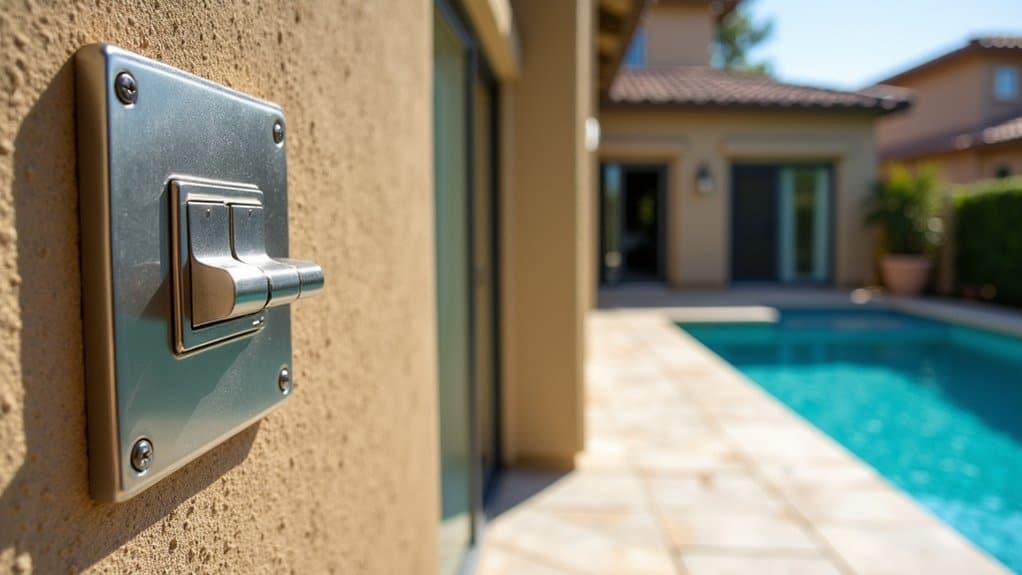
Beyond the interior convenience of indoor switches, you’ll need to understand how pool light controls function in outdoor environments where they’re closest to the water.
You’ll find pool light switches mounted on exterior walls of nearby structures pool houses, garages, or your home’s rear wall positioned within sight of the pool for convenient access. These installations comply with code-required distances while maintaining functionality. Raised switch access points, typically positioned 12 inches above ground, provide water intrusion protection and durability. Licensed electricians mount these switches at standardized heights, usually 48 inches, guaranteeing accessibility and compliance with local codes. All outdoor pool light circuits must include GFCI protection to prevent electrical hazards in wet environments. For optimal visibility and safety, consider installing spotlights for highlighting features around your pool deck to complement your switch placement strategy.
You must safeguard weatherproof enclosures and GFCI protection for all outdoor electrical components. Clear labeling prevents confusion with other exterior controls, and proper placement avoids direct splash zones or heavy rainfall areas.
Frequently Asked Questions
Can I Control My Pool Lights Remotely Using a Smartphone App or Wireless Remote?
Yes, you can control your pool lights remotely using wireless control options and smartphone integration. You’ll need compatible pool lights and either a wireless remote or a smart home automation hub. Most modern systems support Wi-Fi or Bluetooth connectivity through dedicated apps. Before installation, you should guarantee proper GFCI protection and follow electrical safety codes. We’d recommend professional installation to guarantee safe, reliable operation and excellent system performance for your specific pool setup.
What Electrical Code Requirements Must Pool Light Switches Meet for Safety Compliance?
You must install your pool light switches in waterproof construction enclosures with weatherproof protection to meet electrical codes. They’ll require GFCI protection on all circuits and must be positioned at least 5 feet from the pool’s inside walls. You’ll need bonding to the equipotential grid using proper-sized conductors, and all equipment must be UL-listed for wet locations. Licensed electricians should verify compliance with current NEC Article 680 standards.
How Far Must a Pool Light Switch Be Positioned From the Water’s Edge?
You must position your pool light switch at least 5 feet horizontally from the water’s edge, measured along the shortest direct path. This proper switch positioning protects you from electrical shock hazards. Guarantee your switch maintains accessibility and visibility so you can easily control the lighting and respond to emergencies. You can reduce this distance only if you’ve installed a solid, permanent barrier like a wall or fence between the switch and pool.
Why Do Older Pool Installations Sometimes Have Switches in Difficult-To-Find Locations?
You’ll find older pool light switches in difficult locations primarily because they’re intentionally positioned to deter unsupervised access a critical safety measure before modern codes mandated strict placement standards. Installers deliberately placed them away from poolside areas to reduce electrical shock risks near water. Additionally, aesthetic placement considerations and architectural constraints meant switches were routed through utility rooms, basements, or garages rather than conveniently near pool exits, prioritizing equipment security over user convenience.
What Should I Do if I Cannot Locate My Pool Light Switch?
If you can’t locate your pool light switch, start by checking the pool equipment area near your filter, pump, or heater for a control box or standalone switch. Next, inspect your breaker panel for a dedicated pool light circuit. Review your pool builder’s documentation or electrical schematics for guidance. If you’re still unsuccessful, consult an electrician who can safely identify the switch’s location and guarantee proper installation.