


You’ll assess your pool’s layout, identifying shadows, depth variations, and functional zones that affect light distribution. Next, position underwater fixtures 9 12 inches below the surface, spacing them 6 8 feet apart with one light per 200 250 square feet. Finally, conduct nighttime inspections to verify even coverage, eliminate dark spots, and adjust angles to prevent glare. Understanding where to install pool lights for best coverage ensures each step guarantees compliance with safety standards and professional industry benchmarks.
Assess Your Pool Layout and Identify Key Zones
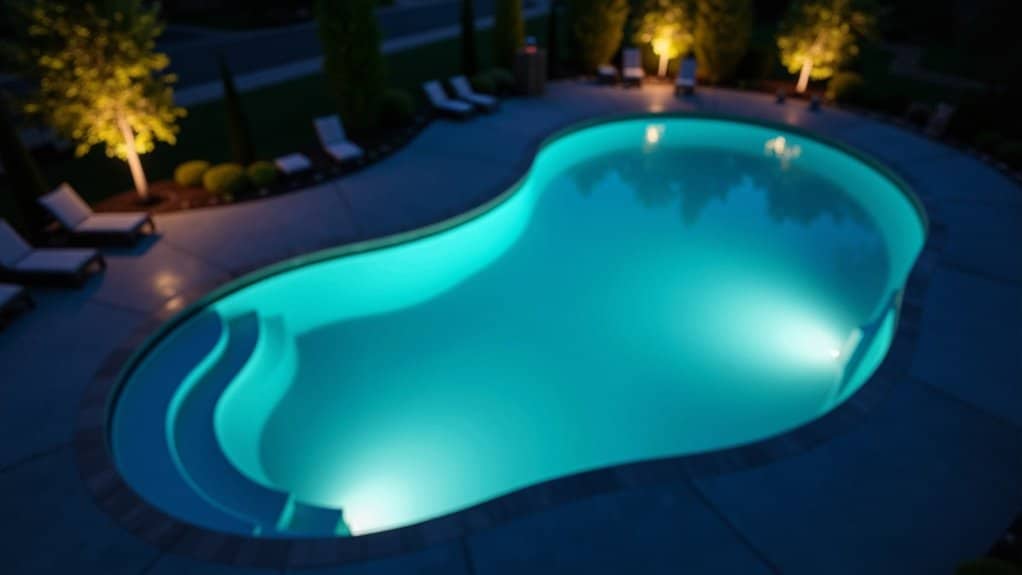
Before installing pool lights, you’ll need to evaluate your pool’s physical characteristics and usage patterns to determine ideal fixture placement. Start by mapping your pool’s shape whether rectangular, freeform, or L-shaped since this directly influences light distribution and consider potential shadows cast by surrounding structures. For L-shaped pools, treat each section as its own lighting zone to ensure even illumination across the entire surface.
Next, assess depth variations across your pool. Deeper zones require higher lumens or additional fixtures to maintain consistent visibility. Identify distinct functional areas: entry points, swim lanes, shallow ends, and deep ends each need separate evaluation. Remember that the number one mistake pool owners make is thinking one or two lights are enough, so plan for sufficient fixture coverage across all zones.
Document your deck perimeters and walkways, which are critical safety zones. Mark social spaces like tanning ledges or sun shelves that often get overlooked. Account for existing landscape features, permanent structures, and proximity to your house. Consider installing path lights along these pathways to enhance both visibility and safety throughout your outdoor space. This thorough layout assessment guarantees your lighting plan addresses all areas systematically.
Select Strategic Placement Locations for Optimal Illumination
Once you’ve mapped your pool’s layout and identified key zones, you’re ready to determine exactly where your fixtures should go. Strategic placement depends on your fixture selection and underwater fixture concealment techniques.
Position underwater lights 9 12 inches beneath the surface, spacing them 6 8 feet apart for even illumination. Calculate coverage using one light per 200 250 square feet of water surface. Aim fixtures away from your home to minimize glare. Dark-colored pools require additional lights compared to light-colored pools to achieve the same level of illumination.
For rectangular pools, distribute lights at regular intervals symmetrically. With free-form designs, adjust placements to eliminate shadow zones in curves and corners. Highlight entry points, steps, and safety zones with focused lighting. Install deck-level pathway lights 6 8 feet apart around perimeters to illuminate access routes reliably.
Verify Coverage and Make Final Adjustments
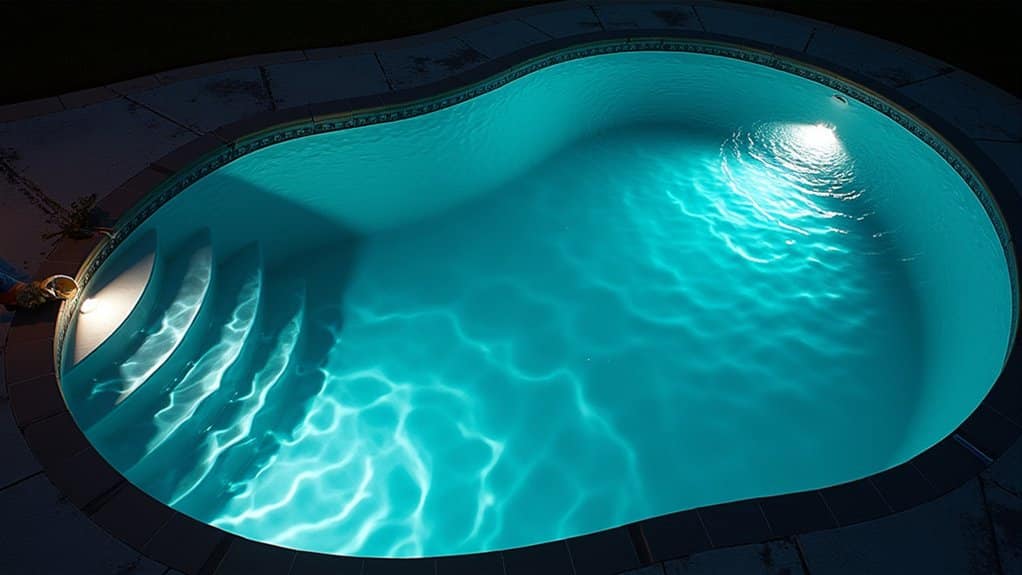
Your pool lighting system’s effectiveness hinges on thorough verification before you consider the installation complete. Conduct nighttime visual inspections to identify dark spots and uneven coverage, ensuring minimum 8 lumens per square foot compliance. Before finalizing your installation, verify that each pool light is connected to the appropriate voltage transformer to ensure safe and proper operation.
Test all fixtures for proper voltage and steady brightness while checking for physical damage or loose connections. Adjust fixture angles to eliminate glare in seating areas and enhance visibility around steps and pool edges. Ensure your lighting installation meets industry standards and safety requirements to prevent hazardous electrical shock to swimmers and users.
Make these critical adjustments:
- Position lights 6 8 feet apart to prevent bright spots or deep shadows
- Monitor pool water levels for consistent illumination across submerged features
- Use diffusers to soften harsh lighting effects and balance color temperature
Consult professionals for specialized lighting guidance on compliance with electrical codes and GFCI functionality, ensuring long-term safety and ideal performance. Modern underwater lighting systems should prioritize lumens as the correct measurement rather than outdated wattage calculations to accurately assess brightness levels and meet current industry standards.
Frequently Asked Questions
What Is the Ideal Light Color Temperature for Nighttime Pool Swimming and Safety?
You’ll find that neutral white (3500K 4500K) offers your best balance for nighttime swimming and safety. This color temperature selection enhances underwater visibility and reduces accident risk without creating harsh glare. You should avoid overly cool or blue tones (>5000K), which feel clinical and disorienting at night. Your lighting placement impact matters equally position fixtures strategically to illuminate steps, shallow zones, and pool edges, ensuring swimmers can navigate confidently after dark.
How Do Smart Pool Lighting Controls Improve User Experience and Energy Efficiency?
You’ll enhance your pool experience through smart controls that let you customize lighting scenes via app or voice command. Automated scheduling guarantees lights activate only when needed, while energy monitoring tracks real-time consumption and identifies savings opportunities. You’ll reduce energy usage by up to 75 90% compared to traditional systems, directly lowering utility bills. Integration with smart home platforms centralizes all controls, giving you seamless management and convenience while minimizing environmental impact.
Can I Install Pool Lights Without Draining the Water From My Pool?
Yes, you can install pool lights without draining. Modern sealed fixtures let you pull them onto the deck using waterproof power cords, avoiding water drainage and preserving pool water integrity. You’ll need adequate cord slack, proper replacement parts rated for underwater use, and a new lens gasket. Shut off power at the main breaker, work from the deck, and thoroughly dry components before reassembly. This approach prevents unnecessary pool damage while maintaining ideal functionality.
What Waterproof Ratings and Certifications Should Pool Light Fixtures Have?
You should prioritize IP68-rated fixtures for underwater installations, guaranteeing they’re certified by recognized bodies like CE, RoHS, and SAA. Verify the submersible depth rating matches your pool’s requirements. Your fixtures must feature corrosion resistant construction using stainless steel or brass to withstand chemical exposure. Look for robust seals and gaskets that maintain waterproof integrity long-term. Professional installation by licensed electricians confirms compliance with local codes. Choose products with 2+ year warranties for dependable performance.
How Often Should Pool Lights Be Inspected and Maintained for Optimal Performance?
You should conduct regular visual inspections monthly during peak swimming season and quarterly during off-season. Additionally, schedule annual electrical evaluations by a qualified electrician to detect wiring defects and shock hazards. You’ll benefit from biannual check-ups every six months to catch deterioration early. Implement timely equipment repair immediately upon identifying damage, corrosion, or compromised seals. This inspection schedule guarantees you sustain ideal performance, extend fixture lifespan, and prioritize swimmer safety.