
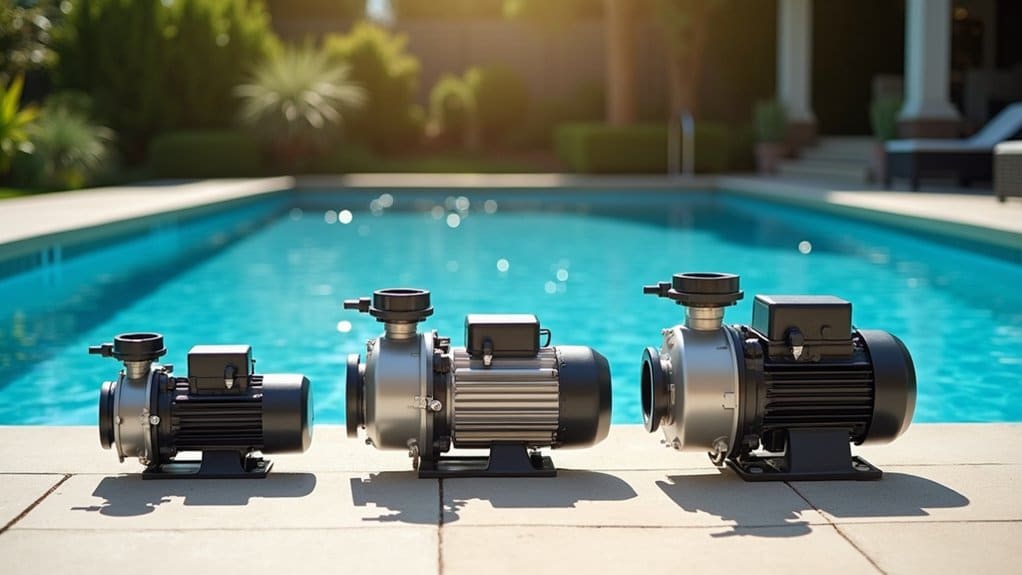
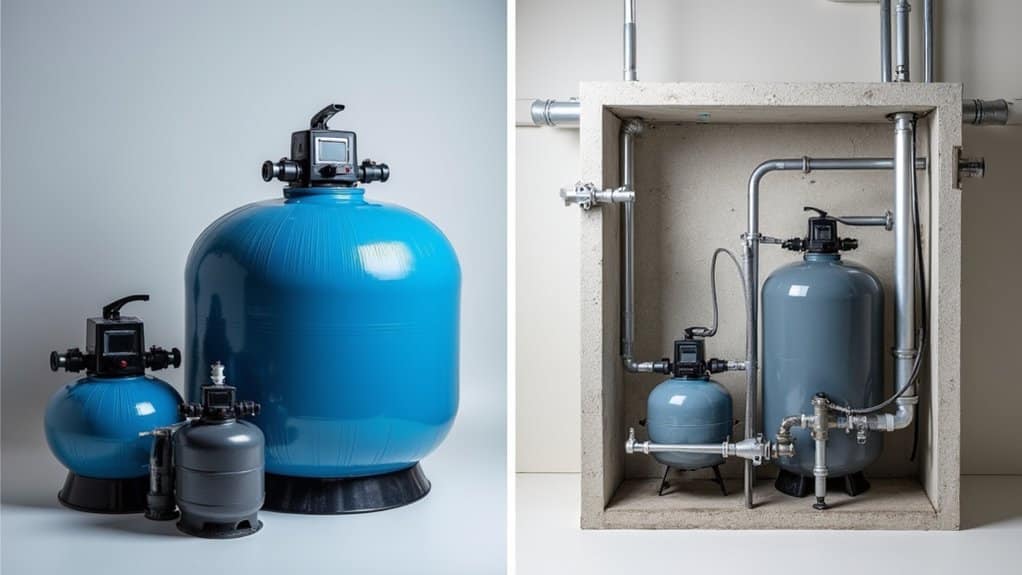
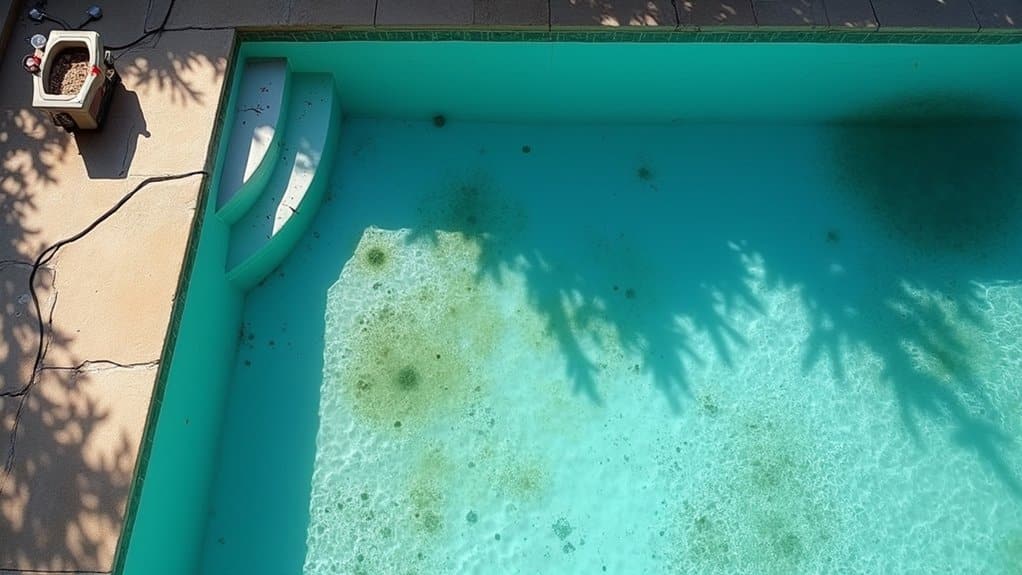


The fastest way to lower your pool electricity bill is to replace your single-speed pump with a variable-speed model cutting daily pump consumption from 12.6 kWh to just 2.2 kWh. You’ll also want to shift run times to off-peak hours for an additional 20 30% savings and lower your heater’s setpoint by 2 3°F to reduce heating costs by up to 30%. Below, you’ll find the exact RPM settings, schedules, and upgrades that maximize those savings.
Where Your Pool Electricity Money Actually Goes
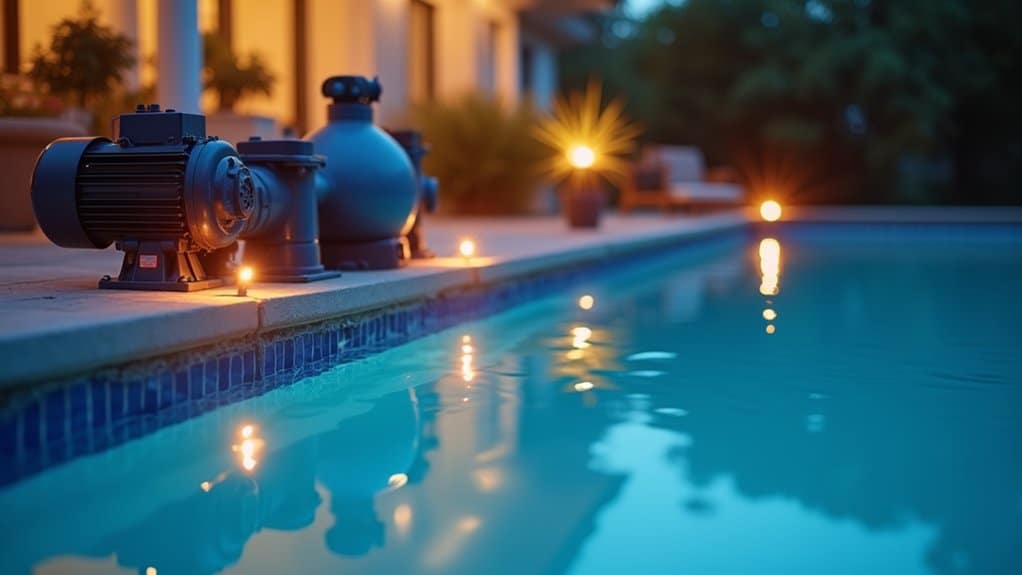
Your pool pump alone accounts for the largest share of your electricity bill, consuming 1,500 2,500 watts per hour, depending on the model. A standard 2,000-watt single-speed pump running 8 hours daily uses approximately 480 kWh monthly. That’s three times more than your refrigerator.
Heating compounds your pool electricity usage considerably. Heat pumps add $50 $250 monthly, while electric heaters push costs to $100 $300. Combined, heating often exceeds pump consumption. Shifting your pump schedule to off-peak hours can save 20 30% on energy costs, making it one of the simplest ways to cut your bill. Heating significantly increases your pool’s electricity usage, with heat pumps adding $50 $250 per month and electric heaters raising costs to $100 $300, often exceeding pump-related expenses. Adjusting your pump to run during off-peak hours can reduce energy costs by 20 30%, making it one of the most effective strategies for how to reduce pool operating costs while maintaining efficient system performance.
Don’t overlook accessories. Filtration systems draw 100 200 additional watts, and halogen lighting drains five times more energy than LED alternatives. Homes with pools use 40 50% more electricity overall, with total monthly costs ranging $10 $300 based on equipment type, run times, and local utility rates. Large pumps running around the clock can add $150 $200 monthly to your bill, making run time one of the most impactful variables to manage. When researching energy-saving pool equipment online, some vendor sites use Cloudflare security solutions that may temporarily block access if your browser submits unusual requests.
Switch to a Variable-Speed Pump
Because the pump affinity law governs fluid dynamics on a cubic curve, halving your pump’s RPM doesn’t just halve energy use it cuts power consumption to one-eighth. At 3,450 RPM, a single-speed pump draws approximately 2,000W at 66 gpm. Reduce that speed, and you’ll pull just 116W at 22 gpm a 94% drop in wattage.
The pool pump energy saving potential here is substantial. Running a variable-speed pump for 19 hours at low RPM consumes only 2.2 kWh daily, compared to 12.6 kWh for a single-speed unit running 6.3 hours. That’s up to 90% reduction in energy expenditures, with ENERGY STAR certified models saving over $2,800 over their lifetime. Most owners recoup the investment within two years through lower electricity costs and available utility rebates. The energy-saving potential of pool pumps is significant, with a variable-speed unit running 19 hours at low RPM using just 2.2 kWh daily, compared to 12.6 kWh for a single-speed pump operating 6.3 hours. This can reduce energy use by up to 90%, with ENERGY STAR models saving over $2,800 over their lifespan, allowing most owners to recover costs within two years making a major impact on overall pool pump running cost and long-term efficiency.
Adjust Pump Speed and Schedule for Each Job
Once you’ve installed a variable-speed pump, the next step is matching its RPM output to each specific task filtration, cleaning, heating, chemical distribution, and general maintenance all demand different flow rates and wattages. When you adjust pump speed and schedule for each job, you’ll target 300 1,200W for filtration over 8 hours, cutting monthly consumption from 480 kWh to 72 kWh. For cleaning, run 4 6 hours at 500 1,000W, saving $30 $150 monthly. Chemical distribution needs just 2 4 hours at 750 1,000W for adequate dispersal.
Among the most effective pool energy saving tips: schedule heating circulation at 300W during peak solar hours and shift all runs to off-peak rates at 15.95 cents/kWh. Track usage monthly and recalibrate seasonally longer summer cycles, shorter off-season runs. Among the most effective pool energy-saving tips, run heating circulation at around 300W during peak solar hours and shift all pump operation to off-peak rates at 15.95 cents/kWh to minimize costs. Monitor usage monthly and adjust schedules seasonally longer cycles in summer and shorter in the off-season while investing in energy efficient pool equipment to maximize long-term savings and performance.
How Much Does Pool Heating Really Cost?
After optimizing your pump’s speed and schedule, the next major cost driver demands attention: pool heating, which accounts for roughly 40% of your pool’s total energy bill based on analysis of 100+ pool owners’ energy meter readings.
So how much does pool heating really cost? Here’s a breakdown by heater type:
- Electric heaters consume 50 150 kWh daily, costing $5 $15 per day or $100 $300 monthly
- Heat pumps use 15 25 kWh daily, reducing costs to $1.50 $2.50 per day
- Natural gas heaters run approximately $7.00 per hour of operation
- Propane heaters cost roughly $18.00 per hour
- Each degree increase in your target temperature adds 10 15% to heating expenses
Lowering your setpoint by just 2 3°F yields approximately 20 30% savings.
Use a Pool Cover to Slash Heating Costs
While lowering your thermostat setting delivers meaningful savings, adding a pool cover tackles the single largest source of heat loss evaporation, which accounts for 70% of an outdoor pool’s total thermal energy loss.
| Cover Type | Evaporation Reduction | Pool Heating Costs Savings |
|---|---|---|
| Solar Cover | Up to 95% | 50% 70% |
| Automatic Cover | Up to 90% | Up to 70% |
| Liquid Solar Blanket | 15 20% | Minimal |
You’ll prevent up to 5°F of nightly temperature drop and gain 10 15°F during the day with solar covers. That translates to $500 $1,200 in annual savings for gas-heated pools. Covers also reduce pump runtime by minimizing debris infiltration and cut water replacement costs by 1,000 5,000 gallons annually.
Long-Term Upgrades That Lower Pool Energy Bills
Beyond covers and thermostat adjustments, permanent equipment upgrades deliver the highest long-term energy savings for pool owners. These long-term upgrades that lower pool energy bills target the most power-hungry components in your system.
- Variable-speed pumps save up to 90% on pumping costs, with ENERGY STAR models delivering over $300 in annual savings versus single-speed units.
- Heat pumps use ambient air for heating, consuming considerably less power than gas models.
- Solar heaters harness sunlight directly, eliminating electricity demand for water heating.
- LED lighting cuts lighting energy by 80% and lasts up to 10 times longer than traditional bulbs.
- Pool automation systems schedule equipment during off-peak hours, eliminating unnecessary runtime.
Each upgrade supports energy saving pool maintenance while reducing operational costs permanently.
Frequently Asked Questions
Does Running My Pool Pump at Night Save Money on Electricity?
Yes, running your pool pump at night saves you money if you’re on a Time-of-Use (TOU) pricing plan. Off-peak rates during overnight hours cost considerably less per kWh than daytime rates. You’ll cut your monthly bill without sacrificing water quality, though you should use a pool cover to maintain chemistry. Pair night scheduling with a variable-speed pump, and you’ll reduce energy costs by 50-80% compared to single-speed daytime operation.
How Often Should Pool Equipment Be Serviced to Maintain Energy Efficiency?
You should service your pool equipment on a daily, weekly, monthly, and annual basis to maintain energy efficiency. Daily, check pumps and filters for malfunctions. Weekly, inspect equipment for leaks or damage. Monthly, adjust pump timers, test water chemistry, and replace worn seals to prevent energy loss. Annually, deep clean or replace filters, lower heater settings, and use pool covers to reduce circulation workload and minimize energy waste.
Do LED Pool Lights Significantly Reduce Overall Pool Electricity Costs?
Yes, LED pool lights considerably cut your electricity costs. They consume just 42 watts compared to 300 500 watts for incandescent bulbs, delivering up to 80 87% energy reduction. You’ll spend only a few cents daily operating LEDs versus roughly $1 for traditional options. They also last 20,000 50,000 hours about 25 times longer than incandescents so you’ll save on replacement and maintenance costs too. It’s one of the most impactful efficiency upgrades you can make.
Can Solar Panels Generate Enough Electricity to Power a Pool System?
Yes, solar panels can generate enough electricity to power your pool system. A typical 2-horsepower pump consumes about 9.7 kWh daily, requiring roughly 1.85 kW of solar capacity after accounting for 14% efficiency losses. That’s approximately 5 7 panels rated at 300 400 watts each. You’ll need to factor in your local peak sun hours, roof orientation, and shading. However, electric pool heaters demand considerably more power potentially requiring a 54 kW system.
Does Pool Size Affect How Much Electricity Filtration Systems Consume Monthly?
Yes, your pool’s size directly affects monthly filtration electricity consumption. Residential circulating pumps average 0.7429 kWh per hour, but larger pools demand higher flow rates and longer circulation times, increasing energy draw. Small pools consume roughly 8,000 kWh annually, while large home pools reach 15,000 kWh. Since filtration accounts for about 30% of household pool energy, you’ll reduce costs by optimizing pump runtime and upgrading to variable-speed equipment.