
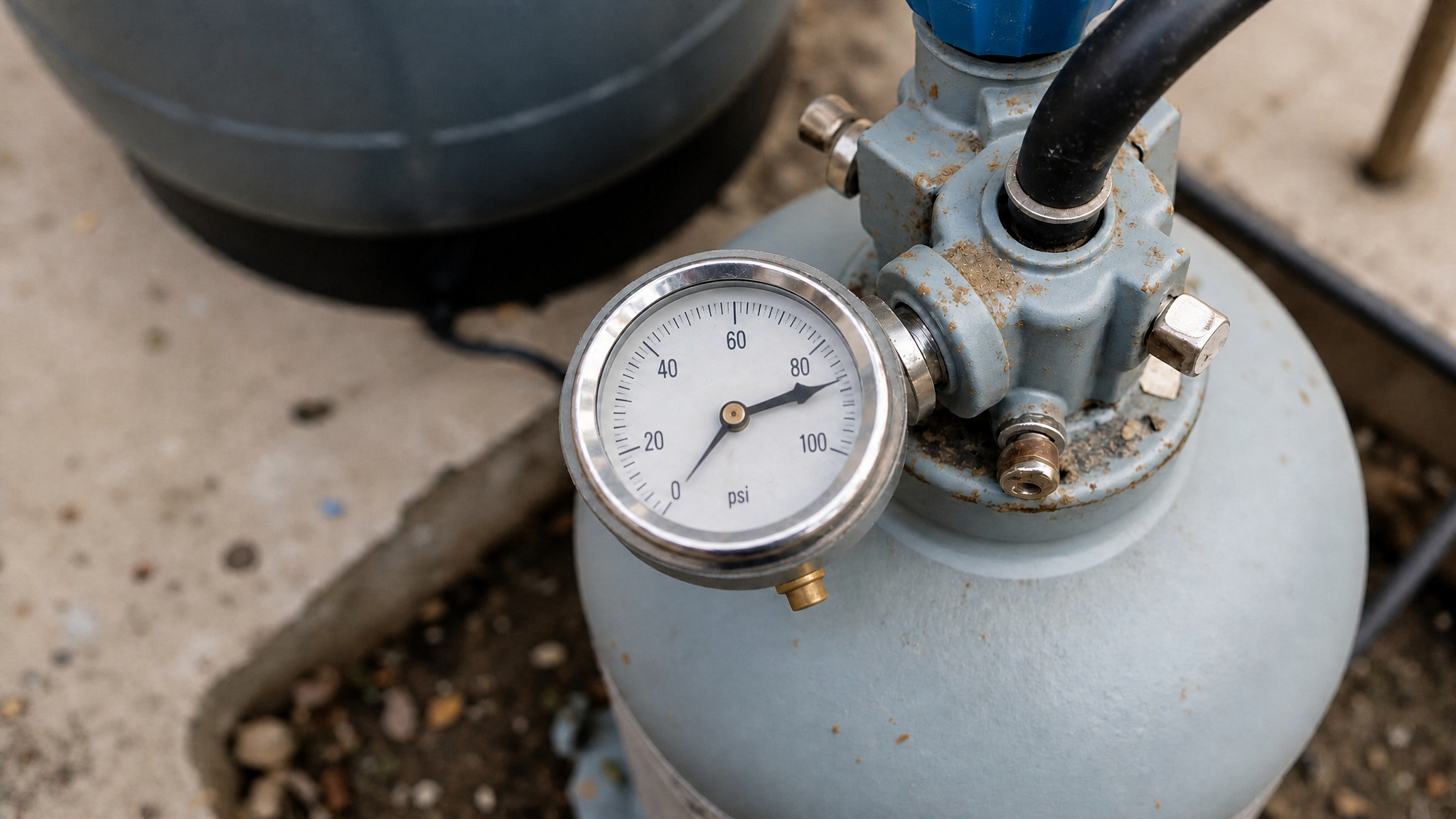

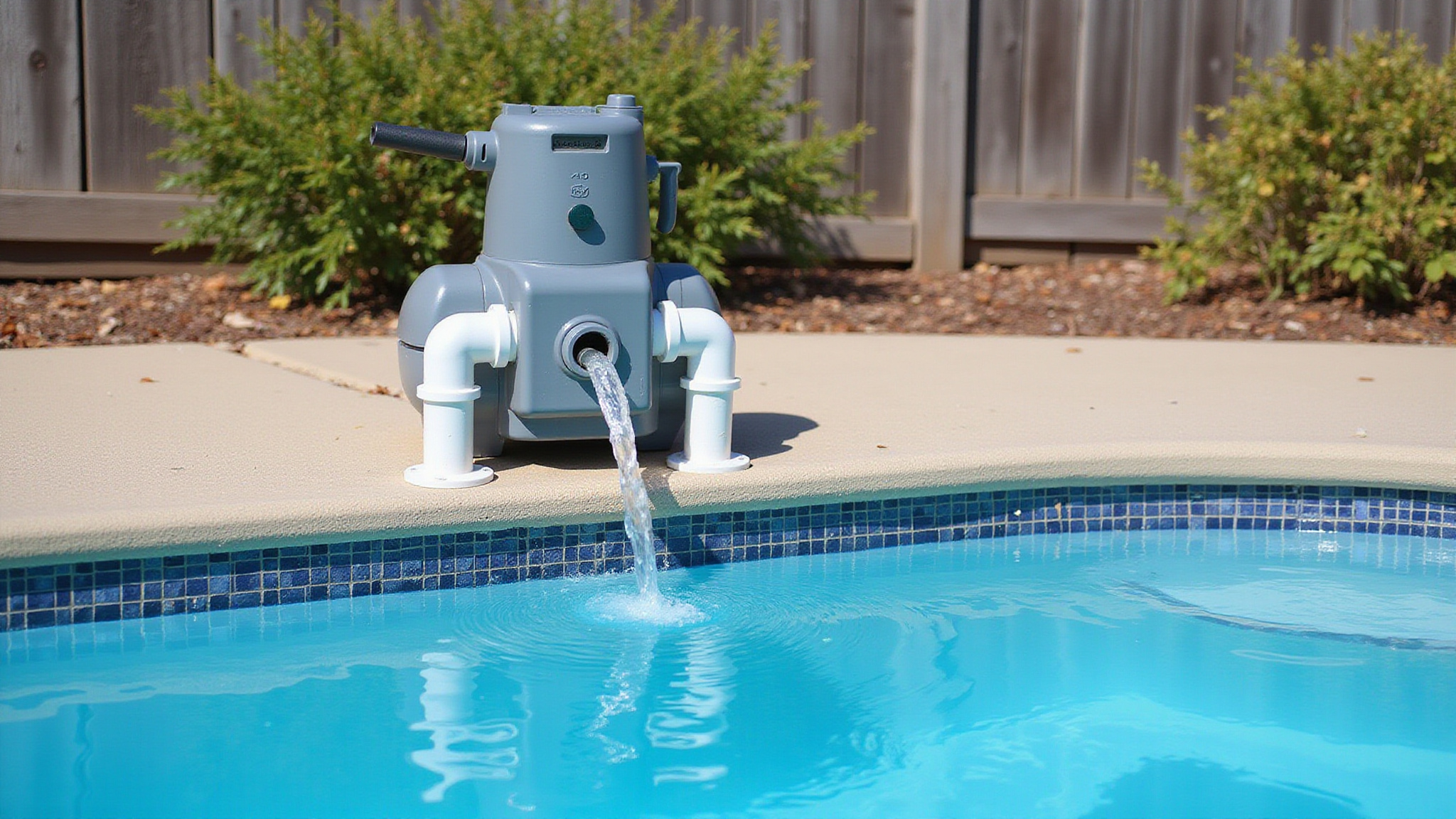
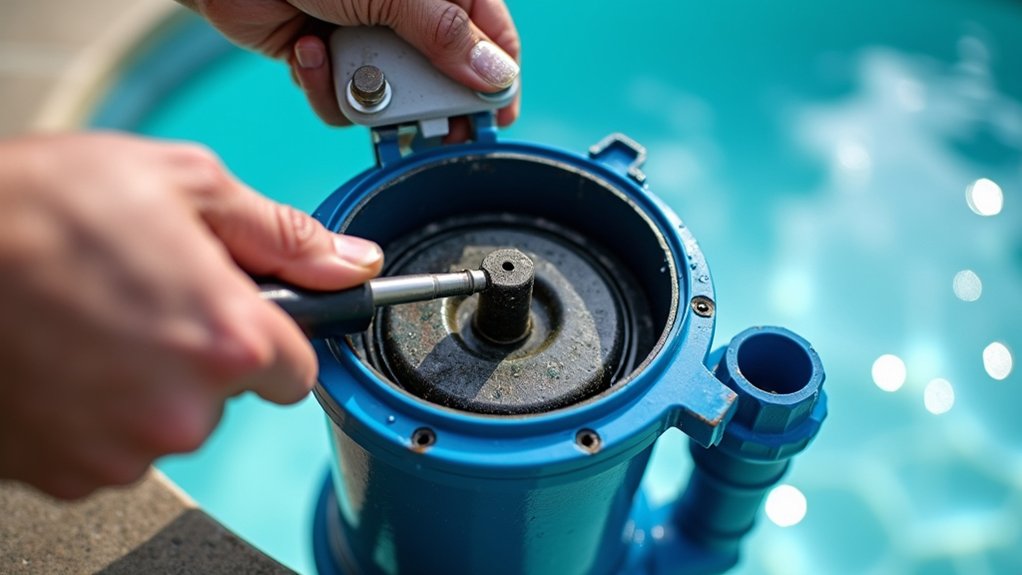
Your pool pump should be the first upgrade it’s the largest energy load in your system, drawing 2,000 2,500W on standard single-speed 1.5 HP models and consuming 480 600 kWh monthly. Switching to a variable-speed, Energy Star-certified pump drops wattage to 300 1,200W and can cut annual costs from nearly $1,000 to under $150. That’s an immediate, measurable ROI. Energy-efficient pool equipment like LED lights, efficient heaters, solar covers, and smart controls each stack additional savings worth exploring below.
Your Pool Pump Is the Biggest Energy Drain : Fix It First
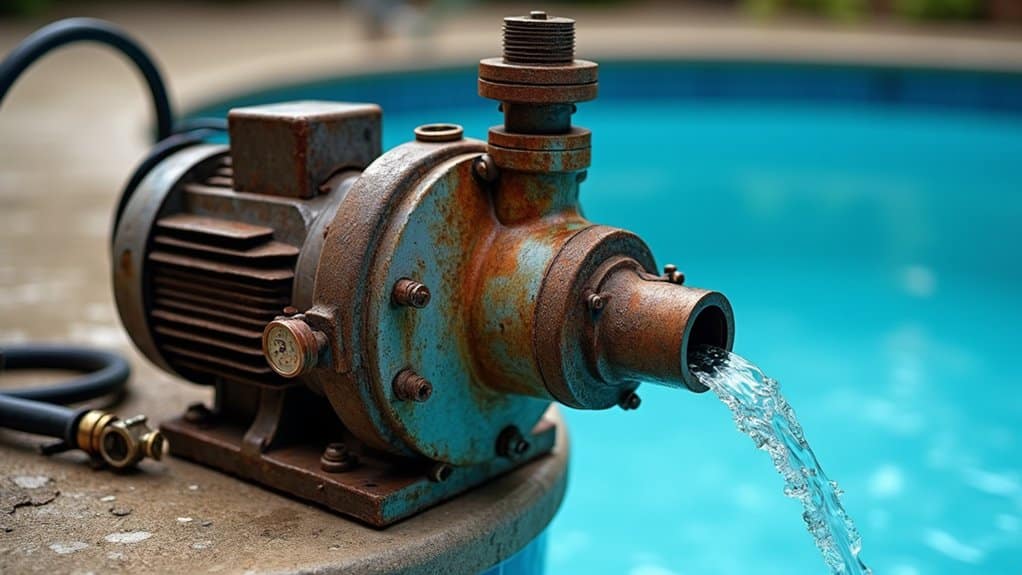
If you’re looking for the single biggest way to cut your pool’s energy bill, start with the pump it’s the largest electrical load in most residential pool systems. A standard single-speed 1.5 HP unit draws 2,000 2,500W per hour, consuming 480 600 kWh monthly at eight hours daily. That’s roughly $76 $90 per month at $0.1595/kWh. These costs vary dramatically by location, with states like Hawaii seeing daily pump costs as high as $6.48 per day while North Dakota homeowners pay closer to $1.59. If you’re looking for the single biggest way to cut your pool’s energy bill, focus on the pump it’s the largest electrical load in most residential systems. A standard single-speed 1.5 HP unit draws 2,000 2,500W per hour, using 480 600 kWh monthly at eight hours daily, which translates to about $76 $90 per month at $0.1595/kWh, though rates vary widely by location. Targeting pump efficiency is a key step in how to reduce cost of inground pool, especially in high-cost energy regions.
Switching to a variable speed pool pump drops consumption to 300 1,200W depending on speed setting. At 300W over eight hours, you’ll use just 2.4 kWh daily 72 kWh monthly delivering up to 70% energy savings. Energy Star-certified models meet DOE efficiency standards and reduce annual costs from nearly $1,000 to under $150. The payback period justifies prioritizing this upgrade first. To maximize efficiency further, divide your daily pump operation into two sessions and ensure your system can filter the entire pool volume within that combined run time.orarily block access to retailer sites if your browsing behavior triggers automated protection filters.
LED Pool Lights Deliver the Easiest Energy Savings
While the pump upgrade delivers the largest absolute savings, swapping incandescent or halogen pool lights for LEDs offers the highest efficiency gain per dollar of effort. A standard incandescent fixture draws 300 500 watts; an equivalent LED replacement consumes as little as 42 watts an 80 85% reduction that defines led pool lights efficiency.
You’ll cut daily operating costs from roughly $1.00 to a few cents. LEDs convert energy directly into light via solid-state semiconductors, wasting minimal output as heat, unlike incandescents that lose 90% to thermal radiation. Rated lifespans reach 25,000 50,000 hours outpacing halogen’s 2,000 4,000 hours by an order of magnitude. Fewer replacements eliminate repeated labor and material expenses. ENERGY STAR-qualified LEDs achieve 90% greater efficiency than legacy incandescents, making this swap your simplest high-return upgrade.
Heat Pumps, Gas, or Solar: Match the Heater to Your Pool
Lighting accounts for a fraction of your pool’s total energy draw heating dominates it. Selecting the right energy-efficient pool heater requires matching the technology to your usage profile and climate specs. When considering the cheapest way to heat pool water, it’s essential to evaluate the various heating options available, such as solar heaters or heat pumps. Additionally, factoring in installation and maintenance costs can help you make a more informed decision. By doing so, you can find a solution that maximizes efficiency while keeping expenses low.
- Heat pumps deliver COP ratings of 5.0 6.5 above 50°F, running $500 $1,200 annually your best efficiency-per-BTU option for consistent use.
- Gas heaters convert 84% of fuel input to heat (Pentair MasterTemp spec), heating faster than any alternative at $150 $450/month.
- Solar systems operate at zero recurring cost with 15 20+ year lifespans, though they’re climate-dependent and often require supplemental heating.
- Upfront costs range from $800 $6,500 for heat pumps versus $2,000 $5,500 for gas units.
- Heat pump lifespan reaches 10 15 years, nearly doubling gas heater longevity at 5 10 years.
Solar Covers Slash Energy Costs Without a Single Wire
Because evaporation accounts for the single largest heat and energy loss in any pool system, solar covers deliver measurable savings without requiring electrical connections, wiring, or equipment modifications. Properly installed solar covers achieve 95% evaporation reduction, yielding 30 50% energy cost savings confirmed across independent studies, including Colgate University’s 2014 research documenting 30% reductions with seven-hour nightly coverage.
You’ll see daytime temperature gains of 10 15°F under six-plus hours of direct sunlight, while nighttime heat retention reaches 90%. Real-world utility data validates these specs: Phoenix users reported 42% monthly savings ($89 versus $154). Solar covers also reduce chemical consumption and water top-up frequency by minimizing evaporative loss. With a 3 5 year service life and zero electrical requirements, they represent one of your highest-ROI upgrades before addressing powered equipment.
Smart Pool Controls That Tie Every Upgrade Together
Once you’ve sealed in passive gains with a solar cover, smart pool controls become the central hub that coordinates every powered component pumps, heaters, lights, and sanitizers into a single automated system. To maximize savings, consider other strategies on how to lower electric bill AEP, such as implementing energy-efficient appliances and utilizing smart thermostats. Additionally, investing in home insulation can significantly reduce energy consumption, leading to lower bills over time. By combining these methods, you can enhance overall efficiency and enjoy a more sustainable lifestyle.
Key specifications for modern smart pool controls:
- Energy output: Automated scheduling cuts pump consumption by up to 70%, dropping monthly bills from $100 to $30
- Chemical precision: Real-time pH and chlorine sensors reduce chemical waste by 35 50% through automated dosing
- Protocol compatibility: Native integration with Alexa, Google Home, Control4, and Apple HomeKit ecosystems
- Remote access: Smartphone apps deliver one-touch management of temperature, lighting, and equipment with real-time fault notifications
- ROI timeline: Smart panels ($500 $5,000 installed) achieve payback within 18 36 months via 30 50% utility reductions
Frequently Asked Questions
How Much Do Energy-Efficient Pool Equipment Upgrades Cost Upfront?
You’ll spend $1,000 $1,500 for a variable-speed pump, $1,200 for four LED light fixtures, and approximately $4,000 for a heat pump installation. Solar heating systems run $3,000 $7,000, while advanced sanitization units cost $500 $2,500+. A thorough upgrade package totals roughly $6,700. You can offset these costs with available rebates $50 $100 per LED fixture and $300 $600 for heat pumps plus tax incentives for solar installations, improving your overall ROI.
Do Energy-Efficient Pool Upgrades Qualify for Tax Credits or Rebates?
Yes, certain pool upgrades qualify. Under Section 25D, solar pool heaters earn a 30% Residential Clean Energy Credit through 2025. Section 25C covers ENERGY STAR heat pump water heaters at 30% up to $2,000. Geothermal heat pumps extend under Section 25D through 2032 at 30%. You’ll also find utility rebates $200 $400 for variable-speed pumps and $300 $600 for heat pumps. You must install equipment before December 31, 2025, to claim most credits.
How Long Does It Take for Pool Equipment Upgrades to Pay Off?
You’ll typically recover your investment within 12 24 months for variable-speed pumps, which save $800+ annually per the Affinity Law’s cube-speed principle halving pump speed cuts energy use by ~80%. ENERGY STAR-certified VSPs achieve sub-2-year payback from electricity savings alone. Factor in utility rebates ($100 $350), and you’ll accelerate ROI further. Heaters and broader upgrades pay off in 2 4 years, even without incentives, delivering decades of subsequent savings.
Should I Replace All Pool Equipment at Once or Upgrade Gradually?
You should upgrade gradually, prioritizing components by age and energy impact. Start with your variable-speed pump first it’ll cut energy consumption 70-90%, delivering payback within 2-3 years. Add LED lighting next for $100-200 annual savings across a 10-15 year lifespan. Phase in heat pumps and automation within 2-3 years. This staged approach avoids the $6,700 all-at-once investment while you’ll still capture $1,050 in combined annual savings.