
Robotic cleaners are your best bet for above-ground pools. They operate independently from your pump and filter, scrub floors and walls automatically, and handle pools up to 33 feet. You’ll want to prioritize models with gyroscope navigation, NanoFilters, and wall-climbing capability for thorough coverage. The Dolphin Escape delivers strong value, while the Dolphin Cayman adds automated wall scrubbing at a moderate price point. Below, we break down each top model, corded vs. cordless trade-offs, and brand comparisons to match your specific setup.
Key Takeaways
- Robotic cleaners are the best option for most above-ground pools because they work independently from the pump and filter.
- Above-ground cleaners come in corded and cordless versions, which affects cleaning power and runtime.
- Small and soft-sided pools need lighter cleaners than rigid above-ground pools.
- Match the cleaner to your pool’s size and volume, since undersized units won’t keep up.
- Dolphin models generally clean more thoroughly than Polaris in above-ground pools.
Why Robotic Cleaners Are the Best Above-Ground Pool Option

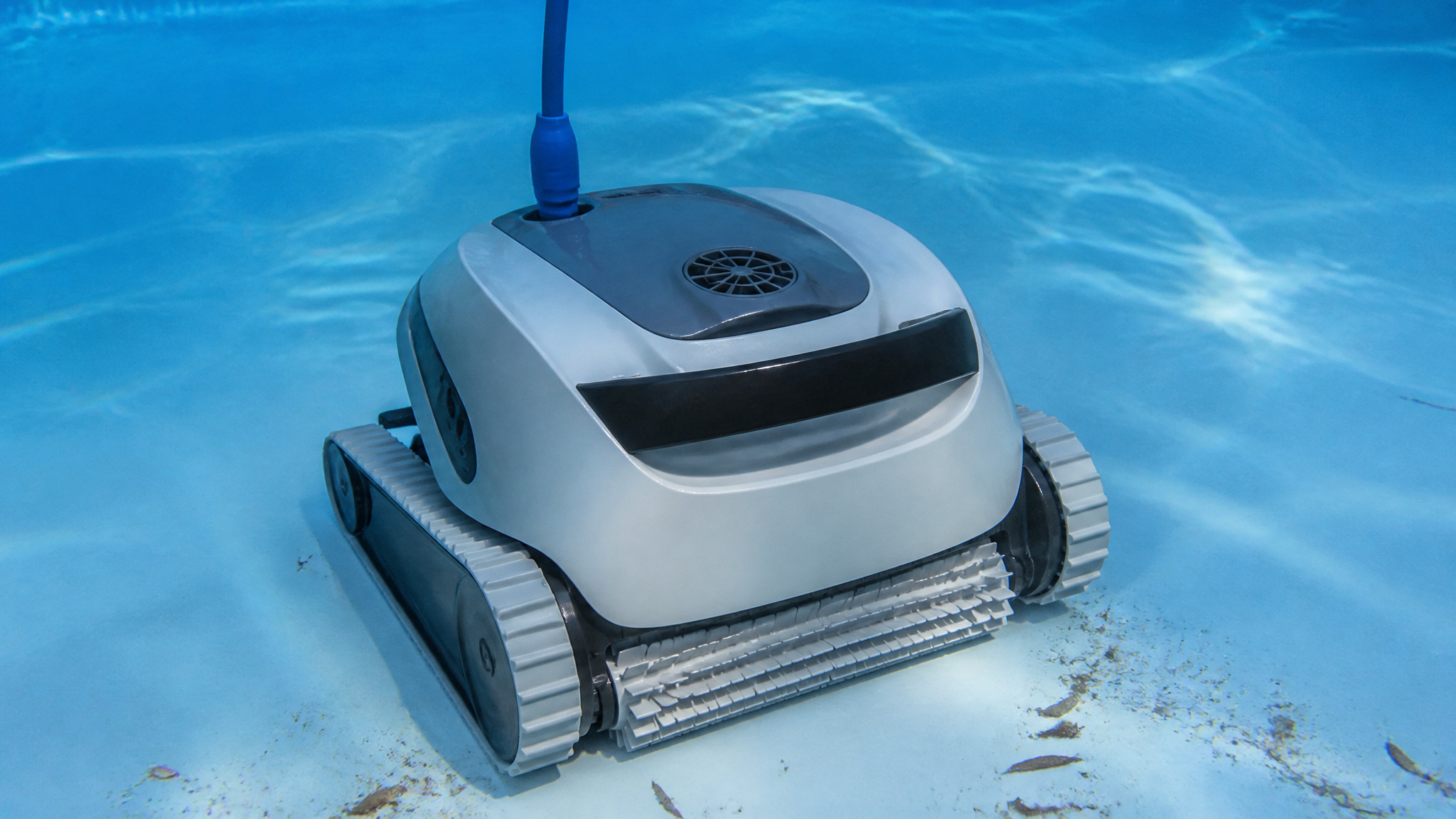
When you’re maintaining an above-ground pool, robotic cleaners consistently outperform suction and manual alternatives in overall effectiveness and convenience. A robotic above ground pool cleaner operates independently from your pump and filter, reducing strain on existing equipment while delivering automated floor and wall scrubbing across various pool shapes and surfaces.
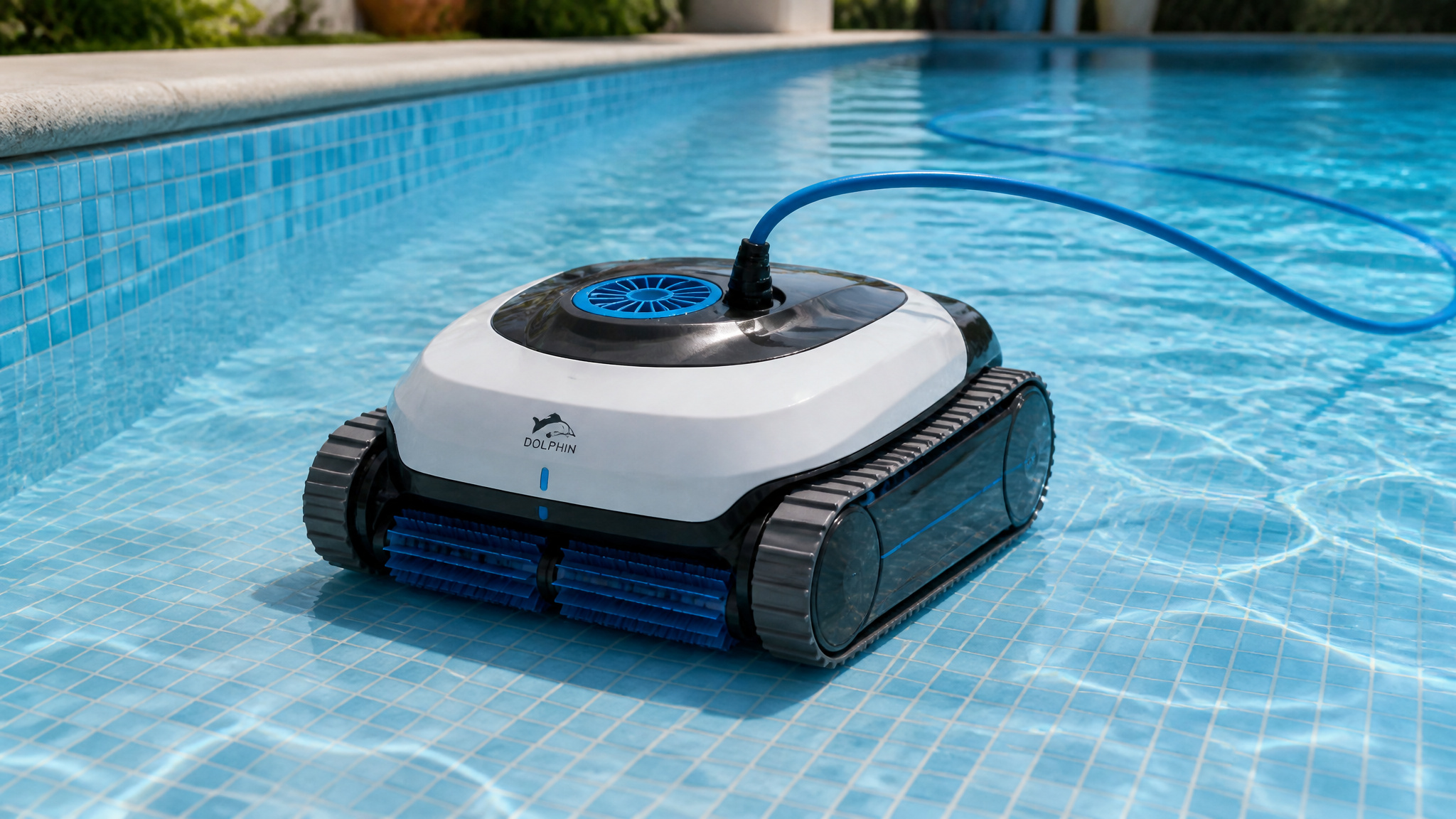
These units adapt to nonstandard dimensions common in above-ground setups, handling pools up to 33 feet with lightweight, portable construction. You’ll benefit from programmable cleaning cycles and weekly smart timers that eliminate hands-on involvement. Models like the Dolphin Escape are engineered specifically for above-ground configurations, providing targeted debris collection without oversized hardware. Their advanced algorithms ensure thorough coverage, cleaning uneven bottoms and sharp corners so no spot is missed. By pairing a robotic cleaner with your regular chemical maintenance routine, you’ll maintain cleaner water, improve circulation efficiency, and greatly cut manual brushing and vacuuming time.
Corded vs. Cordless Above-Ground Pool Cleaners
Because above-ground pool cleaners now split into corded and cordless categories, choosing between them directly affects your cleaning power, runtime, and daily convenience. Corded models deliver continuous suction (up to 4,500 GPH) making them stronger candidates for heavy debris loads. Cordless units peak around 1,300 GPH but eliminate cord management entirely. Corded models are also not ideal for above-ground pools due to their bulkiness and perceived safety concerns around water.
When evaluating a corded vs cordless above ground pool cleaner, you’ll weigh tradeoffs directly. Cordless cleaners run 60 to 180 minutes per charge, suit smaller pools, and offer simpler deployment. Corded cleaners require outlet access and cable routing but won’t interrupt mid-cycle. Upfront costs range from $600 to $1,600+ across both types. Cordless ownership introduces battery replacement concerns, while corded units carry cord-related maintenance. Match your selection to your pool’s size, debris frequency, and storage setup.
Features to Look for in an Above-Ground Pool Cleaner
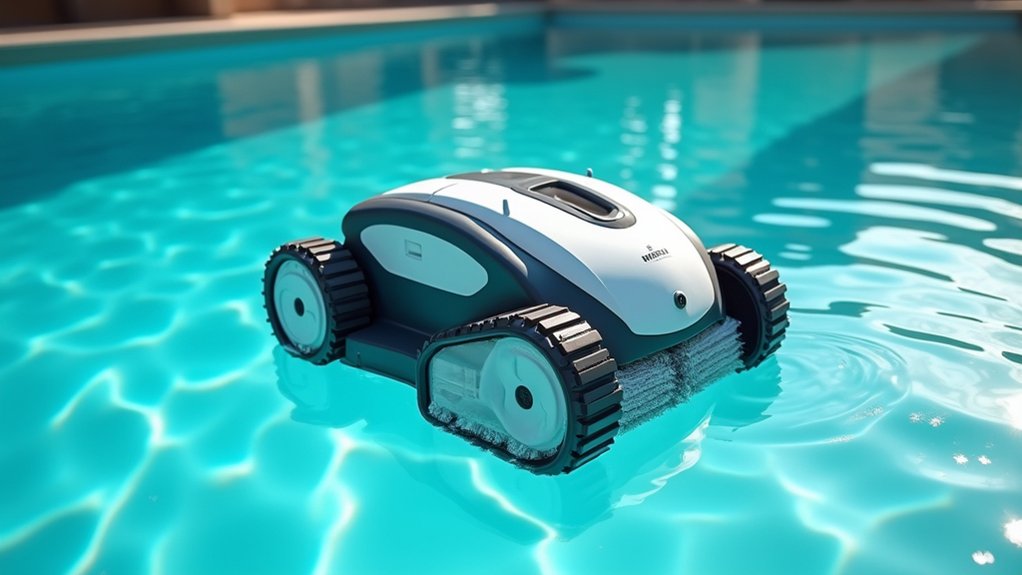
Although above-ground pool cleaners share a common job: removing debris and maintaining water clarity, their feature sets vary considerably across robotic, suction-side, and manual categories. When selecting the best above ground pool cleaner, prioritize filtration quality first. NanoFilters and top-loading cartridges capture fine particles while simplifying debris disposal.
Evaluate cleaning power next. Corded robotic units deliver 4,000 4,500 gallons per hour, outperforming cordless models at 1,200 1,500 GPH. Look for wall-climbing capability and waterline scrubbing to extend coverage beyond the pool floor. Gyroscope navigation guarantees efficient path routing and single-pass vacuuming reduces cycle time. Weekly programmable timers let you automate cleaning without intervention. Cordless cleaners also pose concerns, as some units have reported overheating and fire risks, leading to product recalls. Finally, don’t overlook lightweight construction and built-in handles. You’ll lift the unit frequently. Match features to your debris load, pool size, and automation needs rather than price alone.
Best Above-Ground Pool Cleaners by Model
Since above-ground pool cleaners vary widely in design and capability, matching a specific model to your pool’s requirements matters more than brand loyalty alone. The Dolphin Escape stands out as the best above ground pool cleaner for value-focused buyers needing reliable suction without overspending. If you want wall-climbing automation at a moderate price, the Dolphin Cayman hits that sweet spot. For maximum debris capture, the Dolphin Quantum delivers the largest filter capacity in its class, though you’ll pay a premium. The Dolphin Sigma offers the most advanced feature set for buyers prioritizing top-tier performance. Polaris ranks as the strongest competitor brand, trailing just behind Dolphin in head-to-head testing. You’ll get the best results by selecting based on your pool’s size, debris load, and budget constraints.
Best Above-Ground Pool Cleaner for Small or Soft-Sided Pools
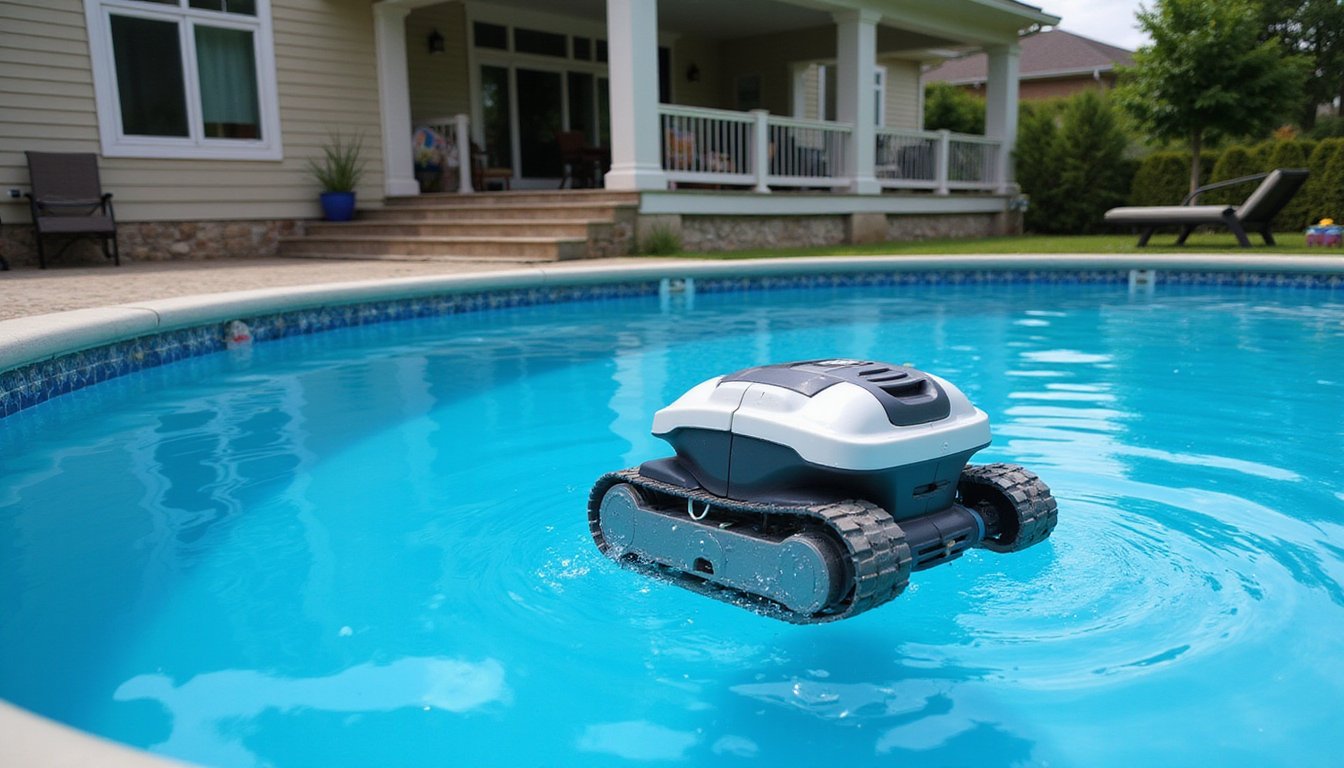
Small and soft-sided pools: especially Intex-style setups, don’t pair well with the same cleaners that handle rigid above-ground models. Flexible walls can’t support aggressive climbing mechanisms, and weak pump systems often lack the flow rate suction-side units demand. You’ll get better results matching your cleaner to the pool’s structural limits.
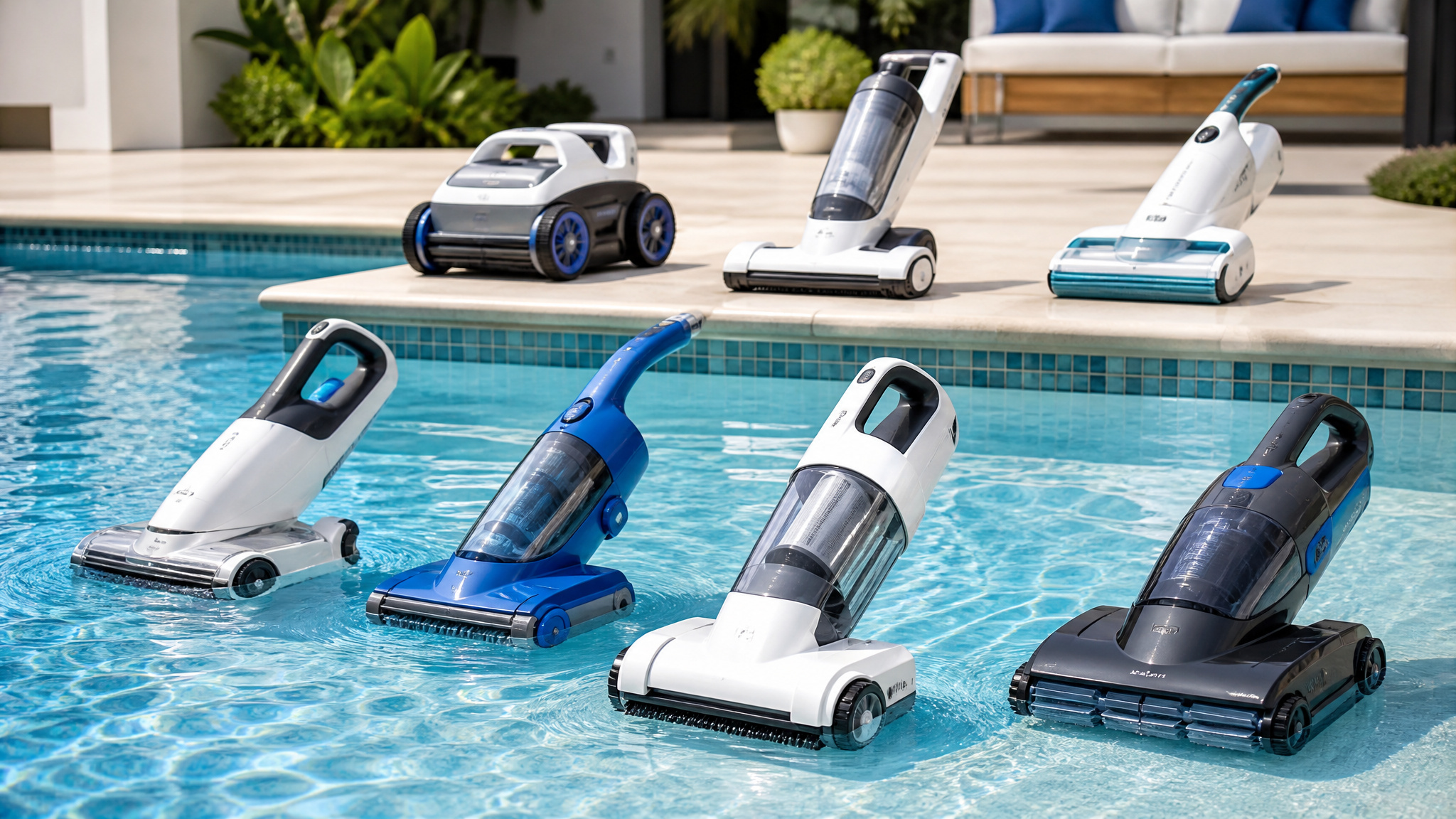
Battery-powered handheld vacuums are your most practical option here. They operate independently of your filtration system, require zero plumbing modifications, and handle sand, fine dirt, and leaf debris effectively. Their low weight won’t stress vinyl liners or soft walls.
If you want automation, compact robotic cleaners like the Dolphin Escape deliver plug-and-play floor cleaning with strong suction and easy-empty debris bins. Prioritize bottom-focused cleaning, simple startup, and liner-safe operation over feature depth you won’t use.
How to Match a Cleaner to Your Above-Ground Pool Size
Your pool’s volume in gallons directly determines which cleaner category you need, since undersized units won’t maintain adequate suction across the full floor area. Small pools under 5,000 gallons work well with compact manual or lightweight robotic cleaners, while mid-size pools between 5,000 and 15,000 gallons typically require models with longer runtimes and stronger flow handling. For large above-ground pools exceeding 15,000 gallons, you’ll want a cleaner with extended cycle capacity and compatibility with your pump’s maximum flow rate.
Small Pool Options
How effectively a pool cleaner performs depends largely on whether you’ve matched it to your pool’s actual size and structure. For small above-ground pools: particularly soft-sided and Intex models, lightweight battery-powered handhelds like the Pool Blaster or Aqua Broom deliver efficient floor cleaning without overcomplicated setup.
If you want an automatic pool cleaner, compact robotic units such as the Dolphin Cayman offer plug-and-play operation at a budget-friendly price point. Suction-side options like the Hayward AquaBug also work well for smaller above-ground installations. You don’t need a high-capacity robot moving 4,000+ gallons per hour when your pool’s volume doesn’t demand it. Check compatibility with your pool’s liner material before purchasing, and prioritize floor-cleaning efficiency over wall coverage. That’s the performance metric that matters most for compact pools.
Mid-Size Pool Picks
Corded robotic units outperform most cordless models here, with top options producing over 4,000 gallons per hour: nearly three times typical cordless output.
- Dolphin Cayman: mid-market sweet spot balancing price and floor-to-wall coverage
- Dolphin Escape: strong suction at a value price point
- Dolphin E10 plug-and-play robotic setup with minimal configuration
- Pentair Kreepy Krauly: suction-side cleaner effective on dished-out bottoms up to 72 inches
Match your pick to your pool’s bottom profile and filtration setup for ideal debris capture.
Large Pool Coverage
Stepping up from mid-size models, large above-ground pools, those stretching beyond 30 ft in their longest dimension, demand a cleaner with a rated coverage capacity that exceeds your actual pool length by at least a few feet. This buffer compensates for navigation inefficiencies and guarantees full-floor passes without missed zones.
A dolphin above ground cleaner like the Quantum targets this segment, delivering robust drive systems and higher filtration capacity suited to wider debris distribution. Prioritize corded units: they eliminate battery-range limits and sustain continuous runtime across larger footprints. Wall-climbing capability matters here too, since perimeter surfaces scale with pool size.
Look for weekly timer functionality. Scheduled cycles maintain consistent coverage without manual intervention, reducing algae buildup between full maintenance sessions. Match motor strength and filter volume to your pool’s actual square footage, not just its shape.
Dolphin vs. Polaris: Which Brand Cleans Better?
When you’re comparing Dolphin and Polaris robotic cleaners for your above-ground pool, Dolphin consistently outperforms on cleaning thoroughness thanks to its smart-scanning navigation and multi-surface coverage across floors, walls, and the waterline. Polaris units deliver strong suction and handle heavier debris well, but their less advanced pathing can leave gaps in coverage on smaller, above-ground setups. If complete, systematic cleaning with minimal missed spots is your priority, Dolphin holds the edge as the stronger performer.
Dolphin’s Cleaning Edge
Dolphin robotic cleaners outperform Polaris models in cleaning thoroughness because they combine active scrubbing with superior filtration technology. Your dolphin pool cleaner captures everything from leaves down to fine sand and algae through Multi-Media™ and NanoFiltration™ systems, while Polaris relies on basic plastic mesh filters that miss microscopic contaminants.
Here’s what gives Dolphin its technical advantage:
- Active wall scrubbing that removes biofilm and algae buildup, not just loose debris
- Multi-stage filtration with interchangeable media designed for specific particle sizes
- Smart navigation mapping that systematically covers every surface instead of random movement
- Twin DC motors delivering 90% greater energy efficiency than conventional cleaners
You’ll notice clearer water faster because Dolphin’s filtration captures particles Polaris systems simply can’t trap.
Polaris as Runner-Up
Although Polaris robotic cleaners deliver strong suction and handle heavy debris buildup effectively, they fall short of Dolphin’s systematic coverage and filtration precision. You’ll find Polaris units excel at vacuuming settled dirt, but they lack the smart navigation that drives Dolphin’s wall-to-waterline cleaning path.
System dependence is another factor. Many Polaris setups require a booster pump, pushing total costs to $1,600 $2,200 once you factor in installation. That erodes any upfront savings. You’re also looking at a 2-year warranty versus Dolphin’s 3-year coverage on comparable models: 50% less protection.
Polaris does offer scheduling and app connectivity on select versions, matching Dolphin’s convenience features. If your above-ground pool accumulates heavy debris regularly, Polaris remains a capable option, but it’s not the most efficient or cost-effective long-term choice.
Shop Top-Rated Pool Cleaners Today
If you are comparing robotic, suction, or pressure pool cleaners, Prime Pool Market has the brands and prices that fit your pool. We carry Pool Cleaners from top names like Polaris, Hayward, Pentair, and more at discount pricing from real pool guys. Browse our full catalog or contact us to find the right cleaner for your pool today.
Call us at (877) 650-7665 with your pool’s size and wall type, and we will help you choose a cleaner that fits.
Frequently Asked Questions
How Often Should You Run a Pool Cleaner in an Above-Ground Pool?
You should run your above-ground pool cleaner 2 3 times per week under normal conditions. If you’re using a corded robotic cleaner, set its weekly timer for hands-off scheduling. Increase frequency after storms, heavy bather loads, or peak pollen seasons. Lightly used pools with minimal debris can get by with fewer cycles. Always pair automated runs with regular skimming, brushing, and filter checks to guarantee full-pool coverage and best filtration performance.
Can Above-Ground Pool Cleaners Damage Vinyl Pool Liners?
Most above-ground pool cleaners won’t damage your vinyl liner if it’s in good condition and your water chemistry‘s properly balanced. However, you’ll risk scuffing or snagging if you’re running a cleaner with hard plastic wheels or aggressive suction on aged, weakened vinyl. Choose models with rubber treads and soft PVC brushes designed for vinyl surfaces. You should also maintain proper pH, alkalinity, and chlorine levels to prevent chemical degradation that makes liners vulnerable.
Do Robotic Pool Cleaners Increase Your Electricity Bill Significantly?
Robotic pool cleaners won’t spike your electricity bill drastically. They run on low-voltage power supplies, typically drawing modest wattage during cleaning cycles that last just a few hours. Your actual cost depends on runtime frequency and motor efficiency: shorter, less frequent cycles keep consumption minimal. Since robots operate independently with self-contained filtration, they can reduce your pump’s runtime, partially offsetting added energy use. For most above-ground pool owners, the electricity increase is negligible.
How Long Do Above-Ground Pool Cleaners Typically Last?
You can expect most automatic above-ground pool cleaners to last 5 to 8 years with proper care. You’ll extend that lifespan by rinsing the unit after each session, storing it in a shaded dry area, and running shorter cleaning cycles instead of continuous operation. Watch for worn wheels, degraded hoses, or reduced suction. These signal it’s time to replace components or the entire unit.
Can You Leave a Robotic Cleaner in the Pool Overnight?
Yes, you can leave a robotic cleaner in the pool overnight after a late-evening cycle: most manufacturers consider short-term submersion safe. However, you should remove it the next morning, empty the filter, rinse it with clean tap water, and store it in a dry, shaded area. Don’t leave it submerged during shock treatments or prolonged chemical dosing, as high concentrations can degrade seals, gaskets, and internal components faster.