
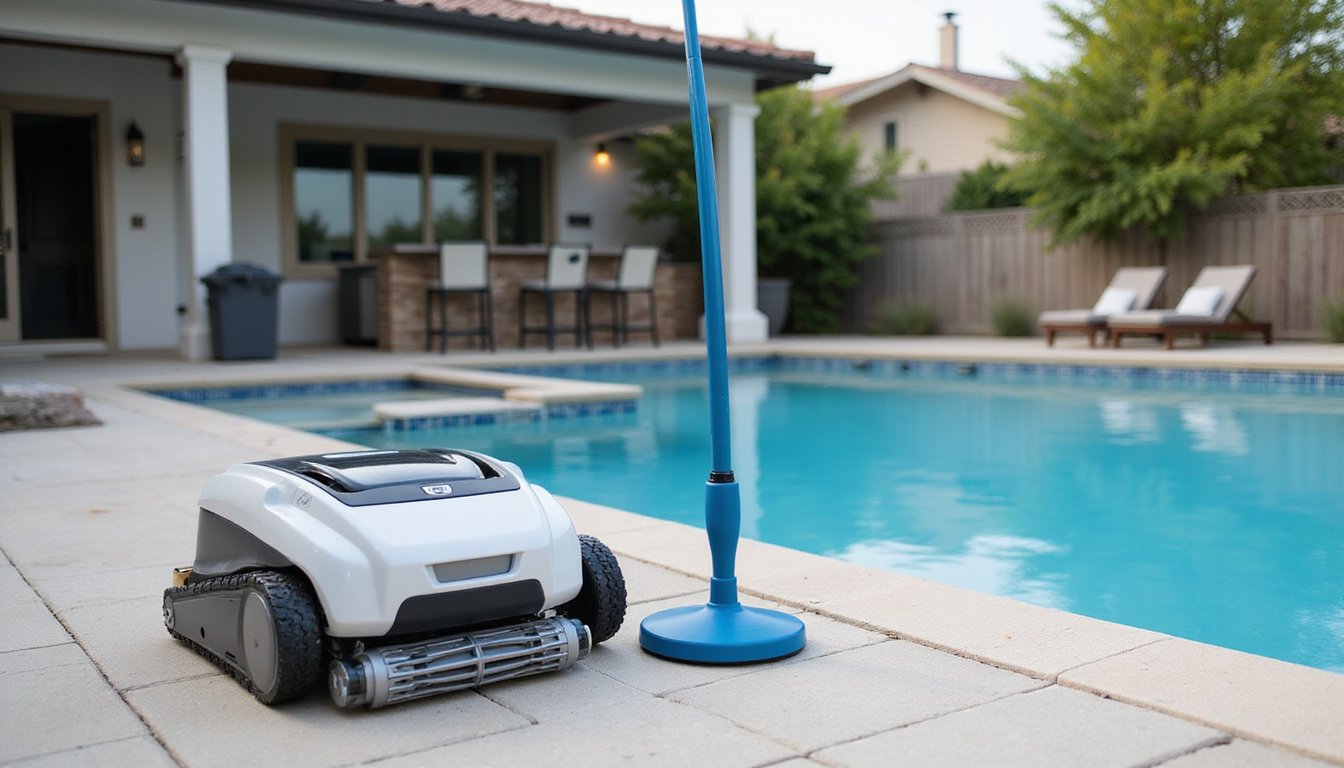
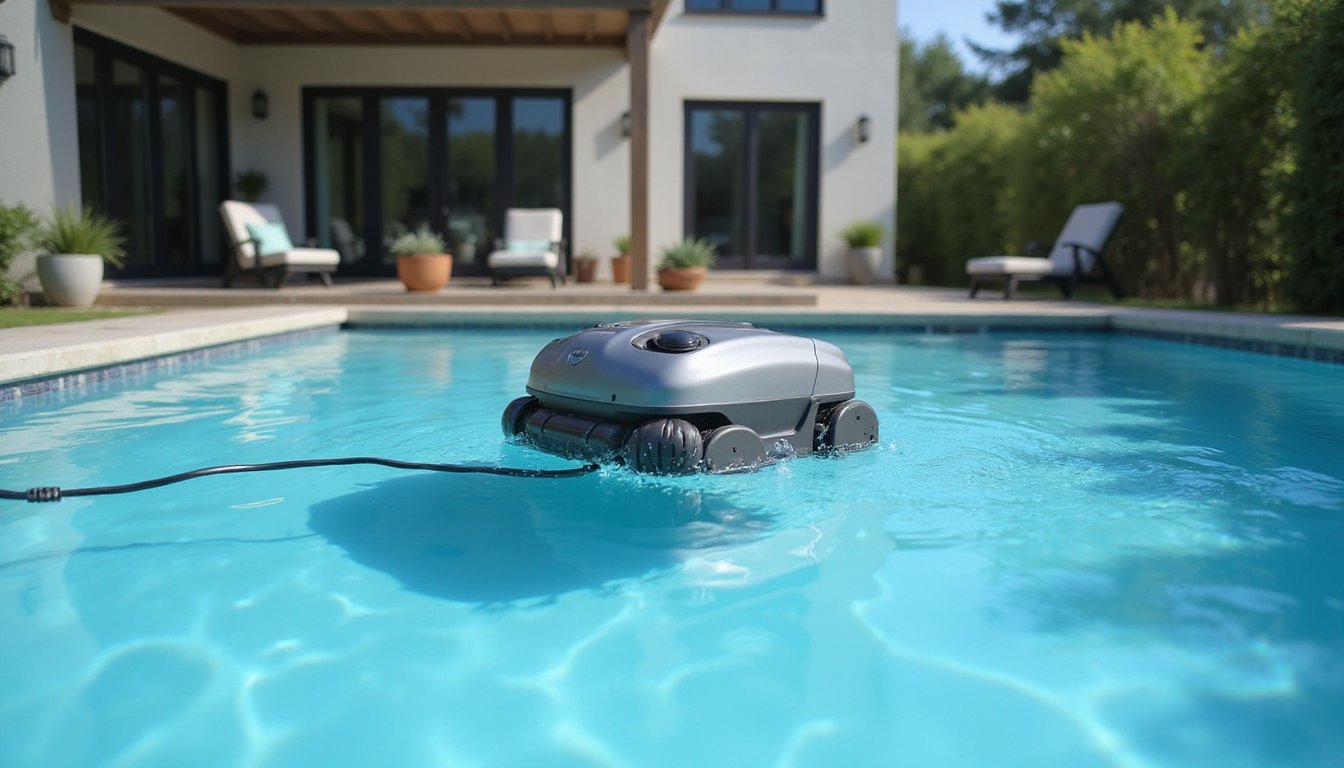
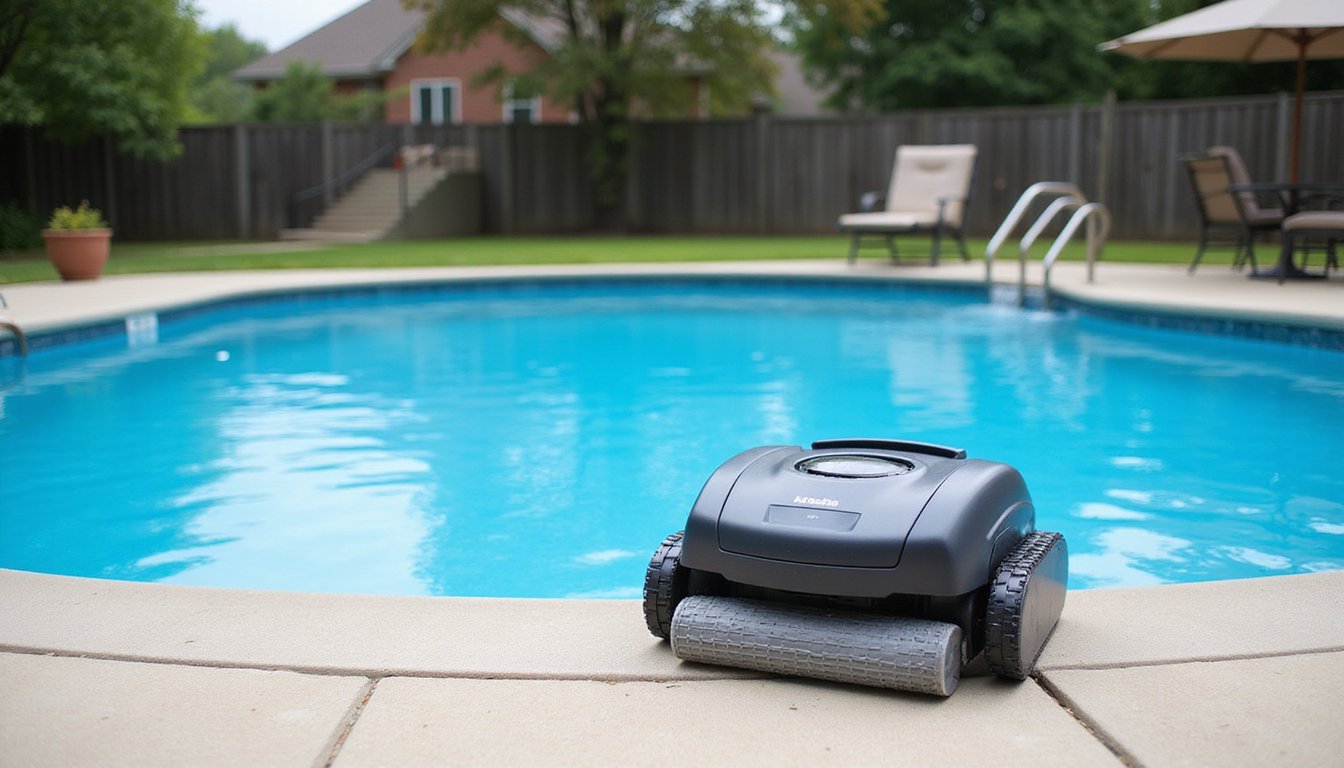
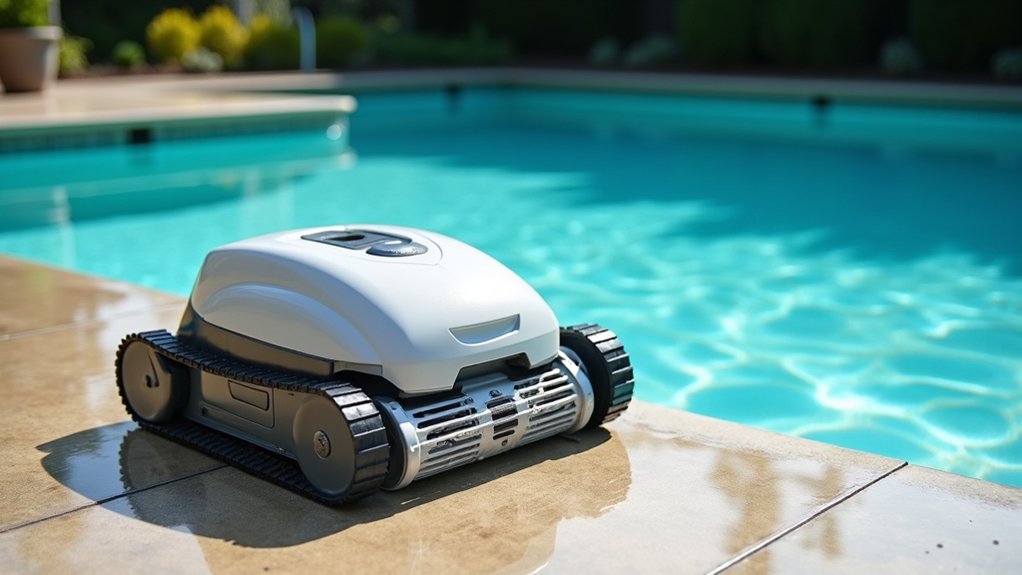
You’ll find robotic pool cleaners priced from under $150 for basic floor-only models to over $2,300 for premium cordless units with AI navigation. Most homeowners get the best performance-to-value ratio in the $500 $800 range, where you’ll get smart navigation, wall climbing, and larger filters. The market’s projected at $2.35 billion in 2026, and growing competition in the under-$800 segment means more frequent discounts. Below, we break down each price tier and the features driving those costs.
What Does a Robotic Pool Cleaner Cost in 2026?
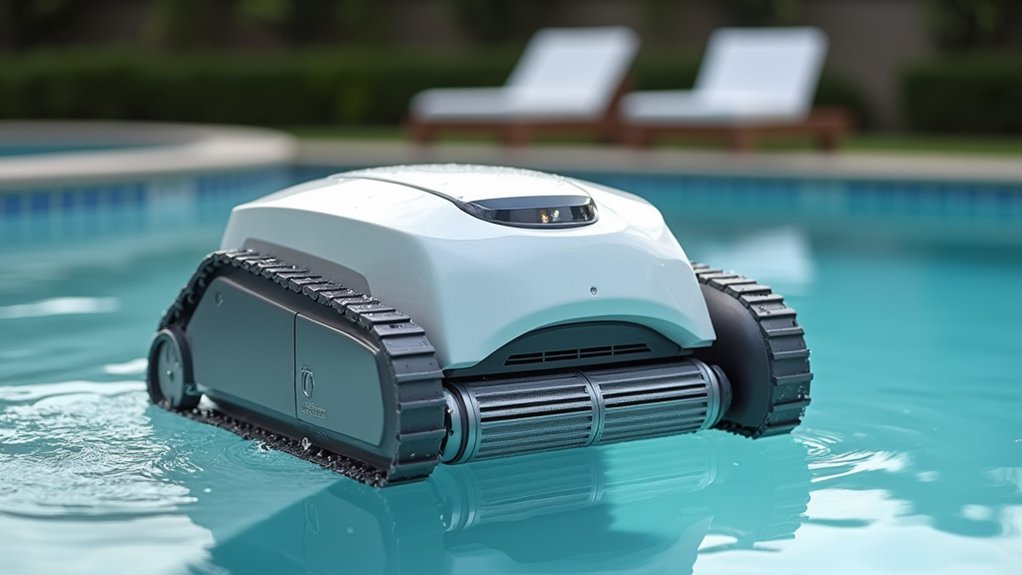
How much should you expect to pay for a robotic pool cleaner in 2026? Prices range from about $400 to over $2,300, depending on features, navigation technology, and pool size. Budget models start around $375 $500, while the strongest value sits in the $500 $700 midrange band. Premium cordless units typically sell between $1,049 and $1,799 after discounting. For example, the Mammotion Spino E1 is priced at $499 and delivers intelligent navigation and strong suction that rival higher-priced competitors.
This robotic pool cleaner price guide reflects a market projected at $2.35 billion in 2026, growing at a 12.16% CAGR through 2034. Residential buyers drive 76.60% of demand, and North America holds over 35% market share. Frequent product launches and seasonal promotions create notable gaps between MSRP and street pricing, so you’ll want to track actual selling prices before purchasing.
Budget Robotic Pool Cleaners Under $500
If you’re shopping under $500, you’ll find mostly cordless, floor-focused robots like the Aiper Seagull SE and Aiper Scuba N1 Pro models built for small to medium pools with straightforward layouts. At this price point, expect reliable maintenance cleaning with top-load filters and simple operation, but don’t count on advanced navigation, wall scrubbing, or extended runtime. Budget robots work best when matched to pools under average residential size, where routine upkeep matters more than heavy-duty debris removal. Many owners find that upgrading to a corded model becomes necessary within the first year as they seek consistent suction and better overall performance.
Best Features Under $500
Although premium robotic pool cleaners can exceed $1,000, the sub-$500 market now delivers a surprisingly competitive feature set that covers most homeowners’ core cleaning needs. When evaluating robotic pool cleaner cost, you’ll find cordless operation, rechargeable batteries, automatic cleaning modes, and fine debris filtration standard across this tier. It’s worth noting that the Dolphin E10 (~$497) remains the only corded robot under $500, offering consistent power without battery degradation concerns.
The most notable trend is wall and waterline cleaning migrating into budget territory. Models like the Wybot C1 (~$420) and Aiper Scuba S1 (~$430) now offer full-coverage cleaning previously reserved for higher price points. You’ll also find app control and extended runtimes up to 150 minutes in this range. Entry-level options start around $140 $150 for basic floor cleaning, while midrange models between $380 $430 deliver the strongest feature-to-cost ratio for most pool owners.
Ideal Pool Size Match
Budget robotic pool cleaners under $500 split into three distinct size tiers that determine which models actually fit your pool. For above-ground pools under 860 sq ft, you’ll find floor-only options like the Aiper Scuba SE ($150) and Seagull SE ($140). Medium above-ground pools up to 1,150 sq ft align with cordless models like the Wybot B1 ($380).
The strongest value in automatic pool cleaner pricing sits in the small inground tier. The Wybot C1 ($420) and Aiper Scuba S1 ($430) cover pools up to 1,600 sq ft with floor, wall, and waterline cleaning. Beyond 1,600 sq ft, your under-$500 options thin out considerably. The Wybot C2 at $520 stretches the budget but handles pools up to 2,152 sq ft.
Best-Value Robotic Pool Cleaners ($500 $800)
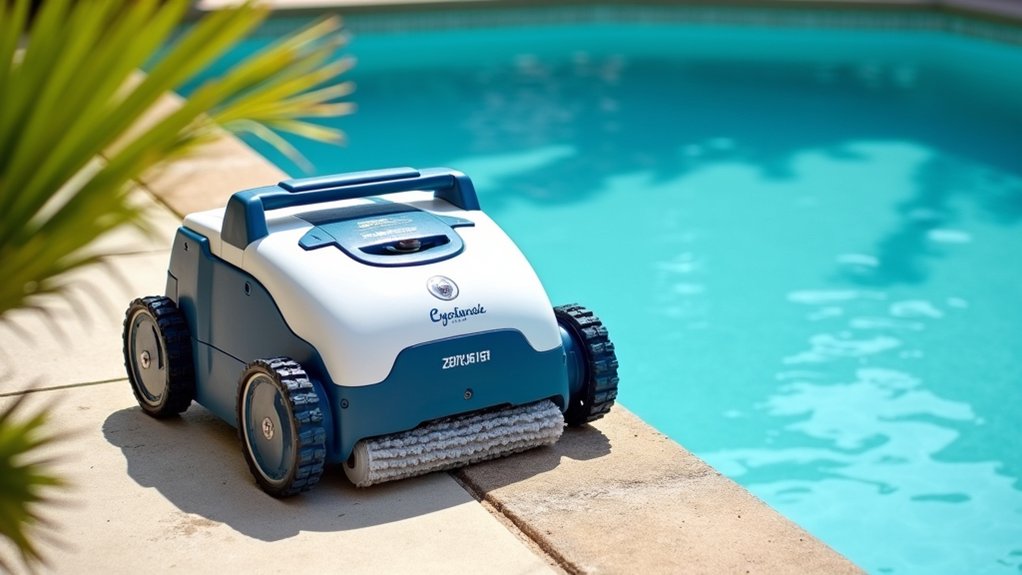
In the $500 $800 range, you’re getting meaningful upgrades like smart navigation, wall climbing, and larger filters (often 3.5 4 liters) that sharply improve cleaning consistency over sub-$500 models. Standout picks include the Dolphin Cayman for budget-friendly wall climbing, the Dolphin Nautilus CC+ for medium-sized pools, and the Mammotion Spino E1 at $649 for top-tier overall performance. This segment consistently ranks as the sweet spot where you’ll find premium-like cleaning capability without crossing into premium pricing.
Features Worth Paying For
Not every feature on a robotic pool cleaner justifies the price bump, but several upgrades in the $500 $800 range deliver measurable performance gains. A robotic vacuum for pools with smart navigation consistently outperforms random-pattern models by reducing missed spots and improving total coverage per cycle.
Wall climbing and waterline scrubbing expand cleaning beyond the floor, addressing buildup where it’s most visible. Pleated or NanoFilters capture microscopic particles like pollen and algae spores that standard filters miss. Corded models in this range deliver 4,000 5,000 GPH of suction, far exceeding the 1,200 1,500 GPH typical of cordless units. Anti-tangle swivel cords and easy-access filter baskets cut maintenance time between cycles. A 3-year warranty adds long-term value you shouldn’t overlook when comparing total ownership costs.
Top Mid-Range Picks
The Aiper Seagull Pro ($550 $750) appeals to cordless-first buyers with smart navigation and good wall climbing, though its 2.5-liter filter is smaller. The Hayward AquaVac 500 ($650 $850) suits simple rectangular pools but relies on random navigation. The Polaris VRX iQ+ ($800 $1,100) pushes into near-premium territory with app control. You’ll find the strongest value concentrated between $500 $800.
Premium Robotic Pool Cleaners Over $1,000
Once you move past the $1,000 mark, you’re entering the premium tier of robotic pool cleaners a segment that extends to roughly $1,800 for most full-featured models and can reach $4,000 at the extreme end for top-tier cordless units. Premium robotic pool cleaners over $1,000 target larger inground pools and deliver full-surface cleaning rather than basic floor-only coverage.
Your inground pool cleaner cost at this level reflects advanced navigation, stronger motors, and broader debris capacity. Review sites consistently separate this bracket from sub-$1,000 value picks, framing it as a performance-driven segment for homeowners with demanding cleaning needs. You’ll find both corded and cordless options here, with pricing driven by build quality and automation rather than power format alone. This tier prioritizes long-term convenience over upfront savings.
Features That Raise Robotic Pool Cleaner Prices
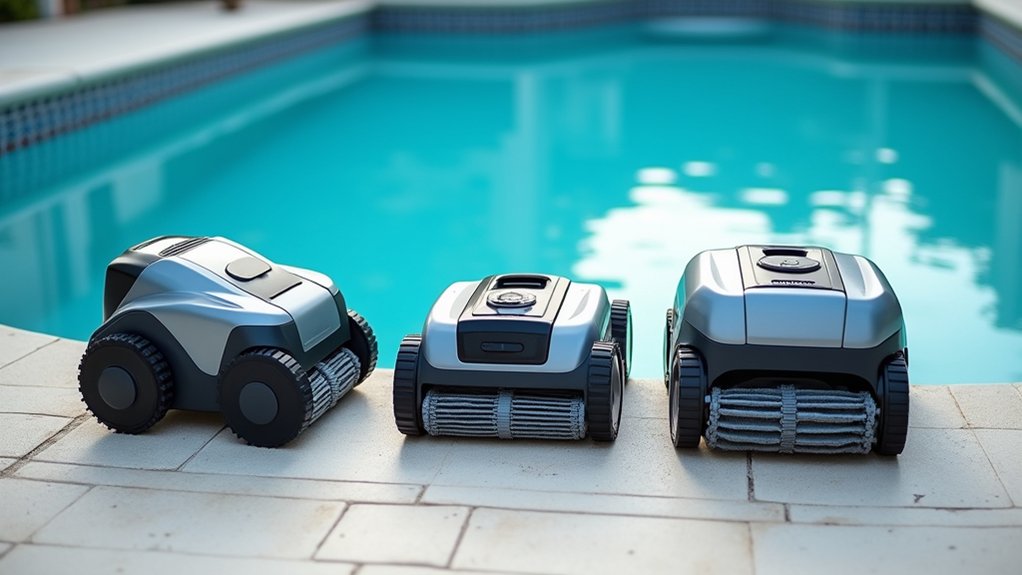
Because robotic pool cleaners span from under $300 to over $4,000, the features packed into each model are what drive the price gaps you’ll see across the market. Smart navigation with gyroscopic positioning, multi-surface cleaning coverage, and extended battery runtimes are the clearest cost escalators. Models offering wall climbing, waterline scrubbing, and five-in-one cleaning systems command notably higher prices than floor-only units.
Battery capacity separates tiers sharply premium cordless models reach 5 to 7 hours, while sub-$800 units cap around 210 minutes. Advanced filtration, AI debris detection, and track-based traction systems further widen pricing. When you’re comparing a Polaris robotic cleaner price against competitors, focus on navigation intelligence, cleaning zone coverage, and automation extras like auto-docking. These features determine whether you’re paying for convenience or just basic functionality.
How to Save on a Robotic Pool Cleaner in 2026
How strategically you time and tier your purchase in 2026 can shave hundreds off your robotic pool cleaner cost. Premium models, including options like a Hayward robotic pool cleaner, have dropped from $3,000 to under $2,000 during major sales. The $500 $700 tier delivers the strongest performance-to-value ratio for most residential pools.
Smart timing and tiered buying can save you hundreds on a robotic pool cleaner in 2026.
- Shop seasonal promotions: Mid-range models near $500 see frequent discounts as brands compete in a crowded under-$800 segment.
- Compare within price bands: Units priced $499 $579 vary markedly in coverage and runtime.
- Use no-interest financing: Payment plans improve cash flow on premium cordless models without inflating total cost.
- Factor in energy savings: Robotic cleaners use roughly 197 kWh annually versus 1,600+ kWh for suction models, offsetting purchase price over time.
Shop Top-Rated Pool Cleaners Today
If you are comparing robotic, suction, or pressure pool cleaners, Prime Pool Market has the brands and prices that fit your pool. We carry Pool Cleaners from top names like Polaris, Hayward, Pentair, and more at discount pricing from real pool guys. Browse our full catalog or contact us to find the right cleaner for your pool today.
Frequently Asked Questions
How Much Electricity Does a Robotic Pool Cleaner Use per Month?
You’ll typically use around 3 8 kWh per month running a robotic pool cleaner, costing roughly $0.50 $1.50 depending on your local electricity rate. That’s because most units draw 150 300 watts and run only 2 3 hours per cycle, a few times weekly. Higher-end models with stronger motors consume slightly more, but overall monthly energy costs stay minimal compared to your purchase price and traditional pump-driven cleaning systems.
How Long Do Robotic Pool Cleaners Typically Last Before Replacing?
Most robotic pool cleaners last 5 to 7 years with normal residential use. If you invest in a higher-end model and maintain it consistently, you can push that to 7 to 10 years. Budget cordless units often fall short of that range due to battery degradation. You’ll extend your cleaner’s lifespan by cleaning filters regularly, storing it indoors, and monitoring water chemistry to protect seals and electronics.
Are Robotic Pool Cleaner Replacement Filters and Parts Expensive?
Replacement filters and parts aren’t usually expensive on their own, but costs add up over time. You’ll find filters are moderately priced relative to your cleaner’s cost budget models ($400 $500) have cheaper parts, while premium units ($1,000 $2,300) use pricier, brand-specific components. Battery replacements on cordless models can become your biggest long-term expense. You’ll save most by choosing cleaners with washable filter baskets and widely available replacement parts.
Can Robotic Pool Cleaners Handle Saltwater Pools Without Extra Damage?
Most robotic pool cleaners can handle saltwater pools without extra damage, since they’re built with corrosion-resistant plastics and sealed electronics. You’ll minimize wear by rinsing your unit with fresh water after each cycle and drying it before storage. Budget models under $500 may use less durable materials, so you should prioritize saltwater-rated specs if that’s your pool type. Stronger warranties and better sealing reduce your long-term replacement risk.
Is a Robotic Pool Cleaner Cheaper Than Hiring Professional Pool Service?
A robotic pool cleaner‘s typically cheaper than professional service over time. You’ll pay a one-time cost midrange models run $400 to $800 while recurring service bills add up month after month. Even premium robots at $1,800 to $2,300 can break even within a season or two. Professional service only makes sense if you’re cleaning occasionally or short-term. For most homeowners, the robot delivers stronger long-term value.