
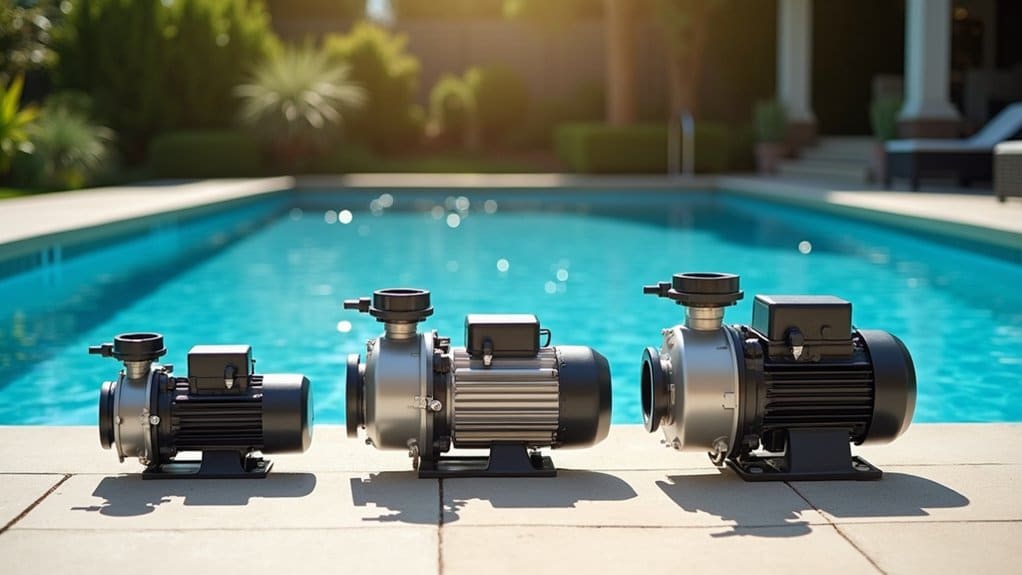


You can reduce pool operating costs by up to 50% by stacking key efficiency upgrades. Start with a variable-speed pump it’ll reduce pump energy use by roughly 87%. Add an ENERGY STAR certified heat pump with a COP of 7.1 to slash heating costs by 80%. Use a solar cover to curb evaporation losses, which drive 90% of heating expenses. Smart controls and off-peak scheduling compound these savings further, as each section below breaks down.
Find Where Your Pool Energy Budget Goes
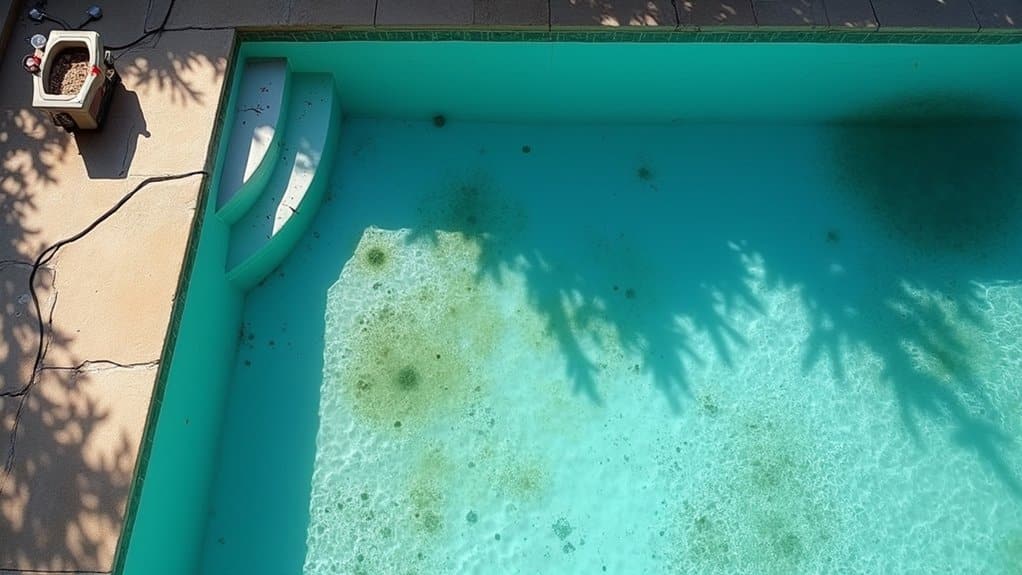
Before you can cut costs, you need to understand where your pool’s energy actually goes. Your heated pool’s total energy consumption combines two primary loads: heating energy and pump electrical energy. Heating dominates it’s the largest contributor, with 90% of annual water heating costs driven by evaporation losses alone. Every pound of evaporated water strips approximately 1,000 Btu from your pool.
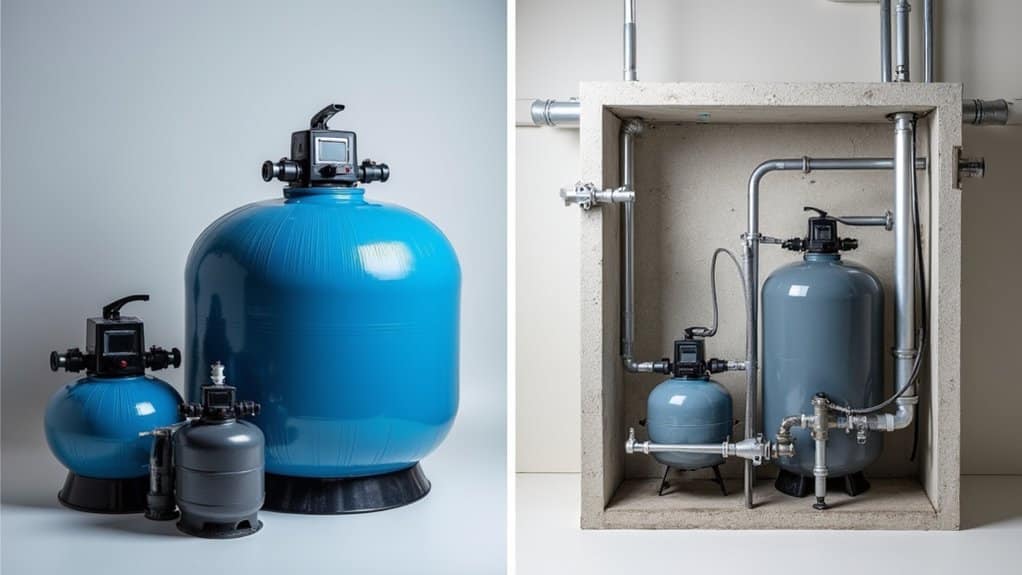
When learning how to reduce pool operating costs, start by mapping your consumption. A medium-sized pool typically consumes 2,000 3,000 kWh annually, costing $660 $1,200 and accounting for roughly 30% of household energy use. Pump and filtration systems form a smaller but significant share. Your filter type sand, cartridge, or diatomaceous earth directly influences that energy draw. Installing a variable speed pump is one of the most effective ways to reduce the electrical energy drawn by your filtration system. Beyond the pump itself, water features like fountains and waterfalls consume additional electricity that many pool owners overlook when budgeting for energy costs. Target heating efficiency first for maximum savings impact. The pool industry has made remarkable strides, with average annual energy consumption for heating dropping from 15,000 kWh in 1980 to just 1,570 kWh in 2015, demonstrating how modern technology can dramatically shrink your energy footprint. When learning how to reduce pool operating costs, start by mapping your energy consumption a medium-sized pool typically uses 2,000 3,000 kWh annually, costing $660 $1,200 and accounting for about 30% of household energy use. While pumps and filtration systems contribute significantly, your filter type and upgrades like variable-speed pumps can lower energy draw, and overlooked features like fountains or waterfalls also add to usage. Prioritizing heating efficiency delivers the greatest savings, and understanding electrical requirements for pool equipment ensures your system runs safely and efficiently as modern technology continues to reduce overall energy demand.
Cut Pool Energy Use With a Variable-Speed Pump
Because pump affinity laws govern fluid dynamics exponentially rather than linearly, halving your pump’s speed doesn’t just cut energy use in half it drops consumption by roughly 87%, to one-eighth of the original draw. A standard single-speed pump consuming 2,000 watts burns approximately 480 kWh monthly at eight hours daily. A variable-speed model performing identical turnover uses just 72 kWh an 85% reduction in pool pump energy usage.
Variable-speed pumps achieve this through Permanent Magnet Motors operating at 90% efficiency versus 30 70% for traditional induction motors. You’ll run 200 500 watts at ideal speeds, costing $10 25 monthly. ENERGY STAR certified models push savings further, exceeding $300 in lifetime energy reductions. Most installations achieve full payback within 18 months.
Heat Your Pool for Less With a Heat Pump
Heat pumps extract ambient thermal energy from surrounding air and transfer it to your pool water using a refrigeration cycle, delivering four to seven units of heat for every unit of electricity consumed. With a Coefficient of Performance (COP) of 5.0, you’ll spend roughly $1.20 per day to heat your pool a fraction of what gas boilers or electric resistance heaters cost. Upgrading to a high-efficiency model rated at COP 7.1 drops daily operating costs to approximately $0.84, making it one of the most impactful changes you can make to reduce long-term pool expenses.
How Heat Pumps Work
Here’s the process: A fan draws outdoor air across an evaporator coil containing liquid refrigerant, which absorbs heat and converts to warm gas. The compressor then pressurizes this gas above 200°F. As your pool pump circulates water through the heat exchanger, the hot refrigerant transfers its heat to the cooler pool water, warming it 3 5°F per pass.
This refrigerant cycle delivers up to 710% efficiency the cornerstone of meaningful pool heating cost reduction. Heat pumps perform efficiently above 45 50°F air temperature, with low-ambient switches protecting the compressor in cooler conditions.
Lower Operational Energy Costs
Switching from a gas or electric resistance heater to a pool heat pump cuts your heating costs by up to 80%, thanks to Coefficient of Performance (COP) ratings that range from 4 to 7. A COP of 7.1 drops daily heating costs to approximately $0.84, compared to $1.20 at a COP of 5 translating to monthly expenses between $27 and $33.
Among the most impactful pool energy saving tips: select inverter-driven models that modulate compressor speed to match real-time demand. High-efficiency units like the AquaCal SQ145 consume just 5.63 kWh daily versus 8 kWh for standard models. Evaluate Seasonal COP (SCOP) ratings rather than single-point measurements to assess true performance across your entire heating season, typically May through September.
Use Smart Controls to Manage Pool Temperature
Smart controls let you automate temperature scheduling, so your heater runs only when needed rather than cycling continuously systems like HeaterReader’s 7-day programming with 12 personalized timers and Pentair Home’s support for up to 100 schedules make this precision straightforward. You can monitor your pool remotely through apps like iAquaLink or the Pentair Home app, adjusting temperature setpoints from anywhere to prevent unnecessary heating when the pool isn’t in use. By shifting heating cycles to off-peak electricity hours and coordinating variable-speed pump schedules with heating demand, you’ll cut energy costs considerably without sacrificing water comfort.
Automated Temperature Scheduling
Because pool heating typically ranks among the highest operational expenses, automated temperature scheduling through smart controllers offers one of the most impactful ways to cut costs. Systems like Pentair IntelliCenter let you schedule heating cycles during off-peak electricity hours, directly reducing power bills. The Attendant leverages historical performance data and weather conditions to activate heating or chilling only when necessary.
You’ll gain precise control through digital monitoring that calibrates water and solar temperatures in 1° increments. Energy-efficient pool systems eliminate unnecessary heating by setting your preferred temperature to be ready at exactly the right time. SolarTouch controllers even provide nocturnal cooling for pools that overheat in hot climates, circulating warmer water through collectors at night to maintain ideal conditions.
Remote Pool Monitoring
Smart monitoring platforms integrate with weather forecasts to auto-adjust heating based on incoming conditions. Occupancy sensors toggle heating off when the pool isn’t in use, while threshold alerts notify you instantly if temperatures deviate from set ranges. These capabilities reduce equipment breakdowns by 85% through early detection and cut maintenance costs by 40% via predictive diagnostics. Compatible with Google Home and Alexa, remote controls alone deliver 10 15% energy savings through optimized, data-driven operations.
Off-Peak Heating Optimization
When you dial back your pool’s target temperature by just 2 3 degrees, you’ll cut heating costs by roughly 20 30% since each degree reduction saves approximately 10% on energy consumption. Heat pump systems with COP ratings between 3.0 7.0 deliver 3 7 units of heat per electricity unit consumed, maintaining consistent temperatures once they reach the setpoint.
Schedule your heater to run during off-peak electricity hours, especially since a 7kW unit operating 6 hours daily at $0.14/kWh costs $5.88 per day. Reducing runtime during mild spring and fall seasons drives substantial pool maintenance cost savings. Real-time power monitoring devices track consumption patterns and peak usage, letting you pinpoint exactly where to trim operational hours. These targeted adjustments compound into meaningful annual reductions without sacrificing water comfort.
Run Pool Equipment During Off-Peak Hours
Most utility providers structure their electricity pricing around time-of-use (TOU) plans, where rates drop considerably during off-peak windows typically between 9 p.m. and 6 a.m. Programming your pump to operate during these hours directly reduces pool operating expenses without compromising water quality or circulation.
Install a programmable timer or smart automation system to sync equipment schedules with your utility’s off-peak periods. ENERGY STAR-approved variable speed pumps running at lower speeds during off-peak hours cut energy consumption by 30 45% compared to single-speed models saving up to $2,800 over the equipment’s lifespan. Weekends and federal holidays often qualify all hours as off-peak, giving you additional scheduling flexibility. Verify your local utility’s specific TOU windows before configuring run times.
Stack These Upgrades to Cut Pool Costs 50%
Shifting your pump schedule to off-peak hours tackles one major cost driver, but combining multiple efficiency upgrades compounds those savings far beyond what any single change delivers.
For maximum pool cost reduction, stack these proven upgrades:
- Variable-speed pump: ENERGY STAR-certified models save $300+ annually with up to 90% energy reduction
- LED lighting: Cuts lighting energy consumption 80% with triple the lifespan
- Heat pump or solar heater: Delivers 4-7x greater efficiency than gas, saving $13,000+ over ten years
- Solar pool cover: Reduces heating costs 50-70% by eliminating evaporation losses
- Dark pool finish: Absorbs UV rays for passive solar heating, reducing mechanical heater runtime
Each upgrade amplifies the others’ effectiveness, creating compounding returns.
Frequently Asked Questions
How Much Does a Variable-Speed Pump Installation Typically Cost?
You’ll typically spend $800 to $2,500 for a complete variable-speed pump installation, covering both the unit and labor. The pump itself runs $604 $743 for a standard 1.5 HP model, while installation labor adds $100 $500, depending on rewiring or piping modifications. Most homeowners average around $1,300 total. You’ll recoup this investment within two years through reduced electricity consumption across the pump’s 8 12 year lifespan.
Do Energy-Efficient Pool Upgrades Qualify for Tax Credits or Rebates?
Yes, certain energy-efficient pool upgrades qualify for federal tax credits. Under Section 25C, you can claim 30% of costs for ENERGY STAR-certified heat pump water heaters up to $2,000 through December 31, 2025. Solar pool heaters fall under Section 25D’s Residential Clean Energy Credit at 30% with no annual cap. You’ll file Form 5695 to claim these credits. Electrical panel upgrades supporting pool equipment also qualify for up to $600.
How Often Should Pool Equipment Be Serviced to Maintain Efficiency?
You should service pool equipment on a staggered schedule to maintain peak efficiency. Check pump and skimmer baskets daily, and monitor filter pressure gauges. Weekly, you’ll want to backwash filters when pressure rises 8 10 psi above baseline. Monthly, inspect pumps, filters, and chemical balance. Annually, have a certified technician tune up pumps, heaters, and circulation systems, replace filter media, and lubricate O-rings to prevent costly efficiency losses.
Can Solar Pool Covers Reduce Heating Costs Significantly?
Yes, solar pool covers can drastically cut your heating costs. You’ll typically see 50-70% reductions in heating expenses by using one consistently. They’ll block 95% of evaporation your pool’s biggest heat loss source and prevent 90% of nighttime heat loss. You can expect 10-15°F temperature gains without running your heater. Depending on your heating type, you’re looking at $500-1,800 in annual savings, making covers one of your highest-ROI efficiency upgrades.
How Long Does It Take for Energy-Efficient Pool Upgrades to Pay Off?
Most energy-efficient pool upgrades pay for themselves within 2 7 years, depending on the equipment. You’ll recoup a variable-speed pump investment in 2 5 years, saving $250 $375 annually. Solar heating systems hit payback in roughly 2.35 years when replacing gas heaters. Heat pumps take about 6.7 years, while LED lighting requires around 8 years. Combined, a $6,700 investment delivers $9,050 in net savings over 15 years.