
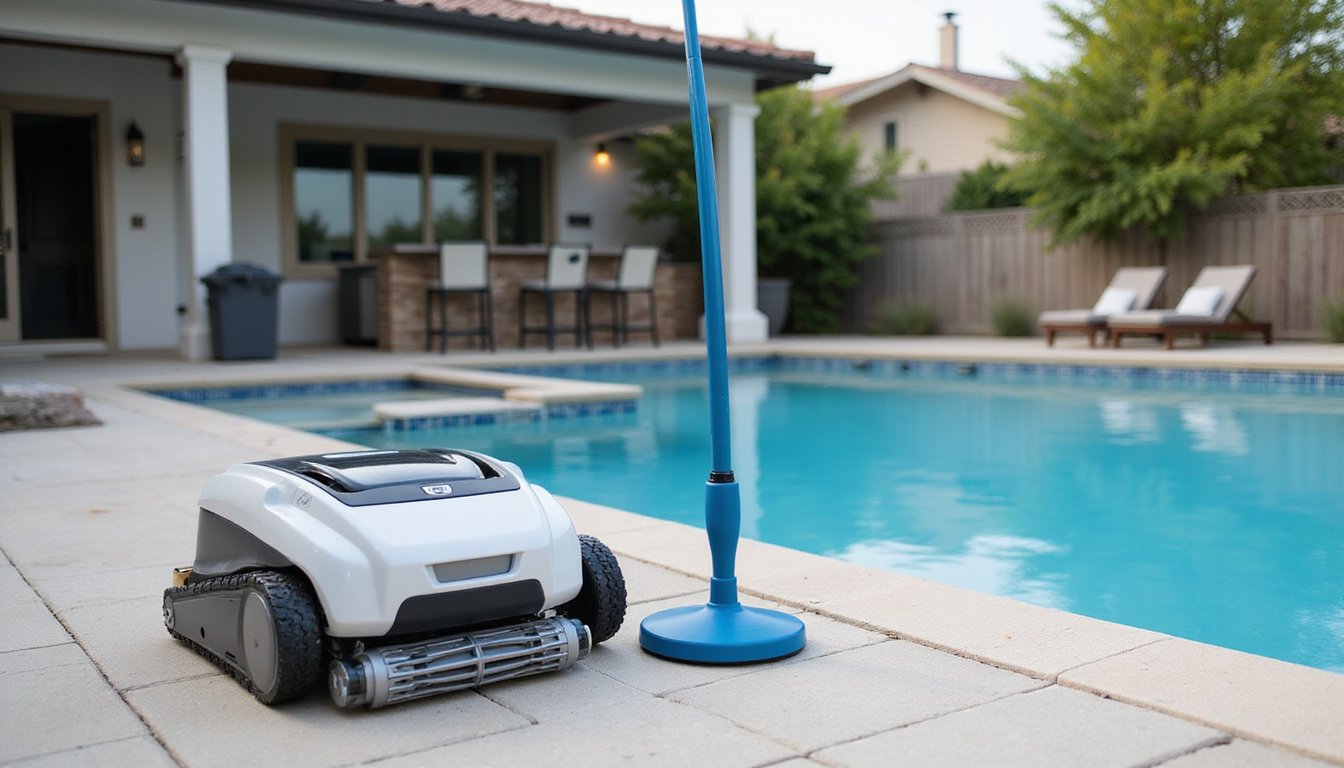
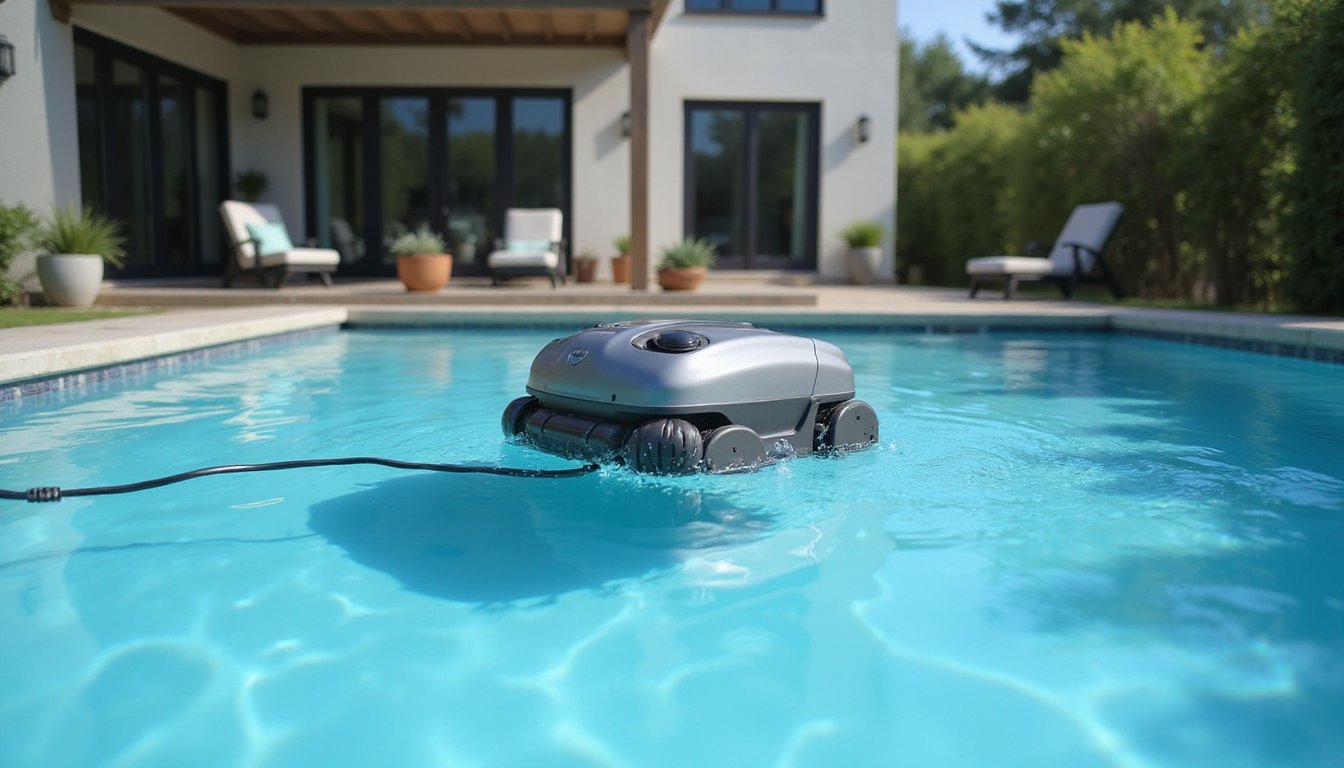
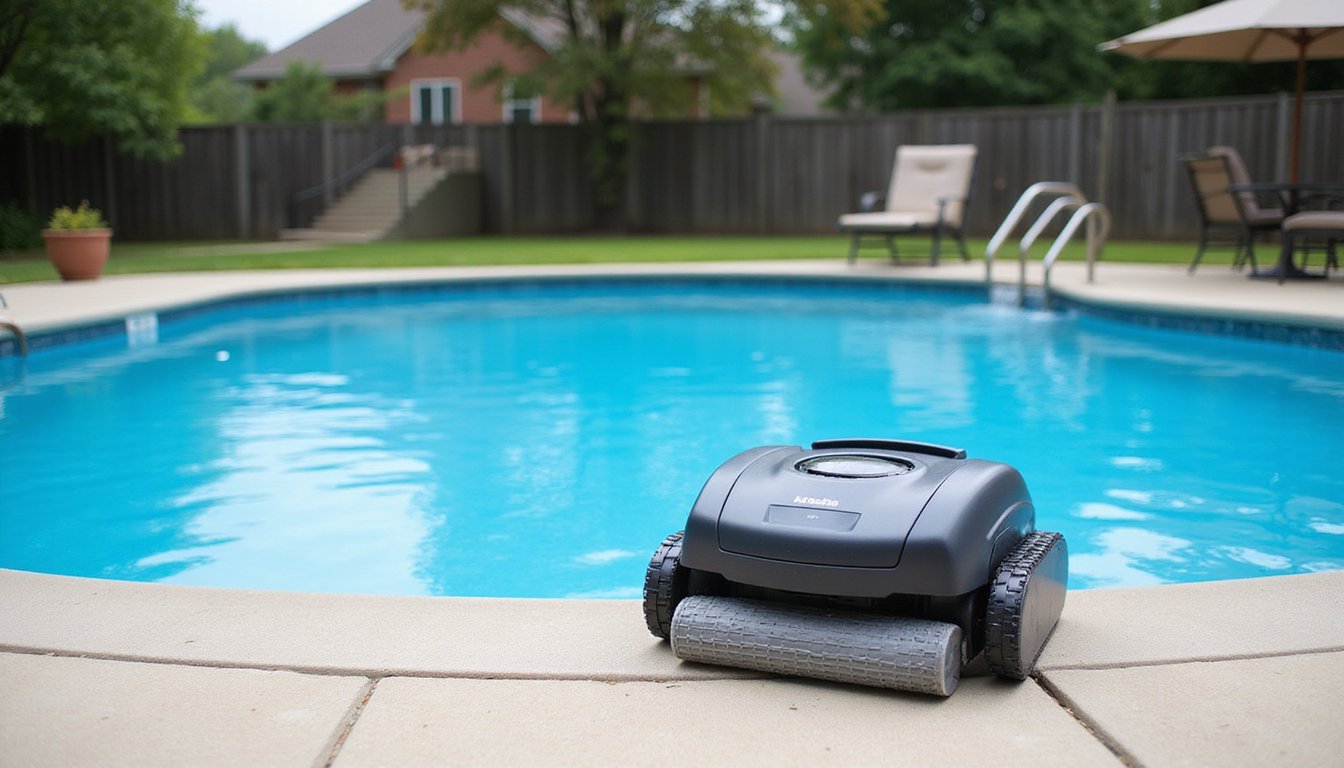
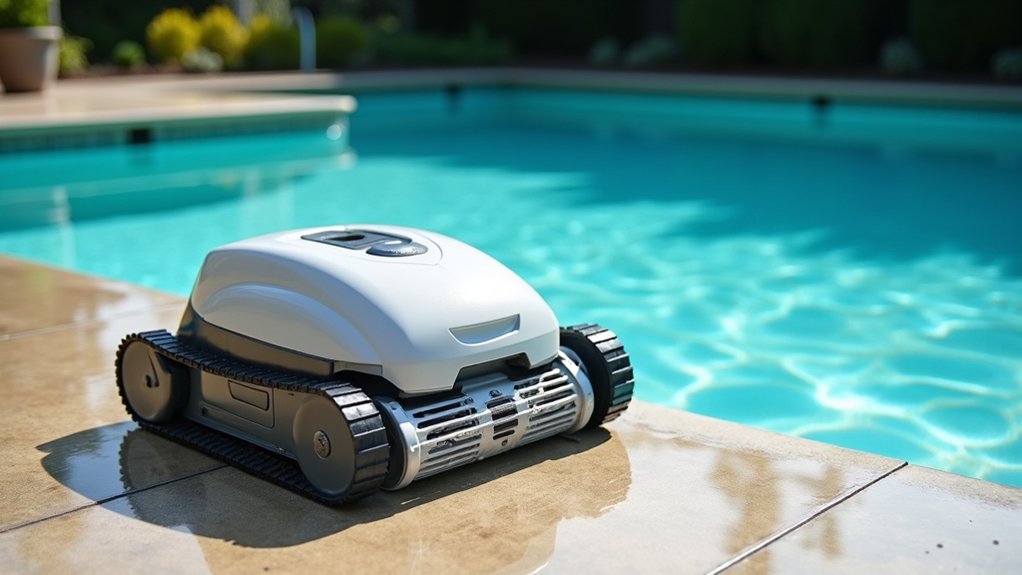
Robotic cleaners run independently on low-voltage power, costing just $22 $45 in electricity over five years, while suction and pressure-side units rely on your pool’s pump system and can rack up $460 $920 in energy expenses. Suction models handle fine particles best, pressure-side units excel with bulky debris like leaves, and manual vacuums give you precision for spot cleaning. Each type’s true cost and compatibility factors break down further in the sections below.
How Each Pool Cleaner Type Works
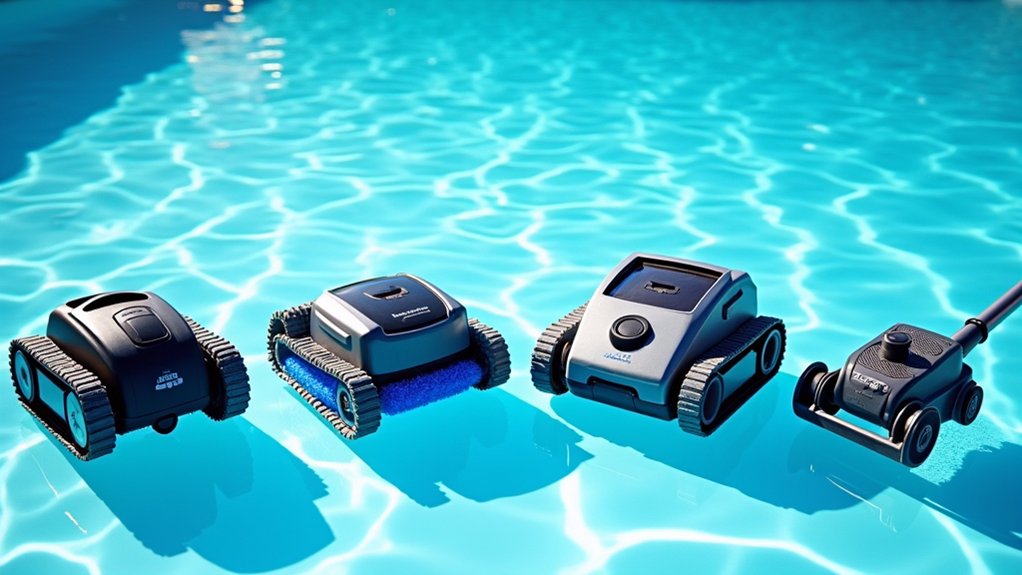
Pressure-side cleaners use pressurized water and often a booster pump to propel themselves via the Venturi effect, collecting debris in an attached filter bag. Manual cleaners require you to physically guide a vacuum head across pool surfaces.
Which Pool Cleaners Handle Debris Best?
How well a pool cleaner handles debris depends on the cleaner type, intake design, and filtration media. Robotic pool cleaning systems deliver the strongest overall performance across mixed debris, especially models with fine-mesh filters for dust, sand, and algae. Heavy-duty corded units sustain higher suction than cordless alternatives during peak debris loads.
Pressure-side cleaners excel at collecting bulky debris leaves, acorns, twigs into separate onboard bags, reducing strain on your pool’s filtration system. Suction-side cleaners handle fine particles economically but struggle with large or heavy debris volumes. Manual vacuums offer the highest precision for targeted spot cleaning in corners and stairs. This pool cleaner buying guide recommends matching your dominant debris type to the cleaner’s intake capacity and filtration rating for best results. Consistent debris removal also matters because organic material consumes sanitizers and destabilizes water balance, increasing overall chemical demand.
Pool Cleaner Energy Costs and Pump Wear
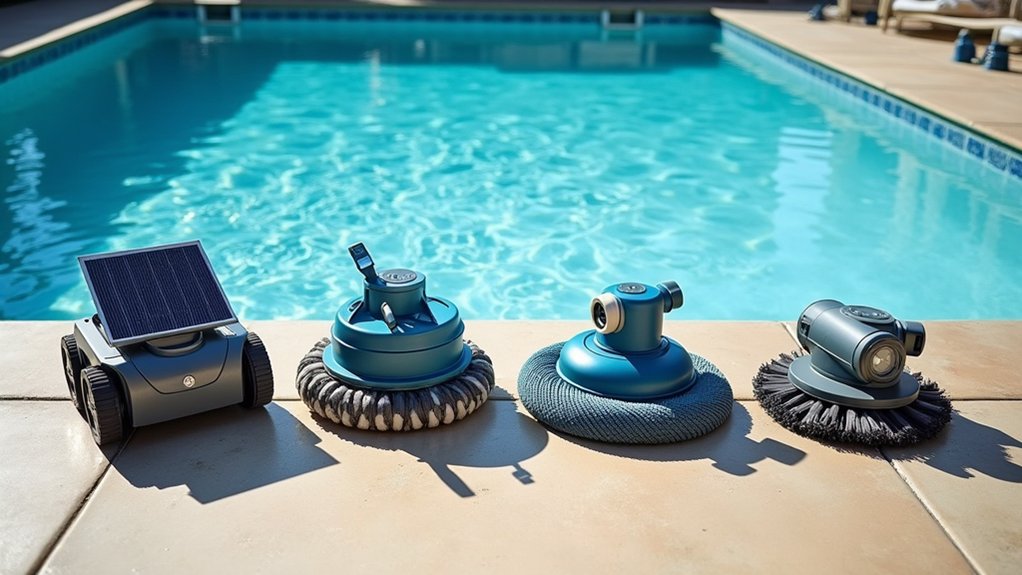
Beyond electricity, you’ll want to contemplate pump wear. Suction cleaners increase your filtration pump’s runtime and mechanical strain. Pressure-side units add a 2,000 3,000W booster pump, compounding equipment degradation. Robotic cleaners operate independently, reducing pump load and extending your circulation system’s lifespan. Over five years, suction and pressure cleaners can accumulate $460 to $920 in electricity costs, while robotic models like the Dreame Z1 Pro cost just $22 to $45 in total energy expenses.
What Each Pool Cleaner Costs Over Time
While upfront price often drives the buying decision, total cost of ownership varies greatly across cleaner types.
- Robotic pool cleaner: Higher upfront cost, but low-voltage operation minimizes electrical expense; annualize by dividing purchase price by expected lifespan and adding filter, brush, and track replacements.
- Suction cleaner: Lowest purchase price, but increased pump runtime and filter load raise indirect operating costs over time.
- Pressure pool cleaner: Moderate upfront cost with the highest operating expense, especially if a dedicated booster pump is required.
- Manual tools: Minimal equipment cost; labor whether paid or self-performed becomes your primary long-term expense.
- Wear items across all types: Hoses, diaphragms, bags, brushes, and drive components represent recurring costs that erode initial savings if you don’t budget for replacements.
Which Pool Cleaner Fits Your Pool Best?
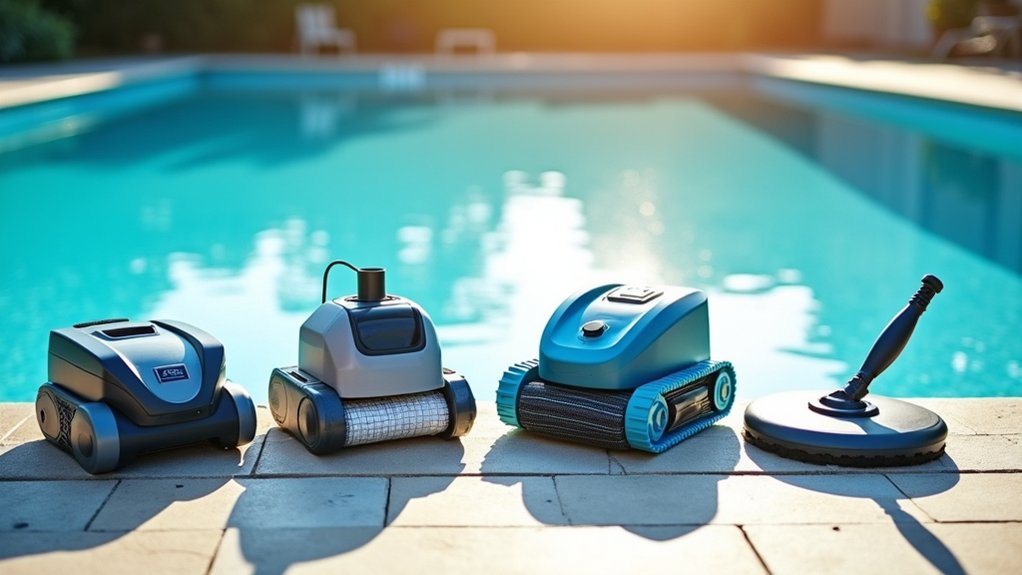
Check your pool’s plumbing configuration before selecting suction or pressure models many pools support only one type. A manual pool vacuum remains effective for spot cleaning, algae removal, and targeted debris extraction regardless of pool size. Match your cleaner to pool shape, debris type, and existing circulation infrastructure for ideal performance.
Shop Top-Rated Pool Cleaners Today
If you are comparing robotic, suction, or pressure pool cleaners, Prime Pool Market has the brands and prices that fit your pool. We carry Pool Cleaners from top names like Polaris, Hayward, Pentair, and more at discount pricing from real pool guys. Browse our full catalog or contact us to find the right cleaner for your pool today.
Frequently Asked Questions
Can Robotic Pool Cleaners Work in Saltwater Pools?
Yes, robotic pool cleaners can work in saltwater pools. You’ll need to verify your specific model’s saltwater rating, as compatibility varies. Maytronics confirms Dolphin robots handle saltwater pools with salinity levels not exceeding 5,000 P.P.M. You should choose corrosion-resistant builds and rinse your robot with fresh water after each cycle. Inspect brushes, tracks, and seals regularly, since saltwater accelerates wear on plastic components faster than freshwater environments.
How Long Do Pool Cleaners Typically Last Before Needing Replacement?
Robotic pool cleaners typically last 3 7 years, with heavy daily use shortening that to 3 4 years. Suction-side models average 5 8 years, though continuous run hours accelerate hose and wheel wear. Pressure-side cleaners fall in the 5 8 year range but often outlast suction units due to shorter duty cycles. Manual tools poles, brushes, nets can exceed a decade since they’ve got minimal moving parts. Proper storage and maintenance extend every type’s service life.
Are Pool Cleaners Safe to Use With Vinyl Pool Liners?
Yes, you can safely use pool cleaners on vinyl liners when you select models specifically rated for vinyl compatibility. You’ll want cleaners equipped with soft rubber, soft PVC, or PVA brushes to minimize abrasion risk. For suction-side models, guarantee adjustable suction settings to prevent liner lift-off or distortion. Pressure-side cleaners should feature soft-contact components. You should also remove debris like sticks or stones before each cleaning cycle to prevent puncture damage.
Can I Leave a Robotic Cleaner in the Pool Permanently?
You shouldn’t leave a robotic cleaner in the pool permanently. Most manufacturers, including Maytronics, recommend removing the unit after each cycle to clean filters and store it in a dry, shaded location. Continuous exposure to pool chemicals, UV light, and water accelerates degradation of motors, cables, and plastic components. Some models with weekly timers tolerate short-term immersion, but prolonged submersion shortens the typical 3-to-7-year lifespan and increases maintenance issues.
Do Pool Cleaners Help Reduce the Need for Chemical Treatments?
Pool cleaners can reduce your chemical demand, but they don’t replace sanitizers. By removing debris, scrubbing surfaces, and filtering fine particles like algae spores, they lower the organic load in your water, which decreases chlorine consumption. Robotic cleaners offer the strongest chemical-reduction support since they operate independently and capture particles down to fine micron levels. You’ll still need balanced pH, alkalinity, and sanitizer levels cleaners simply reduce how often you’re adding treatments.