
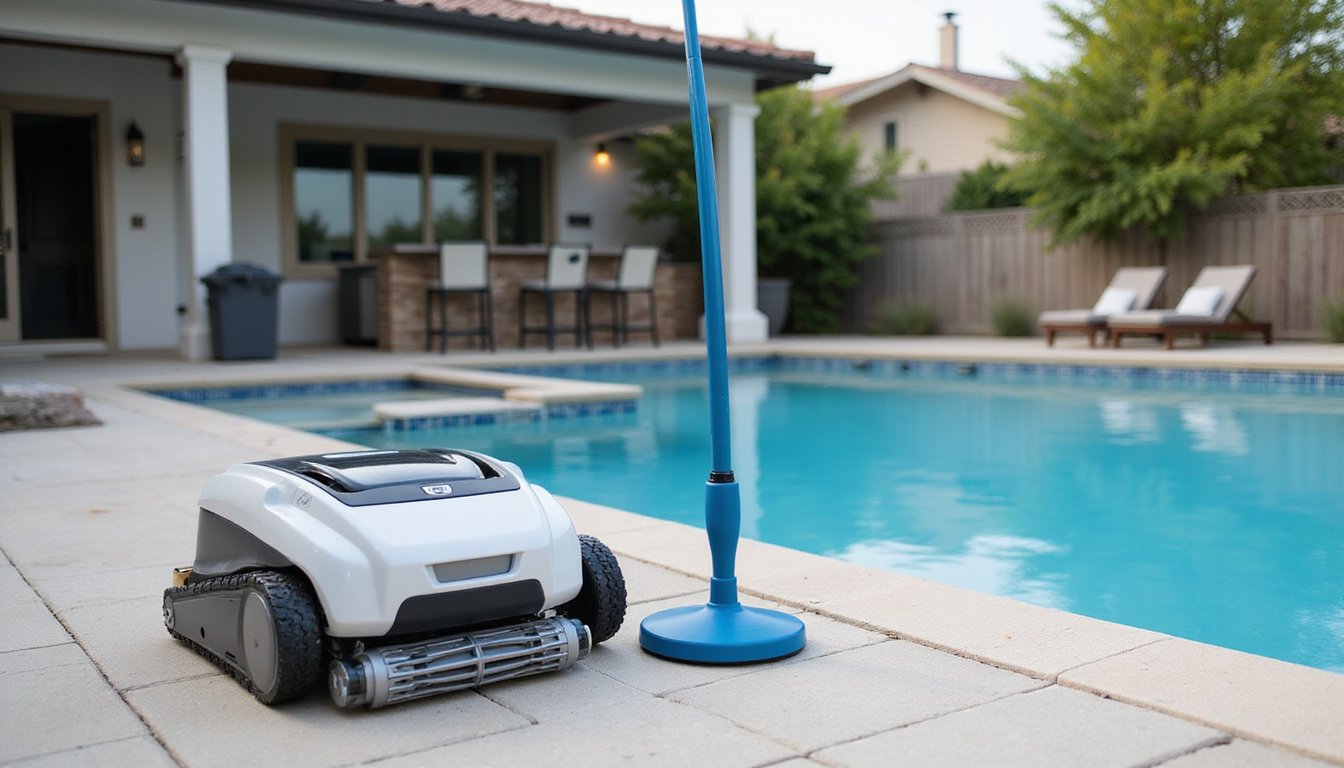
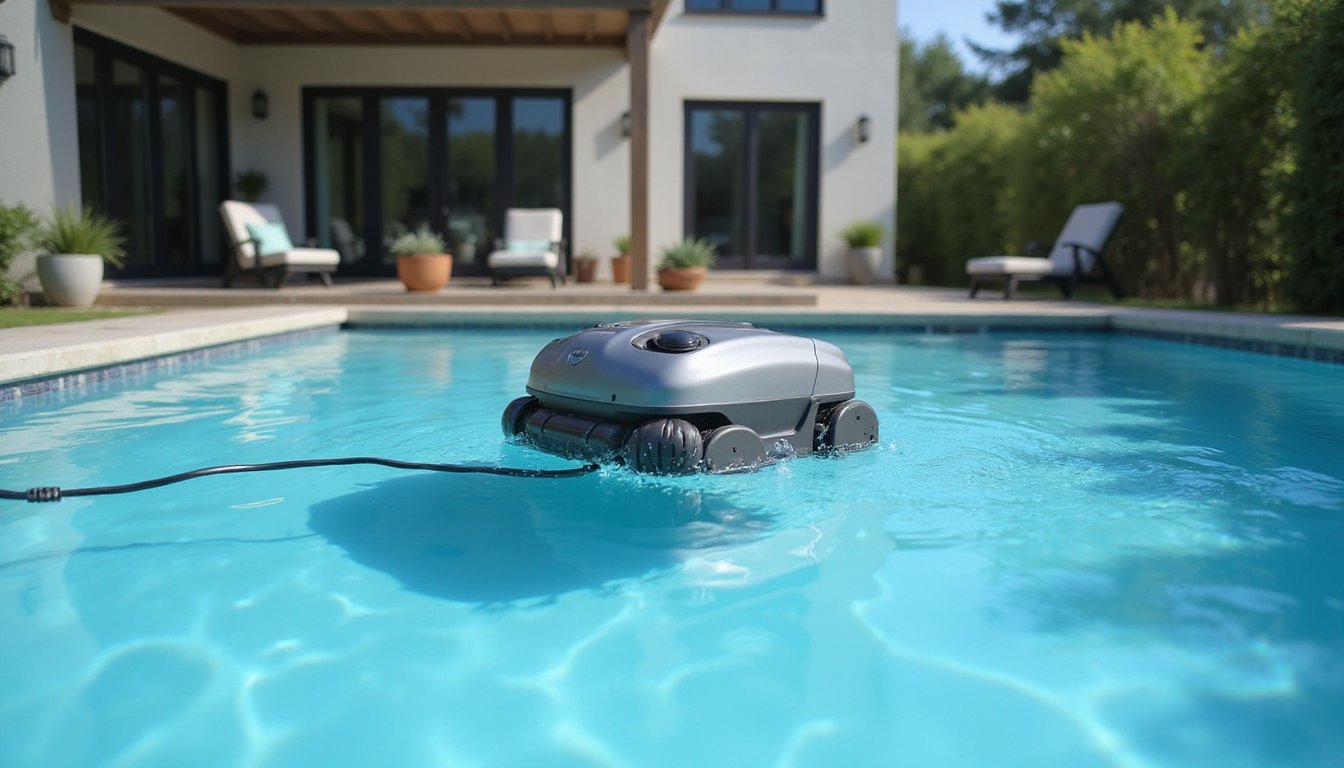
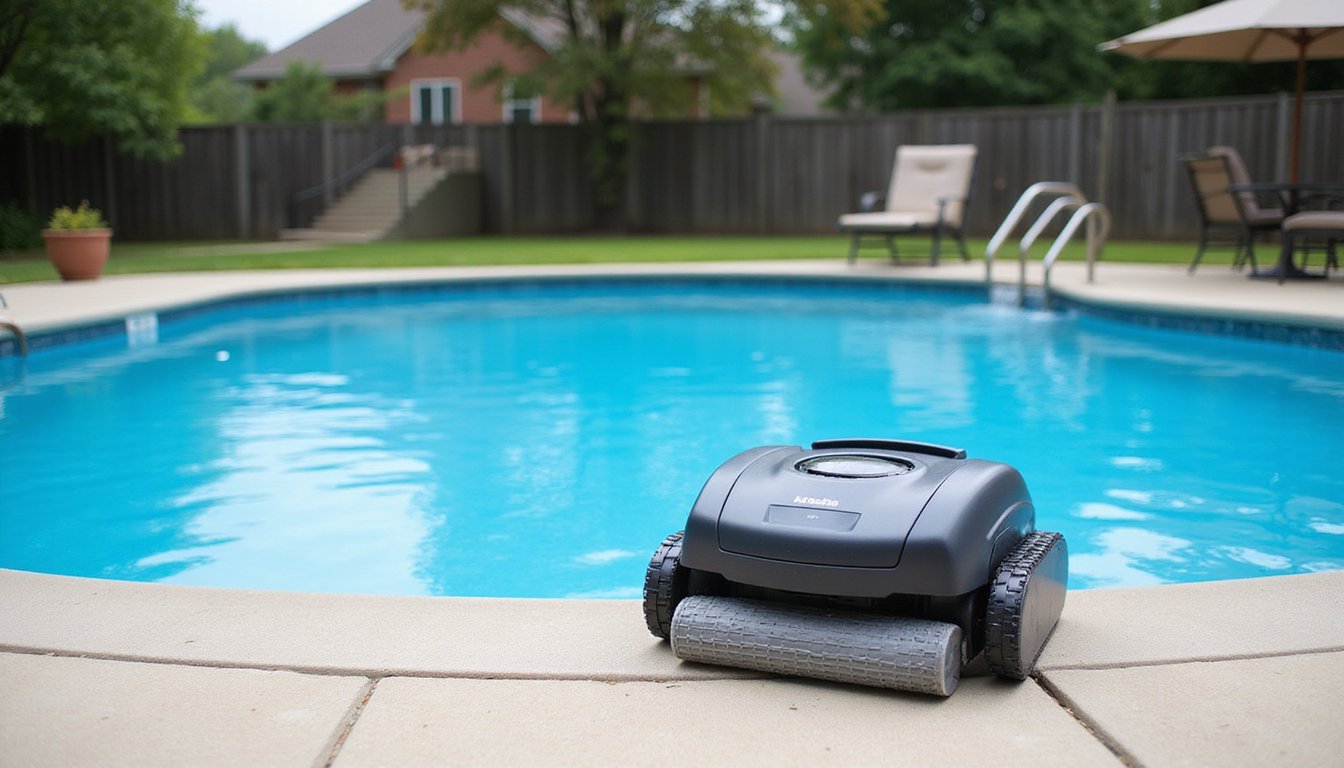
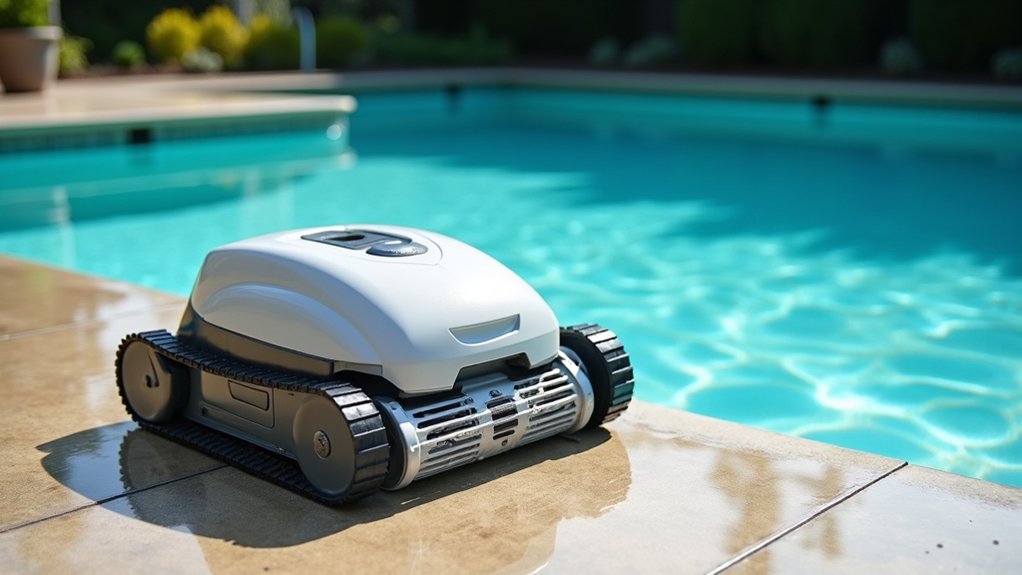
A robotic pool cleaner is a self-contained, automated unit that operates independently from your pool’s pump and filtration system. It runs on low-voltage power via a floating cable, drawing just 100 200 watts while onboard motors drive movement, suction, and brush scrubbing. Built-in sensors and gyroscopic navigation guide it systematically across floors and walls. At roughly $0.03 $0.06 per cycle, it’s considerably cheaper to run than pump-driven alternatives and the full cost and performance breakdown below shows exactly why.
What Is a Robotic Pool Cleaner?
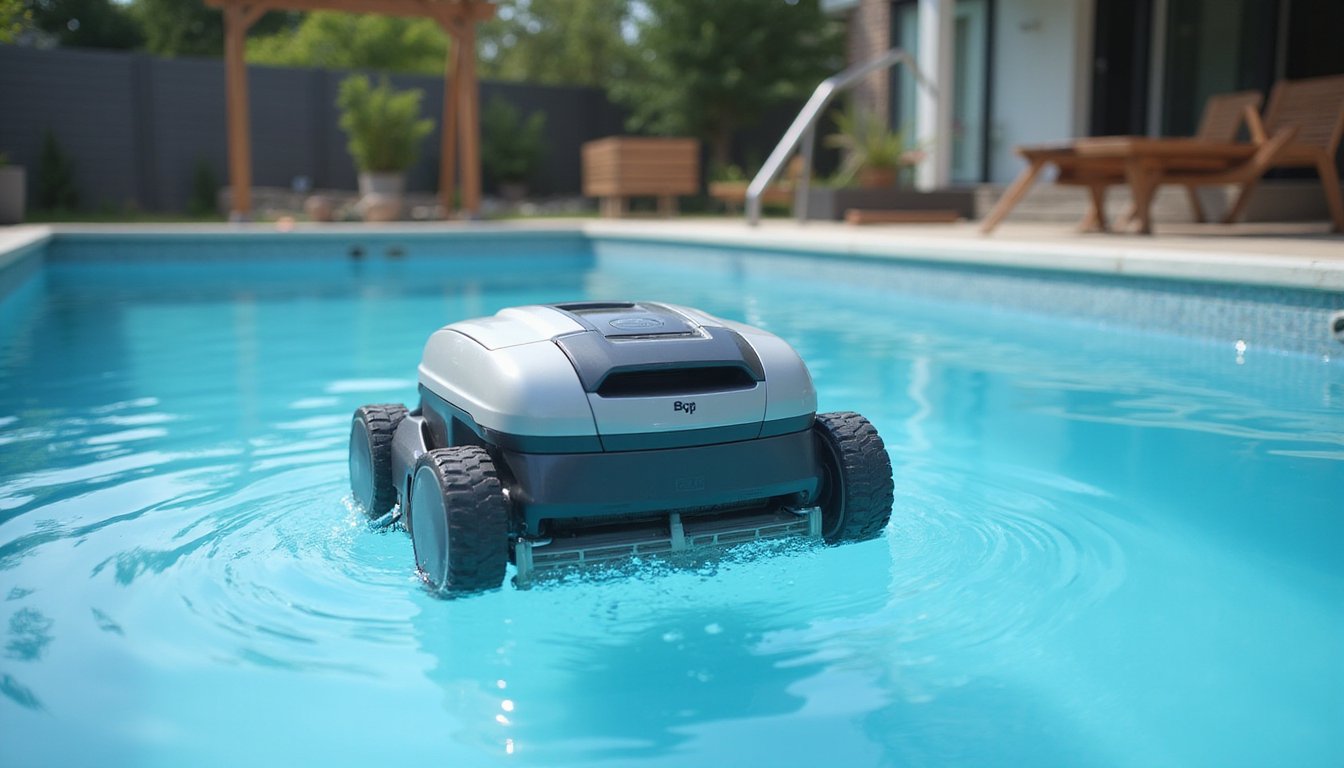
A robotic pool cleaner is an automated vacuum that collects debris and sediment from your pool’s surfaces with minimal manual effort. Unlike suction-side or pressure-side units, this electric cleaner operates independently from your pool’s pump and filtration system. It runs on a separate low-voltage power supply, typically connected through a floating cable to a poolside transformer.
As an automatic pool cleaner, it uses internal motors for movement and suction, built-in brushes for scrubbing, and an onboard filter or bag for trapping debris. Your pool cleaning robot handles leaves, dirt, silt, and fine particles without routing anything through your main circulation equipment. This standalone design gives you operational flexibility you can clean your pool without engaging your pump or plumbing system.
How Does a Robotic Pool Cleaner Work?
When you drop a robotic pool cleaner into the water, it runs on low-voltage DC power supplied through a cord connected to a step-down transformer, keeping mains electricity safely outside the pool. Internal drive motors power belts, tracks, or wheels that move the unit across the floor and up walls, while onboard sensors and mapping systems guide it around obstacles for systematic coverage. As the cleaner travels, a separate pump motor draws water and debris into built-in filter cartridges or baskets, and rotating brushes scrub surfaces to loosen dirt and algae for capture.
Power and Drive System
| Component | Function | Maintenance Focus |
|---|---|---|
| Drive Motor | Powers wheels/tracks for self-propelled movement | Wheels, tracks, cable |
| Suction Pump | Lifts debris into internal filter | Filter cartridge, impeller |
| Brushes | Scrubs surfaces to loosen dirt and algae | Brush replacement |
As an energy-efficient pool cleaner, most units draw just 50 100 watts per cleaning cycle. Because the system operates independently of the pool’s pump and filtration system, it reduces overall energy consumption even further.
Navigation and Cleaning Process
Once placed in the pool, a robotic cleaner operates independently from your pool’s filtration system, relying on onboard sensors and navigation algorithms to map the pool’s shape, detect walls, and plot an efficient cleaning route. Advanced models use gyroscopic navigation and adaptive programming to systematically cover floors, walls, and waterlines without redundant passes.
During the cleaning process, internal motors drive the unit while rotating brushes scrub surfaces and suction channels debris into a built-in filter cartridge. Obstacle detection and self-correction allow the cleaner to identify ladders, stairs, and pool boundaries, adjusting direction in real time to avoid getting stuck. After completing the cycle, you simply remove the filter basket, rinse it, and reinsert it for the next run. Navigation by sensors and algorithms guarantees consistent, thorough coverage every session.
What’s Inside a Robotic Pool Cleaner?
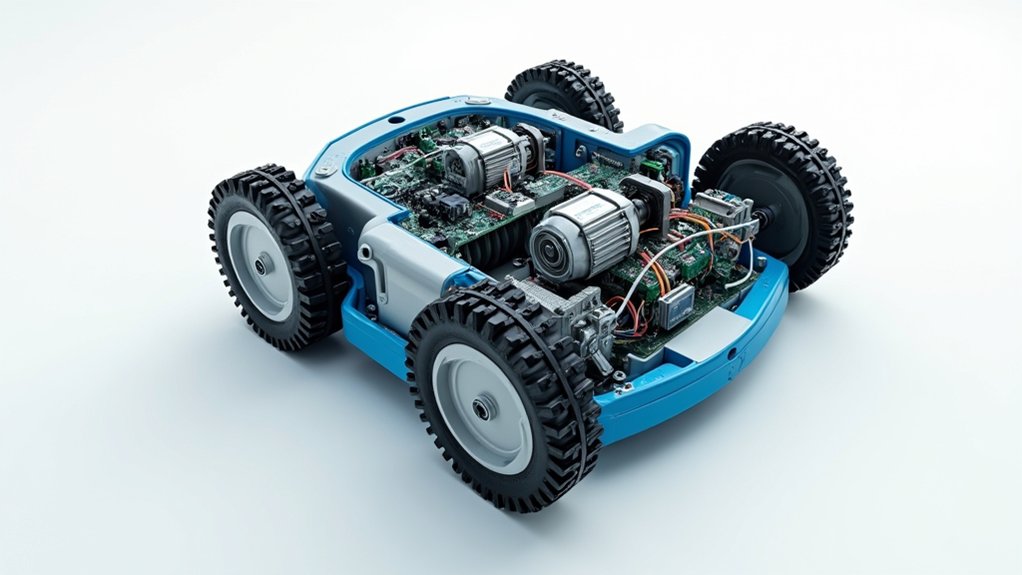
Inside a robotic pool cleaner, you’ll find a low-voltage electric motor that powers both the drive system and an internal impeller pump for suction. The drive system uses wheels, roller tubes, or rubber tracks paired with rotating brushes that scrub surfaces and feed debris into the unit’s intake. Onboard cartridge or mesh filters trap particles while built-in sensors and a microprocessor coordinate navigation, coverage patterns, and cleaning cycles.
Motors and Drive System
Every robotic pool cleaner relies on an electric motor as its core power component, driving both movement and suction through a low-voltage system designed for safe underwater operation. Most corded models use a transformer that steps household power down from 110 volts to approximately 24 volts. The motors and drive system work together through an internal gear train that transfers force to wheels or tracks for propulsion across floors, walls, and waterlines.
A separate pump motor generates suction, pulling debris into the filtration chamber while pressing the unit against surfaces for consistent contact. Any smart pool cleaner uses microprocessors alongside gyroscopes or sensors to optimize navigation patterns. If you’re selecting an inground pool cleaner, prioritize models with multi-motor configurations for reliable climbing performance and efficient surface coverage.
Brushes, Rollers, Tracks
Beneath the outer shell of any robotic pool cleaner, three mechanical components handle the physical work of surface cleaning: brushes, rollers, and tracks. Brushes rotate against pool surfaces to loosen algae, biofilm, and embedded dirt that suction alone can’t remove. Rollers support locomotion while maintaining consistent surface contact across slopes, seams, and uneven changes.
Tracks provide the traction you need for wall climbing and stable navigation on slick underwater surfaces. They grip steps, contours, and obstacles that would stall wheel-only systems. Together, brushes scrub while rollers and tracks drive the unit through its cleaning pattern. You’ll want to inspect all three regularly brush wear reduces scrubbing effectiveness, and debris caught in tracks or rollers compromises mobility and coverage consistency.
Onboard Filters and Sensors
For navigation, sensors and obstacle detection hardware prevent your pool vacuum robot from snagging on ladders, drains, or edges. Gyroscopic mapping and infrared scanners help the unit track its position, minimize overlap, and systematically cover floors, walls, and waterlines. You’ll need to clean internal filters regularly clogged media reduces suction performance. Together, these systems deliver efficient, autonomous cleaning without adding back pressure to your main filtration equipment.
How Do Robotic Pool Cleaners Navigate Your Pool?
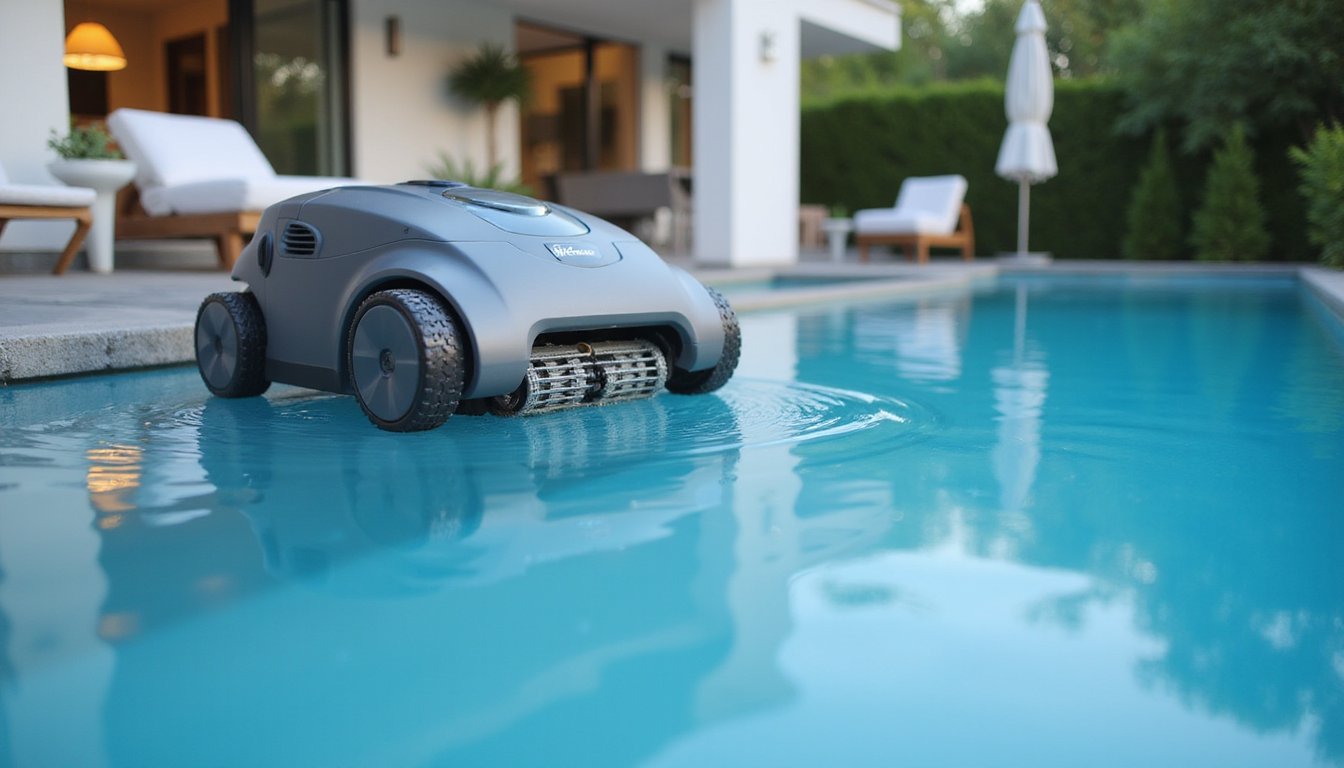
Higher-end models use gyroscopes to maintain orientation and generate digital pool maps for optimized coverage. These systems reduce duplicate passes and missed spots across complex layouts. Obstacle avoidance and edge handling** protocols guarantee the cleaner reverses or redirects when it encounters barriers, preventing it from getting stuck. Some models, like certain Dolphin units, are programmed to shift to wall and waterline cleaning** every 4 6 minutes automatically.
What Can a Robotic Pool Cleaner Clean?
When a robotic pool cleaner is explained regarding debris capture, you’ll find these units collect leaves, sand, and microscopic particles through onboard filtration systems. Filtration performance depends heavily on filter media pleated filters trap finer contaminants than basic mesh options. Dual-layer systems handle both large debris and small particulates in a single cycle. Your unit’s self-contained pump captures debris before it reaches the pool’s main filter, reducing strain on your circulation system.
How Much Energy Does a Robotic Pool Cleaner Use?
Beyond debris capture performance, energy consumption is a key specification that separates robotic cleaners from other pool cleaning methods. Most units draw 100 200 watts per hour, operating independently from your pool pump. A 200-watt cleaner running a two-hour cycle consumes approximately 0.4 kWh comparable to a household light bulb.
Your total cost depends on cycle duration, cleaning frequency, and local electricity rates. A Dolphin robotic cleaner typically features efficient navigation that minimizes unnecessary runtime. The Polaris robotic cleaner and Hayward robotic cleaner lines also incorporate low-voltage motors that reduce power demand. To optimize consumption, use eco modes, match runtime to actual pool conditions, and maintain filters regularly. Scheduling fewer, targeted cycles rather than daily maximum-duration runs keeps cumulative seasonal costs low.
Do Robotic Pool Cleaners Reduce Maintenance?
Robotic pool cleaners directly reduce hands-on maintenance by automating floor, wall, and waterline cleaning through built-in motors, rotating brushes, and onboard filtration. Because they operate independently from your pool’s pump and filtration system, they lower wear on circulation equipment and keep collected debris out of your main filter.
Regular robotic cleaning reduces debris accumulation that drives algae growth, which can decrease how often you’ll need to adjust water chemistry or perform shock treatments. You’ll also spend less time manually vacuuming and brushing hard-to-reach areas.
However, robotic cleaners don’t eliminate maintenance entirely. You’ll still need to empty the robot’s filter basket, inspect brushes and wheels, and check cables periodically. Manual skimming, water testing, and circulation upkeep remain necessary. Expect lower effort and frequency not zero maintenance.
How Do Robotic Pool Cleaners Compare to Other Types?
Because robotic, suction-side, and pressure-side cleaners each rely on different power sources and operating mechanisms, they differ greatly in cleaning performance, filtration quality, and system impact. Robotic cleaners operate independently using a self-contained electric motor and onboard filtration, placing zero strain on your pool’s pump and filter. Suction-side units depend on your existing pump’s suction, while pressure-side models use pressurized water flow and may require a booster pump.
You’ll get the most precise coverage from robotic cleaners they systematically map your pool’s floor, walls, and waterline. Their onboard filter cartridges capture fine particles like sand and silt more effectively than suction-side units, which route all debris through your pool’s main filtration. Robotic models cost more upfront but typically consume less energy during operation.
What Does a Robotic Pool Cleaner Cost Over Time?
When you evaluate a robotic pool cleaner’s true cost, you’ll need to account for three primary expense categories: the initial purchase price, ongoing energy consumption, and maintenance or replacement parts over the unit’s lifespan. Most models range from $300 to $1,500 upfront, while electricity costs remain minimal at roughly $5 to $9 per year during regular operation. Factoring in filter upkeep, brush replacements, and potential repairs gives you a more accurate picture of total ownership cost across multiple seasons.
Initial Purchase Price
Budget units under $300 handle basic floor cleaning for small pools. The $600 $800 mid-range segment represents the most common homeowner purchase point, balancing automation with cost. Higher-budget buyers targeting the $800 $1,500 range gain stronger suction, programmable cycles, and app controls. Premium units above $1,500 deliver full-featured automation for large inground pools. You’ll want to match your pool’s size and surface material to the appropriate tier rather than defaulting to the lowest available price point.
Energy Costs Over Time
Beyond the sticker price, a robotic pool cleaner’s real cost advantage shows up on your electric bill. Most units draw 100 to 200 watts per hour, completing a full cycle on roughly 0.2 to 0.4 kWh. That translates to $0.03 to $0.06 per clean.
Here’s how those numbers scale:
- Monthly cost: Running your unit three times weekly costs approximately $0.36 to $0.72 per month.
- Annual cost: That same schedule totals $4.32 to $8.64 per year up to 95% less than pump-dependent systems.
- Five-year savings: You’ll accumulate $400 to $800 in energy savings compared to suction-side or pressure-side cleaners.
Your actual costs depend on cycle duration, cleaning frequency, and local electricity rates. Shorter cycles and efficient navigation modes reduce consumption further.
Maintenance And Replacement Parts
Three categories of replacement parts drive most of your long-term ownership cost: consumable filters, mechanical wear items, and electrical components. Filter cartridges, bags, and baskets represent your most predictable recurring expense they clog and lose capture efficiency with regular use. Brushes, rollers, and drive belts wear down from surface contact and require intermittent replacement to maintain traction and scrubbing performance. Power cables and electrical components carry higher per-unit cost due to their complexity.
You’ll reduce premature part failure by clearing debris from filters, brushes, and impellers after each cycle. Clean mineral buildup with diluted vinegar when rinsing falls short. During belt replacement, inspect pulleys for debris and misalignment. Always match serial numbers when ordering production-run variations mean identical model names don’t guarantee identical components.
Are Robotic Pool Cleaners Worth It?
How much value does a robotic pool cleaner actually deliver? That depends on your pool size, usage frequency, and current maintenance costs. Units run at roughly $0.03 $0.06 per cycle versus $0.40 $0.50 for pump-driven cleaning, and you’ll recover approximately 156 hours annually in manual labor.
Here’s how to evaluate the investment:
- Cost recovery: Entry-level units start above $500, but many owners report payback within 2 3 seasons through reduced energy and service expenses.
- Best-fit scenarios: Medium to large inground pools with moderate to heavy debris loads deliver the strongest return.
- Limitations: Seasonal pools, tight budgets, and above-ground setups may not justify premium models consider compact units instead.
Expect 5 8 years of service life with proper component maintenance.
Shop Top-Rated Pool Cleaners Today
If you are comparing robotic, suction, or pressure pool cleaners, Prime Pool Market has the brands and prices that fit your pool. We carry Pool Cleaners from top names like Polaris, Hayward, Pentair, and more at discount pricing from real pool guys. Browse our full catalog or contact us to find the right cleaner for your pool today.
Frequently Asked Questions
Can Robotic Pool Cleaners Be Left in the Pool All the Time?
You shouldn’t leave your robotic pool cleaner in the pool all the time. Prolonged submersion accelerates seal degradation, motor wear, and chemical damage from chlorine or saltwater. Remove the unit after each cleaning cycle, rinse the filter cartridge with fresh water, and store it in a shaded, dry area. Some models with weekly timers can stay submerged short-term, but routine removal and proper storage will extend your cleaner’s lifespan and maintain peak performance.
How Long Do Robotic Pool Cleaners Typically Last Before Needing Replacement?
Most robotic pool cleaners last 3 to 5 years, though well-maintained units can reach 5 to 7 years or longer. Your cleaner’s lifespan depends on usage frequency, storage habits, and component upkeep. Heavy daily operation typically shortens service life to around 3 to 4 years. You’ll extend longevity by rinsing filters after each cycle, storing the unit in a cool, dry location, and regularly inspecting brushes, tracks, and seals for wear.
Do Robotic Pool Cleaners Work in Saltwater Pools?
Yes, robotic pool cleaners work in saltwater pools when the model’s materials are rated for salt-treated water. They use low-voltage motors and internal filtration to vacuum debris independently from your pool’s pump system. You’ll want to verify the manufacturer’s saltwater compatibility before purchasing, since corrosive conditions can affect unrated components. Prioritize models designed for your pool’s size, debris level, and cleaning coverage to get the strongest performance.
How Often Should You Run a Robotic Pool Cleaner?
You should run your robotic pool cleaner 2 3 times per week during swim season for best results. If your pool sits under trees or gets heavy use, increase that to every other day. Each cycle typically runs 1.5 to 3 hours don’t leave the unit operating continuously, as that accelerates wear on seals and motors. After storms or parties, run an extra cycle to handle the increased debris load.
Can Robotic Pool Cleaners Handle Large Leaves and Acorns?
Yes, robotic pool cleaners can handle large leaves and acorns, but you’ll need a model built for heavy debris. Look for units with high suction power (around 6,800 GPH), oversized debris baskets (6L+), and wide intake paths that won’t jam on dense objects like acorns. Budget robots with small baskets and lower suction will struggle during peak leaf fall and require frequent mid-cycle emptying.