
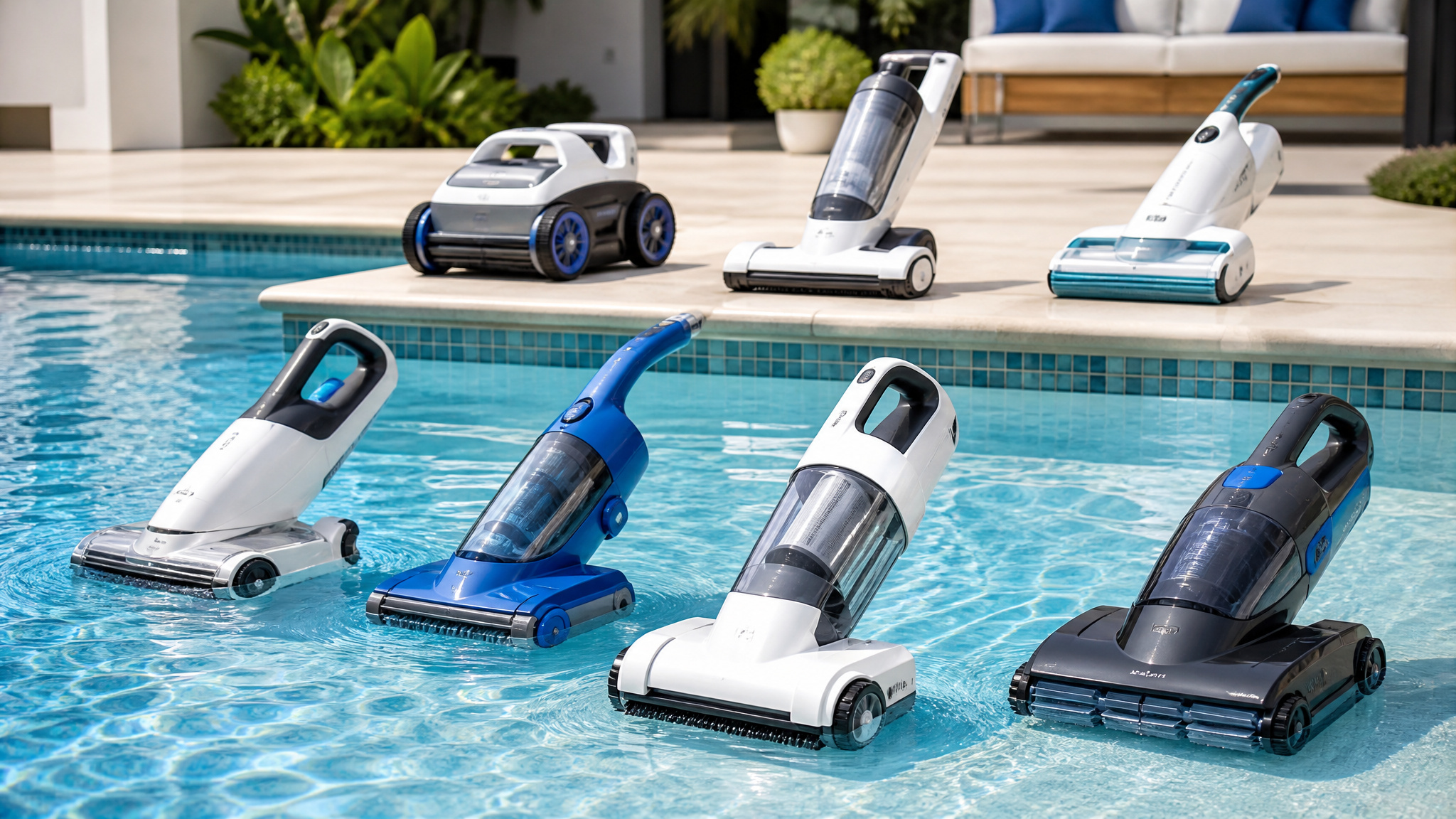
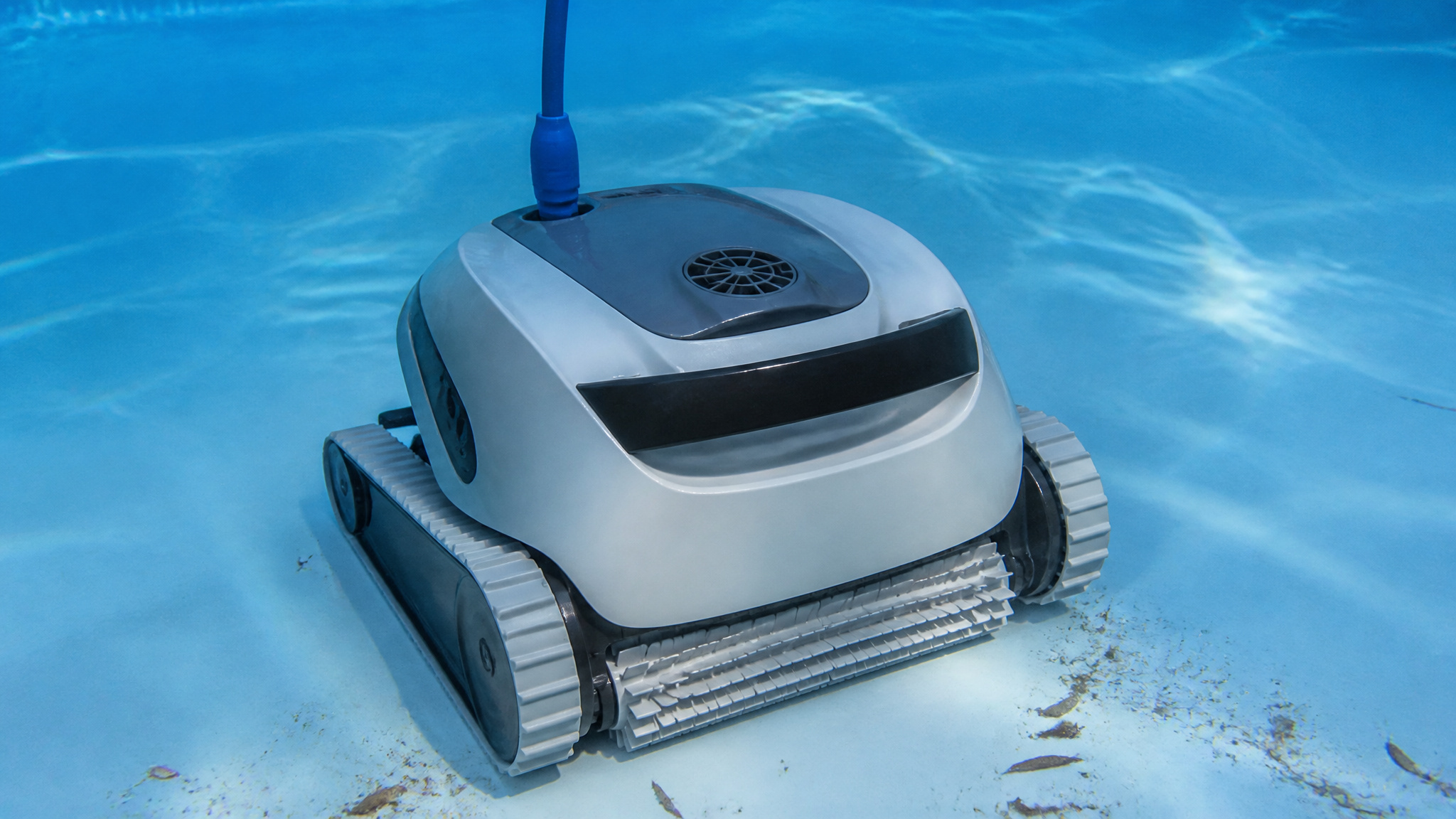
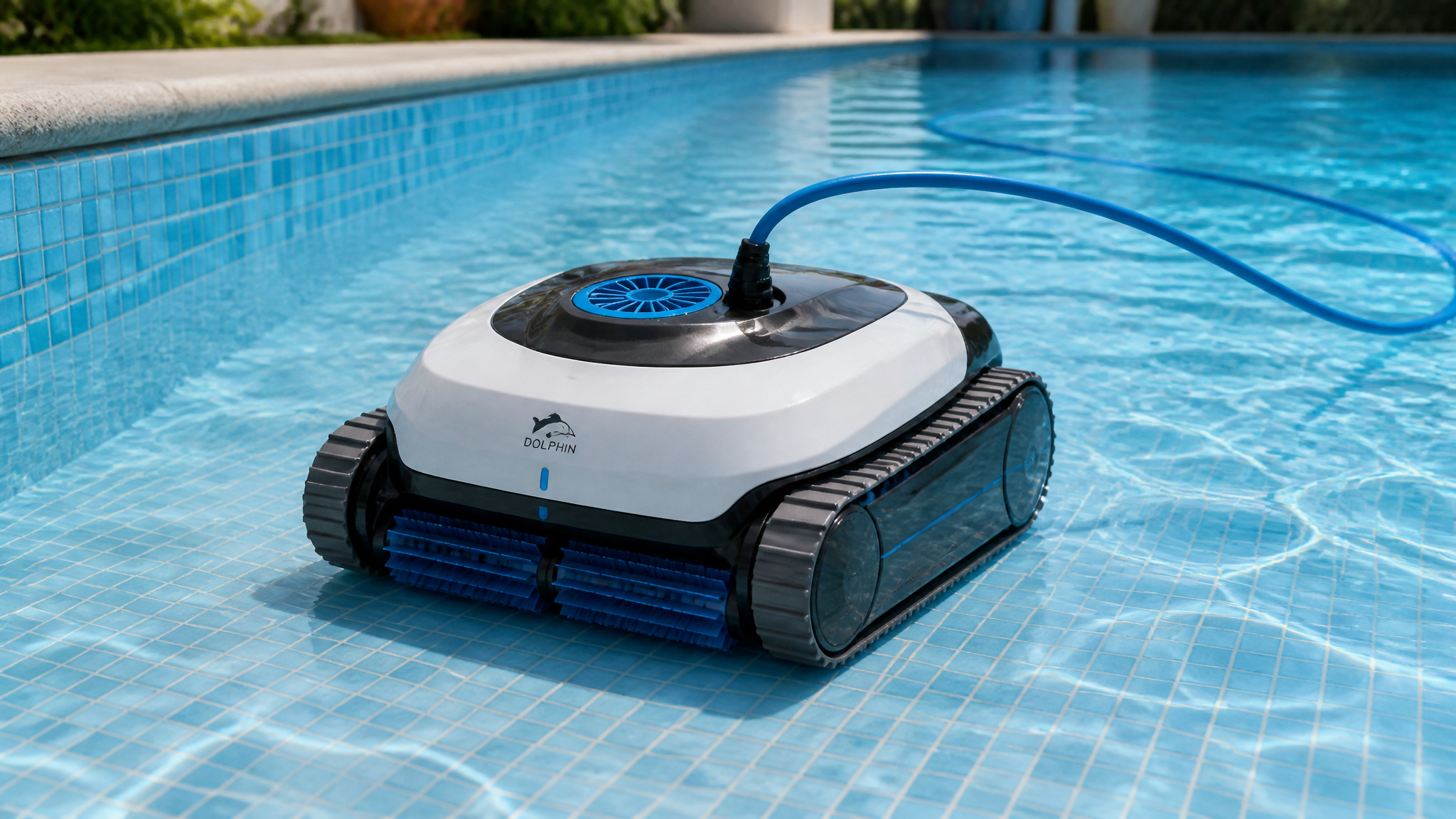
Many robotic pool cleaners can reach and scrub your waterline, but capability varies by model. Wall climbing alone isn’t enough. Some robots stop partway up the wall, while others touch the tile line and reverse without brushing it. Check the specs for a dedicated waterline mode and lateral movement along the tile. Inspect your brushes, since worn ones lose grip. Knowing which features matter and how to handle missed spots helps you remove that stubborn ring. Robotic pool cleaner cord tangles can significantly hinder performance during cleaning cycles. To prevent this, consider using a cord management system or manually untangling the cord before each use.
Key Takeaways
- Many robotic pool cleaners can scrub the waterline, but capability varies by model, so check specifications for explicit waterline cleaning.
- Wall climbing alone doesn’t guarantee waterline scrubbing, since some robots stop partway or reverse at the tile line without brushing.
- A dedicated waterline mode, lateral movement along the tile line, and quality brushes provide the most effective waterline cleaning.
- Worn brushes, deep ends, and short programmed climb times can prevent a robot from fully reaching and scrubbing the waterline.
- Manually brush missed areas like steps, benches, and ledges, then run a cleaning cycle to capture loosened debris.
Do robotic pool cleaners clean the waterline
Many robotic pool cleaners can clean the waterline, but not all of them do, and capability varies widely by model. Wall climbing doesn’t guarantee a waterline scrub. Some robots climb only partway up the wall, while others reach the tile line briefly and reverse without brushing it. Models built for the task move sideways along the waterline, keeping brushes in contact with grime and buildup, sometimes with part of the brush above the surface. Check your cleaner model’s specifications for explicit waterline capability or a dedicated waterline mode before you buy. Don’t assume marketing terms cover it. Consider your pool’s depth, since programmed climb times can stop a robot short in deep ends, and inspect brushes, because worn ones reduce grip and scrubbing.
Why does the waterline collect grime and scum
The waterline collects grime and scum because the tile line sits where water meets air, so it catches whatever floats. Oils, lotions, and debris drift to the surface, and as water levels rise and fall, residue clings to the tile and dries into a stubborn ring. You’ll notice it first as a dull band, then as slick, discolored buildup.
Where water meets air, floating oils and debris cling to tile, drying into a stubborn ring that starts dull and turns slick.
Common contributors include:
- Body oils and sunscreen that float and coat the tile
- Airborne dust, pollen, and leaf particles trapped by surface film
- Evaporation that concentrates residue along the same band
Left alone, this film hardens and resists light scrubbing. That’s why waterline-capable robots use brushes that contact the tile line directly, sometimes reaching slightly above the surface. Still, you’ll need occasional manual brushing for heavy buildup and areas the robot misses.
Which robotic pool cleaner features clean the waterline

The features that clean the waterline are wall-climbing ability, a dedicated waterline mode, lateral movement along the tile line, floating handles, and brushes. Wall-climbing comes first, since your robot must travel from the floor up the wall before it can scrub anything. Don’t assume climbing equals waterline cleaning, though; some models climb partway and reverse. Check the specs for explicit waterline capability. A dedicated waterline mode lets you select targeted cleaning separately from floor-only or wall-only cycles. Lateral movement matters most: models that travel sideways along the tile line keep brushes in contact longer than those that touch it briefly and descend. Floating handles help some units climb and guide that sideways travel. Brushes do the scrubbing, often partly above the surface, so keep them in good condition. For deep ends, confirm the programmed climb duration actually reaches the waterline.
How do you set a cleaner to scrub the waterline
Select the dedicated waterline mode on the control panel, remote, or app before starting the cycle, if your model offers one. Some cleaners let you choose waterline cleaning separately from floor-only or wall-only modes, so check your manual rather than assuming wall climbing includes it. Is it safe to swim with a pool cleaner? Most modern pool cleaners are designed to operate safely while in the water, but it’s essential to ensure they are turned off before entering the pool.
Select your cleaner’s dedicated waterline mode before starting, and check the manual rather than assuming wall climbing includes waterline cleaning.
Check these factors ahead of the cycle:
- Brush condition: Worn brushes can impair climbing and scrubbing, so replace them per the maintenance guidance.
- Pool depth: A programmed climb duration may not let the robot reach the waterline in a deep end.
- Floating handle: On models that use one, make sure it’s free to guide sideways movement along the tile line.
Watch the first cycle. If the robot doesn’t reach or laterally scrub the waterline, brush it manually. The lifespan of a robotic pool cleaner can vary significantly based on its brand and usage. Regular maintenance plays a crucial role in extending the robotic pool cleaner lifespan.
How do waterline-capable robotic cleaners compare
Waterline-capable robotic cleaners differ in how they reach and scrub the tile line, ranging from wall-only climbers that skip the waterline to dedicated-mode models that run a selectable waterline cycle. Many robotic cleaners climb walls, but wall climbing doesn’t guarantee tile-line scrubbing, so compare designs before you buy.
| Cleaner Type | Waterline Behavior | What to Check |
|---|---|---|
| Wall-only climber | Climbs partway; skips waterline | Specs for explicit waterline claims |
| Timed climber | May fall short in deep ends | Climb duration versus pool depth |
| Brief-contact model | Touches waterline, then reverses | Actual scrubbing time |
| Lateral scrubber | Moves sideways while brushing | Floating handle, brush condition |
| Dedicated-mode model | Runs selectable waterline cycle | Mode options, grime removal claims |
Even the best model misses spots. Worn brushes weaken climbing, and steps, benches, and ledges disrupt coverage. Replace brushes on schedule, and plan manual brushing for corners and submerged ledges the robot can’t reach or scrub.
How do you clean the waterline the cleaner misses
Brush the missed tile line by hand, since even waterline-capable robots leave gaps. Start by identifying where your cleaner falls short. Deep ends, steps, benches, and submerged ledges are common problem areas, especially if your model uses a timed climb or only reaches the waterline briefly.
Even waterline-capable robots leave gaps, so brush deep ends, steps, benches, and ledges by hand where timed climbs fall short.
- Remove the robot first: Pull it from the pool before brushing, so you’re not working around a moving unit or its cable.
- Brush the tile line directly: Scrub grime and buildup at the waterline, working corners and ledges the robot can’t reach.
- Collect loosened debris: Brushing frees particles, but your robot may not capture them all, so run a cleaning cycle afterward.
Worn robot brushes also weaken climbing and scrubbing, widening these missed gaps.
Conclusion
Yes, plenty of robotic pool cleaners will reach and scrub your waterline, as long as you choose the right one and keep it in good shape. The models that truly handle the tile line combine solid wall-climbing with a dedicated waterline mode, lateral movement that keeps the brushes scrubbing sideways, and healthy brushes with good grip. Before you buy, read the specs for explicit waterline capability rather than assuming wall climbing covers it, and match the climb range to your pool’s depth. Keep the brushes fresh, watch that first cycle, and plan a quick manual pass on steps, benches, and ledges the robot can’t reach. Do that, and you’ll keep that stubborn grime ring from ever settling in, for a cleaner, sharper-looking pool with far less effort.
Shop Robotic Pool Cleaners
Browse our robotic pool cleaners. Call us at (877) 650-7665 with your pool size and surface, and we will help you choose a cleaner that handles your waterline.
Frequently Asked Questions
Can Waterline Scrubbing Damage Pool Tiles or Vinyl Liners?
Before you run a waterline mode, check your cleaner’s specifications and maintenance guidance for compatibility with your pool surface. Inspect brushes regularly, since worn brushes reduce climbing and scrubbing performance. If you’re unsure, contact the manufacturer, and keep brushing difficult areas manually where the robot struggles or misses spots.
How Often Should a Robotic Cleaner Run a Waterline Cycle?
There’s no universal waterline schedule, so you’ll need to set frequency by how quickly grime builds at your tile line. Check your model’s specs first; some robots offer a dedicated waterline mode, while others only climb partway. If you see residue returning, run cycles more often. Inspect brushes regularly, since worn brushes impair climbing and scrubbing. Deep ends and complex layouts may require repeat cycles plus manual brushing of missed spots.
Does Waterline Cleaning Drain the Robot’s Battery Faster?
It depends on your model. Climbing walls and scrubbing laterally does demand motor effort, but you shouldn’t assume a specific impact. Check your manual carefully for runtime per mode. Keep brushes in good condition, since worn brushes impair climbing and scrubbing performance. Don’t lift a running robot from the water, and follow the manufacturer’s charging guidance to protect the battery.
Do Waterline-Capable Robotic Cleaners Work in Above-Ground Pools?
It depends on the model, so you’ll need to confirm above-ground compatibility in the product specifications, since wall climbing doesn’t guarantee waterline scrubbing. Check whether the cleaner explicitly scrubs laterally along the waterline or only reaches it briefly. Consider your pool’s shape, depth, steps, and ledges, which affect coverage. Inspect brushes regularly, because worn brushes impair climbing. You’ll still need occasional manual brushing for corners, steps, and other missed spots.
How Often Should Brushes Be Replaced to Maintain Waterline Performance?
There’s no universal replacement interval, so you’ll need to follow your manufacturer’s maintenance guidance for your specific model. Worn brushes reduce grip and scrubbing contact, so your robot may struggle to climb walls or fail to reach the waterline. Inspect brushes regularly for flattening, tearing, or uneven wear. Always unplug the power supply before handling the cleaner. If you notice weaker climbing or missed tile-line grime, check brushes before anything else.