
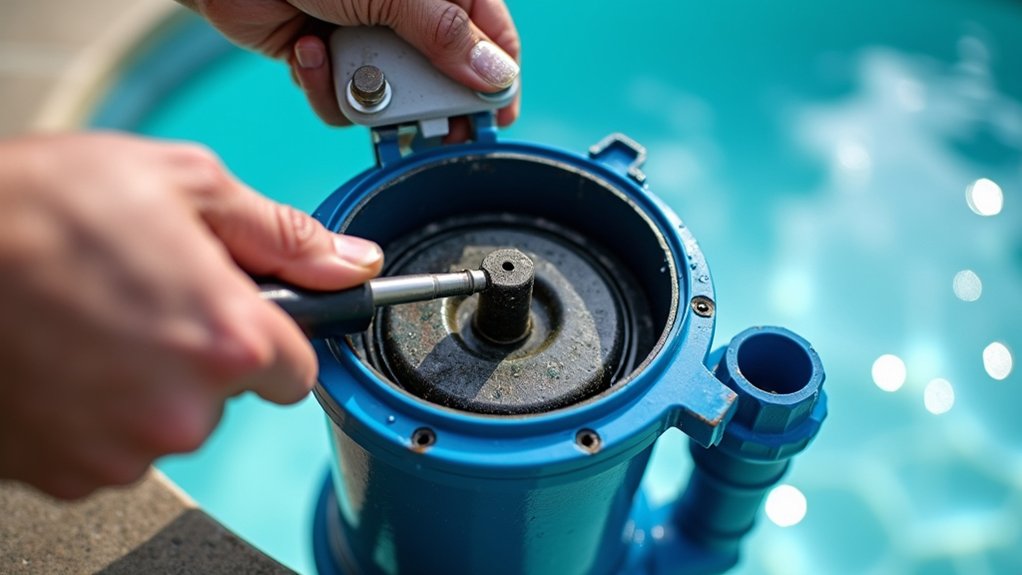
You’ll typically pay between $6,000 and $22,000 installed for an automatic pool cover, with most homeowners landing around $10,000 to $15,000. New builds run $10,000 to $20,000, while retrofits jump to $15,000 to $30,000+ due to structural modifications. Your pool’s size, shape, and track configuration top-mount or under-track directly drive the final number. Factor in annual maintenance of $200 to $600 and fabric replacement every 5 to 10 years. Below, we’ll break down every cost factor so you can budget accurately.
What Does an Automatic Pool Cover Cost in 2025?
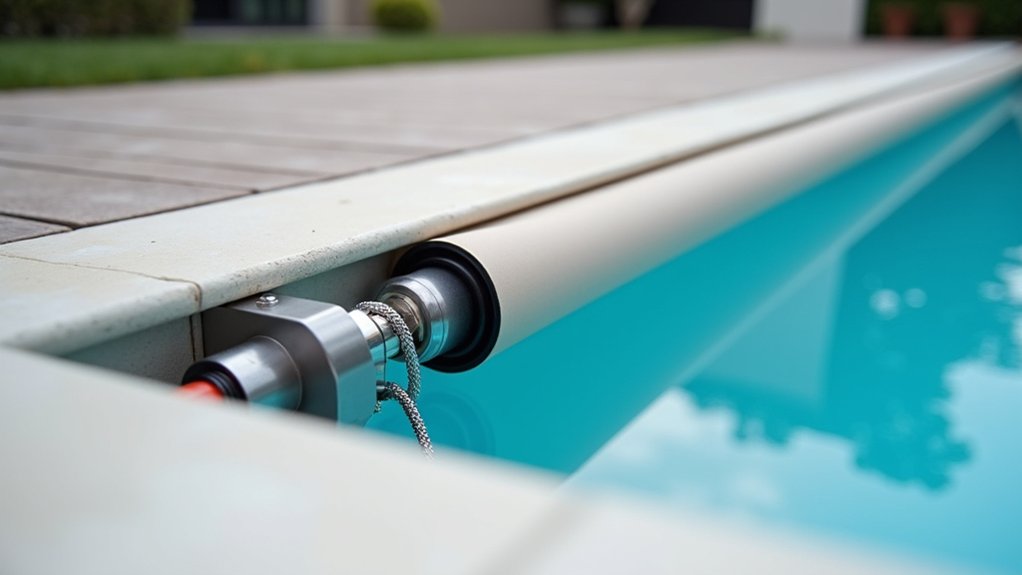
Your actual automatic pool cover cost depends on pool size, shape, cover type, and installation complexity. A standard 16×32 rectangular pool typically runs about $10,000, while oversized or custom pools can push past $22,000. Premium systems with recessed tracks and deck integration can reach $30,000.
When evaluating pool cover pricing, factor in the motor configuration, track system, and whether you’re building new or retrofitting. Automatic pool cover installation on existing pools often costs more due to structural modifications. Budget toward the higher end if your project involves custom fitting, coping integration, or non-standard pool shapes.
How Pool Size and Shape Affect Cover Price
Because automatic cover pricing ties directly to surface dimensions and perimeter rather than water volume, pool size and shape are the two biggest cost variables you’ll face. A larger inground pool cover requires more fabric, longer tracks, and heavier structural components pushing material costs up proportionally. Most motorized pool cover systems are calibrated to standard rectangular dimensions, so simple layouts get the most predictable pricing.
Irregular shapes change the equation fast. Curves, built-in steps, benches, and extensions all require custom measurement and fabrication. This shape-based customization increases design time, specialty labor, and parts costs beyond what a standard rectangle demands. Even small geometric deviations can trigger custom pricing tiers. Depth won’t directly raise your cover cost, but it can influence track anchoring and mechanism engineering during installation. When measuring your pool, be sure to capture length and width at the longest and widest points, including any extensions, and use feet for all measurements as specified by the cover manufacturer.
New Build vs. Retrofit: Two Very Different Price Tags
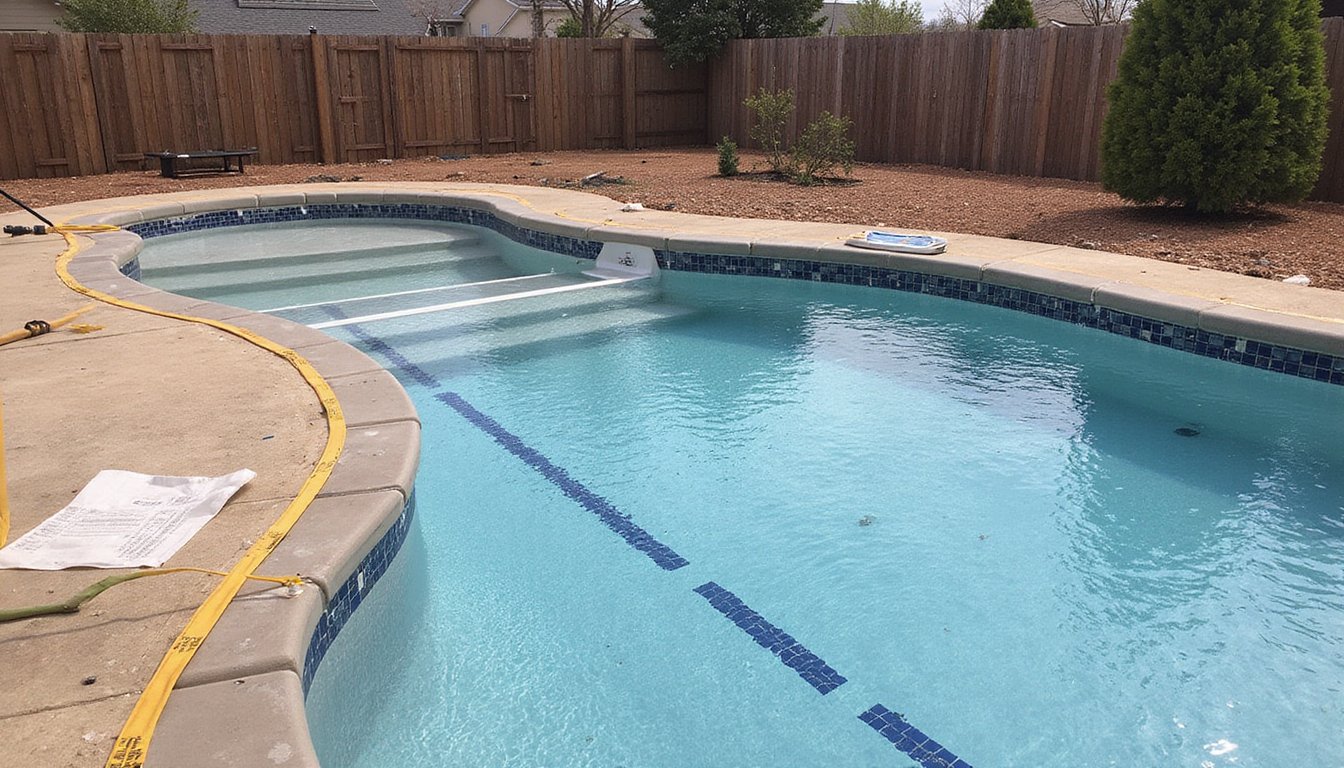
If you’re building a new pool, you can integrate an automatic cover system vault, rails, motor, and all into the design before concrete is poured, which typically keeps installed costs in the $10,000 to $20,000 range. Retrofitting an existing pool is a different story, with finished decking modifications, equipment rework, and structural adaptations pushing total costs to $15,000 to $30,000+, including labor that alone can run $2,000 to $10,000. Planning your cover system during the build stage eliminates expensive field changes and reduces the coordination headaches that drive retrofit pricing higher.
New Build Advantages
Installation typically adds just 1 to 2 days to your build timeline. You’ll bundle cover work with other trades already on-site, reducing coordination costs. Track alignment, lid-to-coping matching, and recessed mechanisms all become simpler when nothing’s finished yet.
An automatic safety cover installed during construction avoids the deck disruption and retrofit modifications that drive prices toward the upper end of the $15,000 $30,000 range.
Retrofit Labor Costs
When you’re retrofitting an automatic cover onto an existing pool, labor costs climb fast crews must cut into finished decking, reroute track placement around existing coping, and coordinate electricians alongside specialized installers. Hourly rates run $75 to $150, and multiple trades stack billable hours quickly. A hidden track pool cover retrofit demands even more precision since concealing hardware in an already-finished deck adds complexity.
Total retrofit costs typically land between $6,000 and $25,000, with most residential pool automation projects averaging around $15,000. Freeform shapes, limited access, and premium finishes push you toward the upper range. Unlike new builds, you’re adapting existing conditions rather than building features in sequence. If you’re prioritizing a swimming pool safety cover, expect retrofit labor to represent a significant share of your total investment.
Planning Saves Money
Because automatic pool covers typically cost $8,000 to $20,000 covering the cover itself, track system, motor, control panel, and professional installation the timing of that investment matters more than most homeowners realize. Planning during new construction lets you integrate the track system, lid housing, and motor directly into your pool’s original design eliminating the custom modifications that drive retrofit costs upward.
A top-track system on a new rectangular pool might land between $8,000 and $12,000, while retrofitting a freeform pool can push costs past $20,000. Under-track systems, which hide components for a cleaner look, run $12,000 to $15,000 but install far more efficiently during initial construction. You’ll also maximize pool heat retention from day one, reducing energy costs before they ever start accumulating.
Top-Mount vs. Under-Track Automatic Pool Cover Costs
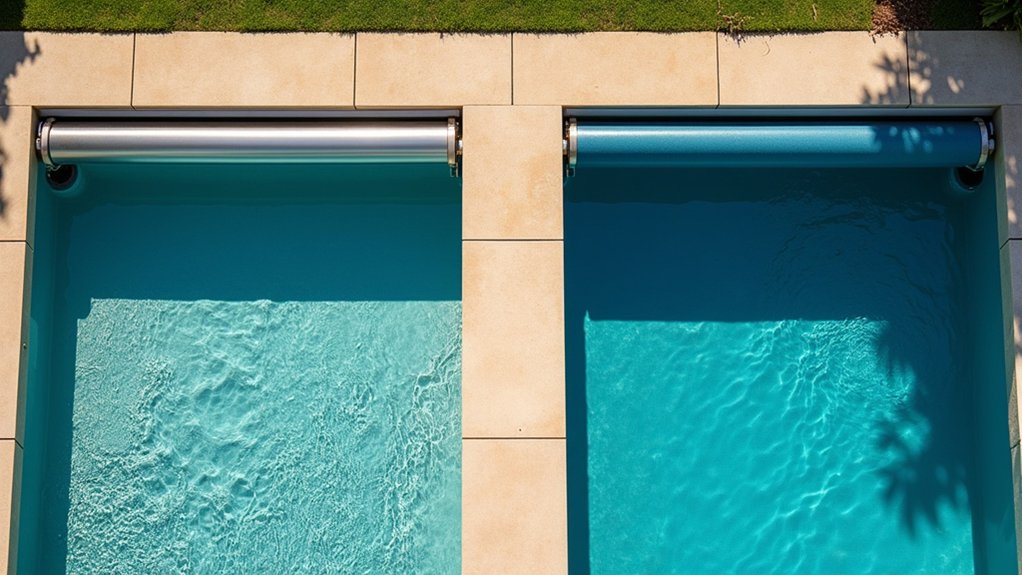
Two primary track configurations define the automatic pool cover market top-mount and under-track and each carries a distinct cost profile.
- Top-mount systems typically install for $15,000 $18,000, using visible tracks mounted on the deck’s surface for simpler, faster installation.
- Under-track systems run $16,000 $22,000+, with concealed tracks integrated into the deck and coping for a cleaner aesthetic.
- Deck-matching lids and custom finishes push either system toward the upper end of these ranges.
The cost gap between the two comes down to track placement complexity. Under-track configurations require more vault integration and structural coordination, especially during retrofits. If you’re building a new pool, you’ll reduce under-track installation costs by designing the deck around the system from the start.
Labor Costs for Automatic Pool Cover Installation
Several factors drive your labor costs higher: pool size, nonstandard shapes requiring custom adjustments, travel charges, and track repairs on replacement jobs. Matching the cover lid to surrounding materials also adds fitting time. With total installed pricing commonly landing between $11,000 and $15,000, labor represents a significant share of your final bill.
Remotes, Sensors, and Add-Ons That Raise the Price
- Smartphone integration adds $500 to $2,000 and may require ongoing subscription fees for remote monitoring
- Safety sensors are a common premium option for households with children or pets, though line-item pricing is often buried in bundled quotes
- Custom colors and lid styles matching your decking can push costs toward the top of the range
Weatherproofing upgrades are especially worth considering in harsh climates, where they’re frequently paired with smart controls and recessed installations for maximum protection.
Long-Term Automatic Pool Cover Maintenance Costs
Beyond the upfront price, you’ll face recurring costs that shape your total investment over time. Annual professional servicing typically runs $200 to $500, replacement fabric costs $1,000 to $3,500 installed every 5 to 10 years, and electricity to operate the motor adds roughly $50 to $150 per year. Understanding these ongoing expenses helps you budget accurately and avoid surprises as your automatic cover ages.
Annual Servicing Expenses
Most automatic pool cover manufacturers recommend annual professional servicing, typically costing $300 $600 per visit, to keep the system running reliably and prevent premature component failure. This service is separate from your standard pool operating expenses like chemicals and cleaning.
During a typical annual service visit, a technician will address:
- Track and mechanism inspection clearing debris, tightening pulleys, and lubricating moving parts
- Housing assessment checking for standing water and moisture intrusion that causes corrosion
- Electrical component review verifying motor function and identifying early signs of damage
You should also clear track debris yourself several times per year between professional visits. Regular surface cleaning with a leaf blower and prompt rainwater removal will reduce mechanical strain and help you avoid costly repairs between service appointments.
Cover Replacement Cycles
Watch for these replacement triggers: leakage through the material, sticking or malfunctioning operation, brittleness in the vinyl, and visible holes, tears, or frayed stitching. UV exposure, chemical imbalance, and debris buildup accelerate deterioration.
Replacement fabric typically runs $2,500 to $3,500 installed, though quotes can range from $3,000 to $10,000 depending on cover size, fabric type, and system design. A full system replacement costs roughly $17,000 to $23,000. Base replacement timing on visible wear and operational performance, not age alone.
Electricity Operating Costs
Because automatic pool covers only draw power during brief open/close cycles typically under a minute each their direct electricity costs stay minimal. Your motor activates intermittently, not continuously, keeping electrical demand low relative to other pool equipment.
The real cost advantage comes from energy offsets:
- Heat retention Covers reduce heat loss considerably, cutting heater runtime and delivering up to 70% energy savings
- Evaporation reduction You’ll see roughly 90% less water evaporation, lowering reheating and refill costs
- Net savings The small electrical draw is typically outweighed by reduced utility bills over each season
Factor in $200 $400 annually for professional tune-ups that include electrical component inspection. Frequent daily cycling increases motor wear and electricity use, so keep your cover closed whenever the pool isn’t active.
How to Budget for an Automatic Pool Cover
When you’re planning for an automatic pool cover, your installed cost will typically land between $6,000 and $22,000, with most homeowners spending around $10,000 to $15,000 depending on pool size, shape, and system type. Upgrades like smart controls, custom colors, or safety sensors can add $500 to $2,000.
Beyond the initial install, budget $50 to $150 annually for electricity and roughly $1,000 per year for maintenance and repairs. You’ll also need to plan for vinyl cover replacement every 5 to 8 years, which runs $4,000 to $6,000.
Set your budget using the full installed cost not just the kit price since labor and pool-specific fitting add materially to the total. Reserve funds for customization and build in an annual maintenance allocation from day one.
Find the Right Pool Cover at a Great Price
When choosing a pool cover, quality construction and proper sizing make all the difference for long-term durability. At Prime Pool Market, our team helps you compare options and select the best fit for your setup, with installation services available in select areas. Browse our shop or reach out to discuss what works best for your pool.
Frequently Asked Questions
How Long Does an Automatic Pool Cover Last Before Needing Replacement?
You can expect your automatic pool cover fabric to last 7 10 years with proper care, though some fabrics wear out closer to 5 7 years under harsh conditions. The mechanical components often outlast the fabric itself. High chlorine levels, UV exposure, poor installation, and skipping routine maintenance will shorten that lifespan considerably. You’ll know replacement’s approaching when you spot fading, tears, frayed ropes, or worn webbing separating from the vinyl.
Can an Automatic Pool Cover Reduce My Monthly Energy Bills?
Yes, an automatic pool cover can greatly reduce your monthly energy bills. You’ll cut heating costs by 50% 70% by minimizing evaporation the biggest source of heat loss. You can also lower electricity expenses by up to 50%, since your heater and pumps won’t run as often. You’ll save on water refills (30% 50%) and chemical consumption (35% 60%) too. Your actual savings depend on how consistently you use the cover and how frequently you heat your pool.
Do Automatic Pool Covers Work Safely in Heavy Snow or Ice?
Automatic pool covers aren’t designed to handle heavy snow and ice loads like dedicated winter covers are. You’ll need to maintain proper water levels, run a cover pump to remove snowmelt, and avoid shoveling or chopping ice off the fabric. For harsh climates, you’re better off retracting your automatic cover into its housing and installing a purpose-built winter safety cover engineered for extreme weather conditions.
Are Automatic Pool Covers Worth the Investment for Small Pools?
Yes, they’re worth it for small pools. You’ll typically pay $11,000 $15,000 for installation the lower end of automatic cover pricing while gaining the same benefits as larger systems: 50 70% heating savings, 30 50% water conservation, and 40 60% reduced chemical costs. You should budget about $1,000 annually for maintenance and $4,000 $6,000 for cover replacement every 5 8 years. The fixed safety and efficiency gains make the investment stronger on smaller surface areas.
How Much Electricity Does an Automatic Pool Cover Motor Use Annually?
Your automatic pool cover motor uses relatively little electricity annually because it only runs during brief opening and closing cycles typically under a minute each. Your actual consumption depends on cycle frequency, motor type (electric or hydraulic), and pool size. Since no universal kWh figure exists, you’d need your motor’s wattage specs for a precise calculation. The cover’s energy savings up to 70% on heating costs far outweigh the motor’s modest electrical draw.