
If you’re on a budget and want minimal winter upkeep, a mesh cover is your best bet it’s lighter, drains rainwater automatically, and costs $200 $600 less upfront. If you prioritize water clarity and algae prevention, a solid cover blocks 100% of sunlight and preserves your winterization chemicals far longer. Both types have distinct tradeoffs in maintenance, lifespan, and spring cleanup that’ll shape your decision once you explore the full comparison below.
Mesh vs Solid Pool Covers at a Glance
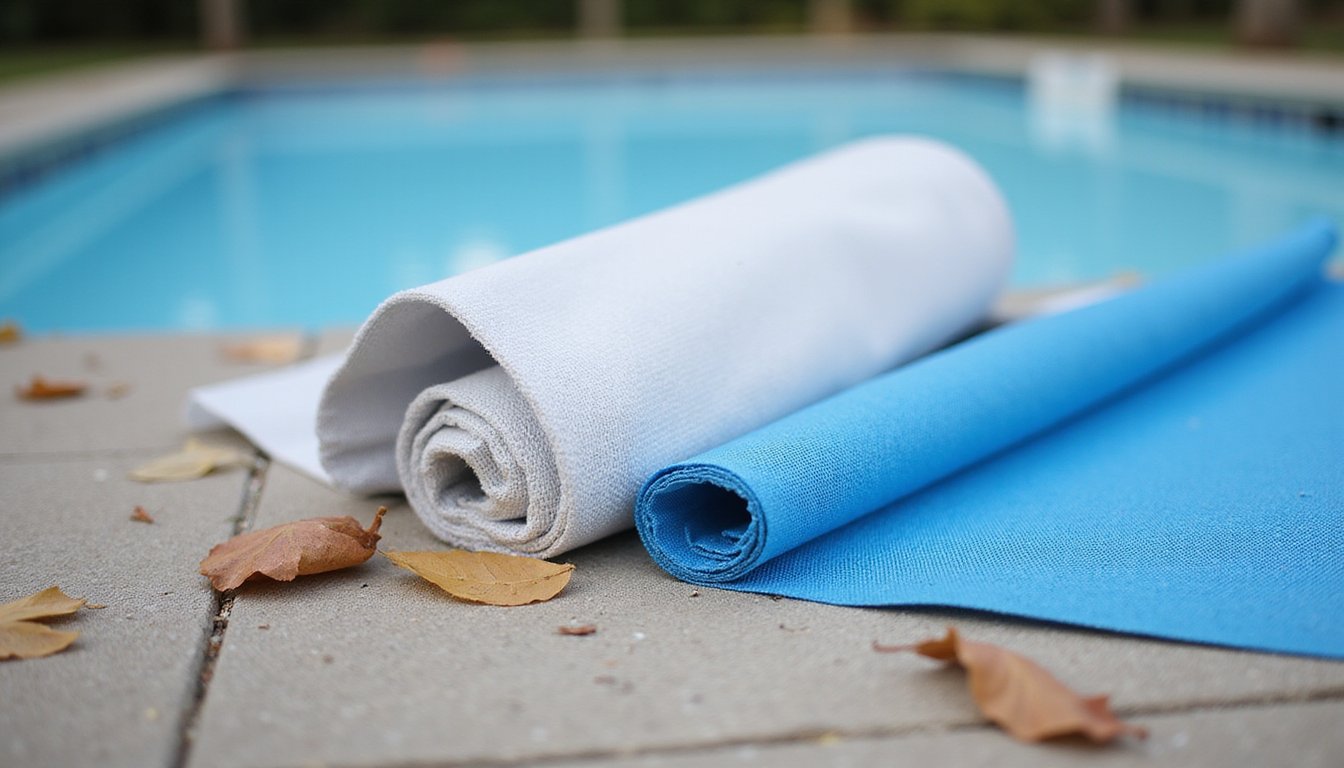
Two main options dominate the winter pool cover market: mesh and solid vinyl. When comparing mesh vs solid pool cover options, you’ll find distinct differences in cost, maintenance, and lifespan.
Mesh covers cost roughly $200 to $600 less than solid covers and last 10 to 15 years. They’re lighter, don’t require a top pump, and one person can handle installation. However, they allow fine debris and sunlight through, which can promote algae growth.
Solid covers block sunlight more effectively, reduce algae development, and keep your water cleaner during the off-season. They’ll cost more upfront, last 7 to 11 years, and require a submersible pump to manage standing water. They’re also heavier, typically requiring two people for installation.
For those who can’t decide between the two, hybrid safety covers combine features of both types, featuring a small mesh opening that allows drainage while blocking sunlight and eliminating the need for a submersible pump.
How Mesh and Solid Covers Handle Rain and Snow
When rain or snow hits your mesh cover, water drains directly through the porous material into the pool, eliminating standing water on the cover’s surface. A solid cover blocks that precipitation entirely, which means water collects on top and requires a pump or drainage system to prevent excessive weight buildup. This fundamental difference in water handling shapes your winter maintenance routine and determines what equipment you’ll need on hand during the off-season.
Mesh Drains Water Through
Mesh winter pool covers function as large strainers, letting rain and melted snow drain directly into the pool rather than collecting on the cover’s surface. This self-draining design eliminates the need for a cover pump, reducing your winter maintenance tasks considerably.
To maintain proper drainage, you’ll need to keep your mesh pool cover’s fabric and drain panels clear of leaves and debris. Wind typically removes smaller debris, but larger accumulations require manual clearing during periodic winter checks. Their lighter construction also means mesh covers are easier to remove in spring compared to solid alternatives.
The tradeoff is straightforward: precipitation passing through the mesh enters your pool water along with fine particles and UV light. You’ll spend less time managing water on top of the cover during winter but should expect additional water treatment and cleanup work when you open the pool in spring.
Solid Traps Standing Water
Because solid winter pool covers create an impermeable barrier, rain and melted snow can’t pass through they collect directly on the cover’s surface. This standing water adds significant weight, stressing straps, springs, and the cover material itself. Without active removal, the accumulated load can cause sagging, stretching, or even collapse into the pool.
You’ll need a pump or integrated drainage system to manage water buildup on your solid pool cover throughout winter. Check these systems regularly for clogging and freezing, especially during temperature fluctuations. Leaf debris compounds the problem by trapping moisture and increasing surface load. Heavy wet snow layered over existing standing water accelerates stress on the entire support system. Periodic inspection and prompt water removal are essential to prevent material damage and maintain cover integrity across the off-season.
Winter Maintenance: Mesh vs Solid Pool Covers
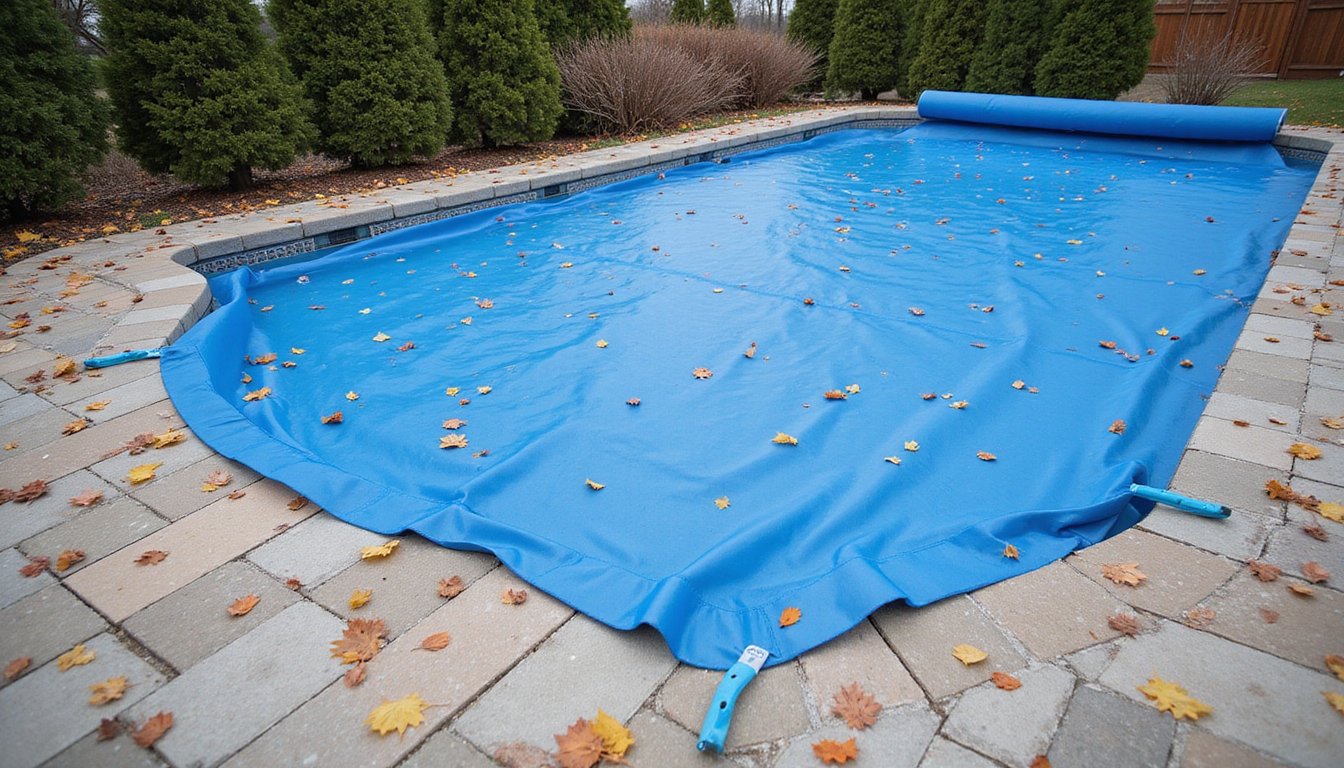
How much work you’ll face during winter depends largely on which cover type you’ve installed. A mesh winter pool cover lets rain and snowmelt pass through, eliminating the need for surface pumping. You’ll typically only remove larger debris occasionally, keeping your workload minimal until spring.
A solid winter pool cover demands more attention. Standing water, snowmelt, and debris accumulate on the surface, requiring a submersible pump or drain system. You’ll need periodic checks to prevent clogs in filters or hoses that can cause water buildup and potential cover damage.
In snowy regions, both covers require snow removal to prevent excess weight from stressing anchors or tearing material. Mesh reduces routine winter tasks considerably, while solid covers trade higher seasonal maintenance for cleaner pool water underneath.
Why Solid Covers Control Algae Better
Algae need light to grow, and solid winter pool covers block 100% of sunlight and UV radiation eliminating the primary driver of photosynthesis beneath the surface. Mesh covers block approximately 99% of UV, but that residual light transmission can fuel algae development as spring temperatures rise.
| Factor | Solid Covers | Mesh Covers |
|---|---|---|
| UV Blocking | 100% | ~99% |
| Fine Debris Entry | Fully sealed | Passes through |
| Spring Water Clarity | Crystal clear | Often cloudy/green |
Solid covers also exclude fine organic matter, phosphorus-laden runoff, and insects that feed algae colonies. By sealing the water from contaminants, they preserve your winterization chemistry reducing chlorine loss by up to 60%. You’ll spend less on shock treatments and corrective balancing at spring opening.
What Spring Cleanup Looks Like for Each Cover
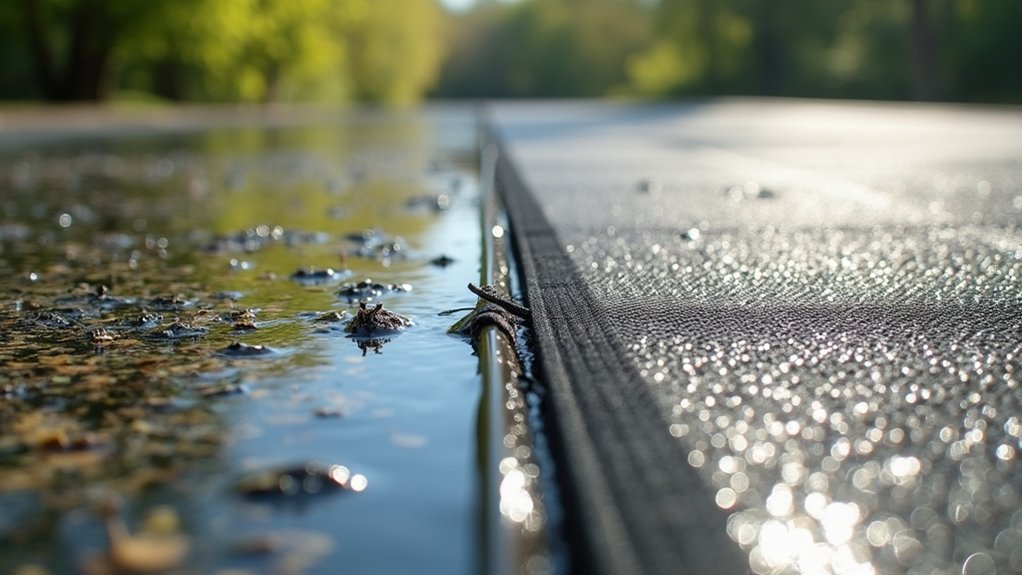
When spring arrives, your cleanup process depends on which cover type you’ve used all winter. With a mesh cover, you’ll start by clearing surface debris using a leaf blower or soft-bristle broom, then inspect straps and anchors before removal. A solid cover requires you to first pump off accumulated standing water, then remove trapped debris before you can fold and dry the cover for storage.
Mesh Cover Spring Tasks
Opening a pool after winter with a mesh cover means tackling dirtier water from the start. Fine debris, silt, and dust pass through the mesh over months, leaving cloudy water that requires immediate attention. Your mesh cover spring tasks include chemical correction, filtration, and hardware handling before you can swim.
- Disconnect springs and straps from each deck anchor using a spring-removal tool, then inspect anchors for damage before storage.
- Start filtration before full cover removal so the system begins clearing suspended particles early.
- Vacuum, skim, and chemically balance the water, addressing any algae growth caused by UV penetration through the mesh.
- Clean, dry, and fold the cover properly, keeping it aligned with original chalk marks for accurate reinstallation next season.
Solid Cover Spring Tasks
Pump standing water off your solid cover before doing anything else snowmelt and rain accumulate on the surface all winter, and removing that load is the critical first step. Brush leaves, twigs, and debris off the cover before folding to prevent contamination from spilling into the pool during removal.
Solid cover spring tasks require two or more people because the cover’s weight and wind resistance make solo handling impractical. Fold the cover clean and dry to avoid dragging organic matter into the pool area. Once the cover’s off, skim and vacuum fine sediment from the pool bottom. Test water chemistry immediately winter stagnation affects pH, alkalinity, and sanitizer levels even when the water looks clear. You’ll likely need opening chemicals, but expect lower shock-treatment intensity than with mesh-covered pools.
Mesh vs Solid Pool Cover Costs Compared
Two main cost categories separate mesh and solid winter pool covers: upfront purchase price and long-term maintenance expense. When comparing mesh vs solid pool cover costs, you’ll find mesh covers typically run $1,200 $3,000, while solid covers range from $1,800 $3,600.
- Mesh covers cost $100 $300 annually for maintenance and don’t require a cover pump.
- Solid covers run $50 $200 per year in maintenance but may need a pump for water removal.
- 10-year mesh costs total approximately $2,500 $4,500.
- 10-year solid costs total approximately $3,500 $6,500.
Mesh covers are easier to install yourself, reducing labor expense. Solid covers can offset their higher price through lower chemical-adjustment costs since they block sunlight and debris more effectively. Your climate and debris load ultimately determine which option delivers better value.
Which Pool Cover Lasts Longer?
Because mesh covers don’t trap standing water on their surface, they experience less material stress and consistently outlast solid vinyl alternatives. You can expect a mesh covers lifespan of 10 15 years, compared to 7 11 years for solid vinyl. That 3 8 year gap adds up in replacement costs and long-term value.
Solid covers bear significant weight from accumulated rainwater and snow, which strains both the material and anchoring hardware over time. You’ll need a cover pump to manage that load, and repeated pumping cycles accelerate wear. Mesh covers eliminate this issue entirely since water drains through the fabric naturally.
If durability drives your purchase decision, mesh is the stronger investment. Solid covers offer cleaner water at spring opening but won’t match mesh in overall service life.
Pick a Mesh Cover if This Sounds Like You
If you want a winter cover that demands the least offseason attention, mesh is your match. A mesh winter cover lets rainwater and snowmelt drain through, so you won’t need a pump sitting on top all season. You’ll spend less time monitoring the cover and more time ignoring your pool until spring.
A mesh winter cover fits you best if:
- You hate winter pool chores. No pump maintenance, no standing water removal.
- Leaves are your main enemy. Fine mesh blocks solid debris while draining water automatically.
- You need a safety-rated barrier. ASTM-rated mesh covers help protect children and pets from accidental falls.
- Budget matters. Mesh typically costs $200 $600 less than solid vinyl alternatives.
Pick a Solid Cover if This Sounds Like You
When keeping every drop of rain and snowmelt out of your pool is the priority, a solid winter cover delivers what mesh can’t. You’ll block sunlight, dirt, and water intrusion almost entirely, which directly reduces algae growth and off-season contamination.
Solid winter covers suit you if you want cleaner water at spring opening and less chemical rebalancing. They’re also the better choice in regions with heavy rainfall or prolonged snow exposure, where controlling water levels and chemistry matters.
You should expect tradeoffs. Solid covers require a pump to remove standing water from the surface, weigh more during removal, and typically last 7 11 years compared to mesh’s 10 15. If you prioritize maximum environmental shielding and accept higher off-season maintenance, a solid cover is your match.
Shop Premium Pool Covers Today
If you are looking for quality pool covers that protect your investment and keep your water clean year-round, Prime Pool Market has you covered. We offer a complete range of pool supplies and outdoor living products with discount pricing from real pool guys you can trust. Browse our full catalog or contact us to find the right cover for your pool today.
Frequently Asked Questions
Can You Use a Mesh Cover on an Above-Ground Pool?
Yes, you can use a mesh cover on an above-ground pool. Manufacturers sell purpose-built mesh winter covers sized specifically for above-ground pool shapes. These covers are durable, easy to install, and engineered to handle ice, snow, sleet, and high winds. The porous mesh design lets rainwater and snowmelt drain through, preventing dangerous water accumulation on the cover’s surface. You’ll want to verify proper sizing to guarantee secure fit and ideal winter protection.
Do Winter Pool Covers Need to Be Replaced After Heavy Storms?
You don’t automatically need to replace your winter pool cover after every heavy storm. Instead, inspect it for tears, punctured fabric, separated seams, broken anchors, and excessive sagging. Heavy snow, ice accumulation, and high winds can crush, rip, or destabilize your cover beyond repair. If the cover no longer blocks debris or secures the pool opening against pets and children, you should replace it immediately to maintain proper off-season protection.
Can You Walk on a Solid Winter Pool Cover Safely?
You shouldn’t walk on a solid winter pool cover, even though it’s built to hold significant weight. Weight capacity doesn’t equal a safe walking surface performance depends on water level, installation tension, and drainage conditions. If water drains out or snow accumulates, the cover can cave in or tear. Manufacturers explicitly advise against walking on it. You’ll need to maintain proper water levels and use a pump to manage standing water.
Do Pool Covers Affect Water Chemical Levels During Winter Months?
Yes, pool covers directly affect your water chemistry over winter. Solid covers block 100% of UV rays, which slows chlorine breakdown and limits algae growth, keeping your water more chemically stable. Mesh covers allow sunlight, rainwater, and fine debris to pass through, accelerating sanitizer loss and increasing contamination risk. You’ll typically face less chemical rebalancing at spring opening with a solid cover, while mesh covers often require more extensive water-quality correction.
Should You Add Antifreeze to Your Pool Before Covering It?
You don’t need to add antifreeze to your pool water before covering it. Instead, you should focus on winterizing your plumbing blow out lines, drain equipment, and seal exposed pipes. Use antifreeze only in specific plumbing sections you can’t fully drain, like skimmers or return lines. Whether you’re installing a mesh or solid cover, freeze protection comes from proper plumbing prep, not from treating the pool water directly.