
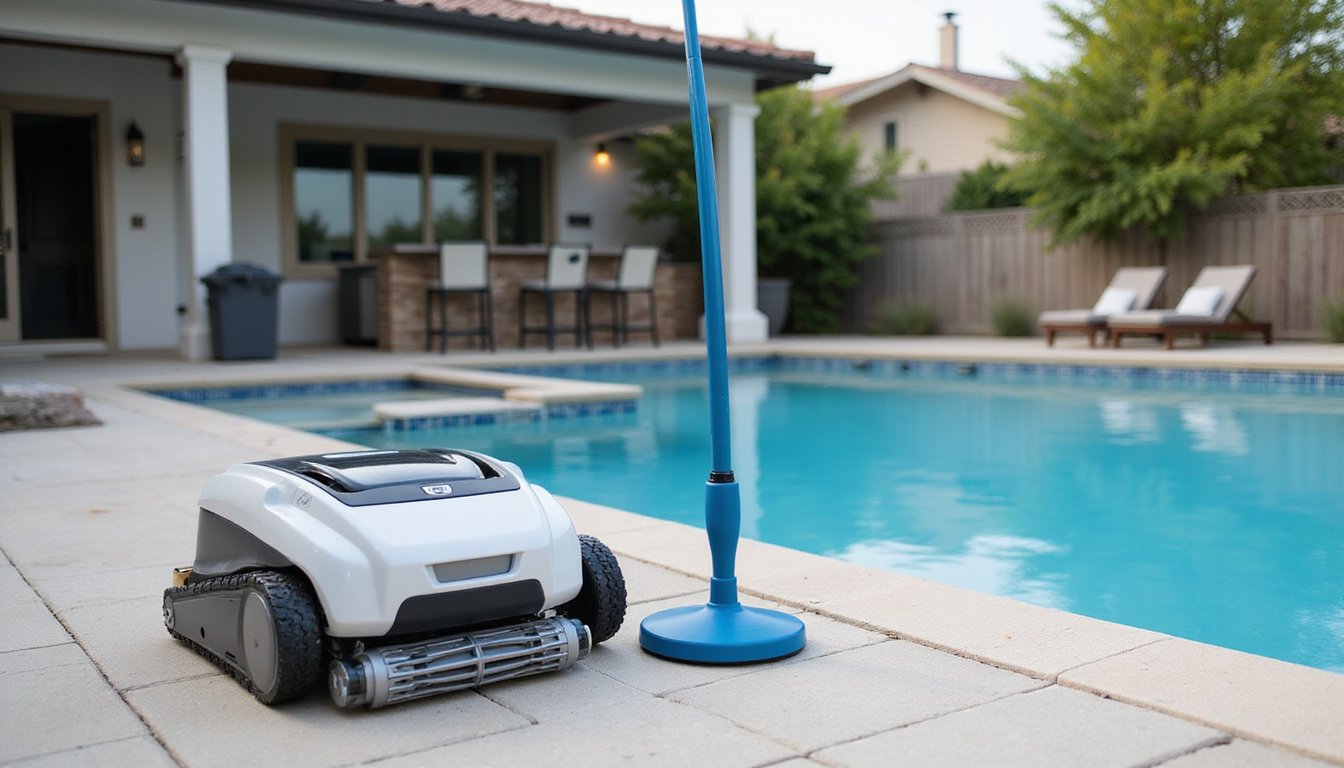
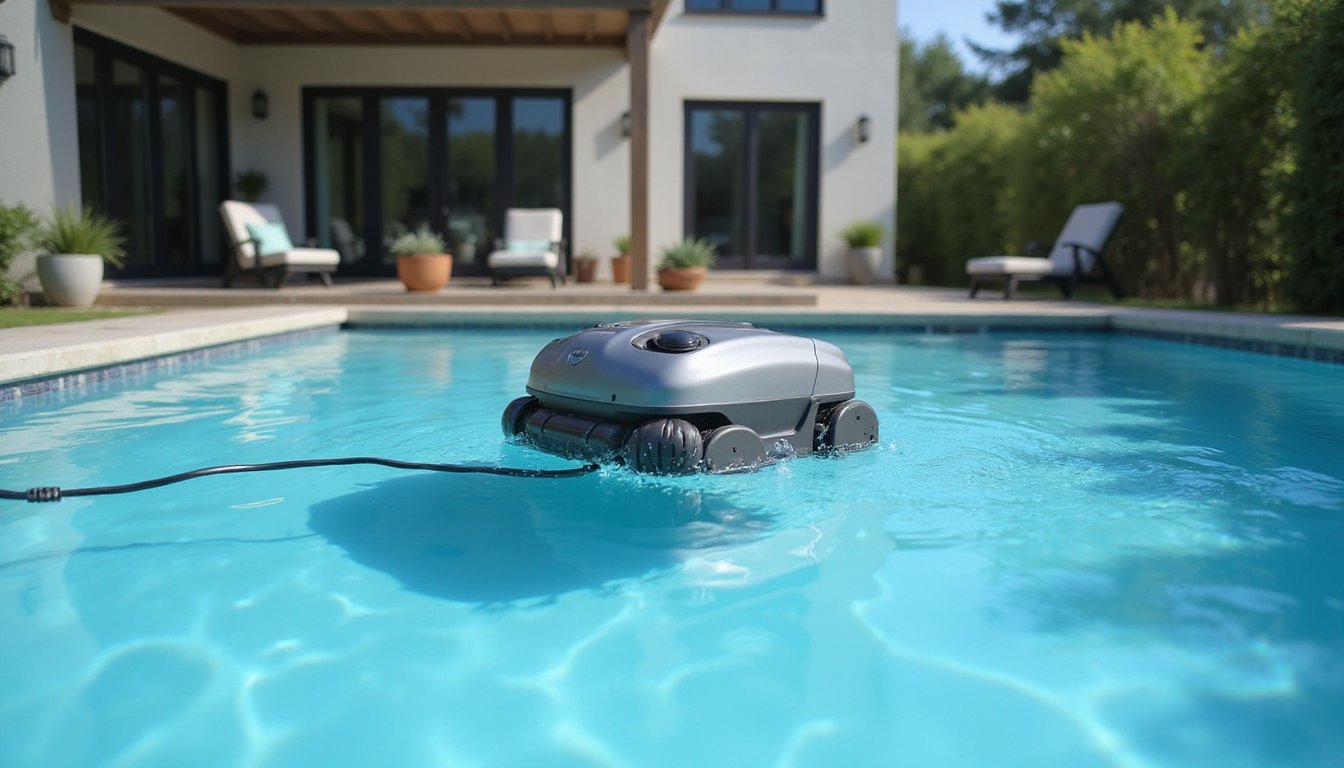
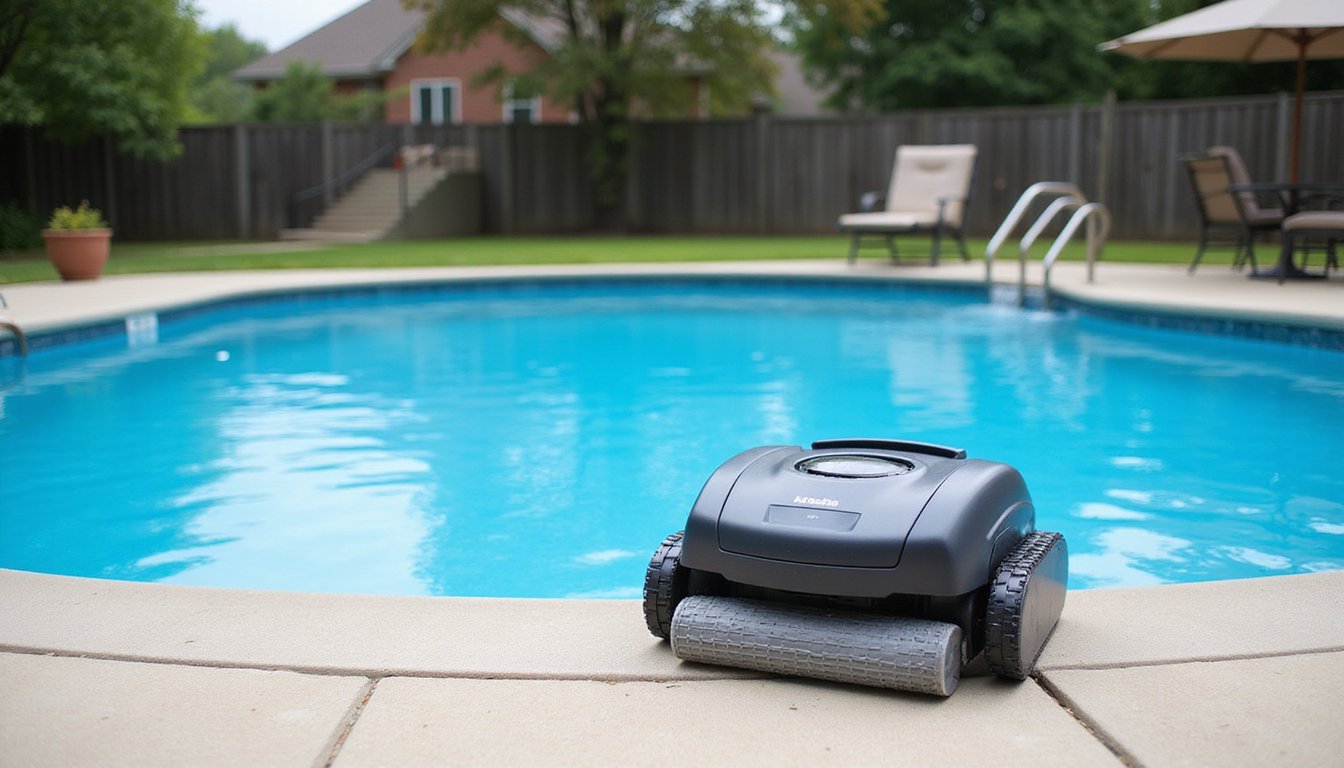
Dolphin leads with SmartNav mapping and NanoFiltration for ultra-fine debris, running up to 90% more efficiently than conventional cleaners. Polaris delivers superior suction power for heavy debris like leaves and twigs but often requires booster pumps that increase operating costs. Hayward offers budget-friendly options with solid general cleaning, though it lacks Dolphin’s navigation precision and filtration versatility. Each brand targets different pool needs, and the details below will help you find your best match.
Polaris vs Dolphin vs Hayward: What’s the Real Difference?
How do Polaris, Dolphin, and Hayward actually differ when all three sit in the same robotic category? The core separation lies in navigation intelligence, filtration design, and energy efficiency. Dolphin units use SmartNav-style mapping for calculated coverage patterns, while Polaris models typically rely on more basic pathing. Hayward occupies the same premium tier but receives less granular differentiation in head-to-head testing data.
When you’re evaluating a polaris vs dolphin pool cleaner matchup, filtration tells the clearest story. Dolphin offers multi-media filtration handling fine particles like sand and algae. Polaris excels at heavy debris pickup but uses a more traditional single-filter setup. Dolphin’s self-contained operation also delivers up to 90% greater energy efficiency over conventional alternatives, reducing your long-term operating costs considerably. Some Polaris models also require booster pumps, which can further increase energy expenses compared to Dolphin’s independent operation.
How Do They Clean Floors, Walls, and Waterlines?
Where each brand truly separates itself is in how thoroughly it handles floors, walls, and waterlines the three zones that define complete pool coverage. Dolphin robots use dual scrub brushes, onboard suction, and internal filtration to clean all three zones independently excelling at fine debris removal. Polaris robotic models deploy dual motors with programmable modes, letting you target floor-only or full-coverage cycles. Hayward’s robotic units handle floors and walls effectively, though waterline performance varies by model.
In any robotic pool cleaner comparison, you’ll find wall-climbing and waterline scrubbing depend on traction systems and dedicated climbing features. Dolphin and Polaris consistently reach the waterline, reducing algae and scale buildup. Hayward’s non-robotic cleaners don’t match this coverage since they rely on your pool’s circulation system rather than self-contained operation. Dolphin models also feature intelligent navigation systems that map optimal cleaning paths, ensuring no zone is missed during a cycle.
Which Brand Has the Smartest Navigation?
Dolphin’s SmartNav 2.0 and 3.0 systems map your pool’s layout and calculate efficient cleaning paths with minimal overlap, giving you faster, more thorough coverage per cycle. Polaris robotic models like the 9650 IQ offer solid feature sets but lack navigation technology that matches Dolphin’s route optimization at comparable price points. The 9650 IQ does provide app connectivity via iAquaLink and four-wheel drive, but its Vortex Vacuum Technology doesn’t compensate for weaker path planning. If smart path planning is your priority, Dolphin’s mapping capability gives it a clear edge over both Polaris and Hayward in this category.
Dolphin SmartNav Technology
When it comes to pool navigation intelligence, Dolphin’s SmartNav platform sets the benchmark. SmartNav 2.0 scans and maps your pool to create precision cleaning paths with minimal overlap and faster clean times. You won’t find a dolphin robotic pool cleaner using random movement every route is calculated to avoid missed sections and wasted energy.
SmartNav 3.0 takes this further by integrating gyroscope sensors for tighter, more precise movement control. You’ll notice smoother pathing and more efficient route selection compared to 2.0, though the upgrade is subtle rather than transformative. The Dolphin Sigma runs SmartNav 3.0, while the Premier relies on 2.0 both deliver strong coverage efficiency. If navigation intelligence is your priority, SmartNav 3.0 currently represents Dolphin’s most advanced system.
Polaris Navigation Limitations
Although Polaris markets its robotic cleaners as capable of traversing every corner, independent testing tells a different story. The 9550 Sport and 9650 IQ both exhibit non-optimal pathing, repeating coverage in some zones while skipping others entirely. Even the 9650 IQ’s “Smart Navigation” feature doesn’t close the gap against Dolphin’s mapped cleaning efficiency.
Each Polaris robotic cleaner in this lineup delivers functional navigation, but route planning remains a generation behind at comparable price points. The Freedom cordless model adds another constraint once submerged, you lose app connectivity, preventing mid-cycle adjustments. You’re locked into pre-set parameters until you physically remove the unit. If navigation precision drives your buying decision, you’ll find Polaris robotics fall short of the calculated, efficient coverage Dolphin’s SmartNav systems consistently deliver.
Polaris vs Dolphin vs Hayward on Fine Debris and Filtration
If you’re dealing with fine sand, algae, or microscopic contaminants, Dolphin’s NanoFiltration technology and interchangeable filter baskets give you the most advanced fine-particle capture among the three brands. Polaris robotic models rely on standard mesh-style filtration that handles leaves and larger debris effectively but won’t match Dolphin’s precision on ultra-fine particles. Hayward sits between the two, offering solid general filtration but lacking the multi-media versatility that makes Dolphin the stronger choice for water clarity.
Fine Particle Capture
Fine particle capture separates Dolphin from Polaris and Hayward in measurable ways. Dolphin’s NanoFiltration system uses smaller pore sizes than standard mesh, trapping fine sand, dirt, and algae that competitors miss. The Dolphin Premier’s Multi-Media and Generation 2 filters give you interchangeable options matched to specific debris conditions, making fine debris capture consistently superior.
Polaris robotic models rely on traditional plastic mesh filters designed primarily for larger debris. You won’t find NanoFilters or multi-media options at comparable price points, limiting microscopic particle removal. Hayward’s suction-side cleaners handle visible debris effectively but don’t match Dolphin’s ultra-fine filtration performance. If you’re prioritizing water clarity and targeting sand, algae, or fine particulate matter, Dolphin’s filtration technology delivers the most specialized results across this three-brand comparison.
Filtration System Design
Because each brand engineers its filtration system differently, the gap in fine-debris performance across Dolphin, Polaris, and Hayward starts at the hardware level. Dolphin uses internal filter baskets and cartridges with Multi-Media™ and NanoFiltration™ options, giving you interchangeable media for varying debris conditions. Polaris relies on standard plastic-mesh filtration, while Hayward’s onboard collection systems don’t match Dolphin’s multi-stage sophistication.
| Feature | Dolphin | Polaris | Hayward |
|---|---|---|---|
| Filter Architecture | Multi-media cartridges | Standard mesh | Onboard collection |
| Fine-Particle Capture | Ultra-fine/nano options | Limited | Moderate |
| Media Interchangeability | Multiple swap-ready options | Single-tier | Model-dependent |
You’ll find Dolphin’s filter variety directly translates to broader adaptability across seasonal debris loads, reducing your dependence on the pool’s primary circulation system for particulate removal.
Heavy Debris Performance
While filtration architecture determines fine-particle capture, heavy debris performance depends on intake design, suction power, and navigation consistency areas where Polaris, Dolphin, and Hayward diverge sharply.
- Polaris excels at heavy debris performance with its 2½-inch vacuum inlet, pulling in leaves, twigs, and large organic matter that smaller intakes can’t handle.
- Dolphin balances large and fine debris capture through dual scrubbing brushes and multi-media filtration, maintaining consistent pickup across varying debris loads.
- Hayward delivers durable, rugged construction suited for heavy-duty outdoor conditions, though its suction-side models perform better on larger debris than fine particles.
- Navigation consistency separates these brands Dolphin’s intelligent pathing reduces missed zones, while Polaris models show weaker coverage in debris-heavy pools despite superior raw intake capacity.
How Much Do They Cost to Run Over Time?
The upfront price tag on a robotic pool cleaner tells only part of the story, since long-term operating costs can shift the value equation markedly between Polaris, Dolphin, and Hayward. In any robotic pool vacuum comparison, Dolphin units stand out for energy efficiency, often costing just pennies per cycle and saving you hundreds of dollars annually versus pressure-side alternatives. Polaris robotic models share this low-watt advantage, but older pressure-side Polaris cleaners require booster pumps that add $650 $1,100 in setup costs plus ongoing energy draw. Hayward’s cost profile depends on cleaner type robotic Hayward units run efficiently, while suction-side or pressure-side models increase your electricity burden over time. You’ll find that choosing any brand’s robotic option delivers the strongest long-run efficiency compared to pump-driven setups.
Which Robotic Cleaner Fits Your Pool Type?
Beyond operating costs, your pool’s surface material, shape, and debris profile determine which robotic cleaner delivers the best results.
- Fiberglass or vinyl liner pools: Dolphin and Polaris robotic pool cleaner models list explicit compatibility, while Hayward covers fiberglass through its robotic line.
- Gunite, plaster, pebble, or tile surfaces: Polaris 9550 Sport and higher-end Dolphin models handle these rough textures effectively.
- Freeform pools with obstacles: Polaris excels here its 9550 Sport navigates steps, ladders, ledges, and pop-ups with precision.
- Fine debris and algae removal: Dolphin’s dual scrubbing brushes and strong vacuum action target particles that other brands miss.
If you own an above-ground pool, Hayward’s suction-side range offers broad compatibility, though Polaris also provides select robotic coverage for above-ground setups.
Polaris vs Dolphin vs Hayward Features and Pricing
How do Polaris, Dolphin, and Hayward actually stack up when you compare features and pricing side by side? When evaluating Polaris vs Dolphin vs Hayward features and pricing, Dolphin leads in navigation intelligence, fine filtration, and energy efficiency. Polaris delivers strong debris pickup with durable construction. Each hayward robotic pool cleaner option tends toward budget-friendly pricing but relies more on pump-dependent operation.
| Feature | Brand Advantage |
|---|---|
| Smart Navigation | Dolphin (SmartNav-style mapping) |
| Fine Particle Filtration | Dolphin (ultra-fine/nano options) |
| Large Debris Handling | Polaris and Hayward |
| Energy Independence | Dolphin (pump-free operation) |
You’ll find Dolphin commands premium pricing, while Polaris occupies mid-range positioning and Hayward offers cost-conscious entry points.
Which Robotic Pool Cleaner Should You Actually Buy?
So which robotic pool cleaner actually deserves your money? Your ideal pool vacuum robot depends on your specific conditions:
- Best overall: Dolphin delivers smart navigation, wall-to-waterline coverage, and self-contained operation that doesn’t tax your existing filtration system.
- Best for heavy debris: Polaris handles large leaves and twigs with superior suction power, making it ideal for demanding pool environments.
- Best for automation: Dolphin’s scanning technology and app control provide organized, predictable cleaning paths that minimize missed spots.
- Best for efficiency: Dolphin runs up to 90% more efficiently than conventional cleaners, reducing long-term operating costs considerably.
For most residential pools, Dolphin’s the strongest default buy. Choose Polaris when debris volume is your primary challenge.
Shop Top-Rated Pool Cleaners Today
If you are comparing robotic, suction, or pressure pool cleaners, Prime Pool Market has the brands and prices that fit your pool. We carry Pool Cleaners from top names like Polaris, Hayward, Pentair, and more at discount pricing from real pool guys. Browse our full catalog or contact us to find the right cleaner for your pool today.
Frequently Asked Questions
How Long Do Robotic Pool Cleaners Typically Last Before Needing Replacement?
You can expect most robotic pool cleaners to last 3 to 7 years, with well-maintained units typically reaching 5 to 7 years. Dolphin models often hit 7 to 10 years with occasional repairs. Daily use shortens lifespan to roughly 3 to 4 years. You’ll extend service life by rinsing filters after each cycle, storing the unit in a cool, dry location, and regularly inspecting brushes, tracks, and casings for wear.
Can Robotic Pool Cleaners Handle Saltwater Pools Without Damage?
Yes, you can run a robotic pool cleaner in a saltwater pool without damage provided the manufacturer rates that specific model for salt use. Look for sealed motors, corrosion-resistant plastics, and salt-rated cable connections. After each cycle, rinse the unit with fresh water and store it dry to prevent salt residue buildup. Always check warranty terms, since some brands exclude coverage if you exceed stated water-chemistry limits.
Do Robotic Pool Cleaners Work With Pool Covers Installed?
Robotic pool cleaners don’t work with covers installed. Your Polaris, Dolphin, or Hayward robot needs open water access to navigate, scrub surfaces, and filter debris through its onboard cartridge or bag. A cover blocks the sensors, brushes, and movement patterns these units rely on. Instead, you’ll get better results by covering your pool between uses to reduce debris load, then removing the cover before running your cleaning cycle.
How Often Should Robotic Pool Cleaner Filters Be Replaced?
You’ll replace your robotic pool cleaner filter based on condition, not a fixed schedule. Rinse the filter after every cleaning cycle, inspect it weekly for tears or clogging, and replace it only when rinsing no longer restores proper suction. Polaris, Dolphin, and Hayward models each use different filter designs, so replacement intervals vary by debris load, water conditions, and usage frequency. Treat filters as consumables with a variable lifespan.
Are Extended Warranties Worth Buying for Robotic Pool Cleaners?
Extended warranties can be worth it if you’re investing in a premium robotic cleaner you’ll use frequently. Most models carry only 1- to 3-year warranties, but internal electronics and drive motors the costliest components often fail after coverage expires. Since typical lifespans run 3 to 7 years, you’re exposed to significant repair costs during that gap. If you’re buying from an authorized dealer and expect heavy use, extended coverage helps protect your investment.