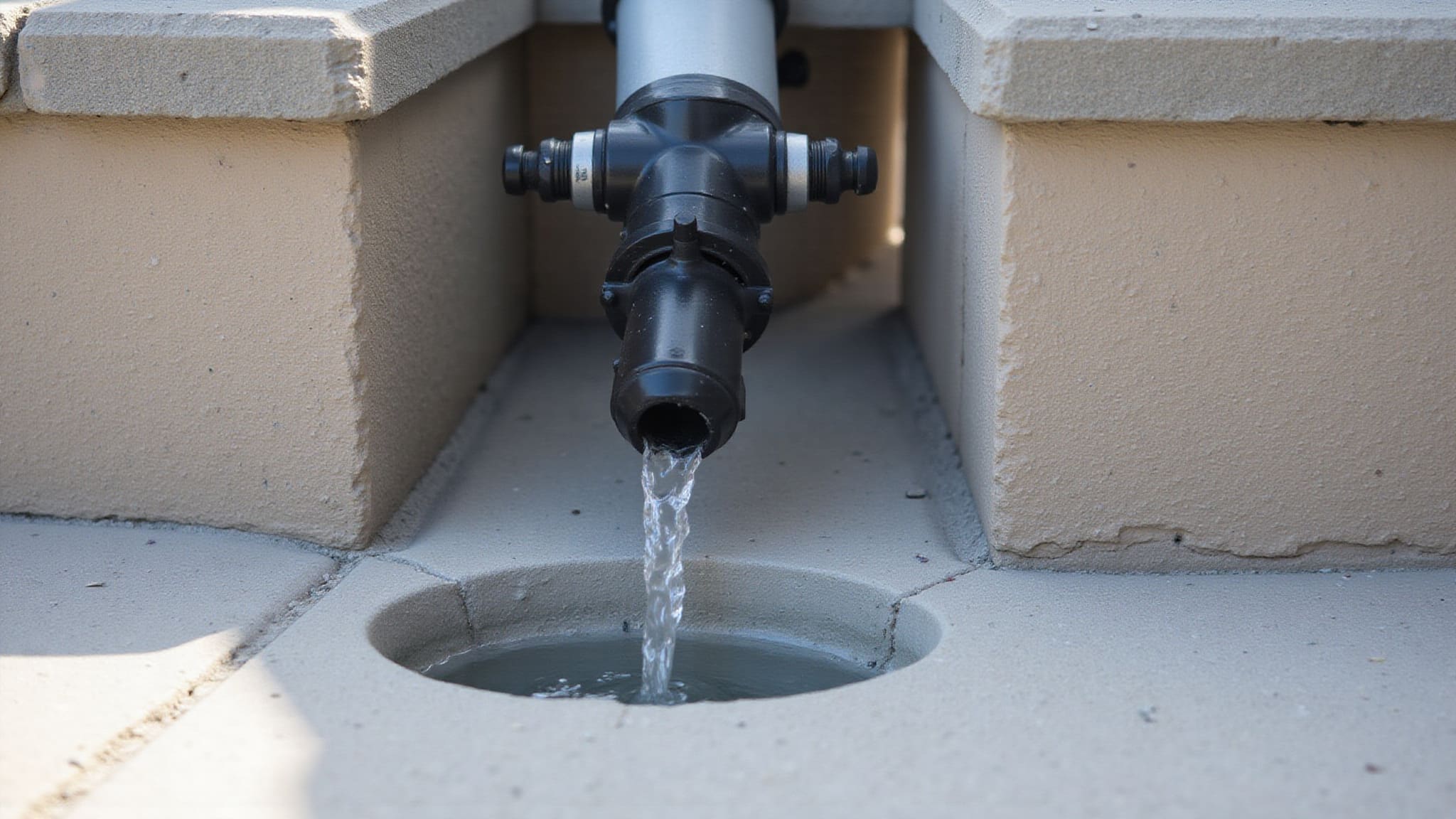
You can run a pool pump without a filter, but only briefly and only if your manufacturer permits it. Use an approved bypass, such as your multiport valve’s RECIRCULATE setting, and never improvise plumbing. Make sure the system’s fully sealed, primed, and has a clear return path. Otherwise, pressurized parts can separate violently, and dry running can damage the shaft seal. Unfiltered water also turns cloudy fast. Here’s how to protect your equipment and water.
Key Takeaways
- Running a pool pump without a filter is possible only briefly and only if the manufacturer explicitly permits it.
- Use a manufacturer-designed bypass, such as the multiport valve’s RECIRCULATE setting, instead of improvised plumbing.
- Before start-up, confirm the system is sealed, fully primed, and has an unobstructed return path to prevent violent component separation.
- Running dry can damage the shaft seal, and debris passing the strainer basket can clog the impeller.
- Without filtration, circulation redistributes contaminants, causing cloudy water, sanitizer strain, and a higher likelihood of algae growth.
When Running the Pump Without a Filter Is Allowed.

You can run a pool pump without a filter, but only briefly and only if your manufacturer permits it. Some systems allow short-term circulation with the filter element removed or through a designated filter bypass, such as a multiport valve’s RECIRCULATE setting. Don’t confuse a missing element with a disconnected filter tank. You shouldn’t start a pump with open, unsecured, or improperly assembled plumbing, because pressurized components can separate violently. Confirm the pump is primed and the return path is unobstructed prior to start-up. Never run it dry, since water cools and lubricates the shaft seal. Without filtration, debris that slips past the pump basket can reach and clog the impeller, increasing equipment risk. Treat any bypass as temporary, and restore normal filtration promptly.
What does the filter do in a pool system
The filter cleans your pool water by trapping suspended debris, fine particles, and organic material that would otherwise stay in circulation. The pump moves water through the system, but the filter element is what actually removes contaminants as water passes through it. The pump’s strainer basket catches only larger items like leaves. Everything smaller depends on the filter.
This particle removal keeps your water clear and reduces the load on your sanitizer. Without filtration, chlorine must contend with contaminants the filter would normally capture, so water can turn cloudy and algae growth becomes more likely. Debris that slips past the strainer can also reach the impeller and potentially obstruct it.
Circulation alone doesn’t clean your pool. Moving unfiltered water redistributes contaminants, so a running pump doesn’t prove sanitary water.
What happens if you run a pool pump without a filter

Running a pool pump without a filter circulates unfiltered water, and the specific risks depend on how the filter was removed from the system. If you use a manufacturer-designed RECIRCULATE setting, water bypasses the filter and returns to the pool. If you’ve physically disconnected the filter tank, you risk violent component separation under pressure.
| Condition | Result |
|---|---|
| Debris passes strainer basket | Impeller may clog |
| Restricted flow path | Pump overheats or fails early |
| Pump runs dry | Shaft seal damage, leaks, flooding |
| No particle removal | Cloudy water |
| Extra organic load | Sanitizer strain, algae risk |
Turn off the pump before changing valve positions, and keep the return path open. Treat bypass operation as temporary, and don’t swim just because water is moving. Restore normal filtration promptly, and stop the pump if you notice leaks or abnormal noise.
When is it safe to run the pump briefly without a filter
It is safe to run the pump briefly without a filter only when your equipment’s manufacturer permits it and the system stays fully sealed. Check your pump and filter manuals first; don’t assume every design tolerates a missing filter element. Use a designated bypass, such as a multiport valve’s RECIRCULATE setting, instead of improvised plumbing. A removed element isn’t a disconnected tank: you must reassemble and secure the housing and all connections before start-up. Shut off the pump before changing valve positions. Confirm that suction and return paths are open, the pump is full of water, and it’s properly primed. Stop immediately if flow drops, water level falls, or you notice leaks or abnormal noise. Treat bypass operation as temporary, and restore filtration as soon as possible.
How do you circulate water if the filter is removed
Circulate water with the filter element removed by keeping the system sealed and routing flow through a path the manufacturer approves. First, shut off power and relieve pressure as your manual directs. Then reassemble and secure the filter housing and every connection. Never run with open or loose pressurized components. If your multiport valve has a RECIRCULATE setting, use it to bypass the filter and return water to the pool. Change valve positions only with the pump off. Confirm that suction and return paths are open and the pump is full and primed before start-up. Stop immediately if you lose flow or notice leaks or abnormal noise. Treat this as temporary circulation, and restore full filtration as soon as possible.
How do you protect your pool pump and water quality
Protect your pump by keeping it primed, its flow paths open, and its strainer clear, and protect your water by monitoring clarity and sanitizer levels until full filtration returns. Temporary circulation keeps water moving, but it exposes both to risks that filtration normally controls.
Confirm the pump is full of water and properly primed before start-up, since dry running can destroy the shaft seal and cause leaks. Keep suction and return paths open, since restricted flow stresses the pump and can cause overheating. Empty the strainer basket often, because debris that slips past it can obstruct the impeller. Always shut off the pump before you change a valve position.
Unfiltered water won’t stay clear. Suspended particles and organic material remain, forcing your sanitizer to work harder and raising algae risk. Monitor clarity and sanitizer levels, and don’t swim just because water’s circulating. Restore full filtration as soon as you can.
Conclusion
You can run a pool pump without a filter, but only for a short time, only if your manufacturer allows it, and only through an approved bypass like the RECIRCULATE setting, never improvised plumbing. The system has to stay sealed and primed with a clear return path, because an open or disconnected filter tank can let pressurized parts separate violently, and a dry run can wreck the shaft seal. Even done correctly, unfiltered water does not stay clean. It clouds fast, strains your sanitizer, and invites algae, so circulation is not the same as filtration. Treat any bypass as temporary, keep an eye on flow and water level, and put the filter back in service as soon as the job is done.
Get Your Filter Back Online
Bypassing the filter is a short-term fix, so the goal is to get filtration running again fast. Browse our pool filters and filter parts for replacement elements, cartridges, and the parts a worn filter needs, or see everything at Prime Pool Market. Tell us your filter’s make and model and we will help you find the right fit. Contact us or call (877) 650-7665 to get your filter back in service.
Frequently Asked Questions
Can Running a Pool Pump Without a Filter Void the Equipment Warranty?
It can, but you’ll need to check your pump and filter warranty terms, since coverage rules vary by manufacturer. Operating outside the manual’s approved configuration, such as running with a disconnected filter tank or improvised plumbing, could jeopardize a claim. Use only a designated bypass, like RECIRCULATE, and shut off the pump before moving valves. Never run it dry; you’ll risk seal damage and leaks. Always restore full filtration promptly.
How Long Can a Pool Pump Safely Run on the Recirculate Setting?
There’s no universal time limit; you should treat RECIRCULATE as a brief, temporary setting and confirm any duration in your pump and filter manuals. You’re circulating water without removing debris, so clarity and sanitizer performance decline, raising algae risk. Keep suction and return paths open, maintain water level and prime, and never run it dry. Switch off the pump before changing valve positions, and restore filtration as soon as possible.
Is It Safe to Add Pool Chemicals While the Filter Is Bypassed?
You can often add chemicals while running on RECIRCULATE, but confirm it in your pump and filter manuals and on the chemical label first. Circulation spreads products through the water, yet it won’t remove debris, so your sanitizer’s fighting extra contaminants. Don’t dose in WASTE mode; it sends treated water out. Don’t swim just because water’s moving. Restore filtration promptly, then retest your water chemistry before anyone gets back in.
Can I Vacuum My Pool Using the Waste Setting Without a Filter?
Yes, you can vacuum on WASTE if your multiport valve offers it, since it routes water past the filter and out the waste line. Turn off the pump before switching the valve, and confirm your manual permits this. Keep the plumbing secured and the waste line open. You’ll lower the water level quickly, so monitor it. Don’t let the pump lose prime or run dry. Stop immediately if flow drops.
Does Running a Pump Without a Filter Increase Electricity Costs?
It won’t reliably save you money. Bypassing the filter cuts resistance, so your pump moves more water, and many centrifugal motors draw somewhat more power at higher flow. Costs vary by pump, so check its manual. The bigger expense comes elsewhere: unfiltered water clouds, sanitizer demand rises, and debris can obstruct the impeller, stressing the motor. Don’t run it dry, and restore filtration promptly to protect your pump and plumbing.