You can’t confirm bacteria with a home test kit, but you can verify your water’s disinfecting power before anyone swims. Use a DPD kit, which the CDC rates as more accurate than test strips, to measure free chlorine and pH. Keep free chlorine at 1 ppm or higher (2 ppm with stabilized chlorine) and pH between 7.0 and 7.8. Correct and retest any out-of-range values first. Normal readings won’t rule out chlorine-tolerant *Cryptosporidium*, and there’s more to know about why.
Key Takeaways
- Home test kits can’t detect bacteria; only lab tests, like heterotrophic plate counts or indicator organism screens, confirm bacterial presence.
- Before swimming, use a DPD kit to test free chlorine and pH, which show whether disinfection conditions are adequate.
- Keep free chlorine at 1 ppm or higher (2 ppm with stabilized chlorine) and pH between 7.0 and 7.8.
- Properly maintained chlorine kills most bacteria, including *E. coli* O157:H7, in under one minute; risk rises when levels fall out of range.
- Normal readings don’t rule out chlorine-tolerant *Cryptosporidium*, which can survive for days even in properly maintained pools.
How do you test pool water for bacteria

To test pool water for bacteria, collect a water sample and send it for lab testing, where technicians may run a heterotrophic plate count or screen for indicator organisms. A home test kit can’t confirm whether bacteria are present. Routine checks measure free chlorine and pH, which show whether disinfection is working, not which germs are present. Lab results take time, so they can’t tell you whether the water is safe right now. CDC’s Model Aquatic Health Code doesn’t recommend routine microbial testing. Labs mainly support investigations and troubleshooting. Instead, test with a DPD kit before swimming, keeping chlorine at 1 ppm or higher and pH at 7.0–7.8. Remember, normal readings don’t rule out chlorine-tolerant *Cryptosporidium*.
Which bacteria are common in pool water
Pool water can contain bacteria such as *E. coli* O157:H7 and coliform bacteria, which laboratories sometimes test for as fecal indicators. Properly maintained chlorine kills most bacteria, including *E. coli* O157:H7, in less than one minute, so you’re at greater risk when free chlorine drops below 1 ppm or pH climbs above 8.0. Coliform test results may not reliably represent overall water quality. Remember, too, that *Cryptosporidium*, a chlorine-tolerant parasite, can survive for days even in properly maintained pools.
How do you collect and read a water sample
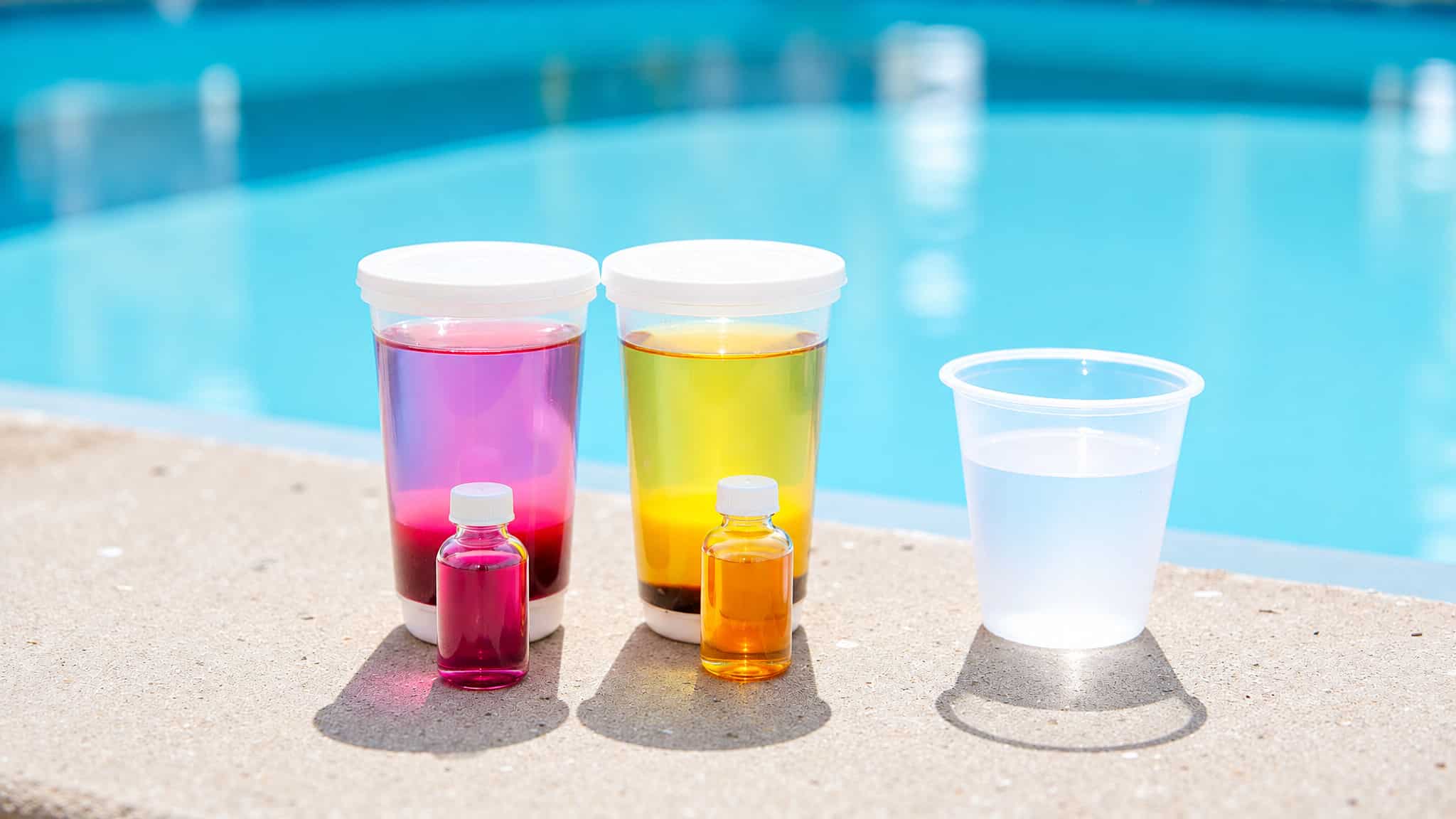
Collect and read each sample by following the manufacturer’s instructions for your DPD test kit, which CDC recommends for more accurate readings than test strips. Use it to test free chlorine and pH before swimming. Test at least twice daily, and test more often when many people are swimming.
Aim for pH 7.0–7.8 and at least 1 ppm free chlorine, or at least 2 ppm if you use cyanuric acid or stabilized chlorine. Watch for misleading results: chlorine above 10 ppm can bleach the test, showing a falsely low or zero reading. If pH exceeds 8.0, chlorine kills germs less effectively.
Clear water doesn’t prove adequate disinfection, so retest and correct out-of-range values before anyone swims. Remember, these readings don’t detect specific bacteria or parasites.
How do bacteria test kits and methods compare
Home kits, whether DPD kits or test strips, measure chlorine and pH, which reflect disinfection conditions rather than germs, while lab tests look for indicator bacteria or Giardia/Crypto but return delayed results. None of your routine home tests will tell you whether a specific sample contains harmful bacteria.
| Method | What it tells you |
|---|---|
| DPD kit | Accurate free chlorine and pH readings |
| Test strips | Faster, less accurate chlorine and pH readings |
| Indicator-bacteria lab test | Delayed results that may not represent overall water quality |
| Giardia/Crypto lab test | Costly, slow results; no real-time answer |
CDC’s Model Aquatic Health Code doesn’t recommend routine microbiological testing for pools. Instead, you’ll rely on the DPD kit, testing at least twice daily before swimming. Remember, properly maintained chlorine kills most bacteria in under a minute, but Cryptosporidium can survive for days, so a normal reading doesn’t prove your water is safe after contamination.
How do sanitizer levels relate to bacteria control
Sanitizer levels show whether disinfection is working, even though they don’t measure bacteria directly. CDC says properly maintained chlorine kills most bacteria, including E. coli O157:H7, in under one minute. Keep free chlorine at least 1 ppm, or 2 ppm if you use cyanuric acid or stabilized chlorine, and hold pH between 7.0 and 7.8.
pH directly affects performance. Above 8.0, chlorine’s germ-killing ability drops. Below 7.0, chlorine kills germs better, but acidic water can corrode pipes. Test both at least twice daily, and more often when many people swim.
In-range readings don’t certify water as germ-free. Cryptosporidium tolerates chlorine and can survive for days in properly maintained pools. If you see out-of-range values, correct and retest before anyone swims.
How do you treat and prevent bacteria in pool water
Treat and prevent bacteria in pool water by keeping disinfection consistent, which controls bacteria more reliably than after-the-fact testing. Check free chlorine and pH at least twice daily, and test more often when many people swim. Keep chlorine at 1 ppm or higher, or 2 ppm if you use cyanuric acid, and hold pH between 7.0 and 7.8. Correct out-of-range readings before anyone enters the water.
Chlorine doesn’t quickly kill *Cryptosporidium*, which can survive for days in properly maintained pools. If a fecal incident occurs, close the pool. After formed stool, raise free chlorine to 2 ppm for at least 25 minutes. After diarrhea, maintain 20 ppm for at least 12.75 hours. You’ll further reduce risk by staying out when you’re ill with diarrhea and avoiding swallowing pool water.
Conclusion
Checking your pool water for harmful bacteria before a swim really means checking whether your water can kill them, because a home kit cannot detect bacteria directly. Only a lab can confirm what is present, and those results arrive too late to tell you the water is safe right now. So test with a DPD kit before anyone gets in, hold free chlorine at 1 ppm or higher, 2 ppm with stabilized chlorine, and keep pH between 7.0 and 7.8. Correct and retest anything out of range, and remember that clear water and normal readings still do not rule out chlorine tolerant Cryptosporidium. Keep sanitizer steady, stay out after a fecal incident, and avoid swallowing the water.
Keep Your Water Safely Disinfected
Safe water comes from steady sanitizer and testing before anyone gets in, not from guesswork. Browse our pool and spa chemicals and test kits for DPD kits, chlorine, and balancing products, or see everything at Prime Pool Market. Tell us your pool size and sanitizer type and we will help you hold the right levels. Contact us or call (877) 650-7665 to keep your water properly disinfected.
Frequently Asked Questions
Is It Safe to Swim With a Small Cut or Open Wound?
It’s safest to wait until your cut or open wound heals. If you swim anyway, cover it with a waterproof bandage. Proper chlorine (at least 1 ppm) and pH (7.0–7.8) kill most bacteria quickly, but they don’t make water germ-free, and chlorine-tolerant Crypto can persist for days. Test your water’s chlorine and pH first, skip swimming after fecal incidents, and don’t swallow the water.
Can Pool Water Cause Ear Infections Like Swimmer’s Ear?
Yes, you can develop swimmer’s ear (acute otitis externa) after swimming. It usually happens when water stays in your ear canal, letting bacteria such as *Pseudomonas aeruginosa* grow. You’ll lower the risk when you verify free chlorine is at least 1 ppm (2 ppm with cyanuric acid) and pH is 7.0–7.8, since proper chlorine kills most bacteria. Dry your ears thoroughly afterward, and see a clinician if ear pain develops.
How Long After Adding Chemicals Should I Wait Before Swimming?
You shouldn’t swim until a retest confirms your water’s back in range, since there’s no universal wait time. Use a DPD test kit to verify pH 7.0–7.8 and at least 1 ppm free chlorine (2 ppm with cyanuric acid). If chlorine exceeds 10 ppm, it can bleach your result to a false zero. After diarrheal contamination, you’ll need 20 ppm for at least 12.75 hours before swimming. Clear-looking water isn’t proof.
Are Saltwater Pools Less Likely to Harbor Harmful Germs Than Chlorine Pools?
Not inherently. A saltwater pool’s generator converts salt into chlorine, so you’re still relying on chlorine disinfection. What matters is maintenance: you should test free chlorine and pH at least twice daily, keeping pH at 7.0–7.8 and chlorine at 1 ppm or higher (2 ppm with cyanuric acid). Remember, chlorine-tolerant *Cryptosporidium* can survive days in either pool type, so don’t swim after diarrheal contamination or whenever your readings fall out-of-range.
Should Pregnant Women Take Extra Precautions When Swimming in Public Pools?
There are no pregnancy-specific pool rules, so ask your prenatal provider about your situation. Still, you can apply sensible precautions: don’t swallow pool water, since even a small amount contaminated by diarrheal feces can cause infection. Skip swimming after a fecal incident or when free chlorine and pH fall outside recommended ranges. Remember, normal chlorine readings don’t rule out chlorine-tolerant Cryptosporidium, which survives days in properly maintained pools.