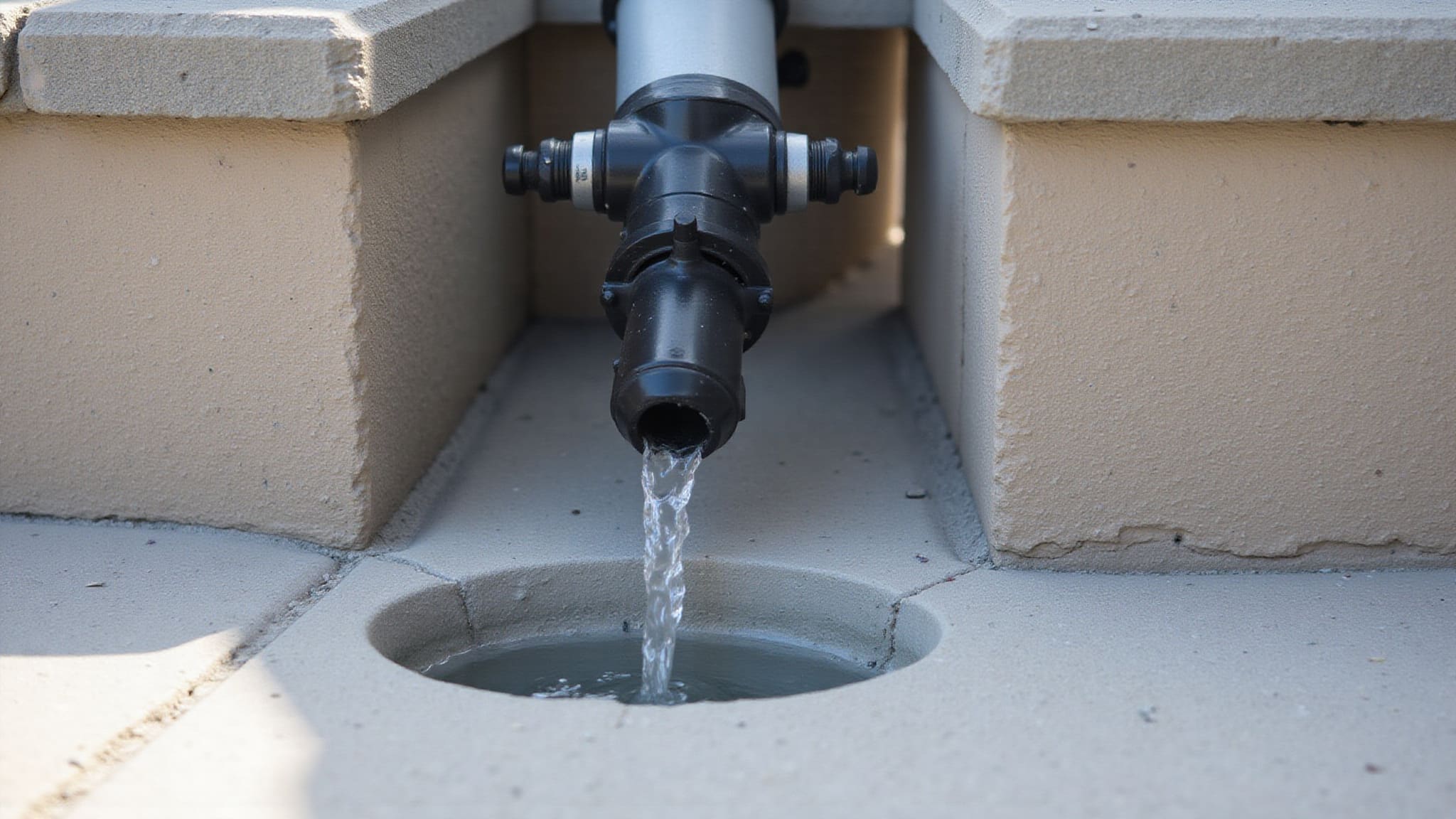
Water leaking from your backwash outlet while the valve’s set to Filter means your multiport valve isn’t sealing. The usual culprit’s a torn, warped, or swollen spider gasket that lets pressurized water slip into the waste port. Debris trapped under the diverter can break the seal. A weak spring or worn key assembly won’t press the diverter tight. Below, you’ll see how to pinpoint the fault and decide whether to reseat, clean, or replace parts.
Key Takeaways
- Water leaking from the backwash outlet during Filter mode usually signals an internal multiport valve sealing failure.
- A torn, warped, swollen, or lifted spider gasket lets pressurized filtered water slip into the waste line.
- Debris trapped between the diverter and gasket can prevent a full seal, even when the gasket looks intact.
- A weak or broken spring, worn diverter, or handle not fully seated in Filter can leave the backwash port partly open.
- Fix the leak by reseating or replacing the gasket, clearing debris, or replacing worn springs and diverter components matched to your valve.
Why is Water Coming Out of My Backwash Line

Water coming out of your backwash line while the multiport valve is set to Filter means the valve isn’t sealing off the waste port. The most likely culprit is a failed spider gasket. This rubber seal separates the valve’s internal channels and directs water to the selected port. A torn, swollen, warped, or lifted gasket lets filtered water slip into the waste port. One repair source attributes about 80% of continuous backwash-line leaks to this gasket. Debris trapped between the diverter and gasket can block a full seal. If the gasket looks intact, check for a weak spring that isn’t pressing the diverter, a faulty key or diverter assembly, or a handle that isn’t fully seated. High pressure worsens any backwash leak.
How does the multiport valve direct water flow
A multiport valve directs water flow by rotating a key and diverter assembly inside the valve body to line up with a specific port, which you select by turning the handle. The spider gasket, a star-shaped seal seated in grooves beneath the diverter, separates the valve’s internal channels so water reaches only the selected port. A spring presses the diverter firmly against the gasket, creating that seal.
On Filter, water travels from the pump through the filter media and back to the pool. On Backwash, the diverter reverses flow through the filter and sends dirty water out the waste line.
If the gasket’s torn, the spring’s weak, debris blocks the sealing surface, or the handle isn’t fully seated, water slips past into the wrong channel and exits the waste line during filtration.
How does a torn or worn spider gasket cause leaks

A torn or worn spider gasket causes leaks by breaking the seal between the valve’s internal channels, which lets pressurized water slip past the damaged section to the waste port. The gasket is the only barrier between those channels. When you set the valve to Filter, the diverter presses against the gasket to block every port except the one you’ve selected. If the gasket’s torn, worn, swollen, or lifted from its groove, water escapes through the gap and trickles or streams from your backwash outlet.
Debris causes the same problem. Grit or sand trapped between the diverter and gasket keeps them from sealing completely, even when the gasket’s intact.
If the gasket has simply shifted, you can sometimes reseat it. If it’s cracked, warped, or deteriorated, you’ll need a replacement matched to your valve model.
How does a stuck or faulty valve cause backwash leaks
A stuck or faulty valve causes backwash leaks by keeping the diverter from pressing firmly and squarely against the gasket, which leaves a gap for water to reach the waste port. A broken or weakened spring can’t hold the diverter tight, so you’ll notice a loose handle with little resistance. A worn key or diverter assembly can leak between ports even when the gasket looks intact. A handle that isn’t fully seated in Filter also leaves the port partly open. To troubleshoot, turn off the pump, press the handle down, rock it slightly side to side, and return it to Filter to dislodge grit. Never switch positions while it’s running. If flow continues, replace the worn spring or key assembly.
How do you diagnose the source of the leak
Diagnose the leak by pinpointing exactly where the water escapes, since each location points to a different fault. Flow from the backwash outlet during filtration suggests an internal sealing problem, and drips at the valve cover, handle stem, body, or plumbing connections indicate O-ring, crack, or fitting issues.
Next, turn off the pump. Press the handle down fully, move it slightly side to side, and return it to Filter to dislodge grit from the sealing surfaces. Make sure it’s fully seated, then restart the pump and watch the outlet.
If water still flows, shut the pump off again and open the valve. Inspect the spider gasket for tears, warping, swelling, or lifted sections. Also check the handle. If it feels loose or lacks firm spring resistance, suspect a weak spring. Finally, compare the pressure gauge reading with your system’s normal pressure.
How do you repair water leaking from the backwash line
Repair water leaking from the backwash line by fixing or replacing the faulty internal valve part you found during inspection. Start by turning off the pump and relieving pressure. Never open a pressurized valve.
If the spider gasket has simply lifted from its groove, reseat it. If it’s torn, warped, or swollen, replace it with a gasket matched to your valve model, since sizes and designs vary. Scrape old gasket material and debris from the seating channels, then follow the manufacturer’s installation instructions. Some valves require replacing the entire key or stem assembly instead.
If the handle lacks firm resistance, replace the spring. If leakage continues after a new gasket, check the diverter and other internal parts for wear. A cracked valve body usually calls for professional service.’
Conclusion
When water keeps spilling out of your pool backwash outlet while the valve is set to Filter, the multiport valve is no longer sealing off the waste port. A torn, swollen, warped, or lifted spider gasket is the usual cause, though trapped grit, a weak spring, a worn key assembly, or a handle that is not fully seated can do the same. Work from the simplest fix first. Shut off the pump, reseat the handle, and clear any debris, then open the valve and inspect the gasket if the flow continues. Reseat a shifted gasket, replace a damaged one with a model matched part, and swap a weak spring if the diverter will not press tight. A cracked valve body is the point where a professional takes over.
Get the Parts to Stop the Leak
A leaking backwash outlet almost always traces to a spider gasket, spring, or diverter that no longer seals. Browse our pool filters and filter parts for multiport valve gaskets, springs, and replacement valves, or see everything at Prime Pool Market. Tell us your valve’s make and model and we will match the exact part. Contact us or call (877) 650-7665 to stop the leak and restore your filter.
Frequently Asked Questions
How Much Pool Water Can a Continuous Backwash Line Leak Waste Daily?
There’s no fixed daily figure. Your loss depends on how fast water’s leaving the waste outlet and how long your pump runs. To estimate it, time how long the outlet takes to fill a one-gallon container, divide 60 by those seconds, and multiply by your pump’s daily run minutes. Even a trickle adds up. Shut off the pump, reseat the handle on Filter, and inspect the spider gasket to stop it.
Can a Leaking Backwash Line Affect My Pool’s Chemical Balance?
Yes, indirectly. When your valve keeps sending water out the waste port, you’ll top off with fresh fill water, which dilutes chlorine, stabilizer, and salt levels and can shift pH, alkalinity, and calcium hardness. Test your water more often until you fix the leak. First, shut off the pump, reseat the handle in Filter, and restart it. If flow continues, inspect the spider gasket for tears, swelling, or lifted sections.
Is It Safe to Keep Running the Pump While the Backwash Line Leaks?
You can usually run the pump briefly, but don’t leave it that way. A continuous waste-line leak drains pool water, and high pressure from a dirty filter or blocked return can worsen it. Check your pressure gauge first. Then shut the pump off, press the handle down, wiggle it, and fully reseat it on Filter. If water still flows, inspect the spider gasket and spring before you resume normal filtration.
How Often Should a Multiport Valve Spider Gasket Be Replaced?
There’s no fixed replacement interval. You replace a spider gasket when it shows damage or stops sealing. Inspect it whenever water keeps flowing from the waste line during Filter mode. Look for tears, warping, swelling, or sections lifting from the groove. If it’s loose, you can sometimes reseat it. When you replace it, match the part to your valve model, clean the seating channels, and shut the pump off first.
Does Homeowners Insurance Cover Water Loss From a Leaking Backwash Valve?
Usually not. Most homeowners policies exclude gradual leaks and wear-and-tear failures, and a worn spider gasket or weak spring falls squarely in that category. Check your policy and call your agent, since coverage varies. Meanwhile, stop the loss yourself: shut off the pump, reseat the handle on Filter, and inspect the spider gasket for tears or swelling. If it’s damaged, replace it with a model-matched part before restarting the pump.