
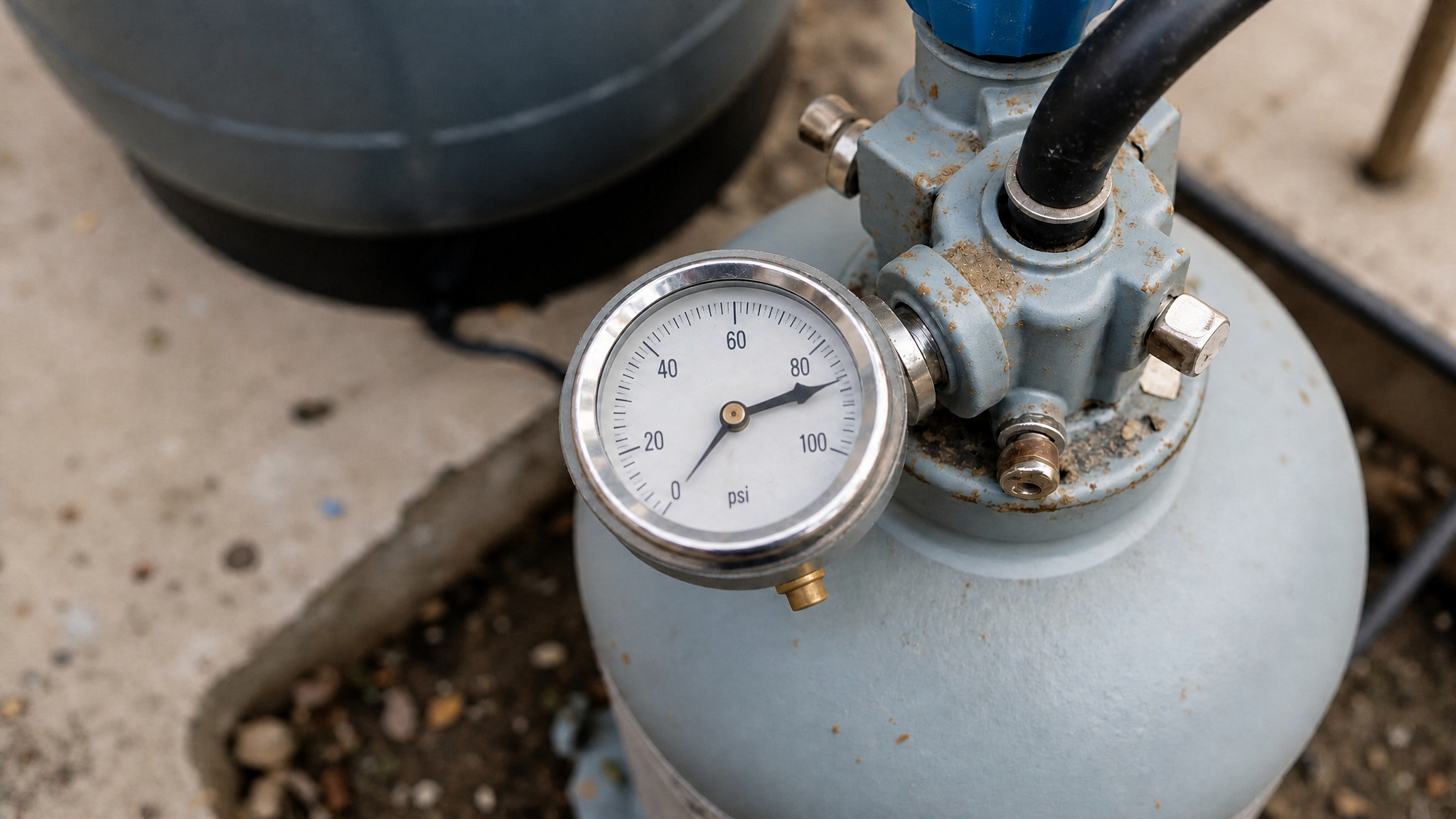
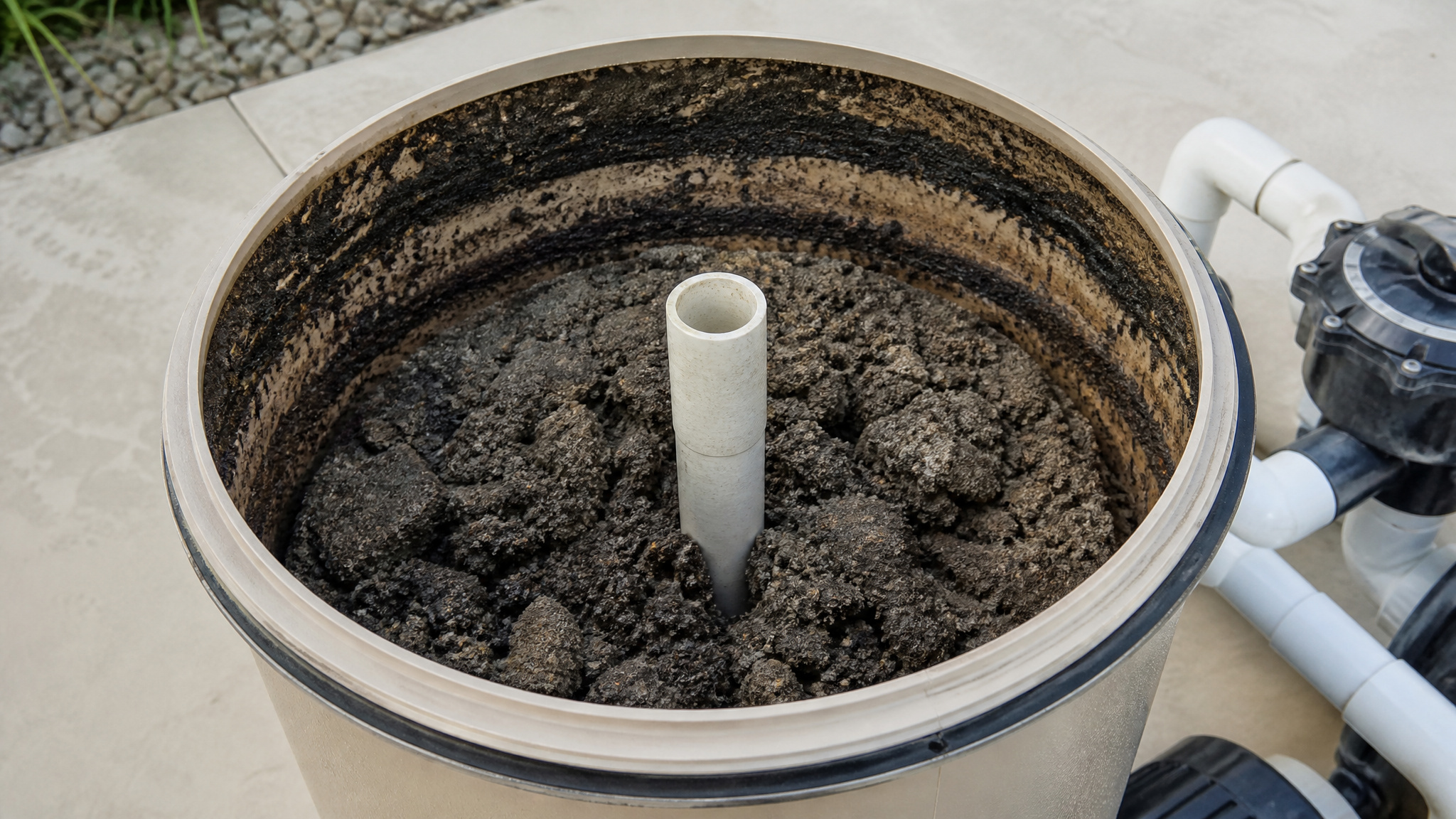
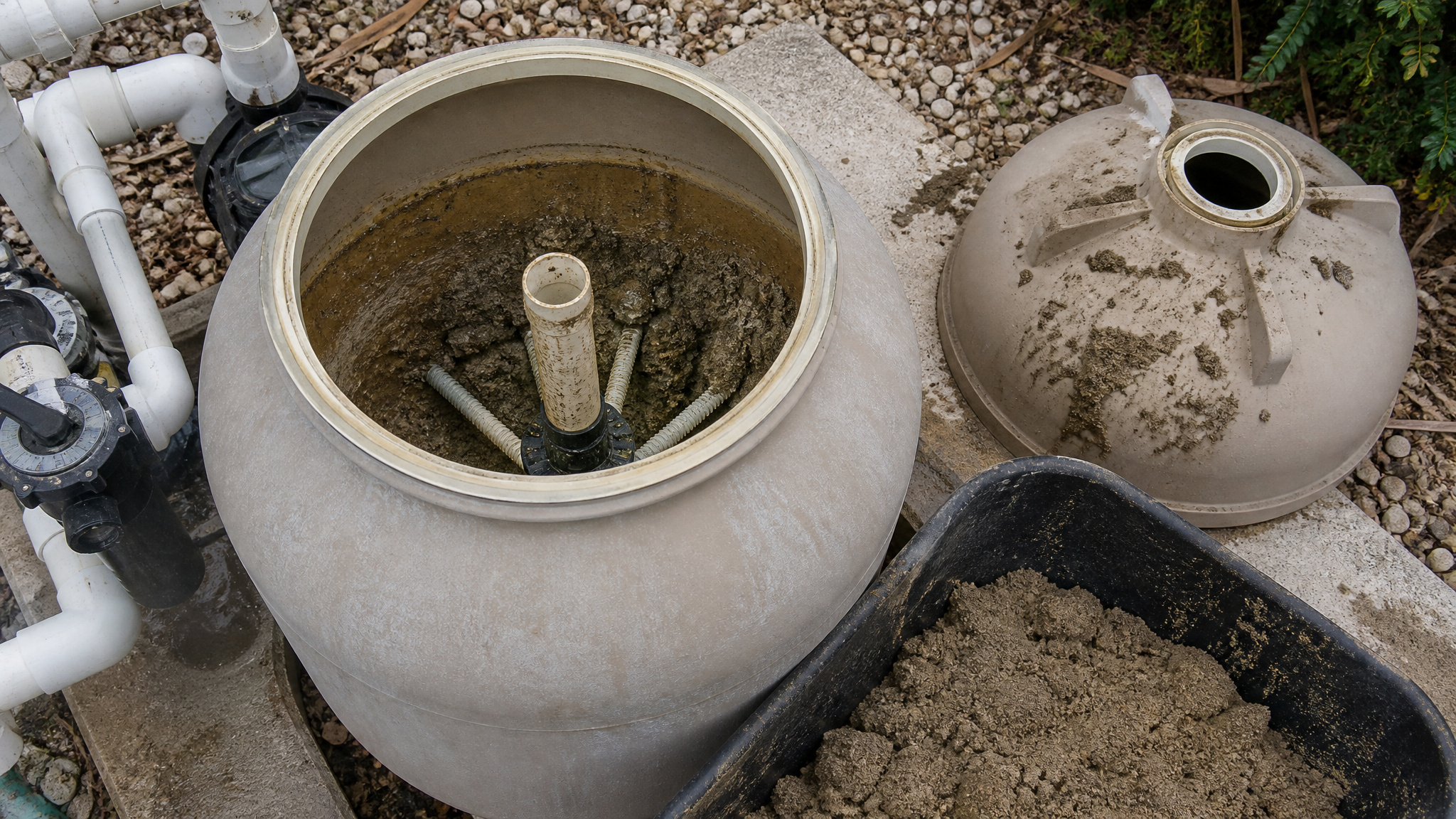
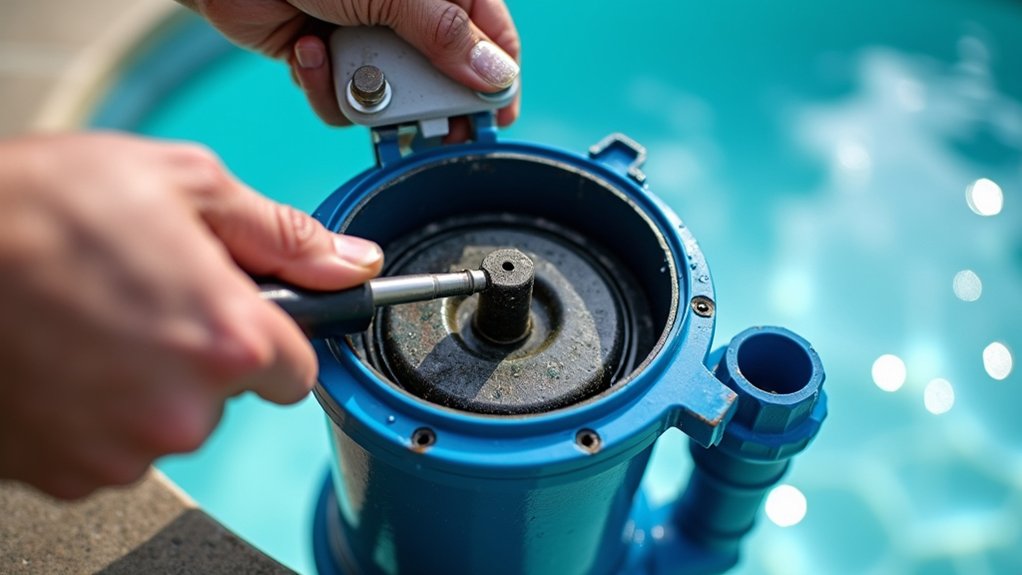
You’ll need to skim debris and check equipment daily, test free chlorine and pH weekly, verify alkalinity and calcium hardness monthly, and inspect your salt cell every 500 operating hours for calcium scale. Seasonal adjustments like extending pump runtime during heat waves and increasing circulation after storms keep your generator efficient year-round. Following a structured maintenance calendar prevents compounding issues, and the complete schedule below breaks down every task by frequency.
What Makes Saltwater Pool Maintenance Different?
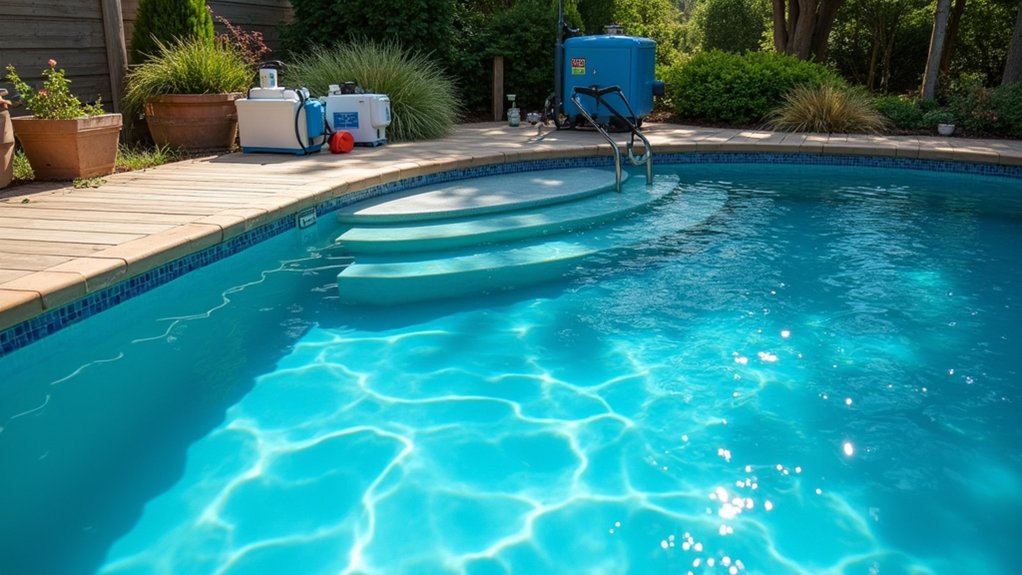
Unlike traditional chlorine pools that rely on tablets or manual dosing, saltwater pools use a salt chlorine generator to convert dissolved salt into chlorine automatically. This means your sanitizer production depends on salt concentration, pump runtime, and generator output settings rather than frequent chemical additions.
However, saltwater pool care still requires consistent water chemistry management. You’ll need to monitor pH, alkalinity, calcium hardness, stabilizer levels, and free chlorine regularly. The salt cell itself demands inspection every three months for scale buildup that can reduce chlorine production. Maintaining CYA levels between 50-80 ppm is especially important in saltwater pools, as it protects chlorine from UV degradation and extends the lifespan of your salt cell.
Your circulation system also plays a larger role you should run your pump at least eight hours daily to distribute generated chlorine effectively. Additionally, check metal components routinely for corrosion caused by salt exposure.
Daily Saltwater Pool Tasks That Take Five Minutes
Even though saltwater pools automate chlorine production, they still need a brief daily walkthrough to catch problems early and maintain water quality. Effective saltwater pool maintenance starts with skimming leaves, insects, and floating debris from the surface using a net. Focus on areas near trees, skimmers, and corners where buildup occurs fastest.
Next, verify your water level sits halfway to three-quarters up the skimmer opening. A low level can damage your pump and reduce circulation efficiency. Then glance at your equipment check for leaks, unusual noise, and debris-clogged baskets. Confirm your pump timer runs eight to ten hours daily to distribute chlorine evenly and prevent stagnation. Combine these steps into one consistent pass around your pool, keeping the entire routine under five minutes. This daily attention also helps you spot early signs of algae, which can be prevented by maintaining proper chlorine levels through your salt chlorine generator.
Weekly Chemistry Checks and Cleaning Routine
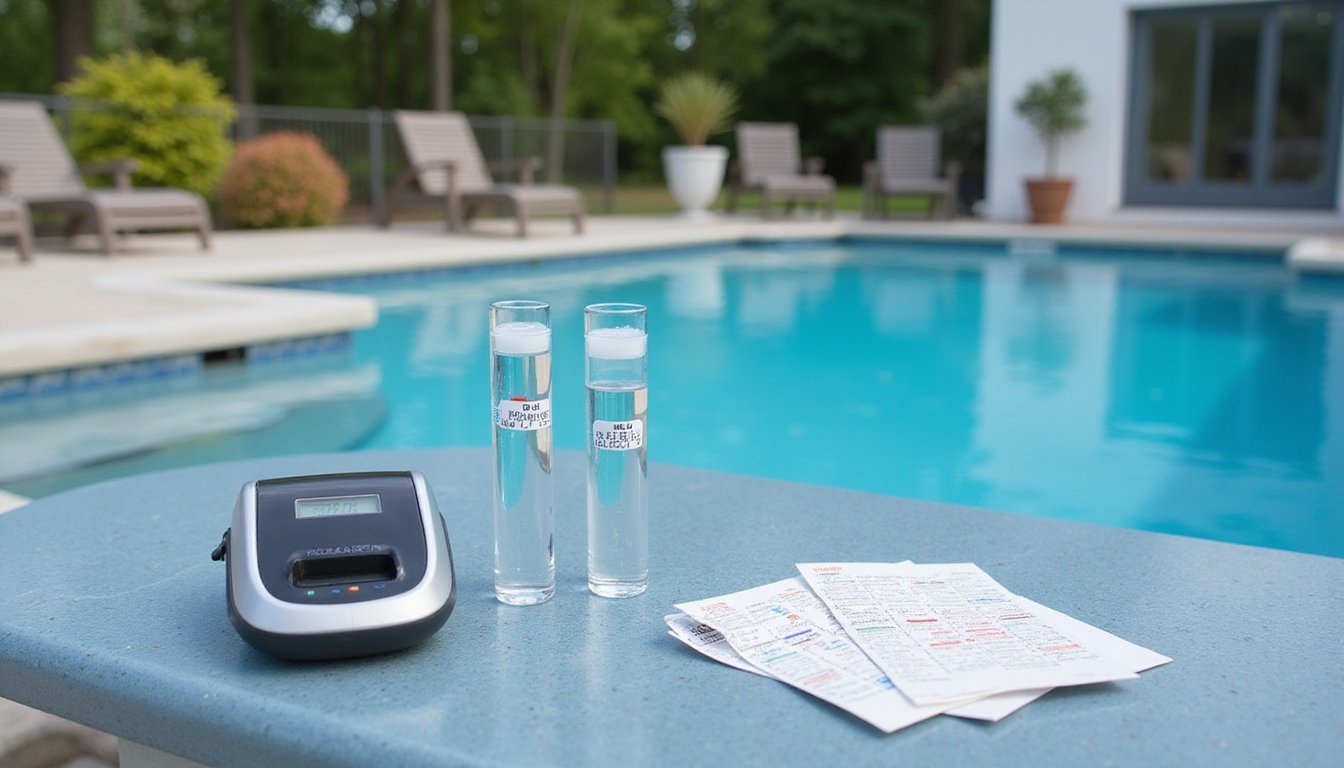
Each week, you’ll test free chlorine (1 3 ppm) and pH (7.2 7.6), adjusting as needed to maintain sanitizer effectiveness and prevent scaling. After testing, brush the walls and floor, then vacuum settled debris to reduce organic load and chlorine demand. If combined chlorine readings exceed 0.5 ppm, apply a shock treatment to restore water clarity and sanitation performance.
Test pH and Chlorine
Two key measurements free chlorine and pH form the core of your weekly saltwater pool chemistry check. Target free chlorine at 1 3 ppm and pH at 7.2 7.6 for ideal sanitation and equipment protection. When you test pH and chlorine, draw your sample 12 18 inches below the surface after running the pump for at least one hour to guarantee accurate, representative readings.
Increase testing to two or three times weekly during heavy use, high temperatures, or after storms. Effective pool chemistry management depends on consistent data store test kits dry, at room temperature, and replace expired reagents promptly. Stable pH directly supports chlorine efficiency, so always address pH drift before adjusting other parameters. This disciplined approach prevents scaling, corrosion, and sanitizer loss.
Brush, Vacuum, Shock
Brush walls, vacuum the floor, and shock your saltwater pool weekly to prevent algae, reduce organic buildup, and keep sanitizer demand manageable. Focus your brush on the waterline, steps, corners, ladders, and behind fittings where circulation is weakest and residue collects fastest. Brush before you vacuum so loosened debris settles to the floor for removal.
Manual vacuuming gives you more control in problem areas, though automatic cleaners can supplement between sessions. Empty skimmer baskets before vacuuming to maintain peak suction.
Shock your pool weekly using your generator’s boost mode or a compatible oxidizer to restore free chlorine levels after heavy use or storms. This oxidation step breaks down chloramines and organic contaminants that routine chlorination can’t eliminate, keeping water clear and sanitation consistent.
Monthly Water Balance Tests You Can’t Skip
Beyond your weekly checks, you’ll need to test total alkalinity (80 120 ppm) and calcium hardness (200 400 ppm) at least monthly to prevent scaling on your salt cell and protect pool surfaces from corrosion. Monthly salt concentration testing targeting 2,700 3,400 ppm confirms your generator’s sensors are reading accurately, even when the system isn’t throwing alerts. You should also verify cyanuric acid levels sit near 30 50 ppm each month, since low stabilizer accelerates chlorine burn-off and high levels reduce sanitizer effectiveness.
Alkalinity and Calcium Levels
Alkalinity and calcium hardness are two measurements you can’t afford to skip on your monthly testing schedule. Target 80 150 ppm for alkalinity and 200 400 ppm for calcium hardness. A calcium-to-alkalinity ratio near 4:1 is ideal, with 3:1 as the minimum. Proper salt chlorinator maintenance depends on keeping both values balanced to prevent scaling on the cell.
Key guidelines for managing these levels:
- Test both values monthly and retest after heavy rain, heavy use, or fresh water additions
- Use baking soda to raise low alkalinity below 80 ppm
- Add calcium chloride when hardness drops below 200 ppm
- Watch for scale deposits when both readings run high simultaneously
- Monitor for corrosive water when both values trend low together
Monthly Salinity and CYA
Two monthly tests keep your salt chlorinator running at peak efficiency: salinity and cyanuric acid (CYA). Check salinity once per month, targeting 2,700 3,400 ppm with an ideal point around 3,200 ppm. Re-test immediately after heavy rain, backwashing, or significant freshwater additions, since dilution shifts pool water balance and reduces chlorine generation. Use a liquid reagent kit rather than standard test strips, which often can’t measure salinity.
Test CYA monthly as well, aiming for 50 80 ppm. CYA acts as a stabilizer, slowing UV breakdown of the chlorine your salt cell produces. Collect samples from the pool’s center, roughly 18 inches deep, away from skimmers and return jets. Cross-reference results with your salt system manufacturer’s recommended operating ranges for accurate calibration.
How to Inspect and Clean Your Salt Cell Quarterly
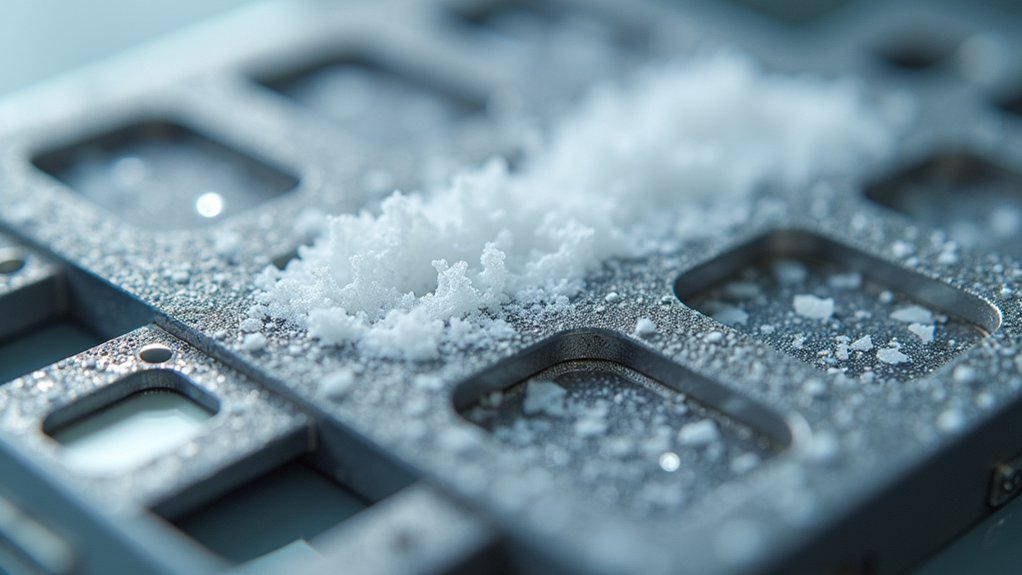
Every 500 operating hours or roughly once per quarter you should inspect your salt cell for calcium scale, debris, and system alerts. Look for white, flaky deposits on the plates and check your control board for error codes.
For salt cell cleaning, follow this procedure:
- Turn off the pump, disconnect the power, and remove the cell from its unions
- Rinse plates with a garden hose to clear loose debris
- If scale remains, soak in a 4:1 water-to-acid solution for 2 15 minutes depending on buildup severity
- Rinse thoroughly and confirm plates are clean before reinstalling
- Reset the “inspect cell” indicator on your control board
Always wear goggles, gloves, and closed-toe shoes when handling acid. If scale returns quickly, recheck your pH and calcium hardness levels.
Seasonal Saltwater Pool Care for Heat, Storms, and Pollen
Because heat, storms, and pollen each stress your saltwater pool in different ways, you’ll need to adjust your maintenance routine as conditions change throughout the season.
During heat waves, test water weekly and keep pH between 7.2 and 7.4 for ideal chlorine effectiveness. Run circulation 8 12 hours daily and apply preventative algaecide. Brush walls, steps, and corners to disrupt algae in low-flow zones.
When temperatures spike, tighter pH control and daily circulation are your best defense against algae.
After storms, increase circulation, clean skimmer and pump baskets promptly, and retest chemistry to account for dilution and debris load.
During pollen season, skim surfaces daily, backwash sand filters every 3 5 days, and increase pump run time by 2 3 hours. Maintain chlorine at 3 4 ppm and use fine-mesh skimmer socks. Consistent pool salt system maintenance across these conditions prevents compounding water quality problems.
Annual Deep Maintenance for Filters, Surfaces, and Equipment
Beyond seasonal adjustments, your saltwater pool needs a full annual deep maintenance cycle to restore filter performance, clean surfaces, and inspect equipment before minor issues become costly repairs.
Your annual service should include:
- Filter breakdown and deep cleaning replace cartridge media every 18 24 months, sand every five years, and inspect DE grids for wear
- Chlorine generator cleaning remove calcium scale from cell plates to restore consistent sanitizer output
- Surface restoration scrub walls, steps, corners, and tile lines to eliminate scaling, staining, and salt residue
- Equipment and plumbing inspection check pumps, heaters, and connections for leaks, corrosion, or unusual noise
- Skimmer and pump basket evaluation confirm baskets are intact and draining properly
This structured approach prevents premature equipment failure and maintains reliable water quality year-round.
Your Complete Saltwater Pool Maintenance Calendar
Although daily habits and seasonal adjustments each play a role, organizing them into a single maintenance calendar helps you stay ahead of chemical drift, equipment wear, and water clarity problems before they compound.
A single maintenance calendar keeps chemical drift, equipment wear, and clarity issues from compounding into costly problems.
Daily: Skim surfaces, empty skimmer and pump baskets, and run circulation at least 8 hours.
Weekly: Test pH (7.2 7.8) and free chlorine (1.0 3.0 ppm), vacuum the pool, and hose down the deck area.
Monthly: Check salinity (2,700 3,400 ppm), calcium hardness (200 400 ppm), and cyanuric acid (30 100 ppm).
Quarterly: Inspect and clean the salt cell for scale buildup.
Biannually: Schedule professional equipment inspections.
Annually: Replace worn components and deep-clean filters.
This structured saltwater pool maintenance calendar consolidates every task into predictable intervals, reducing missed steps and preventing compounding issues.
Shop Pool Chemicals & Water Care Supplies
If you need reliable pool chemicals for opening season, water balance, or routine maintenance, Prime Pool Market has the products your pool needs. We carry a full range of Pool & Spa Chemicals at discount pricing, sourced from trusted brands and shipped fast. Browse our full catalog or contact us for expert product recommendations today.
Frequently Asked Questions
Can You Convert a Traditional Chlorine Pool to a Saltwater System Yourself?
Yes, you can convert your chlorine pool to saltwater by installing a salt chlorine generator yourself. You’ll mount a control box, plumb in the salt cell, and add salt to reach roughly 3,500 ppm. Size the system to your pool’s volume and verify electrical compatibility some units require 240V service. If the project involves electrical work or plumbing modifications beyond basic PVC cuts, hire an experienced pool professional.
How Much Does a Saltwater Pool Cost Compared to Chlorine Annually?
You’ll typically spend $100 to $400 per year on salt and chemicals for a saltwater pool, while a traditional chlorine pool runs $175 to $750 annually for tablets and chemical supplies. Saltwater systems generate chlorine on-site, eliminating recurring purchases. However, you’ll need to budget $200 to $800 every five to seven years for salt cell replacement a cost chlorine pools avoid but offset through higher annual chemical expenses.
Is Saltwater Pool Water Safe for Dogs and Other Pets?
Saltwater pool water is generally safe for dogs in small amounts when you maintain proper chemistry. However, excessive ingestion can cause dehydration, vomiting, or salt poisoning. You’ll need to supervise pets closely, limit swim time, and provide fresh drinking water poolside. Rinse your dog with fresh water after each swim to remove residual salt. Keep pets away during chemical treatments, and maintain balanced water chemistry to guarantee safe exposure.
Do Saltwater Pools Damage Nearby Landscaping, Concrete, or Metal Fencing Over Time?
Yes, saltwater pools can affect surrounding materials over time. Salt residue stains porous concrete and stone, while splash-out accelerates corrosion on aluminum fencing and metal fixtures. You’ll minimize damage by rinsing hardscape and metal surfaces regularly, sealing porous materials, using salt-resistant coatings, and maintaining proper water chemistry. Choose corrosion-resistant materials like fiberglass near the pool, guarantee proper bonding for metal components, and manage drainage to prevent salt accumulation in landscape zones.
How Long Does a Saltwater Pool Take to Heat Up?
You’ll typically need 8 48 hours to heat a saltwater pool by 10 20°F, depending on your heater type. Gas heaters work fastest at 1 2.5°F per hour, while heat pumps average 0.5 1.5°F per hour. Solar heaters require several days. To reduce heating time, you should use a properly sized heater, run it during peak daytime temperatures, cover the pool to limit evaporation, and maintain strong water circulation throughout the system.