
Both systems use chlorine to sanitize your water saltwater pools just generate it automatically through electrolysis, while chlorine pools require manual dosing. You’ll enjoy softer-feeling water and fewer chloramines with a saltwater setup, but you’ll also face higher upfront costs and salt cell replacements every 3 7 years ($800 $2,100). Chlorine pools cost less initially yet demand more hands-on chemical management. The right choice depends on your budget, maintenance preferences, and equipment considerations we’ll break down below.
How Saltwater and Chlorine Pools Actually Work
In any pool sanitation comparison, the chemistry is identical at the endpoint. Both systems rely on chlorine to disinfect. Saltwater systems generate it automatically; conventional pools require manual dosing. The salt cell’s continuous output also reduces chloramine buildup, lowering eye irritation and that strong chlorine smell. For optimal performance, pools should maintain salt levels between 3000-4000ppm to ensure effective chlorine generation.
Saltwater vs Chlorine Pool: Water Feel and Comfort
How different does the water actually feel between these two systems? In the saltwater vs chlorine pool comparison, the most immediate difference is water texture. Saltwater systems produce a softer, spa-like feel through steady chlorine generation, while chlorine pools can feel harsher during dosing spikes. The softness comes from electrolysis-based chlorine generation, which also adds trace minerals to the water.
Three key comfort distinctions affect your pool water quality:
- Skin comfort Saltwater pools cause less dryness and irritation, benefiting swimmers with sensitive or eczema-prone skin.
- Eye irritation Stable chlorination reduces stinging and redness compared to traditional dosing patterns.
- Chemical odor Lower chloramine buildup means less noticeable smell around saltwater pools.
Your skin comfort improves most when chemistry stays balanced. Saltwater systems automate that consistency; chlorine pools require manual precision.
Saltwater vs Chlorine Pool Maintenance Compared
When you’re comparing saltwater and chlorine pools, maintenance differences come down to daily chemical handling, routine testing requirements, and long-term upkeep costs. Saltwater systems generate chlorine automatically through a salt chlorine generator, eliminating manual dosing, while chlorine pools require you to add liquid chlorine, tablets, or granules on a regular schedule. Both systems demand consistent water testing, but their cost structures and equipment obligations differ considerably over time. Salt chlorinators typically last about five years and require periodic cleaning, adding another layer of long-term maintenance planning for saltwater pool owners.
Daily Chemical Handling
Saltwater and chlorine pools differ most noticeably in how you handle daily sanitizer management. A salt chlorinator automates chlorine production, eliminating repeated manual dosing. With automatic chlorination, you’ll reduce hands-on chemical tasks that traditional pools demand weekly. Chlorine pools require you to measure, mix, and add sanitizer on a fixed schedule to prevent algae and maintain safe levels.
For efficient inground pool maintenance, consider these key distinctions:
- Saltwater systems generate chlorine continuously, maintaining steadier sanitizer levels without direct chemical handling.
- Chlorine pools require manual replenishment as sanitizer dissipates, increasing your weekly workload.
- Both systems still need pH and alkalinity corrections, but saltwater pools reduce the frequency of shock treatments and corrective dosing.
Routine Testing Requirements
Both saltwater and chlorine pools demand consistent water testing, though the specific parameters differ slightly between systems. You’ll test free chlorine, pH, total alkalinity, calcium hardness, and cyanuric acid in both pool chlorination systems. Saltwater setups add salinity monitoring typically targeting 2,700 3,400 ppm making it one extra routine check compared to standard residential pool systems.
Test pH and free chlorine at least weekly in either system. Check salt levels monthly, and retest after heavy rain or significant water replacement. For backyard pool systems experiencing heavy use or weather shifts, increase testing frequency since chlorine demand can outpace generator output. Use standard test kits for chlorine and water balance, then verify salinity with digital meters or test strips. Cross-check with a second method when readings seem inconsistent.
Long-Term Upkeep Costs
Beyond routine testing, the real financial picture of pool ownership comes down to long-term upkeep costs where saltwater and chlorine systems diverge sharply once you factor in equipment replacement cycles.
- Salt cell replacement runs $800 $2,100 every 3 7 years, with coastal environments shortening lifespan to 3 4 years. Chlorine pools avoid this cost entirely.
- Annual chemical spending favors saltwater at $70 $100 versus $300 $800 for chlorine, but generator electricity adds roughly $36 $48 per year for a 20,000-gallon pool.
- Cumulative 10-year costs (chemistry plus cell replacement) reach $11,800 $17,200 for saltwater versus $7,200 $10,800 for chlorine, according to one 2026 comparison.
You’ll find saltwater reduces day-to-day chemical purchases, but periodic equipment replacement narrows and often reverses the expected savings over time.
Saltwater vs Chlorine Pool Cost: Upfront and Long-Term
When comparing saltwater and chlorine pools, upfront installation costs show a clear difference. Inground chlorine pools run $25,000 to $100,000, while saltwater installations range from $29,000 to $100,000. The salt chlorine generator adds $1,000 to $2,500 to your initial investment.
Long-term costs shift the equation. You’ll spend $300 to $800 annually on chemicals for a chlorine pool versus $70 to $100 for a saltwater system. Factor in salt cell replacements every five to seven years at $200 to $800. Converting an existing pool to saltwater costs $2,000 to $3,000 for materials. If you’re planning to own your pool for several years, saltwater’s lower recurring chemical costs typically offset the higher upfront expense, making it the more cost-effective option long-term.
Equipment and Energy Needs for Each Pool Type
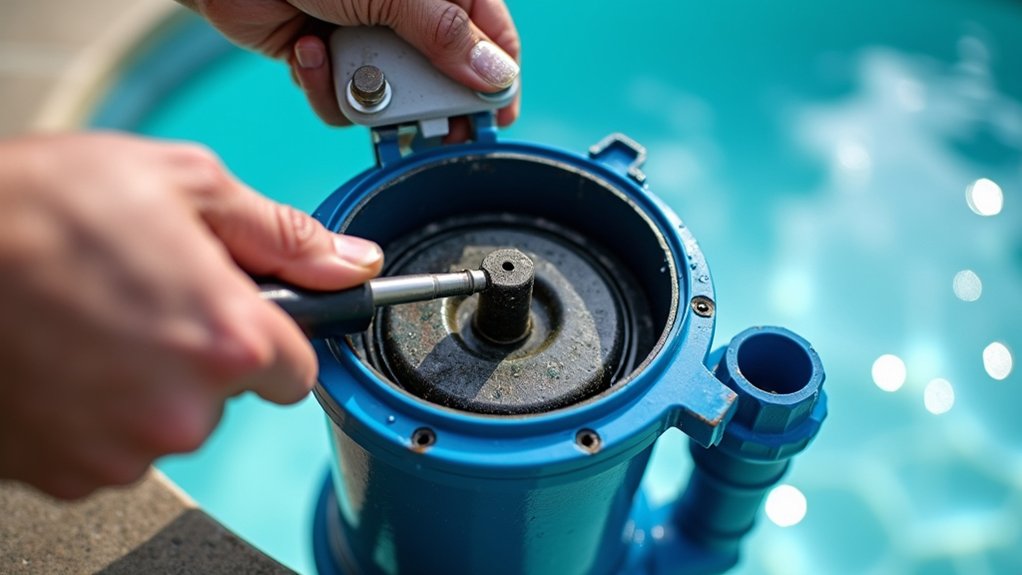
Each pool type requires a pump, filtration system, and water-testing kit, but saltwater pools add a critical component: the salt chlorine generator. This unit uses electrolysis to convert dissolved salt into chlorine, requiring low-voltage electrical power and sufficient water flow to operate effectively.
The salt chlorine generator transforms ordinary pool salt into sanitizing chlorine through simple electrolysis no manual dosing required.
Key equipment and energy considerations include:
- Pump runtime: Salt systems typically need 6 8 hours of daily pump operation to maintain even salinity and consistent chlorine output.
- Generator lifespan: Salt cells last 3 5 years and require periodic cleaning to remove calcium buildup that reduces efficiency.
- Temperature dependency: Generators produce chlorine only when water temperature exceeds 60°F, affecting seasonal energy planning.
Traditional chlorine pools avoid generator-related costs but still require manual dosing equipment and chemical storage infrastructure.
Will Salt Damage Your Pool Equipment?
Salt doesn’t automatically damage your pool equipment, but it creates a more corrosive environment that accelerates wear on metal components like heaters, ladders, and light fixtures when water chemistry drifts out of balance. Scale buildup inside heat exchangers and on plaster surfaces is another common issue tied to the chronic high-pH conditions saltwater systems can produce. You can minimize these risks by maintaining proper water balance, rinsing exposed hardware with fresh water, applying anti-corrosion treatments, and scheduling routine inspections to catch early signs of deterioration.
Salt’s Corrosive Effects
Although saltwater pools don’t inherently destroy equipment, the corrosive potential of salt-laden moisture is a real maintenance concern you shouldn’t ignore. Salt deposits form where water evaporates on exposed metal, accelerating rust even on lower-grade stainless steel.
Key corrosion risk factors include:
- Acidic water chemistry Low pH greatly accelerates metal degradation across heaters, fittings, and salt cells.
- Dissimilar metal contact Galvanic corrosion intensifies when different metals connect in plumbing or hardware without proper bonding and grounding.
- Porous surface exposure Salt etches cement-based materials, limestone coping, and travertine over time.
You’ll reduce damage by specifying marine-grade 316 stainless steel for ladders and rails, installing cupro-nickel or titanium heat exchangers, and rinsing exposed metal components with fresh water regularly.
Protecting Pool Components
Three core components your heater, salt cell, and metal fixtures face the highest risk of salt-related damage, but none of them fail because of salt alone. High pH conditions drive scale buildup inside heater internals, reducing efficiency and accelerating wear. You’ll avert this by maintaining balanced alkalinity and pH levels consistently.
Clean your salt cell every 90 days to remove calcium deposits. Keep salt levels within the upper range of your manufacturer’s specifications dropping below 2,000 ppm can damage the cell’s platinum-group metal anode.
For metal fixtures, guarantee proper bonding and grounding to prevent galvanic corrosion. Use salt-resistant materials and protective coatings on vulnerable surfaces. Rinse deck-area equipment and ladders with fresh water regularly. Water chemistry control, not salt elimination, is your primary defense against equipment degradation.
Saltwater vs Chlorine Pool: Which Fits Your Lifestyle?
Choosing between a saltwater and chlorine pool comes down to how you want to spend your time and money. Saltwater systems automate chlorine generation via electrolysis, reducing manual dosing and chemical purchases. Chlorine pools offer lower upfront costs and direct chemistry control through manual input.
Match your selection to these three decision factors:
- Maintenance tolerance: Saltwater suits hands-off owners; chlorine fits those comfortable with frequent testing and dosing.
- Budget structure: Chlorine pools cost less initially, while saltwater systems can reduce recurring chemical expenses over time.
- Swimmer comfort priority: Saltwater delivers steadier chlorine output at lower concentrations, producing softer-feeling water with less irritation.
Both systems require ongoing pH and stabilizer management. Your ideal setup depends on whether you prioritize automation or affordability.
Common Myths About Saltwater and Chlorine Pools
How much of what you’ve heard about saltwater and chlorine pools is actually accurate? Saltwater pools aren’t chlorine-free they generate chlorine through electrolysis via a salt-chlorine generator. You’re swimming in chlorine either way.
Don’t expect ocean-like water either. Saltwater pools operate at considerably lower salinity than seawater, designed strictly for sanitation, not marine recreation. The water feels milder, but it’s still a treated system.
Maintenance doesn’t disappear with salt systems. You’ll still test weekly for pH, alkalinity, and hardness. Salt cells need cleaning and replacement sometimes within three years.
Cost savings aren’t guaranteed. Higher upfront equipment costs and recurring cell replacements can offset reduced chemical expenses.
Finally, salt corrodes metals, decking, and equipment over time. You’ll need salt-compatible materials to prevent accelerated wear.
Saltwater vs Chlorine Pool at a Glance
Five key factors separate saltwater and chlorine pools: maintenance demands, water feel, cost structure, sanitation method, and owner lifestyle fit. Here’s a quick comparison to guide your decision:
- Maintenance: Saltwater pools automate chlorine generation via electrolysis, reducing manual dosing. Chlorine pools require direct, frequent chemical additions and more regular water balancing.
- Cost structure: Saltwater systems carry higher upfront equipment costs but lower annual chemical expenses. Chlorine pools cost less initially but accumulate higher ongoing chemical and labor costs.
- Water comfort: Saltwater pools produce softer-feeling water with less skin and eye irritation. Chlorine pools can feel harsher due to direct chlorine application at higher concentration levels.
Both systems use chlorine as the active sanitizer. Your budget, maintenance tolerance, and comfort priorities determine the better fit.
Shop Saltwater Chlorination Systems
If you are switching to a saltwater pool or maintaining an existing system, Prime Pool Market has the equipment your setup needs. We carry top-rated Saltwater Chlorination systems and replacement salt cells at discount pricing from real pool guys. Browse our full catalog or contact us to find the right salt system for your pool today.
Frequently Asked Questions
Can You Convert an Existing Chlorine Pool to a Saltwater System?
Yes, you can convert your existing chlorine pool to a saltwater system without draining it. You’ll install a salt-chlorine generator on your return line, typically after the heater. Size the unit at 1.5 to 2 times your pool’s volume for peak performance. Before adding salt, you’ll need to balance pH, alkalinity, and calcium hardness, then dissolve enough salt to reach 2,500 3,500 ppm. Expect conversion costs between $1,700 and $2,500.
Are Saltwater Pools Safe for Pets That Drink Pool Water?
Occasional small sips from a well-maintained saltwater pool generally won’t harm your pet, but you shouldn’t allow regular or heavy drinking. Excess salt intake can trigger saltwater toxicosis, causing diarrhea, vomiting, dehydration, and electrolyte imbalance. Dogs with kidney disease, heart conditions, or salt-restricted diets face higher risk. You’ll want to place a fresh water bowl poolside, supervise access, and contact your vet immediately if you notice lethargy or unusual behavior.
Do Saltwater Pools Affect Nearby Plants, Grass, or Landscaping?
Yes, saltwater pools can affect nearby landscaping. Repeated splash and runoff increase soil salinity, which draws moisture from grass roots and causes dehydration, discoloration, and stunted growth. You’ll notice sensitive plants, shrubs, and vegetables are especially vulnerable salt stress reduces their ability to absorb water and nutrients. To protect your landscaping, you should direct drainage away from planting beds, flush affected soil with clean water immediately, and monitor salinity levels regularly.
How Long Does a Salt Chlorine Generator Cell Typically Last?
A salt chlorine generator cell typically lasts 3 to 7 years, depending on your maintenance habits and water chemistry. You’ll extend its lifespan by keeping salt levels between 2,700 3,900 ppm, maintaining balanced calcium hardness and pH, and cleaning the cell only when scale builds up. Oversizing your system reduces cell workload, adding years to its service life. When output drops, expect replacement costs between $700 and $1,100.
Can Saltwater Pools Be Used in Freezing Winter Climates?
You can use a saltwater pool in freezing climates, but you’ll need to winterize it seasonally. Salt cells don’t operate below 50°F, so you should shut down the system when nighttime lows drop below that threshold. Before the first hard freeze, balance your water to pH 7.2 7.8, shock the pool, lower the water level, and clear plumbing lines to prevent ice damage.