
A well-fitted solar pool cover can raise your water temperature by 10°F to 18°F by transmitting up to 80% of solar energy directly into the water. You’ll see daily gains of 2°F to 8°F on sunny days. Since evaporation accounts for 70% of heat loss, a bubble cover cuts that loss by up to 95%, letting your heater build on retained heat instead of replacing it. Below, you’ll find exactly how to maximize those gains.
How Solar Pool Covers Heat Your Water
Solar pool covers heat your water through two linked mechanisms: capturing solar energy and preventing heat loss. Your pool already absorbs 75% 85% of solar energy striking its surface. A solar pool cover enhances this by letting sunlight pass through while its bubble structure transfers captured warmth directly into the water below.
The larger benefit comes from evaporation reduction. Evaporation accounts for roughly 70% of pool heat loss, and a properly fitted solar pool cover cuts that by approximately 95%. The trapped air pockets also insulate the surface, slowing convective and radiative heat loss overnight. You’ll retain more daytime warmth without active heating. For ideal performance, maintain 95% 100% surface coverage and place the bubble side facing the water. A typical 20,000-gallon pool can lose over 1 million BTUs weekly through evaporation alone, making that reduction especially significant.
Solar Pool Cover Temperature Gains: 10°F to 18°F
Under ideal conditions, a well-fitted solar pool cover can raise your water temperature by 10°F to 18°F though actual gains depend heavily on sunlight intensity, cover type, and pool size. Transparent covers transmit solar energy more efficiently, while full-surface coverage minimizes heat loss. Daily gains of 2°F to 8°F are typical on bright days, meaning you’ll reach a 10°F increase within one to several sunny days.
A solar blanket pool cover performing at the upper range requires sustained sun exposure, unshaded placement, and continuous overnight use to preserve daytime gains. Larger pools heat more slowly, and cloud cover greatly reduces output. The 10°F target is realistic with strong sun and proper fit; 18°F represents peak performance under ideal, not average, conditions. For optimal longevity and performance, clean your solar cover every 3 6 months to prevent buildup that can reduce its heating efficiency.
Evaporation Control: Where the Real Heating Happens
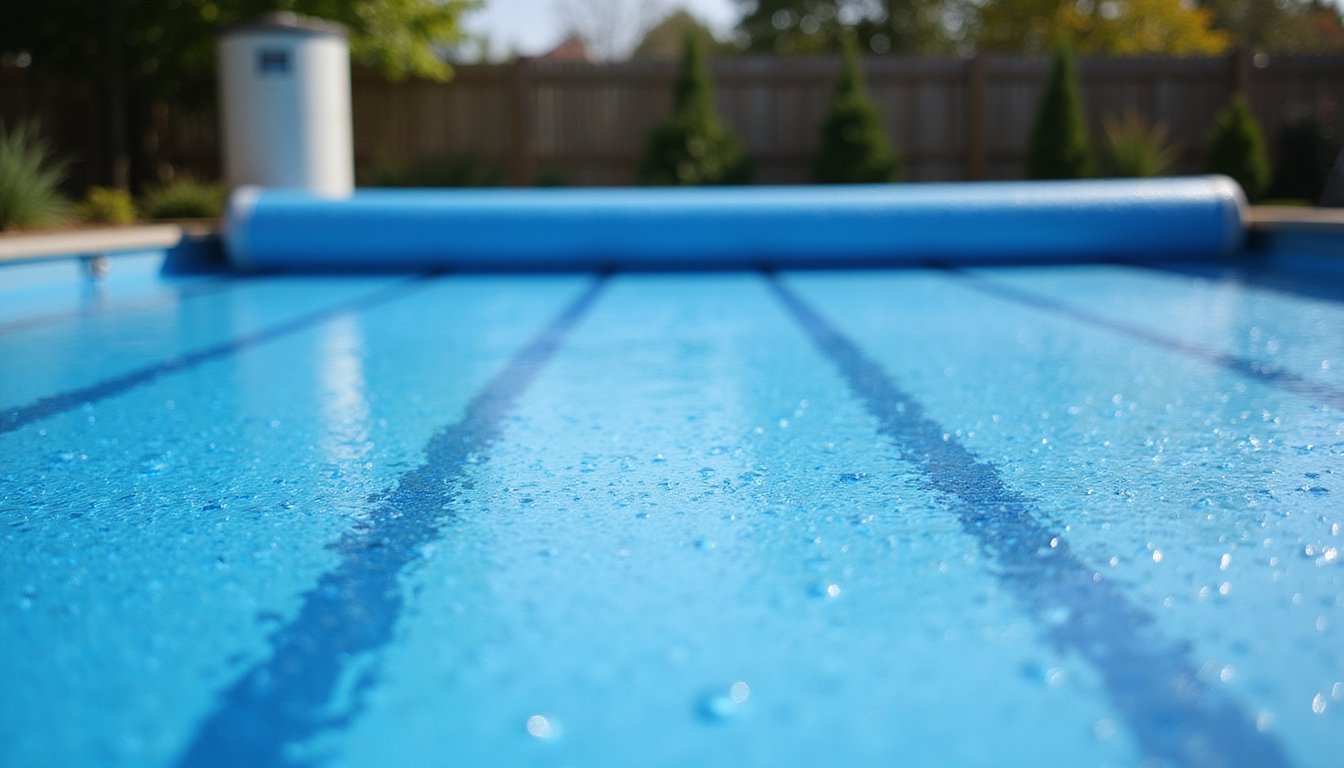
While solar covers do transmit sunlight into your pool, their primary thermal benefit comes from blocking evaporation the single largest heat-loss pathway in uncovered pools. When water evaporates, it carries latent heat energy with it. A physical cover seals the air-water interface, preventing up to 98% of pool evaporation reduction according to GeoBubble data.
| Cover Type | Evaporation Reduction |
|---|---|
| Physical bubble cover | Up to 98% |
| Liquid solar cover | Up to 50% |
This distinction matters for your heating budget. By retaining heat already absorbed, you’re reducing the workload on your heating system rather than generating significant new thermal input. Less evaporation also means lower water replacement costs and reduced chemical loss compounding your efficiency gains.
How Weather and Sunlight Affect Solar Pool Cover Performance
Your solar cover’s heating performance depends directly on how much sunlight reaches the pool surface manufacturers report up to 80% solar energy transmission through the cover material, but cloud cover and shade considerably reduce that input. On sunny days, your pool absorbs 75% 85% of incoming solar energy, making sustained direct sunlight the primary driver of heat gain. When clouds cut solar intensity, the cover still reduces heat loss, but you shouldn’t expect the same temperature increase you’d see under clear skies.
Sunny Versus Cloudy Days
Because solar pool covers depend on light transmission rather than air temperature alone, sunny conditions produce the strongest heating gains up to 8°C (about 14°F) under favorable circumstances. You’ll typically need two to three consecutive sunny days to achieve that peak rise, as cumulative solar exposure drives meaningful temperature increases. Your solar pool blanket transmits sunlight into the water while simultaneously reducing surface heat loss, creating compounding gains throughout each sunny period.
On cloudy days, your cover still functions light penetrates cloud layers, and insulation benefits persist. Light cloud cover permits roughly 70% 80% of normal solar output, while heavy overcast drops transmission to 10% 25%. You’ll see slower, smaller temperature gains, but the cover’s evaporation control and heat-retention properties remain active regardless of sky conditions.
Direct Sunlight Hours Matter
The total hours of direct sunlight hitting your pool surface each day determine how much heat a solar cover can actually add. Solar pool covers rely on transmitted solar energy to warm water, so shorter sun windows yield smaller temperature gains. You’ll typically need 2 3 consecutive sunny days before the full warming effect becomes measurable.
Direct sunlight hours matter because midday high-angle sun delivers considerably more energy than low-angle light at dawn or dusk. Longer summer days increase total heat input proportionally. If your pool receives fewer than several hours of strong, uninterrupted sun, expect reduced performance from your cover. You can maximize efficiency by tracking your site’s peak sun hours and adjusting cover-on/cover-off timing to capture the highest-intensity radiation periods.
Solar Pool Covers vs. Solar Rings vs. Liquid Blankets
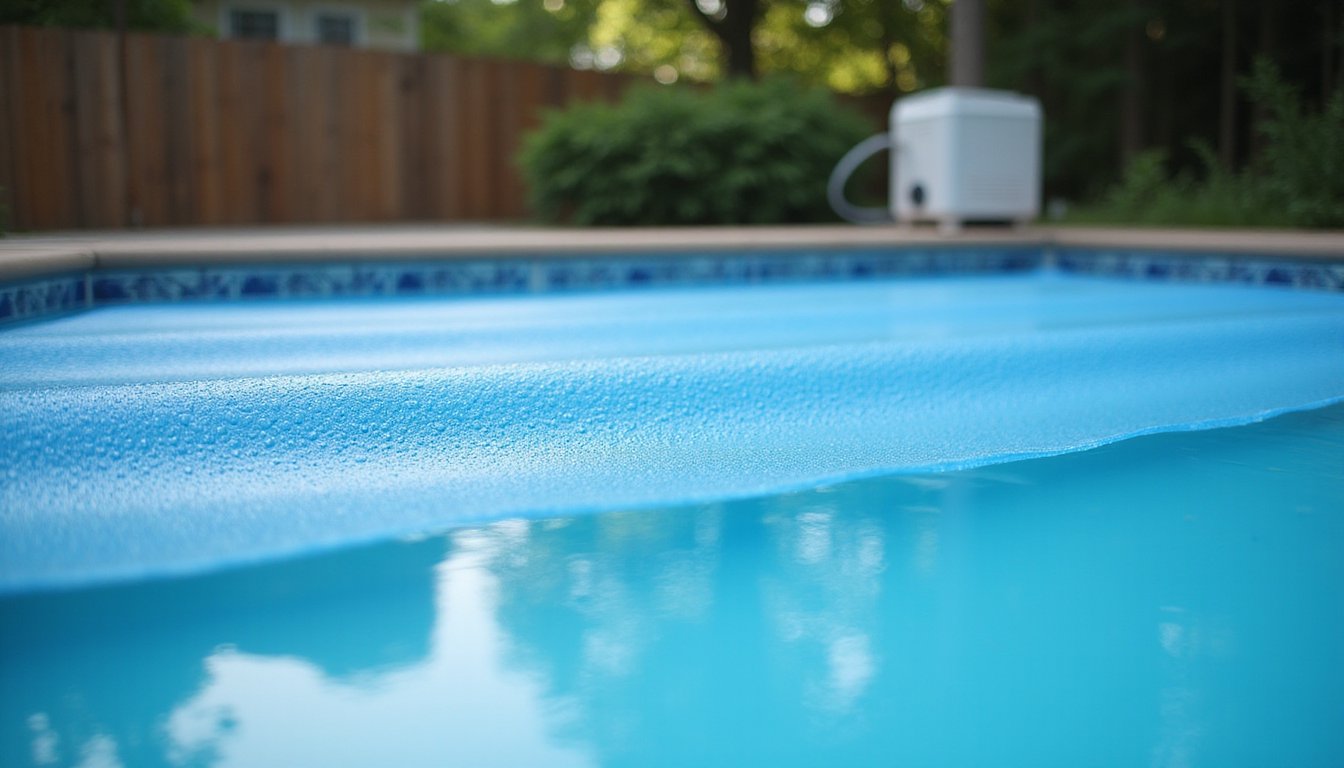
When comparing solar pool covers, solar rings, and liquid blankets, the key differentiator is surface coverage and coverage directly drives both heat retention and evaporation control.
Solar pool covers (full bubble blankets) reduce evaporation and heat loss by up to 95%, making them the highest-performing option. Solar rings cover only a partial surface area, leaving gaps that limit evaporation reduction to roughly 50%. Liquid blankets form a transparent monomolecular film that won’t block solar gain but typically reduces heat loss by 50 70% though some studies place chemical-film effectiveness closer to 20 40%.
If you’re prioritizing maximum heat retention, full-coverage solar pool covers outperform both alternatives. Liquid blankets offer convenience without physical handling, while solar rings split the difference easier to manage than full covers but measurably less effective at retaining heat.
How Much Can a Solar Pool Cover Save on Energy Costs?
| Metric | Without Cover | With Solar Cover |
|---|---|---|
| Heat loss via evaporation | High | Reduced 90% 95% |
| Heating cost savings | Baseline | 50% 70% |
| Chemical use reduction | Baseline | 30% 60% |
You’ll achieve maximum savings by covering your pool consistently when it’s not in use. Pools receiving at least six hours of direct sunlight can gain 10 15°F passively, greatly reducing heater cycling. In many cases, reduced evaporation, chemical, and heating costs allow the cover to pay for itself within the first year.
How to Maximize Your Solar Pool Cover’s Performance
Saving 50% 70% on heating costs requires more than just owning a solar cover you’ve got to use it correctly. Start by ensuring full surface coverage trim the cover to your pool’s exact dimensions, since exposed water drives evaporation and undermines pool heat retention.
Keep the cover on overnight and during all non-use periods. Without it, you’ll lose 6 8°F overnight, forcing your heater to replace heat instead of building on it. Consistent overnight use cuts evaporation by 85% 98%, eliminating the dominant heat loss mechanism.
Match your cover design to your goal: clear covers maximize solar penetration for daytime heating, while thicker covers improve overnight insulation. In windy locations, prioritize consistent coverage wind accelerates evaporative losses. Run your pump during peak sunlight hours to distribute heat evenly.
Shop Premium Pool Covers Today
If you are looking for quality pool covers that protect your investment and keep your water clean year-round, Prime Pool Market has you covered. We offer a complete range of pool supplies and outdoor living products with discount pricing from real pool guys you can trust. Browse our full catalog or contact us to find the right cover for your pool today.
Frequently Asked Questions
How Long Do Solar Pool Covers Typically Last Before Needing Replacement?
Most solar pool covers last 2 4 years under typical conditions, though you can push that to 5 7 years with proper care. UV exposure, high chlorine levels above 2.5 ppm, and direct daily sun are your biggest lifespan killers. You’ll extend durability by storing covers in shade, rinsing them regularly, and keeping them off the pool after shocking. Replace when you notice cracked bubbles, thinning material, or reduced heat retention.
Can You Use a Solar Pool Cover on a Saltwater Pool?
Yes, you can use a solar pool cover on a saltwater pool just confirm the cover’s labeled salt-water compatible or chlorine-resistant. Saltwater pools generate chlorine from salt, so material durability depends on sanitizer resistance. You’ll get the same benefits: up to 15°F heat gain and 95% evaporation reduction. Choose thicker, UV-stabilized polyethylene (20-mil+) to combat accelerated brittleness. Inspect regularly for bubble breakdown and use a reel to minimize wear.
Should the Bubble Side of a Solar Cover Face up or Down?
Place the bubble side down, facing the water. The bubbles act as miniature lenses that focus sunlight into the pool, transferring heat more efficiently than bubble-side-up placement. You’ll warm your water faster some setups gain 10 15°F in roughly 6 hours under direct sun. Bubble-side-up scatters light and reduces heat transfer. It also exposes bubbles to UV damage, shortening your cover’s lifespan. Always unroll with bubbles contacting the water surface.
Do Solar Pool Covers Work Effectively on Irregularly Shaped Pools?
Yes, solar covers work effectively on irregularly shaped pools. You’ll still reduce evaporation the source of roughly 75% of heat loss even with imperfect coverage. Size your cover to the pool’s longest length and widest width, then trim to fit. Even leaving 1 2 feet exposed outperforms no cover at all. You’ll find manual handling easier than reel systems, which don’t accommodate non-rectangular shapes well.
Can a Solar Pool Cover Be Used With an Automatic Pool Cleaner?
Yes, you can use a solar pool cover with an automatic pool cleaner, but you’ll need to remove the cover before running the cleaner. Cleaners require unobstructed access to pool surfaces, and a cover sitting on the water will block movement, cause snagging, or jam the unit. You’ll get the best results by scheduling cleaning cycles first, then replacing the cover to maximize heat retention and maintain that 95% evaporation reduction.