
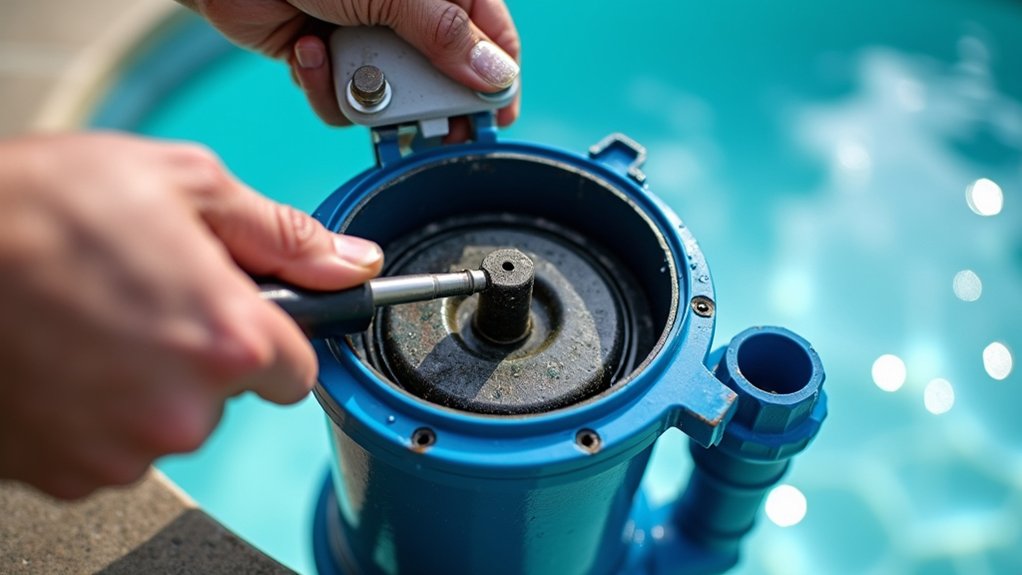
If you’re replacing silica sand, you’ve got three strong options. Filter glass captures particles down to 5 to 9 microns, resists channeling, and lasts 8 to 10 years for about $256, $320. ZeoSand filters at 10 to 12 microns and tackles ammonia and odors in high-bather-load pools. FilterBalls are lighter but pricier long-term. Always confirm media compatibility with your filter’s manufacturer before switching. Below, you’ll find exactly which alternative fits your pool best.
Key Takeaways
- Filter Glass captures particles at 5 to 9 microns, resists channeling and oil saturation, and lasts 8 to 10 years at roughly $256, $320 over a decade.
- ZeoSand (zeolite) filters 10 to 12 microns while removing ammonia and reducing chloramine odors, making it ideal for high-bather-load pools.
- FilterBalls capture down to 5 microns and are ultra-light, 3 lbs replaces 50 lbs of sand, but cost far more at $1,500, $3,000 over 10 years.
- Diatomaceous earth (DE) delivers the clearest water at 1 to 6 microns but requires more effort, expense, and mask-protected handling.
- Always confirm manufacturer compatibility and correct media volume before switching, since installation steps and sizing vary by filter product.
Why Pool Owners Ditch Silica Sand
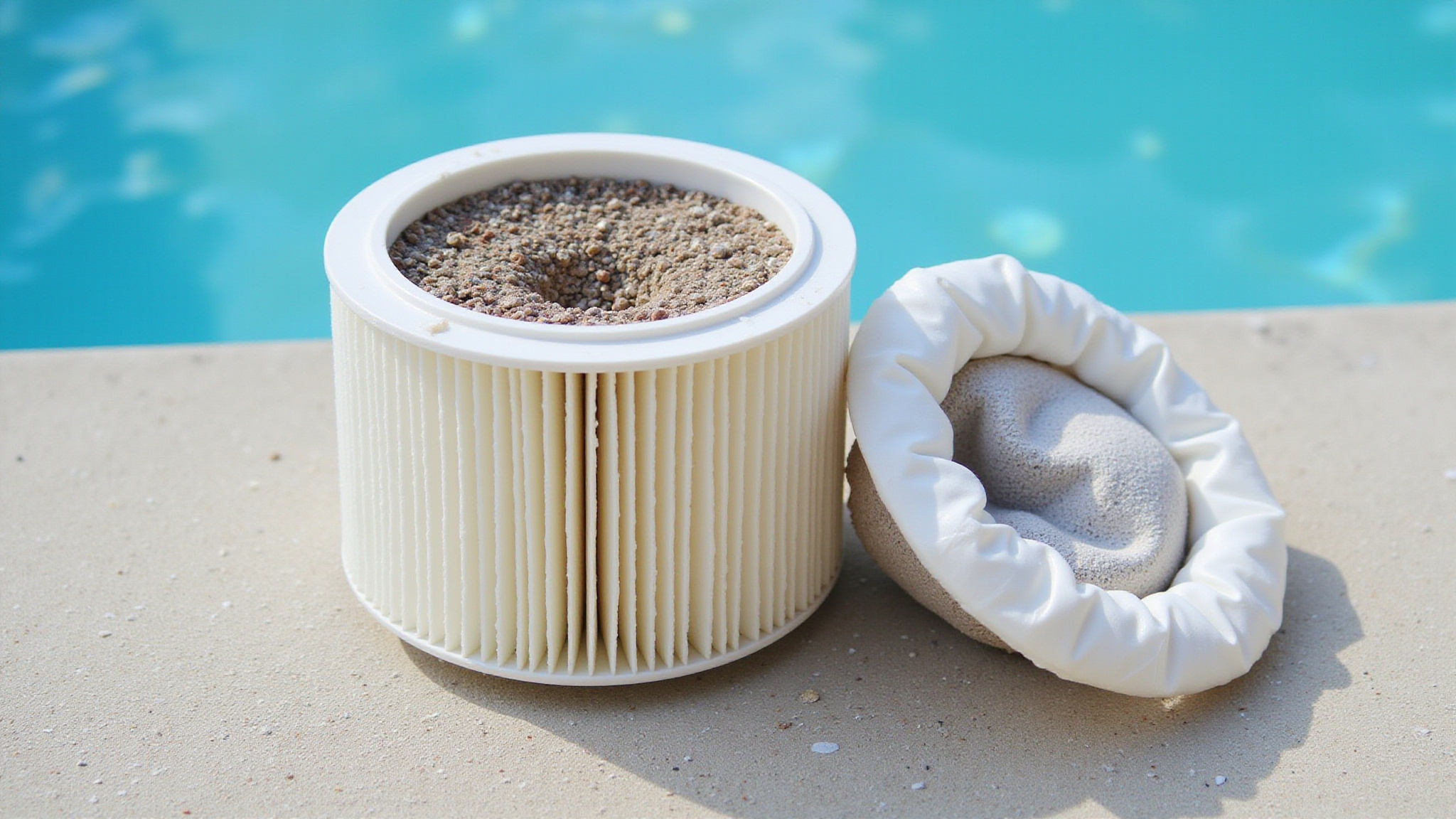
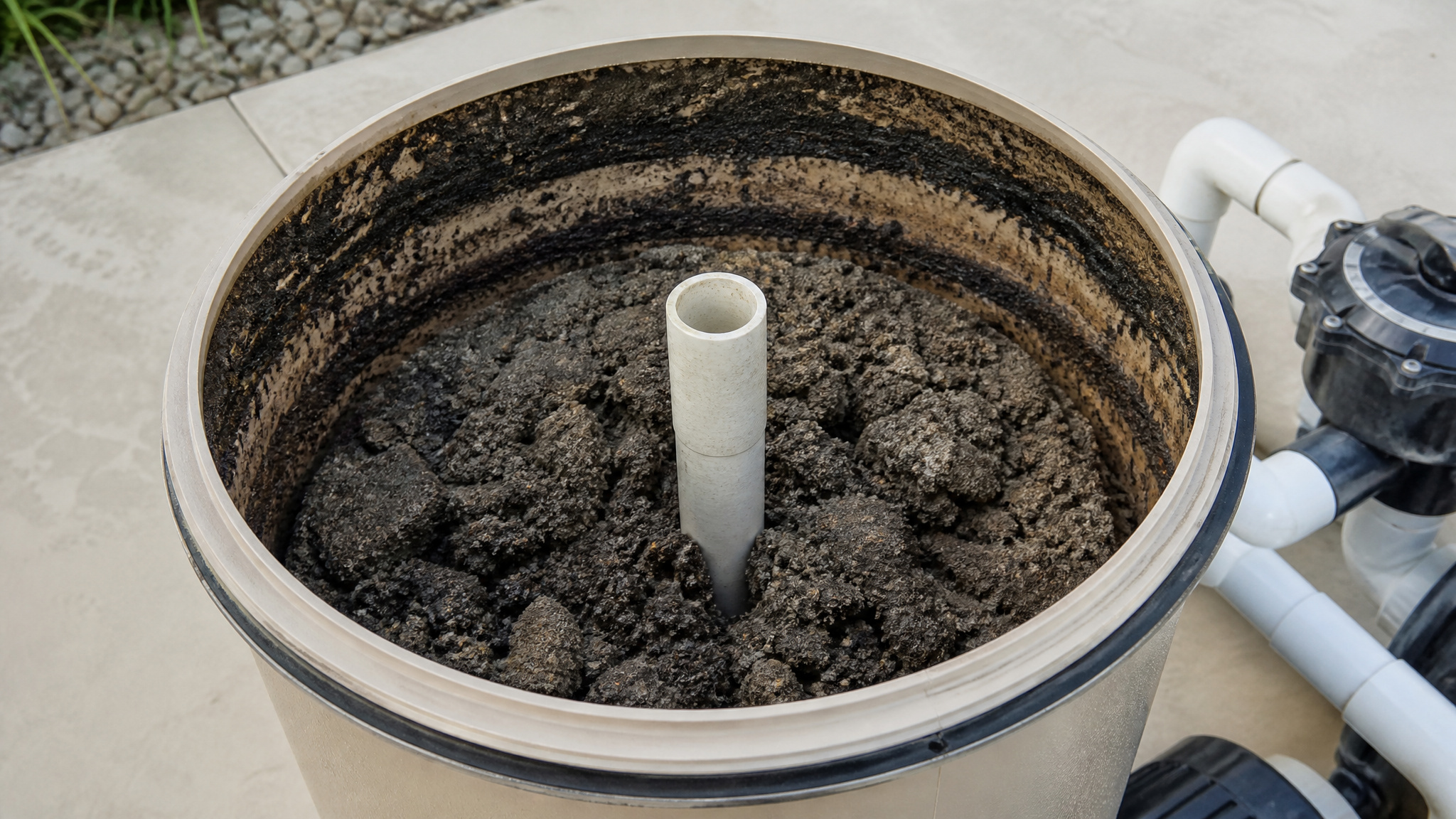
Pool owners ditch silica sand because its performance ceiling falls short, even though it remains the lowest-cost filter media over time. Standard 20-grade silica sand captures particles only down to about 20 to 40 microns, so you’ll notice water clarity that trails finer options. You’ll also replace pool sand every 3 to 5 years, and you’ll find it prone to channeling and oil saturation, which reduces efficiency. If you’re running a high-bather-load pool, sand won’t address ammonia or odor control. That’s why you’ll consider a pool sand replacement that delivers tighter filtration and longer service life. Modern pool filter media, including zeolite, glass, and polyester balls, offer sand alternatives pool operators trust. Just confirm compatibility with your filter manufacturer’s instructions, since media volume and installation steps vary by product.
How DE Sets the Clarity Benchmark
When you’re judging filtration quality, diatomaceous earth (DE) sets the benchmark, capturing particles as small as 1 to 6 microns, the finest performance among the media reviewed. That precision produces water that’s virtually free of visible impurities, which is why you’ll see DE cited as the clarity standard other media aim to match. You’ll pay for it, though, since DE systems generally demand more effort and expense than sand or the alternatives.
Finest Micron Capture
Diatomaceous earth captures the finest particles, as small as 1 to 6 microns, the best performance among the media reviewed here. Because clarity comes down to particle size, DE sets the benchmark. When you compare pool filter sand alternatives against this standard, you’re measuring how close each option gets to DE-level clarity while keeping maintenance manageable.
Standard silica sand captures around 20 to 40 microns, so it can’t match DE’s precision. Glass pool filter media narrows the gap, capturing roughly 5 to 9 microns, with some sources citing 2 to 5 microns. ZeoSand reaches about 10 to 12 microns, and FilterBalls target around 5 microns.
Always confirm the rated micron capture against your filter manufacturer’s specifications, since installation amounts and performance vary by product and setup.
Crystal-Clear Water Results
Diatomaceous earth produces the clearest water, virtually free of visible impurities, which is why it sets the clarity benchmark for every media reviewed here. DE captures particles as small as 1 to 6 microns, outperforming sand, zeolite, glass, and FilterBalls. When you compare media, you’ll see how closely each approaches DE-level clarity while managing lower maintenance demands.
| Media | Micron Capture | Clarity Relative to DE |
|---|---|---|
| DE | 1 to 6 | Benchmark |
| Filter Glass | 5 to 9 | Near-benchmark |
| ZeoSand | 2 to 12 | Strong |
Keep in mind that DE systems require more effort and expense than sand or alternatives. If you want DE-like results without the added upkeep, glass and zeolite deliver refined clarity while remaining compatible with standard filter operation.
Higher Effort And Expense
DE systems require higher effort and expense than sand or its alternatives. That benchmark clarity comes at a cost. DE captures particles as small as 1 to 6 microns, delivering water that’s virtually free of visible impurities, but that performance demands regular maintenance. You’ll recharge the grids after each backwash, add fresh DE powder, and periodically break down the filter for a full cleaning.
Handle DE powder carefully, since inhaling it poses respiratory risks. Wear a mask and follow the manufacturer’s instructions for the correct media amount and installation steps.
If you want DE-like clarity without this workload, glass or zeolite media get you close while keeping maintenance lower. Match your choice to your priorities and budget.
Filter Glass: The Best Sand Alternative Overall
Filter glass is the best sand alternative overall. Made from crushed recycled glass, it captures particles around 5 to 9 microns, and some sources cite 2 to 5 microns, far finer than standard sand’s 20 to 40 microns. You’ll get water clarity that approaches DE benchmarks without the added complexity.
Filter glass also resists channeling and oil saturation better than sand, so your filter maintains consistent flow. Because it reduces backwashing frequency, you’ll save water and chemicals over time. Expect a lifespan of roughly 8 to 10 years, with 10-year media costs near $256 to $320.
Always confirm the correct media volume and installation steps against your filter manufacturer’s instructions, since requirements vary by product.
ZeoSand for Clarity and Chemical Control
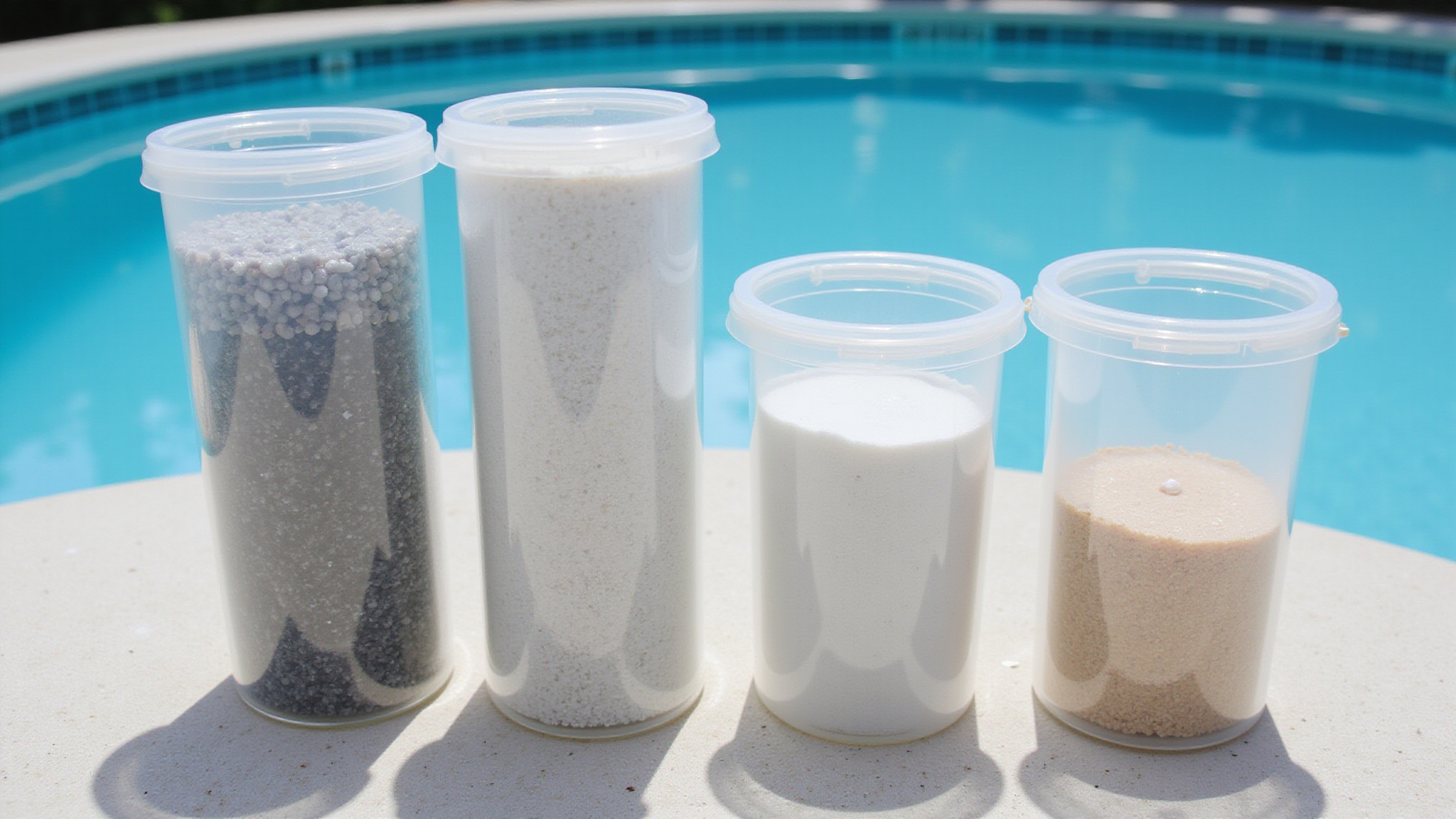
When you switch to ZeoSand, you’re using a zeolite media that captures particles down to roughly 10 to 12 microns, finer than standard sand’s 20 to 40 micron range, for noticeably clearer water. Beyond clarity, zeolite removes ammonia and reduces odors, which helps you maintain chemical balance in pools with heavy bather loads. Follow your filter manufacturer’s instructions for media volume, since zeolite is lighter than sand and installation amounts vary by product.
Superior Clarity and Filtration
ZeoSand delivers superior clarity and filtration by refining particle capture to roughly 10 to 12 microns, with some products and setups reaching 2 to 5 microns, compared to the 20 to 40 microns of standard silica sand. You’ll notice clearer water because zeolite’s volcanic mineral structure traps smaller debris than silica.
Beyond clarity, ZeoSand actively removes ammonia and reduces odor, which helps in high-bather-load pools where chemical demand runs high. That ammonia control can ease your chlorine burden and improve overall sanitation.
Zeolite media also weighs less than sand, simplifying handling and installation. Always follow your filter manufacturer’s instructions, since the required media amount varies by product and system design.
Ammonia and Odor Control
ZeoSand controls ammonia and odor because it is made from zeolite, a volcanic mineral, which captures particles around 10 to 12 microns while actively removing ammonia. That ammonia removal reduces chloramines, the compounds responsible for harsh odors and eye irritation in high-bather-load pools.
| Property | ZeoSand Benefit |
|---|---|
| Filtration | 10 to 12 microns |
| Chemical control | Ammonia removal |
You’ll notice fewer odor complaints and lower chloramine buildup, which can reduce your chlorine demand. If you run a busy pool, this extra chemical control keeps water safer and more comfortable. Always match media quantity to your filter manufacturer’s instructions, since zeolite’s lighter weight changes fill volumes.
Are FilterBalls Worth the Higher Cost?
Whether FilterBalls are worth the higher cost depends on how much you value convenience, since just 3 lbs of these lightweight synthetic media can replace 50 lbs of sand, cutting handling effort and simplifying installation. Weigh the specifications against the price:
- Filtration: FilterBalls capture particles down to about 5 microns, finer than standard sand’s 20-to-40-micron range.
- Lifespan: Expect roughly 3 to 5 years, comparable to sand and shorter than glass.
- Cost: Over 10 years, estimates run $1,500 to $3,000, far above sand, ZeoSand, or glass.
- Handling: The low weight reduces strain and speeds up media changes.
Which Sand Alternative Fits Your Pool?
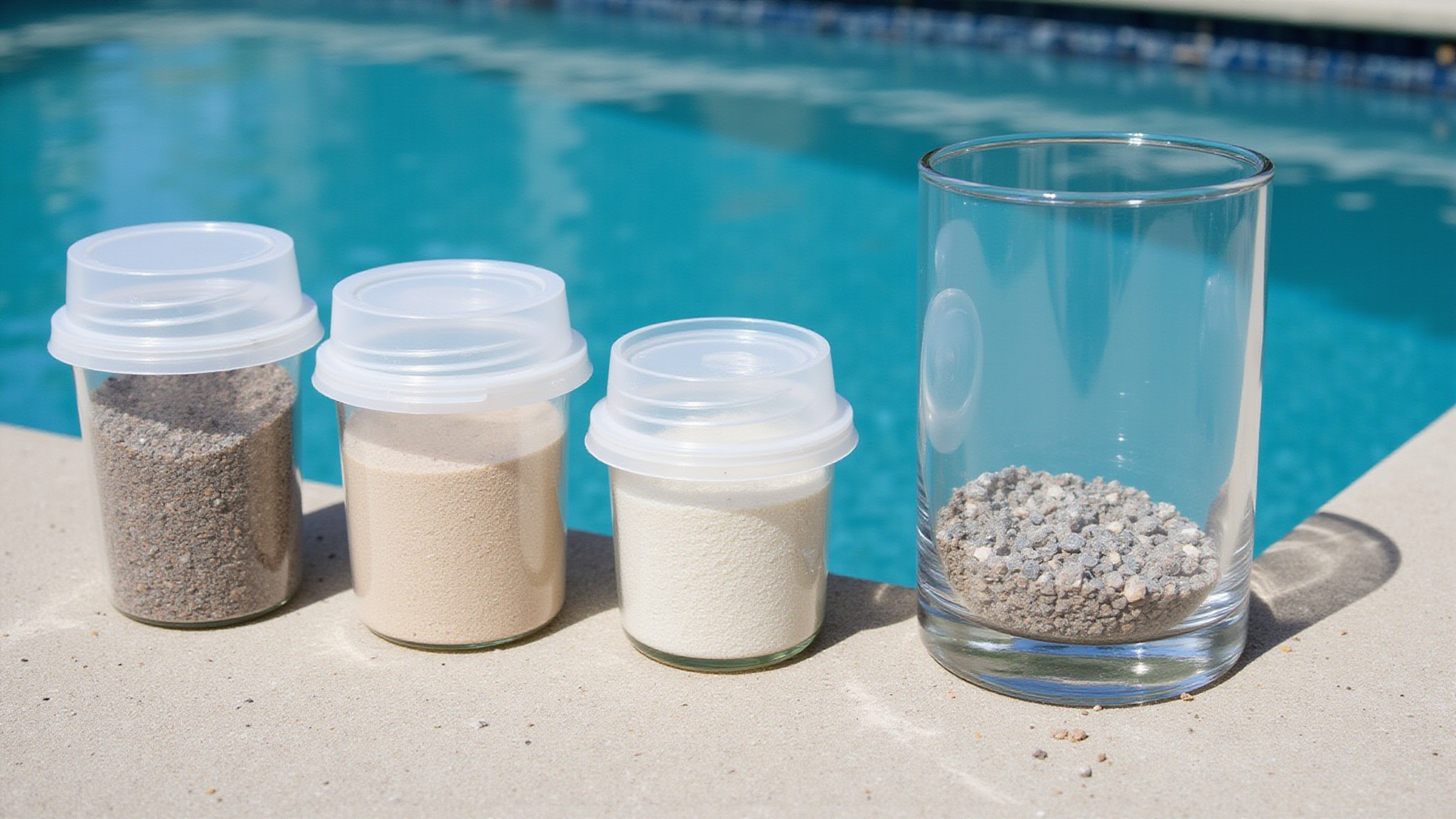
The sand alternative that fits your pool depends on matching media performance against your pool’s priorities and budget. If clarity and durability rank highest, filter glass captures particles around 5 to 9 microns and lasts 7 to 10 years. If your pool carries a high bather load, ZeoSand adds ammonia removal and odor control while refining clarity to roughly 10 to 12 microns. Clogged sand filter solutions often arise from improper maintenance or using the wrong type of sand. Regular cleaning and checking for clogs can significantly enhance filtration efficiency.
| Media | Filtration | 10-Year Cost |
|---|---|---|
| Sand | 20-40 microns | ~$160 |
| ZeoSand | 10-12 microns | $160-$230 |
| Filter Glass | 5-9 microns | $256-$320 |
Match your selection to your filter manufacturer’s instructions, since media volume and installation steps vary by product. Confirm compatibility before switching, protecting both equipment integrity and consistent, safe water quality throughout each season.
Conclusion: Choosing a Sand Alternative
Sand still works, but glass and zeolite media filter finer particles, last longer, and often need less backwashing, which is why many owners make the switch. The right choice comes down to your water clarity goals and how much upkeep you want to trade for them. Match the media to your filter and your priorities, and the water stays cleaner with less effort.
Get Discount Pool Filter Supplies Delivered
From filter sand alternatives to complete replacement systems, expert-selected filters keep your pool water clean and clear. Browse Prime Pool Market for premium Pool Filters with real value from real pool experts. Call (877) 650-7665 today and upgrade your filtration system.
Frequently Asked Questions
Can I Mix Different Filter Media Types in One Pool Filter?
It is generally not recommended. Different media have different densities and grain sizes, so mixing them can channel water unevenly and cut filtration efficiency. If you want the benefits of glass or zeolite, replace the sand fully rather than layering the two. Stick with one media type for the most reliable results.
How Often Should I Backwash My Pool Filter?
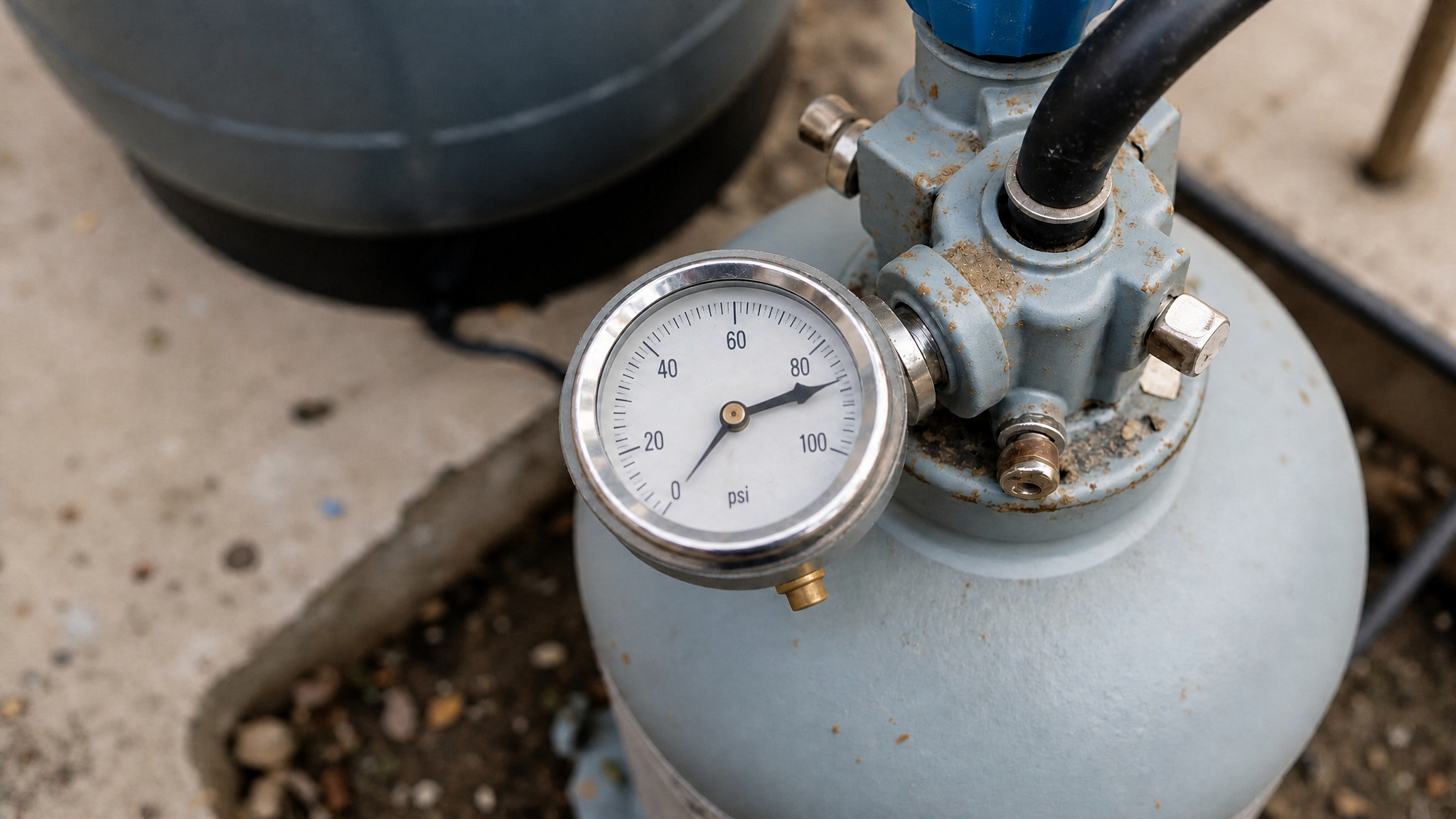
Backwash when the pressure gauge climbs 8 to 10 psi above its clean starting point, which for most pools lands every two to four weeks. Glass and zeolite media often stretch that interval since they trap debris more efficiently. Avoid backwashing on a fixed calendar, since doing it too often wastes water and reduces filtering.
Do I Need to Replace My Filter Tank When Switching Media?
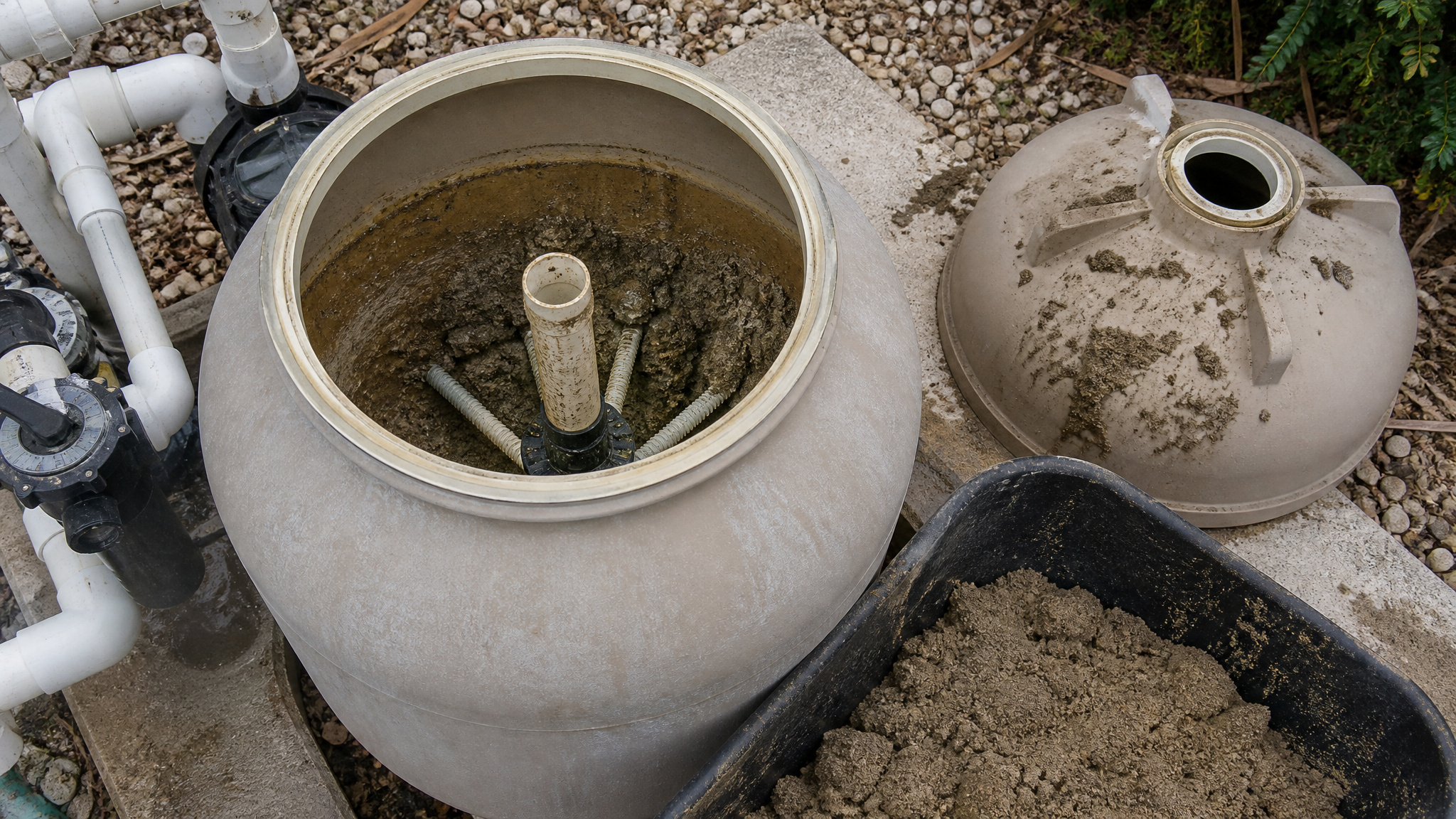
No. Glass and zeolite drop into the same tank that held your sand, so the housing, laterals, and valve all stay in place. You only swap out the media itself. Just confirm the replacement weight matches what your tank calls for, since glass is lighter than sand and needs a different amount by volume.
Is Silica Sand Safe to Handle During Installation?
It is safe with basic precautions. The main concern is breathing the fine silica dust, so wear a dust mask and pour it slowly to keep particles down. Working outdoors or in a well-ventilated spot helps too. Once the sand is in the tank and wet, the dust risk is gone.
How Do I Properly Dispose of Old Pool Filter Media?
Old sand is generally inert and can go in the regular trash in most areas, though bagging it keeps the mess down since it holds water. Glass media is often recyclable. Rules vary by location, so a quick check with your local waste service confirms whether it belongs in the trash or a recycling stream.