
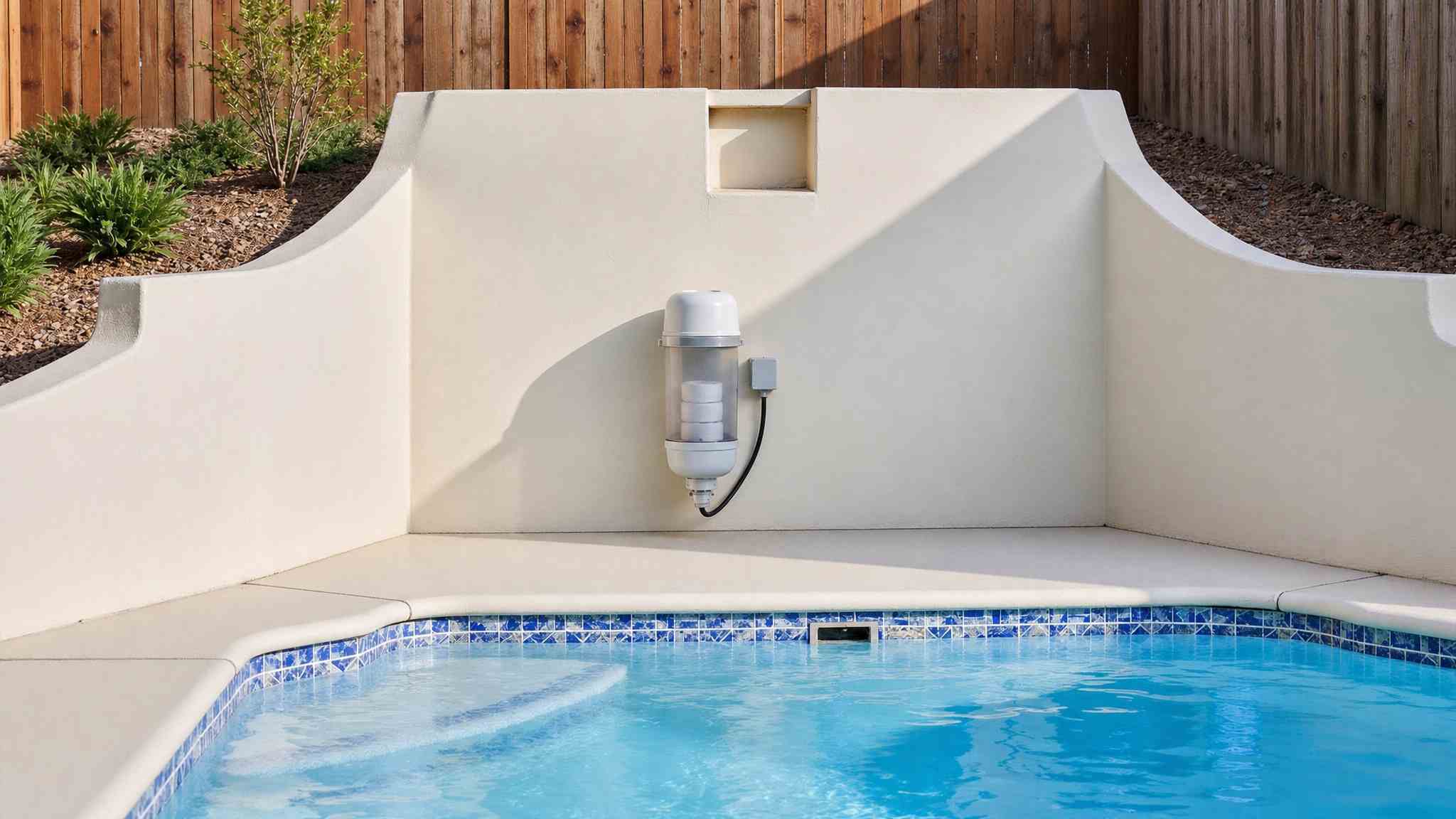
Start by skimming leaves and debris to lower your chlorine demand. Brush algae off walls, floor, and steps to break protective layers that consume chlorine. Test your pH and target 7.4 to 7.6, then balance alkalinity and stabilizer first. After sunset, shock with calcium hypochlorite at 70% available chlorine, and run your pump 24/7. Vacuum dead algae to waste once it settles. Keep going, and you’ll learn exactly how to lock in clear, safe water.
Key Takeaways
- Skim all leaves and debris, then brush algae off walls, floor, and steps before adding chemicals.
- Test and balance pH (7.4 to 7.6), alkalinity (80 to 120 ppm), and CYA before shocking for maximum chlorine effectiveness.
- Apply calcium hypochlorite shock (70%+ available chlorine) after sunset so UV won’t degrade the chlorine overnight.
- Run the pump and filter 24/7, backwashing or cleaning whenever pressure rises 8 to 10 psi above baseline.
- Vacuum dead algae to waste, then retest chemistry, repeating nighttime shock until the water fully clears.
Why Your Pool Turns Green Over Winter

Your pool turns green over winter because the sanitizer that normally keeps algae in check breaks down over months of inactivity. Without adequate free chlorine, algae spores colonize the walls, floor, and steps, feeding on accumulated organic debris like leaves and sticks. Stagnant water compounds the problem, since your pump and filter aren’t circulating chlorine or removing contaminants. Sunlight and warming temperatures accelerate this growth, leaving you with a green pool after winter that seems to appear overnight.
Understanding this chemistry helps you fix a green pool fast. The organic load consumes any residual sanitizer, dropping your chlorine to zero and letting algae dominate. Clearing green pool water starts with recognizing these depleted conditions before you begin any treatment.
Gear You Need Before You Start
The gear you need includes a leaf net or skimmer to pull out leaves, sticks, and organic debris that consume sanitizer. Grab a sturdy pool brush for scrubbing algae off walls, floors, and steps. Keep a reliable test kit on hand to measure pH, alkalinity, calcium hardness, stabilizer, and chlorine. Stock shock with at least 70% available chlorine (calcium hypochlorite) for the green pool cleanup, plus algaecide for prevention. Set up a manual vacuum you can run to waste. Don’t forget protective gloves and eyewear when handling concentrated chemicals. With this gear staged and ready, you’ll clear green pool water faster and safer, without dangerous delays.
Skim Leaves and Debris From Your Pool
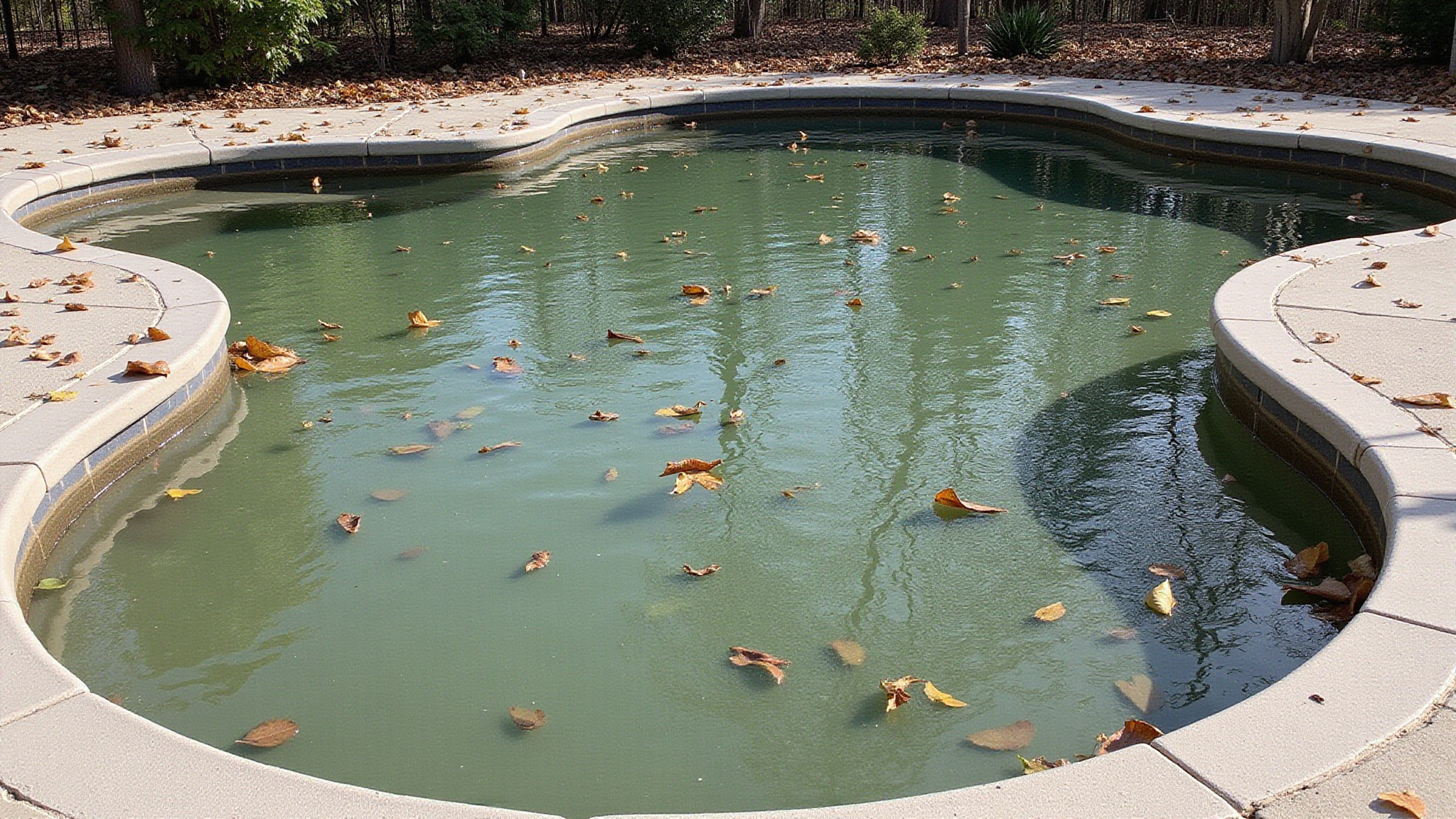
Grab your leaf net and skim out all leaves, sticks, and organic debris before you add any chemicals. This step lowers the organic load that would otherwise consume your sanitizer during treatment. Next, brush the walls, floor, and steps to dislodge algae clinging to those surfaces.
Net Out Debris
Net out debris by pulling every leaf, stick, and clump of organic matter out now to reduce the load your sanitizer has to fight later. Grab a leaf net or skimmer and clear the surface and basin before you add any chemicals. Removing large impurities first lowers the organic demand that would otherwise consume free chlorine during treatment. Work methodically across the pool, lifting debris out completely rather than pushing it toward the drain.
| Tool | Target Debris | Chemical Benefit |
|---|---|---|
| Leaf net | Floating leaves | Lowers chlorine demand |
| Skimmer | Fine surface matter | Preserves sanitizer strength |
| Basin scoop | Settled debris | Reduces organic load |
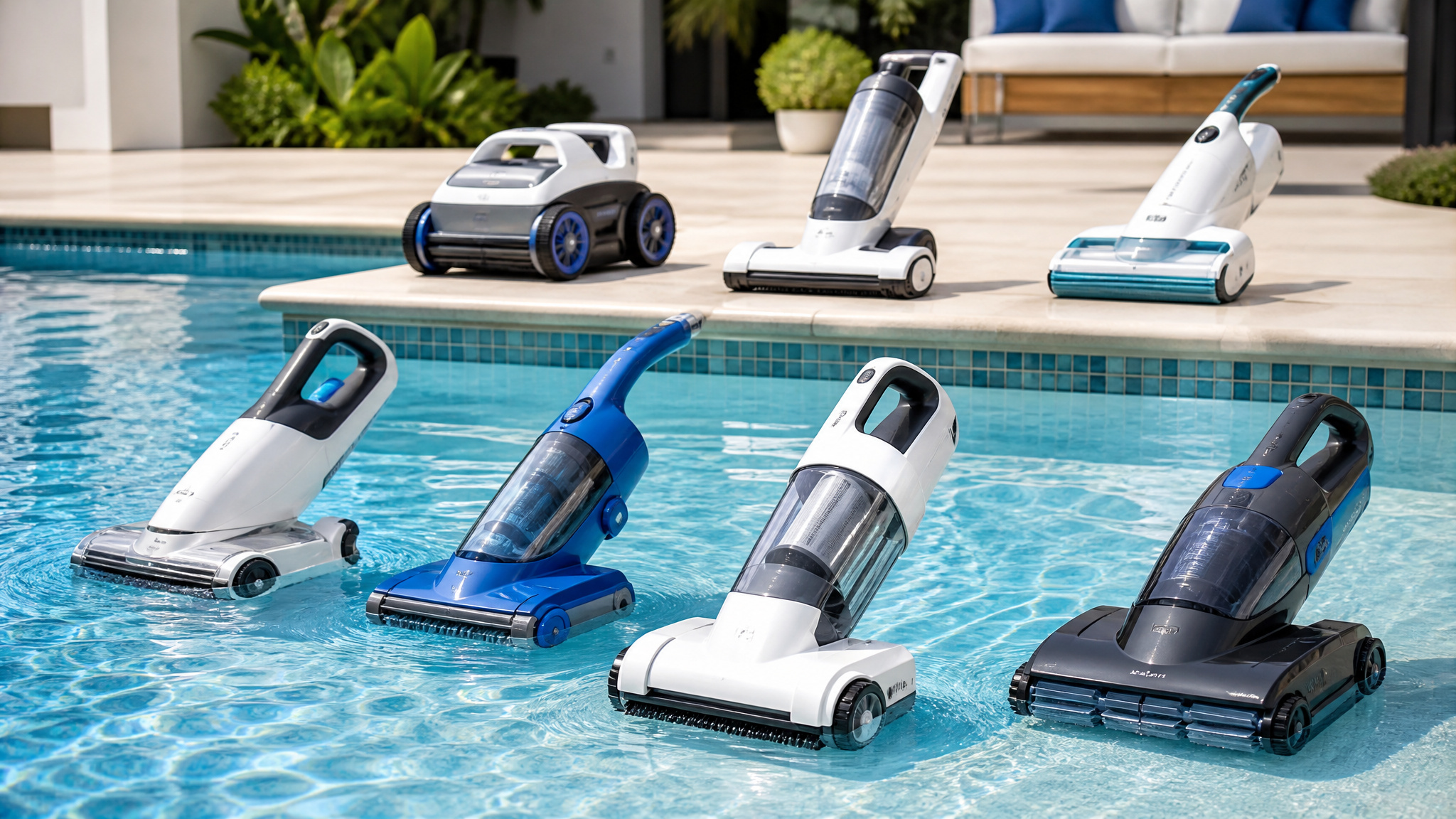
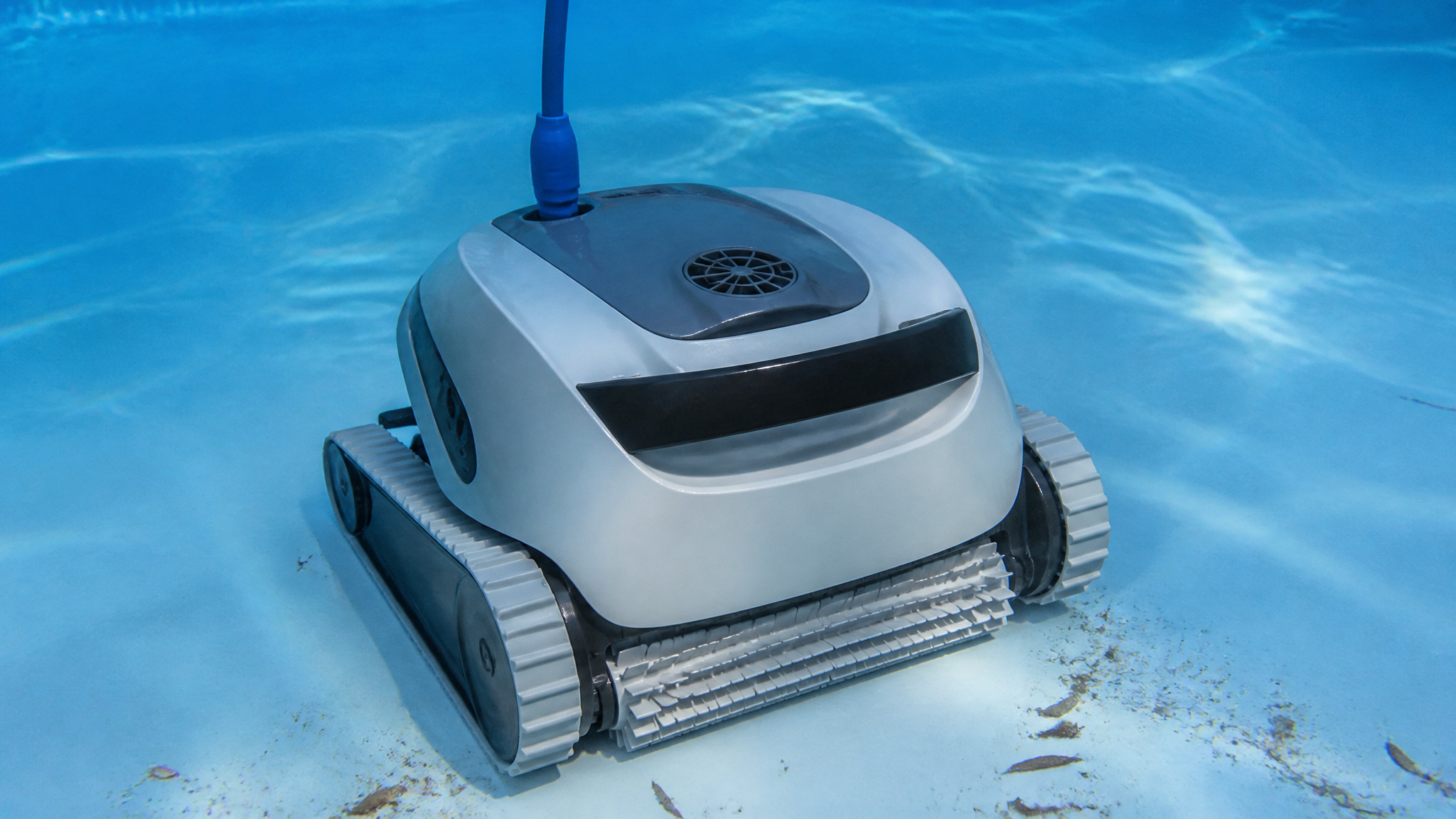
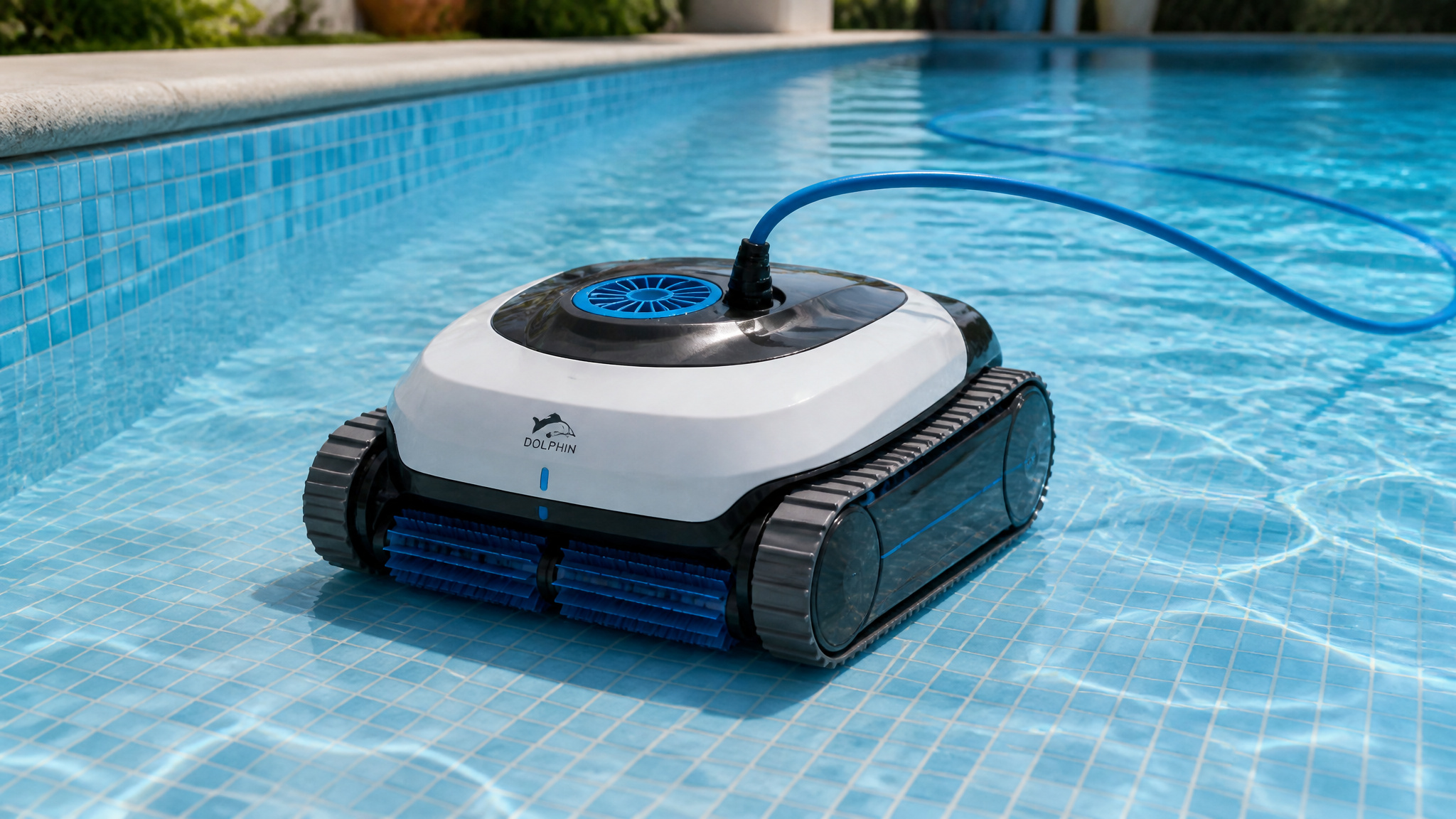
If equipment damage concerns you, hold off on the automatic pool cleaner at this earliest stage.
Brush Loose Algae
Brush the walls, floor, and steps to dislodge the algae clinging to those surfaces. Algae anchors itself to these surfaces, and mechanical agitation breaks it loose so your sanitizer can reach and oxidize it directly. Work systematically from the shallow end toward the deep end, applying firm pressure along tile lines, corners, and seams where growth concentrates. Pay attention to steps and ladder crevices, since low-circulation zones harbor stubborn colonies.
Loosening this algae now reduces the organic load that would otherwise consume chlorine during shock treatment, letting you dose more efficiently later. Avoid relying on your automatic cleaner at this stage if you’re concerned about equipment damage from heavy debris. Manual brushing gives you control and thorough surface coverage.
Brush Algae Off Pool Walls and Steps
Brush algae off pool walls and steps using a stiff-bristled brush, working methodically across every submerged surface. Algae cling stubbornly to submerged surfaces, so you’ll need to physically dislodge them before any sanitizer can work efficiently. Attached algae form protective layers that consume chlorine on contact, reducing your shock treatment’s effectiveness.
Loosen algae before you sanitize, brushing strips their protective layer so chlorine can finally do its job.
- Brush the walls from top to bottom, driving loosened algae toward the floor for later vacuuming.
- Scrub the floor, targeting corners and low-circulation zones where algae accumulate heavily.
- Clean the steps and ledges, common colonization sites due to shallow, warm water.
- Address tight seams and fittings where brushing reaches areas the pool cleaner misses.
Dislodging this biological load first lowers sanitizer demand, so your subsequent shock dose works faster and more predictably.
Test Your Pool’s pH Before You Shock
pH directly affects how efficiently your chlorine works. When pH sits too high, shock loses potency, and you’ll waste product fighting algae that won’t die. Grab a reliable test kit and measure your pH. Target a range of roughly 7.4 to 7.6, though some guides accept 7.0 to 7.4. Check alkalinity too, aiming for 100 to 150 ppm, or 80 to 120 ppm depending on your source. Recheck your stabilizer, or CYA. If it climbs above 50, you may need to partially drain and refill, correcting toward around 20. Balancing water chemistry before or alongside shock treatment gives you the best kill rate, so don’t skip this step. Correct your levels first, then shock confidently.
Balance Alkalinity and Stabilizer Levels
Balance alkalinity and stabilizer by testing both, adjusting alkalinity into its target range before dosing sanitizer, and lowering CYA if it runs high. Alkalinity buffers your pH, so target the correct range and adjust before dosing sanitizer. Then recheck your stabilizer (CYA), since excessive levels blunt chlorine’s effectiveness and can force a partial drain and refill.
- Test total alkalinity; aim for 100 to 150 ppm, or 80 to 120 ppm depending on your source.
- Raise low alkalinity with sodium bicarbonate; lower high readings with a pH decreaser.
- Measure CYA; if it’s above 50, partially drain and refill toward roughly 20.
- Retest both after adjustments settle to confirm stable, in-range numbers.
Getting these balanced now keeps your shock treatment potent, protects your equipment, and prevents chlorine loss during cleanup.
Pick the Right Pool Shock
Pick calcium hypochlorite with at least 70% available chlorine for a shock that hits algae hard. This concentration delivers the oxidizing power needed to kill established algae rather than just suppress it. For severe green water, you’ll need a double or triple dose, scaling the amount to your pool’s volume and the severity of the bloom.
Time your application for night, when sunlight won’t degrade the free chlorine before it works. Add the shock after debris removal and balancing, never before. Handle the product carefully: keep it dry, avoid mixing chemical types, and add shock to water, not water to shock. If the pool stays green or teal by morning, repeat the treatment.
How Much Shock Does Green Water Need?
Green water needs a dose of calcium hypochlorite matched to the severity of the bloom. Use a shock with at least 70% available chlorine, and scale the dose to what you see in the basin:
- Light green or hazy water: Apply a single standard dose per the product’s labeled coverage.
- Deep green water: Move to a double dose to overcome the heavy algae load.
- Dark green or teal water: Apply a triple dose, since severe blooms consume sanitizer fast.
- Still green next day: Repeat the shock at the same or higher rate.
Shock at night so sunlight won’t burn off the chlorine before it kills the algae. Wear gloves and eye protection throughout.
Why Shocking Your Pool at Night Works
Shocking your pool at night works because sunlight breaks down free chlorine through UV degradation, so you’ll lose sanitizer fast if you shock during the day. UV radiation strips unstabilized chlorine within hours, cutting the concentration you need to kill algae. When you shock at night, chlorine stays active longer, giving it uninterrupted contact time to oxidize algae and organic contaminants.
Add your shock after sunset, then run the pump continuously so chlorine disperses evenly across the pool. Overnight circulation keeps sanitizer working against dead and living algae while UV exposure stays zero. By morning, you’ll retain far more available chlorine, maximizing kill efficiency per dose.
Test the water the next day. If it’s still green or teal, repeat the nighttime shock until the chlorine holds and the water clears.
Run Your Pool Filter Around the Clock
Once you’ve shocked, run your pump and filter 24/7 until the water clears, since continuous circulation disperses chlorine and moves dead algae toward the filter. Don’t rely on a timer during treatment, interrupted flow leaves sanitizer unevenly distributed and slows the kill. Clean or backwash the filter throughout recovery, because algae buildup clogs the system and prolongs green or cloudy water.
Run Filter Nonstop
Run your pump and filter 24/7 during green-pool recovery, not on a timer. Continuous circulation disperses chlorine evenly, keeps sanitizer contacting suspended algae, and moves dead cells toward the filter for capture. Interrupting flow lets chlorine concentrate unevenly and allows debris to settle, slowing your clearing timeline. When you’re ready for a fresh start, consider spring reopening tips for above ground pools to ensure optimal performance. Check the water chemistry after winter storage and look for any signs of damage to the liner or equipment.
Follow these circulation priorities:
- Run the pump nonstop until water clears; at minimum, maintain 8 hours overnight after each shock treatment.
- Clean or backwash the filter regularly, since algae buildup clogs the system and reduces flow.
- Monitor pressure gauges for clog-related spikes indicating filter media saturation.
- Keep circulation active so chlorine stays distributed and captured algae reaches waste.
A clogged filter prolongs green or cloudy water, so prioritize maintenance.
Clean Clogged Filter
Clean your clogged filter whenever captured algae saturates the media and restricts flow, which happens fast during green-pool recovery. Monitor your filter pressure gauge; a rise of 8 to 10 psi above baseline signals restricted flow and demands cleaning. Backwash sand or DE filters until the sight glass runs clear, then rinse to reseat the bed. For cartridge systems, remove and hose the pleats thoroughly, clearing trapped algae. Expect to clean repeatedly throughout heavy shock treatment, since dead algae accumulates quickly. Don’t let a clogged filter throttle circulation, because stagnant water lets chlorine dissipate unevenly and prolongs the green. After backwashing, top off water and rebalance if needed. Keep the pump running and inspect pressure until the water clears completely.
How Long Until Your Pool Clears Up?
Clearing a severely green pool takes anywhere from one day to a full week after you shock it, depending on algae severity, filtration runtime, and water chemistry. If the water stays green or teal the next day, repeat the shock process. Run your pump and filter 24/7, not on a timer, so chlorine disperses and dead algae migrates toward the filter.
Your clearing timeline hinges on these factors:
- Algae severity, heavy green may require a double or triple shock dose.
- Filtration runtime, continuous circulation clears faster than 8-hour overnight cycles.
- Filter condition, a clogged filter prolongs cloudy or green water.
- Water chemistry, balanced pH and alkalinity maximize sanitizer effectiveness.
Clean or backwash regularly to prevent clogging during recovery.
Backwash Your Pool Filter During Cleanup
Backwash your pool filter throughout cleanup to keep water moving and chlorine dispersing as dead algae accumulates during shock treatment and clogs your filter media. Once your filter pressure climbs above its clean baseline, run a backwash cycle to flush trapped algae from the media. A clogged filter slows clearing and prolongs green or cloudy water, so don’t wait for pressure to spike dramatically. After heavy cleanup, backwash or rinse thoroughly to remove captured algae and restore flow. Keep the pump running 24/7 during recovery, pausing only to backwash as needed. Consistent circulation moves dead algae toward the filter while chlorine disperses evenly across the basin. Once water clears, backwash a final time, then retest and rebalance chemistry before resuming normal filtration.
Vacuum Dead Algae to Waste
Once the algae dies off, set your multiport valve to the waste position and manually vacuum the settled debris out of the pool entirely, bypassing the filter so dead algae won’t recirculate. This method drains water as you work, so monitor your pool level and add fresh water to compensate as needed. After you’ve cleared the debris, backwash the filter to flush any captured algae from the media and restore full flow.
Vacuum to Waste
Vacuuming to waste routes pool water directly out of the system instead of back through the filter. This setting bypasses your filter media, sending dead algae and fine debris directly out of the system so they can’t recirculate or clog your cartridge or sand.
Follow this sequence for a thorough removal:
- Set your multiport valve to waste before starting the pump.
- Vacuum slowly across the floor, steps, and walls to lift settled debris without stirring it.
- Monitor your water level and refill as needed, since waste vacuuming lowers it quickly.
- Backwash or rinse the filter afterward to clear any captured algae.
Once finished, skim any remaining floating particles for a cleaner result.
Filter Backwash After
Backwash or rinse the filter after heavy cleanup to flush captured particles out. Vacuuming to waste pulls dead algae out of your pool, but plenty of that debris still lodges in your filter media on the way through the multiport valve. Run the backwash cycle until the sight glass runs clear, then switch to rinse to reset the media bed. Skipping this step leaves trapped algae behind, and that buildup restricts flow, slows clearing, and can seed a fresh bloom once circulation resumes. A clogged filter also drives up pressure, so watch your gauge and backwash whenever it climbs 8 to 10 psi above baseline. After you’ve cleared the media, return the valve to filter and keep circulation going to finish the recovery.
Rebalance Your Pool Water Once It Clears
Rebalance your pool water once it clears by retesting and correcting the core parameters before regular use. Heavy shocking and algae die-off skew your chemistry, so don’t skip this verification step. Test each parameter and correct to target ranges: A checklist for pool water balance is essential to ensure optimal water quality. Regular testing and adjustments can help prevent issues such as cloudy water or unwanted algae growth.
- pH: Adjust to 7.4 to 7.6 using acid or soda ash to protect surfaces and sanitizer efficiency.
- Alkalinity: Bring to 80 to 120 ppm to buffer pH swings.
- Calcium hardness: Confirm proper levels to prevent scaling or corrosion.
- Chlorine: Restore a normal free-chlorine residual once demand drops.
Retest after any adjustment, since chemicals interact and shift readings. Add corrections gradually, circulating between doses. Once all four parameters hold steady within range, your water’s balanced and safe for swimming.
When to Call a Pool Specialist
Call a pool specialist when water stays green or teal after repeated shock treatments, even though you’ve followed every step correctly. Persistent discoloration after double or triple doses of shock suggests a chemistry problem you can’t resolve with standard treatment. A specialist can identify hidden issues like metal staining, phosphate saturation, or stabilizer levels so high that chlorine can’t work effectively. If your CYA exceeds 50 ppm despite partial draining, professional testing pinpoints exactly how much water to replace. Bring a water sample for lab-grade analysis, which measures parameters your home kit misses. Don’t keep adding chemicals blindly, since overdosing wastes product and creates safety hazards. When repeated treatment fails, expert assessment protects both your pool and your investment.
Conclusion: Clearing a Green Pool
A green pool after winter is an algae bloom, and clearing it fast comes down to balancing the water, hitting it with a strong shock, and running the filter hard until it clears. Brushing the walls and cleaning the filter speed things along. Stay with the process over a few days and even a deep-green pool comes back to clear, swimmable water.
Get Everything You Need for Pool Opening
From shock treatments to clarifiers and starter kits, expert-selected pool chemicals make spring opening easy. Browse Prime Pool Market for premium Pool & Spa Chemicals with real value from real pool experts. Call (877) 650-7665 today and get your pool crystal clear.
Frequently Asked Questions
Is It Safe to Swim in a Green Pool?
No, wait until it clears. Green water means an algae bloom and usually low sanitizer, so bacteria may be present too. The lack of visibility is also a safety hazard since you cannot see the bottom. Clear and balance the water first, confirm the chlorine is back to normal, then it is safe to swim.
Can I Use Household Bleach Instead of Pool Shock?
Yes, plain unscented household bleach is essentially diluted liquid chlorine and can clear a green pool. It just takes more of it since it is weaker than pool shock, and scented or splash-less versions with additives should be avoided. For a badly green pool, dedicated pool shock is stronger and usually the more efficient choice.
Does a Green Pool Stain the Liner or Surfaces?
It can if left too long. Algae and the metals that often come with a green pool can leave stains on the liner or plaster, especially in a pool that has sat green for weeks. Clearing it promptly reduces the risk. Any staining that remains after the water clears can usually be treated separately.
How Much Does It Cost to Clear a Green Pool?
Doing it yourself, expect to spend 50 to 150 dollars on shock, algaecide, and chemicals, more for a severe bloom. A professional green-to-clean service typically runs 150 to 500 dollars depending on how bad it is and the pool size. Acting early keeps the cost and chemical load on the lower end.
Can I Prevent My Pool From Turning Green Next Winter?
Yes. A proper closing is the key: balance the water, add winterizing chemicals, shock before covering, and use a tight-fitting cover to block sunlight and debris. Checking the pool once or twice over winter and topping off chemicals if needed also helps. A well-closed pool is far less likely to open green in spring.